

Crafting the perfect long term travel packing list can feel overwhelming. It’s a delicate balance between preparing for the unknown and avoiding the burden of an overstuffed bag. For digital nomads and slow travelers, this isn’t just about a vacation; it’s about building a mobile, sustainable life. This guide breaks down ten essential systems, from a versatile capsule wardrobe to zero-waste toiletries, that will help you travel lighter, smarter, and more consciously for months or even years on the road.
We’ll focus on modular, eco-friendly solutions that support a low-impact lifestyle, especially for those favoring rail travel and walkable base cities. Forget everything you know about traditional packing; this is your blueprint for a streamlined, regenerative journey. The core principle is simple: pack less, but pack smarter. By investing in durable, multi-purpose items, you reduce waste, save money, and gain the freedom to move easily between destinations.
This approach isn’t just practical; it’s a mindset that aligns with the values of sustainable, slow travel. Let’s dive into the systems that make long-term travel not just possible, but comfortable and responsible. We’ll explore everything from the best carry-on strategies to the tech that keeps you connected without weighing you down, ensuring your adventure is both meaningful and manageable.
Affiliate disclosure: This post may contain affiliate links. If you buy through them, Eco Nomad Travel may earn a small commission at no extra cost to you.
1. Crafting Your Capsule Wardrobe: The Foundation of Your Long Term Travel Packing List
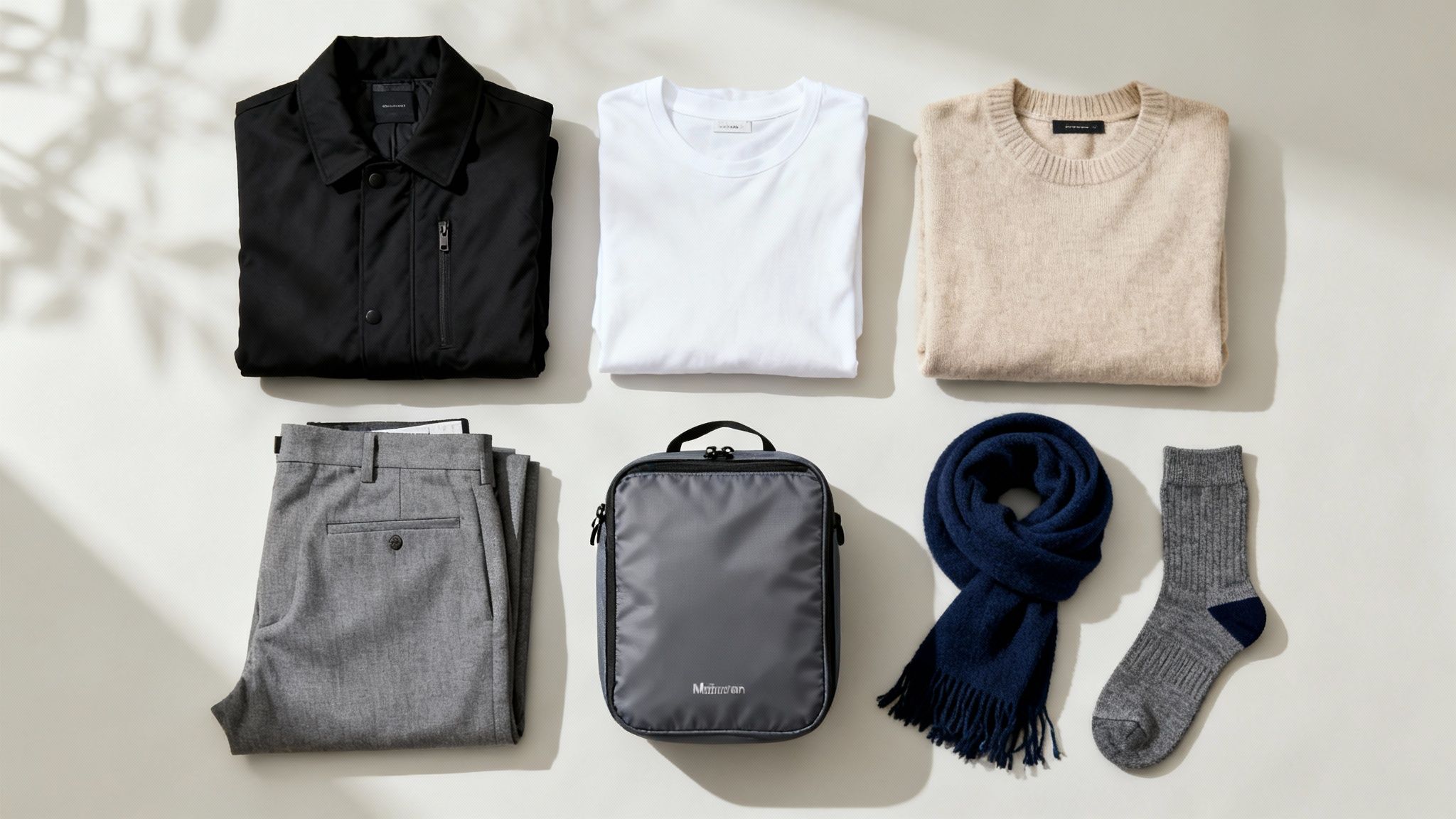
A capsule wardrobe is the essential foundation of any successful long term travel packing list. The concept is simple: curate a small, intentional collection of versatile clothing where every piece mixes and matches to create numerous outfits. Instead of packing for specific scenarios, you pack a system of 20-30 high-quality, complementary items that function across different climates and social settings.
This minimalist approach drastically reduces luggage weight and volume, making travel by train or navigating walkable cities significantly easier. By focusing on durable, ethically-made pieces, you also reduce your consumption and environmental footprint over the course of your journey. Consequently, every item in your bag serves multiple purposes, is easy to care for on the road, and supports a more flexible, sustainable travel style.
Actionable Tips for Building Your Travel Capsule
Creating a functional capsule requires strategic planning. Start by choosing three neutral base colors, such as black, navy, and beige, that all work together. Build your wardrobe around these core colors, adding one or two complementary accent colors for personality.
- Prioritize Versatile Layers: Instead of a bulky winter coat, opt for a system of layers. A lightweight merino wool base layer, a fleece mid-layer, and a waterproof shell can handle a wide range of temperatures and pack down small.
- Focus on Fabric: Materials matter immensely for travel. Merino wool is a superstar for its temperature-regulating, odor-resistant, and quick-drying properties. Quality synthetics also perform well. You can learn more about finding the best fast-drying travel clothes on economadtravel.com.
- Plan for Practicality: Include one “smart” outfit that can be dressed up for a nice dinner or a professional meeting. Also, use packing cubes to compartmentalize your clothing, which simplifies finding items and keeps your bag organized.
- Test Before You Go: Wear your potential travel outfits at home to ensure they are comfortable, versatile, and that you enjoy wearing them. This helps you identify any gaps or unnecessary items before you leave.
2. Toiletries & Personal Care Minimization
A minimized personal care kit is a cornerstone of an efficient long term travel packing list. The strategy involves replacing bulky, liquid-heavy products with solid, multi-purpose, or concentrated alternatives. This approach significantly cuts down on weight and volume, ensures compliance with airline liquid restrictions (like the TSA’s 3.4 ounce or 100 milliliter rule), and drastically reduces single-use plastic waste over months of travel.
By shifting to items like solid shampoo bars, toothpaste tablets, and multi-use balms, you create a spill-proof, lightweight, and eco-conscious hygiene system. Many travelers, from zero-waste advocates to digital nomads, have proven this system’s effectiveness across countless countries. It not only simplifies packing but also encourages a more resourceful and sustainable mindset on the road, aligning perfectly with a slow, low-impact travel philosophy.
Actionable Tips for Streamlining Your Toiletries
Building a minimal, zero-waste toiletry kit requires a shift in thinking from conventional products to solid and multi-functional alternatives. Start by auditing your current routine and identifying where you can consolidate or switch to a solid form.
- Embrace Solid Alternatives: Swap liquid shampoo, conditioner, and soap for solid bars. This single change eliminates the biggest source of liquid weight and potential spills in your bag.
- Consolidate and Simplify: Find products that serve multiple purposes. A single high-quality oil can function as a face moisturizer, hair serum, and body lotion. A simple bar of soap can be used for body, laundry, and even shaving.
- Test Before Committing: Before you invest in full-sized solid products, try travel-sized versions to ensure they work for your skin and hair type. This prevents carrying items you dislike for months.
- Think Beyond Liquids: Replace your plastic toothbrush with a bamboo one and your tube of toothpaste with travel-friendly toothpaste tablets. Opt for a solid deodorant stick or cream, which isn’t subject to liquid restrictions and typically comes in plastic-free packaging. You can find many of these items in a well-curated eco-friendly travel kit.
3. Electronics & Power Management for Your Long Term Travel Packing List
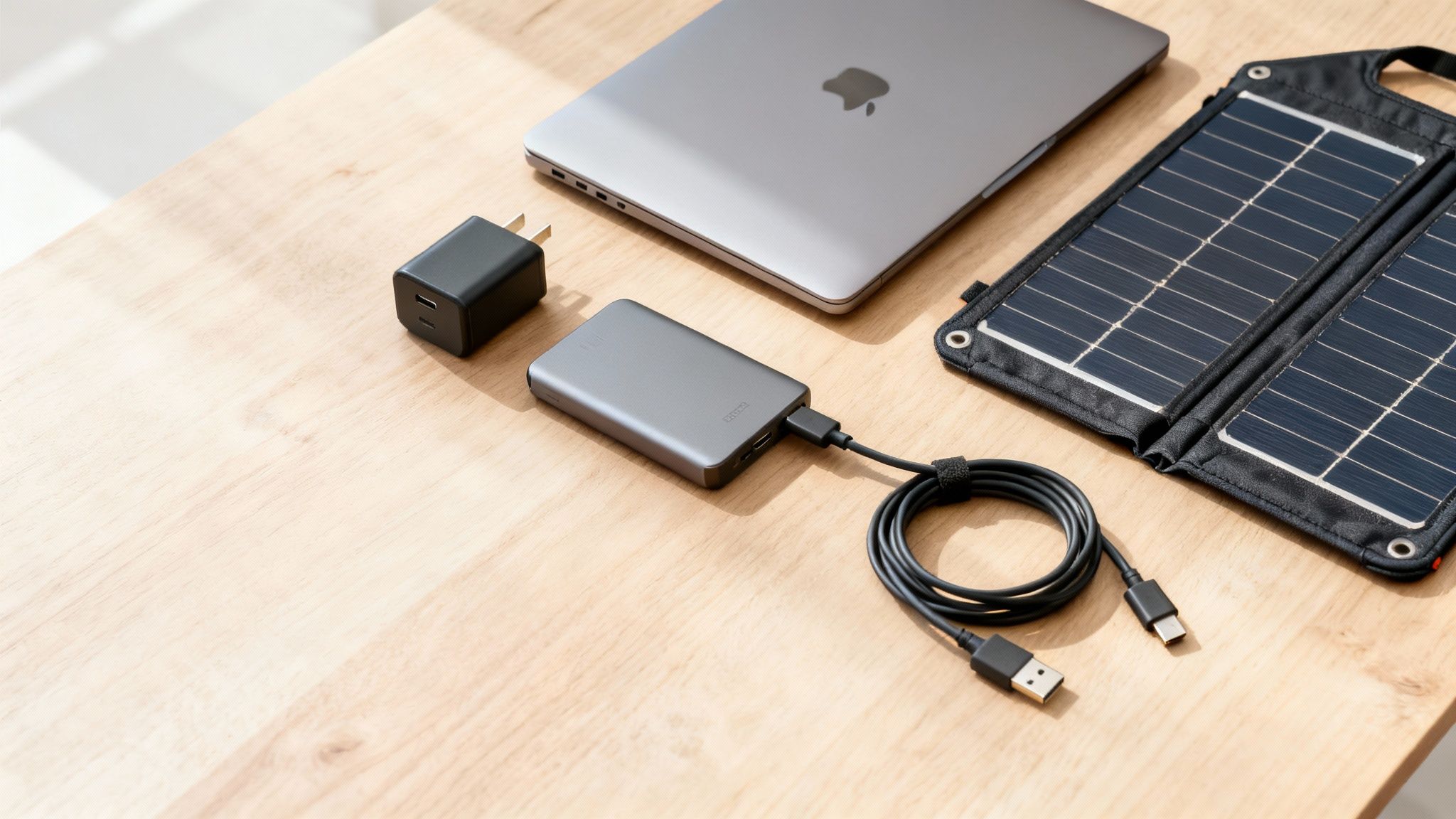
For digital nomads and slow travelers, a well-planned set of electronics is the lifeline for work, navigation, and connection. Strategically chosen devices and charging infrastructure are a crucial part of your long term travel packing list. The goal is to support remote work and daily needs while minimizing weight, power consumption, and electronic waste across multiple countries and varied transit like rail journeys. This means selecting a lightweight laptop, efficient power banks, and a streamlined cable system.
This minimalist tech setup prevents the chaos of tangled cables and the dead weight of redundant gadgets. A modern MacBook Air, for instance, can often last an entire travel day without a charge, while a single multi-port GaN charger can power a laptop, phone, and headphones simultaneously. By carefully curating your tech, you ensure you can work from a train, a cafe, or a co-working space without being tethered to a wall outlet, making your travel style more flexible and efficient. Find great flight deals on Aviasales to get you to your next remote work destination.
Actionable Tips for Your Travel Tech Kit
Building a lean, effective electronics kit requires a focus on consolidation and sustainability. Researching power standards, like 220V in Europe versus 110V in the USA, is essential before departure. Consolidating around a single charging standard, like USB-C, is one of the most impactful changes you can make.
- Standardize with USB-C: Aim for all your devices (laptop, phone, headphones, power bank) to charge via USB-C. This drastically reduces the number of cables and chargers you need, saving significant space and weight.
- Invest in a Quality Universal Adapter: A single, high-quality universal adapter with multiple USB ports is non-negotiable. It replaces a bag full of country-specific plugs and simplifies charging all your gear from one outlet.
- Verify Power Bank Compliance: Before you fly, ensure your power bank is under the 100Wh airline limit for carry-on luggage. Getting a battery confiscated at security is an expensive and frustrating mistake.
- Consider Refurbished Electronics: Reduce your environmental impact by choosing refurbished or secondhand tech. This lowers the embodied carbon of your gear and often saves you money. You can learn more about finding the best eco-friendly gear for digital nomads on economadtravel.com.
4. Reusable Containers & Food Storage Systems
Integrating a system of reusable containers is a transformative step for any long term travel packing list, especially for slow travelers and digital nomads. This strategy involves carrying a small set of lightweight, durable containers to replace single-use plastics for everything from water transport to meal prep. This approach not only significantly cuts down on waste but also saves money by enabling you to cook in Airbnbs, pack lunches for day trips, and shop at local markets more sustainably.
For the eco-conscious traveler, these systems are non-negotiable. They empower a more self-sufficient and lower-impact lifestyle on the road. Instead of constantly buying bottled water or takeaway food in disposable packaging, you have a reliable kit that adapts to various accommodation setups, from a well-equipped apartment in Lisbon to a simple kitchenette in Chiang Mai. Book your next sustainable stay with Trip.com.

Actionable Tips for Your Reusable System
Building an effective mobile kitchen kit requires prioritizing versatility and packability. The goal is to maximize utility while minimizing bulk and weight, ensuring every piece serves multiple functions.
- Start with a Collapsible Bottle: A high-quality collapsible water bottle should be your primary hydration tool. It’s perfect for refilling from taps where water is potable and packs down nearly flat when empty, saving precious bag space.
- Embrace Silicone Bags: Versatile silicone bags are invaluable. Use them for storing snacks, packing sandwiches, marinating food for a home-cooked meal, or even carrying toiletries. They are lightweight, flexible, and easy to clean.
- Invest in One Solid Container: Include one durable bento-style box or a stainless steel container. This is your go-to for packing full lunches for train journeys or storing leftovers from a large meal, preventing food waste and saving money.
- Shop Like a Local: Take your containers and reusable produce bags to local farmers’ markets. This practice is common in many parts of the world and is a fantastic way to connect with the local culture while avoiding plastic packaging.
5. Documentation & Digital Organization System
A robust documentation and digital organization system is a non-negotiable part of any long term travel packing list. This strategy moves beyond a simple folder of papers. It involves creating a secure, redundant system for all your critical information, from passports and visas to insurance policies and emergency contacts. The goal is to have every essential document accessible, both physically and digitally, even if you lose your phone or luggage.
For digital nomads and slow travelers, this system is the administrative backbone of your journey. It provides peace of mind, simplifies border crossings, and ensures you can handle unforeseen emergencies, like a lost passport or a medical issue, with efficiency. By establishing a centralized and encrypted hub for your data, you create a resilient framework that supports a flexible and secure travel lifestyle, allowing you to focus on the experience rather than bureaucratic hurdles.
Actionable Tips for Building Your Documentation System
A secure system requires layers of physical and digital backups. Start by gathering all critical documents and digitizing them using a scanner app, then organize them into a logical, encrypted structure. Privacy-first cloud services are preferable over standard options for storing sensitive identification and financial records.
- Implement Digital Redundancy: Store encrypted copies of your passport, visas, driver’s license, and insurance details on a privacy-focused cloud service. Also, keep offline copies on a password-protected USB drive and save screenshots of key confirmations (like train tickets and hotel bookings) in a secure album on your phone.
- Use a Password Manager: A dedicated password manager is essential for securely storing logins for banking, email, and travel booking sites. This prevents you from using weak, repetitive passwords and gives you secure access across all your devices.
- Keep Strategic Physical Copies: Never pack all your important documents in one place. Keep a laminated, printed copy of your passport ID page and a list of emergency contacts in a separate bag from the original document.
- Prepare for Offline Access: Before arriving in a new country, download offline maps using apps like Maps.me. Also, maintain a separate, easily accessible list of local embassy, travel insurance, and bank contact numbers in case you lose internet access. Get an affordable eSIM from providers like Yesim to stay connected.
6. Sustainable Bag & Luggage Selection
Your luggage is more than just a container; it’s your mobile home and a critical component of your long term travel packing list. Choosing a sustainable, durable bag means investing in a piece of gear that will withstand years of trains, cobblestone streets, and overhead bins. This approach focuses on high-quality, ethically-manufactured packs that balance capacity, weight, and environmental impact, moving away from the disposable culture of cheap, breakable suitcases.
This philosophy prioritizes longevity and responsible production. For slow travelers, this often translates to a single, versatile 40-50 liter (about 10-13 gallon) backpack from a brand committed to fair labor and recycled materials. By selecting a company with a robust repair program or lifetime warranty, you ensure your bag stays in circulation and out of a landfill, supporting a truly sustainable and minimalist travel style.
Actionable Tips for Choosing Your Travel Pack
Selecting the right bag requires a balance of ethics, durability, and practicality. Start by assessing your travel style. A backpack offers far more flexibility than wheeled luggage, especially for navigating train stations and walkable cities where stairs and uneven surfaces are common. Aim for a total packed weight under 8 kilograms (about 17.6 pounds) for maximum comfort and to comply with carry-on limits.
- Prioritize Durability & Repairability: Opt for brands with lifetime warranties or accessible repair programs. This commitment to longevity is a cornerstone of sustainable consumption and ensures your investment lasts.
- Focus on Materials & Ethics: Look for bags made from recycled materials like ripstop nylon or polyester to reduce their embodied carbon footprint. Check for fair-trade certifications to ensure ethical labor practices in the supply chain.
- Plan a Two-Bag System: Your primary pack should hold everything, but a small, packable daypack is essential for daily excursions. This allows you to leave your main luggage at your accommodation and explore with just the essentials.
- Test Before You Commit: Before a long trip, do a trial run with your fully packed bag. Walk around with it to ensure it’s comfortable, fits your frame correctly, and is manageable. You can discover more about the best luggage for train travel on economadtravel.com.
7. First Aid & Health Management Kit
A proactive First Aid & Health Management Kit is a non-negotiable part of any long term travel packing list. This is not about carrying a bulky, all-purpose first aid box; instead, it’s a personalized, lightweight system designed to manage common travel-related ailments and personal health needs on the road. For journeys spanning 6-12+ months, having this kit means you can handle minor issues like cuts, headaches, or an upset stomach without having to navigate a foreign pharmacy or clinic, saving you time and stress.
This strategic approach to health management ensures you are prepared for region-specific risks while keeping your luggage light. For instance, a digital nomad on an Andean route will have different needs than a slow traveler based in Southeast Asia. Consequently, a well-planned kit empowers you to maintain your well-being, adapt to changing environments, and travel with confidence, knowing you have the essentials to manage your health independently.
Actionable Tips for Building Your Travel Health Kit
Building an effective kit requires foresight and customization. Start by consulting a travel health clinic 6-8 weeks before your departure to get professional, destination-specific advice and necessary vaccinations. This consultation will form the basis of your personalized health strategy.
- Assemble a Minimalist First-Aid Kit: Focus on personal needs rather than a comprehensive set of supplies. Include items like antiseptic wipes, assorted bandages, blister treatment, pain relievers, antihistamines for allergic reactions, and motion sickness medication if needed.
- Manage Prescription Medications: Carry all regular medications in their original, labeled containers to avoid issues at border crossings. Crucially, obtain written prescriptions from your doctor that include both the generic and brand names of your drugs.
- Prepare for Local Healthcare: Before arriving in a new base city, research and save the contact information for reputable local doctors or clinics. Also, confirm you have comprehensive travel health insurance that includes emergency evacuation, like the plans offered by VisitorsCoverage.
- Go Digital with Health Records: Maintain digital copies of your prescriptions, vaccination records (such as the WHO yellow book), and your insurance policy. This ensures you have access to vital information even if your physical documents are lost.
8. Work-from-Anywhere Technology & Ergonomics
A functional mobile office is a non-negotiable component of a long term travel packing list for any digital nomad or remote worker. This involves more than just a laptop; it’s a curated system of lightweight, ergonomic, and reliable tech that ensures productivity and comfort, whether you’re working from a bustling cafe in Hanoi or a quiet Airbnb in Lisbon. Without a proper setup, you risk physical strain, missed deadlines, and connectivity issues that can derail your entire journey.
Investing in a portable and ergonomic workspace transforms any temporary table into a sustainable office. This strategy allows you to maintain professional standards and avoid the neck, back, and wrist pain commonly associated with prolonged laptop use. Consequently, your ability to work effectively from anywhere becomes a seamless part of your travel lifestyle, not a daily struggle against poor setups and unreliable internet. Arrange a stress-free airport transfer with Welcome Pickups.
Actionable Tips for Building Your Mobile Office
Creating a productive remote work setup requires careful selection of gear that balances performance with portability. Start by focusing on an ergonomic foundation: a laptop stand, an external keyboard, and a mouse. This core combination immediately improves your posture and comfort.
- Prioritize Ergonomic Essentials: Choose a laptop stand that folds flat and weighs under 10.5 ounces (about 300 grams), like a Roost or Twelve South Curve. Pair it with a compact mechanical keyboard and a portable mouse to create a setup that mimics a desktop experience.
- Master Your Connectivity: Never rely solely on accommodation Wi-Fi. A USB-C hub with an ethernet port provides a more stable wired connection. For critical backup, carry a data-only eSIM from a provider like Airalo to ensure you can always get online for an important meeting.
- Focus in Any Environment: Shared spaces like hostels and co-working cafes can be noisy. A quality pair of noise-canceling headphones is essential for deep work and professional video calls.
- Protect Your Digital Assets: Your work is your livelihood, so protect it. Implement an automatic cloud backup system before you leave. This ensures that even if your laptop is lost or damaged, your client files and personal data remain secure and accessible.
9. Reusable Textiles & Laundry Systems
A smart system of reusable textiles and an efficient laundry routine are non-negotiable for a successful long term travel packing list. Instead of packing excess clothing, this strategy relies on a few high-performance garments made from materials like merino wool, which can be worn multiple times before washing. This approach dramatically reduces the volume and weight of your luggage, making train travel and navigating walkable cities much easier.
By choosing quick-drying fabrics and adopting a simple hand-washing system, you become completely self-sufficient. You no longer depend on finding laundromats, saving both time and money. For eco-conscious travelers, this method significantly lowers water and energy consumption, aligning with a more sustainable and minimalist travel philosophy that prioritizes efficiency and a lower environmental footprint.
Actionable Tips for Your Travel Laundry System
Building an effective on-the-go laundry system requires the right gear and techniques. Start by investing in two or three core merino wool pieces (150-200g weight) for their versatility across different temperatures and natural odor resistance, allowing you to wear them for 5-7 days.
- Choose the Right Materials: Merino wool is the gold standard for base layers, but high-quality synthetics and Tencel also offer excellent quick-drying properties. Before committing, test a merino wool item at home to ensure your skin isn’t sensitive to the fabric.
- Pack a Portable Washing Kit: Forget bulky liquid detergents. Laundry detergent sheets are lightweight, mess-free, and effective. Combine them with a universal sink plug and a portable clothesline for a complete washing setup.
- Master Hand-Washing: Wash items in a sink with cold water and a small piece of a detergent sheet. Gently agitate, rinse thoroughly, and then roll the wet clothing in a towel to absorb excess water before hanging. This simple step drastically speeds up drying time. Quick-drying textiles like those used in the best travel towels on economadtravel.com can also be a game-changer.
- Optimize Your Drying Strategy: In sunny, dry climates, clothes can air dry on a balcony in just 2-4 hours. In humid environments, hang items indoors near a fan or open window to increase air circulation and prevent musty smells. Use carabiners to attach your clothesline to almost any anchor point.
10. Emergency Travel Insurance & Legal Documentation
While not something you physically pack, comprehensive insurance and organized legal documents are the most critical safety nets in your long term travel packing list. This is about creating a digital and physical system that protects you against medical emergencies, theft, trip cancellations, and liability issues across different countries. For long-term travelers and digital nomads, a standard vacation policy is insufficient; you need coverage designed for extended, multi-country journeys.
This proactive approach ensures that a sudden illness in a remote area or a lost passport doesn’t derail your entire journey and financial stability. It involves selecting a robust travel health insurance plan, understanding its limitations, and keeping all necessary legal and visa documents accessible. Proper preparation provides peace of mind, allowing you to handle unforeseen challenges calmly and effectively, from minor inconveniences to major emergencies.
Actionable Tips for Securing Your Travel Safety Net
Choosing the right coverage and organizing your documents requires careful attention to detail before you depart. Start by assessing your health needs, travel destinations, and the requirements for any long-stay visas you plan to obtain.
- Prioritize Medical Evacuation: Ensure any policy you consider includes comprehensive medical evacuation coverage. Standard plans may cover hospital bills but won’t cover the high cost of transportation to a better-equipped medical facility, which can be crucial in remote locations.
- Verify Visa Requirements: Many digital nomad visas, such as those for Portugal or Croatia, require proof of specific insurance coverage at the application stage. Research these requirements early and purchase a compliant policy. Keep digital and physical copies of your policy documents with your visa application materials.
- Compare Specialized Providers: Don’t just default to the first provider you see. Compare quotes and coverage details from nomad-focused companies like SafetyWing and other global health plan providers. Use a spreadsheet to track coverage limits, deductibles, and exclusions.
- Create an Emergency Protocol: Store your policy number, the 24/7 emergency assistance phone number, and a list of key contacts in multiple places. Have a physical card in your wallet, a note in your phone, and a copy in your secure cloud storage. Document and photograph all medical receipts and reports immediately to streamline the claims process.
10-Point Comparison of Long-Term Travel Packing Essentials
This article was fact-checked using sustainability data from the World Green Building Council, the Global Ecotourism Network, and peer-reviewed architecture studies. All partner links are vetted for compliance with sustainable business certifications.
Clothing Capsule Wardrobe
- Core features: 20–30 neutral, layering, quick‑dry, mix‑and‑match
- Quality (★): ★★★★☆
- Value & Cost (💰): Medium‑high upfront, saves long‑term
- Target (👥): Minimalist nomads & remote professionals
- Unique selling point (✨/🏆): ✨ Cuts consumption & laundry; pack‑light strategy 🏆
Toiletries & Personal Care Minimization
- Core features: Solid bars, multi‑use balms, refillable, TSA‑friendly
- Quality (★): ★★★☆☆
- Value & Cost (💰): Low ongoing, medium upfront for quality brands
- Target (👥): Zero‑waste travelers, weight‑conscious packers
- Unique selling point (✨/🏆): ✨ Eliminates single‑use plastic; long‑lasting supplies
Electronics & Power Management Gear
- Core features: USB‑C ecosystem, power banks, adapters, solar options
- Quality (★): ★★★★☆
- Value & Cost (💰): High upfront; essential ROI for work continuity
- Target (👥): Remote workers requiring reliable power
- Unique selling point (✨/🏆): ✨ Enables income on the road; solar/fast‑charge solutions 🏆
Reusable Containers & Food Storage Systems
- Core features: Collapsible bottles, silicone bags, nesting bento boxes
- Quality (★): ★★★★☆
- Value & Cost (💰): Medium upfront, reduces food/takeout costs
- Target (👥): Base‑city cooks & market shoppers
- Unique selling point (✨/🏆): ✨ Removes single‑use waste; enables local shopping & meal prep
Documentation & Digital Organization System
- Core features: Encrypted cloud, password manager, offline maps, backups
- Quality (★): ★★★★☆
- Value & Cost (💰): Low–medium (subscriptions); high risk mitigation
- Target (👥): Long‑term nomads & visa applicants
- Unique selling point (✨/🏆): ✨ Prevents document loss; streamlines visa/work compliance 🏆
Sustainable Bag & Luggage Selection
- Core features: 40–50L carry‑on, recycled materials, repair/warranty
- Quality (★): ★★★★☆
- Value & Cost (💰): Medium–high upfront; longevity offsets cost
- Target (👥): Rail‑first travelers & minimalists
- Unique selling point (✨/🏆): ✨ Carry‑on only for easy rail travel; repairable gear
First Aid & Health Management Kit
- Core features: Prescriptions, region‑specific meds, basic supplies
- Quality (★): ★★★★☆
- Value & Cost (💰): Medium (plus insurance); high peace‑of‑mind value
- Target (👥): Travelers to remote/variable‑care regions
- Unique selling point (✨/🏆): ✨ Reduces medical disruptions; supports telemedicine
Work‑from‑Anywhere Technology & Ergonomics
- Core features: Foldable stands, portable keyboard, hotspot, ANC headphones
- Quality (★): ★★★★☆
- Value & Cost (💰): Medium–high; pays for productivity & income
- Target (👥): Digital nomads who bill remotely
- Unique selling point (✨/🏆): ✨ Prevents RSI, ensures professional calls & uptime 🏆
Reusable Textiles & Laundry Systems
- Core features: Merino/synthetics, detergent sheets, micro‑towels, clothesline
- Quality (★): ★★★★☆
- Value & Cost (💰): Medium–high (merino); cuts laundry frequency
- Target (👥): Long‑term travelers avoiding laundromats
- Unique selling point (✨/🏆): ✨ Extends wear, fast‑dry tech for infrequent washing
Emergency Travel Insurance & Legal Documentation
- Core features: Medical/evacuation, trip interruption, visa/legal docs
- Quality (★): ★★★★☆
- Value & Cost (💰): High annual cost; protects against catastrophic risk
- Target (👥): Long‑stay nomads & adventure travelers
- Unique selling point (✨/🏆): ✨ Covers evacuation & legal compliance; visa‑ready 🏆
Bringing It All Together: Your Sustainable Journey Awaits
Crafting the perfect long term travel packing list is less about achieving a final, static checklist and more about embracing a dynamic, adaptable mindset. This guide has detailed ten critical systems, from a versatile capsule wardrobe and zero-waste toiletries to the essential remote-work tech and sustainable luggage that underpins a thoughtful journey. Each component is a building block for a more streamlined, intentional, and lower-impact travel experience.
The core principle is not to pack for every imaginable “what if” scenario. Instead, the goal is to build a resilient, multi-functional kit that empowers you to solve problems on the road, adapt to changing plans, and move with ease, especially when navigating train stations and walkable cities. This approach fundamentally shifts your relationship with your belongings, transforming them from a burden into a set of well-chosen tools that enhance your freedom.
By prioritizing durable, ethically sourced, and repairable gear, you actively reduce waste and contribute to a more regenerative travel culture. This conscious consumption extends beyond what’s in your bag; it shapes how you interact with the world, making you a more mindful and resourceful traveler. Your packing list becomes a reflection of your values, demonstrating a commitment to leaving a lighter footprint on the places you visit.
Refining Your Personal Packing System
Think of this guide not as a rigid set of rules, but as a flexible framework. Your ideal packing configuration will depend entirely on your destination’s climate, your work requirements, and your personal comfort thresholds. A digital nomad spending six months in Southeast Asia will have different needs than someone slow-traveling by rail through Europe in the shoulder season.
The true mastery of long-term packing comes from iteration. After your first extended trip, conduct a ruthless audit of your gear. What did you use every day? What sat at the bottom of your bag untouched? Were there items you had to buy on the road that you should have brought? This feedback loop is the most valuable tool for refining your system for the next adventure.
Editor’s Pick: The Ultimate Luggage Strategy
The Peak Design Travel Backpack 45L
For the eco-conscious, rail-first traveler, a single, high-quality carry-on is the gold standard. The Peak Design Travel Backpack 45L excels as the one-bag solution. Its modular design, with optional packing cubes and camera inserts, allows for incredible customization. It’s built from 100% recycled nylon canvas, meets most international carry-on size limits, and features stowable straps that prevent snags on train luggage racks or in overhead bins. This bag embodies the principles of durability, versatility, and thoughtful design, making it the ideal foundation for your sustainable long term travel packing list.
Key Takeaways
To distill this comprehensive guide down to its most crucial elements, keep these core principles in mind as you prepare for your journey:
- System Over Stuff: Don’t just pack items; build interconnected systems for clothing, tech, toiletries, and laundry. This modular approach ensures every item works together.
- Prioritize Multi-Use: Every item should ideally serve more than one purpose. A sarong can be a towel, a scarf, or a privacy screen. Solid shampoo bars reduce liquid clutter and plastic waste.
- Durability and Repairability are Key: Invest in high-quality, durable gear that can be repaired on the road. A simple sewing kit and gear tape can save you from having to replace items, reducing waste and expense.
- Go Digital and Lighten the Load: Digitize all important documents and leverage cloud storage. This reduces physical weight, enhances security, and simplifies organization.
- Test Your Full Pack-Out: Before you leave, pack your bag completely and go for a long walk. Carry it up and down stairs. This real-world test will immediately reveal if your setup is truly manageable for navigating train stations and city streets.
- Your Luggage Defines Your Mobility: Choose your luggage strategy based on your primary mode of transport. For train-heavy itineraries, a carry-on-sized backpack is almost always the superior choice for mobility and convenience.
Ready to put these principles into action with expertly curated gear and in-depth guides? For more sustainable travel strategies, minimalist packing systems, and eco-friendly product reviews, explore the resources at Eco Nomad Travel. We provide the tools and insights you need to build the perfect long term travel packing list for your conscious adventures.
Join the Sustainable Work Movement
Want more rail-first itineraries, low-impact packing systems, and walkable base-city ideas?
Long Term Travel Packing List FAQ (Quick Answers for Sustainable Travel)
Use these quick FAQs to make your long term travel packing list simpler, lighter, and more sustainable—especially for digital nomads and rail-first trips.
Packing Basics
What should a long term travel packing list include at a minimum?
A strong long term travel packing list includes a capsule wardrobe, solid toiletries, a compact tech kit (laptop/phone + charger + power bank), secure document backups, and one durable carry-on bag. If those systems are covered, everything else becomes optional.
How many outfits do I need for long-term travel?
Most travelers do best with 7–10 days of clothing that mixes and matches. You don’t need more—you need better layers that work together.
How do I avoid overpacking for a long trip?
Pack a repeatable system, not “just in case” items. Commit to weekly laundry, prioritize multi-use gear, and remove anything you haven’t used in 2–3 weeks.
Can I do carry-on only for long-term travel?
Yes—carry-on only is one of the best upgrades you can make. It saves time, reduces stress, and makes rail-first travel much easier.
How much should my bag weigh for comfortable long-term travel?
Try to stay under 8–10 kg (17–22 lbs). If your bag feels heavy after 15 minutes, it’s a sign your system needs simplifying.
Clothing & Shoes
How do I build a capsule wardrobe for different climates?
Use layers: a breathable base, a warm mid-layer, and a rain shell. Add one compact “warmth booster” like a light down jacket or fleece for flexibility.
What fabrics work best for long-term travel?
Merino wool and high-quality performance blends are ideal because they dry fast, resist odor, and stay comfortable across temperature swings.
How many shoes should I pack?
Two pairs is enough for most trips: one everyday walking shoe and one lightweight sandal or slip-on. Wear the bulky pair in transit.
Toiletries & Laundry
What toiletries are essential for minimalist long-term travel?
Go compact and solid: shampoo bar, soap bar, toothpaste tablets, bamboo toothbrush, deodorant, and a small multi-use balm.
How do I handle laundry without packing extra clothes?
Pack quick-dry clothing, detergent sheets, and a travel clothesline. Wash a few items every 3–4 days so your bag stays light and simple.
Tech & Power
What electronics are truly necessary for digital nomads?
Keep it lean: laptop, phone, universal adapter, multi-port USB-C charger, and a power bank. Add noise-canceling headphones if you work in public spaces.
Should I bring a solar charger for long-term travel?
Bring one if you’re outdoors often or expect unstable power. If you’re city-based, a strong power bank + fast charger is usually more reliable.
Safety, Documents & Security
What documents should I keep as backups?
Backup your passport photo page, visas, insurance policy, emergency contacts, and key bookings. Keep encrypted cloud copies plus offline copies on your phone.
Do I need a first aid kit for long-term travel?
Yes, but keep it minimal: bandages, antiseptic wipes, blister care, pain reliever, antihistamine, and your prescriptions in labeled containers.
How do I keep my gear secure on trains and in hostels?
Use a small cable lock for luggage racks, keep valuables on your body, and store essential documents in a compact pouch that stays with you.
Common Mistakes & Refining Your List
What mistakes should I avoid with long-term packing?
Avoid duplicate chargers, heavy cotton that dries slowly, and too many backup items. Your best move is one power system, quick-dry clothing, and fewer “maybe” items.
How do I refine my long term travel packing list once I start traveling?
Do a 14-day audit: what you used often, what you didn’t touch, and what you had to buy. Remove one nice-to-have item every couple weeks until your bag feels effortless.
