

For digital nomads and slow travelers, finding incredible Mexico tourism spots that align with sustainable values is easier than ever. This guide moves beyond the typical all-inclusive resorts to uncover walkable base cities, ancient ruins accessible by public transport, and natural wonders you can experience with a minimal footprint. Forget the domestic flights and rental cars; we’ll focus on overland routes, regenerative stays, and authentic cultural immersion. We’ll start by exploring the most accessible and eco-conscious hubs, providing practical tips for a richer, more responsible journey.
To ensure you stay connected without plastic waste, having a reliable eSIM from a provider like Airalo can be a game-changer, giving you data from the moment you land. For a seamless arrival that supports local drivers, consider booking a ride with Welcome Pickups to get to your accommodation smoothly. Navigating a new country can have its challenges, so it’s wise to have travel insurance from a provider like VisitorsCoverage for peace of mind. While this guide prioritizes overland travel, you can compare flight options for your initial arrival on Aviasales or find great eco-certified hotel deals on Trip.com.
These thoughtful choices help support a more sustainable travel model, allowing you to explore deeply while respecting local environments and communities. From the vibrant streets of Mexico City to the serene cenotes of the Yucatán, these destinations offer a blueprint for low-impact travel. I always pack my reusable water bottle to stay hydrated and reduce plastic waste. A lightweight travel backpack makes navigating bus stations and cobblestone streets much easier.
1. Mexico City (CDMX): The Ultimate Walkable Metropolis
Mexico City is far more than a sprawling capital; it is one of the premier Mexico tourism spots for establishing a low-carbon, long-stay base. The city’s genius lies in its extensive public transit system and highly walkable neighborhoods, making it surprisingly easy for digital nomads to live a modern, connected life without relying on a car. This sustainable infrastructure allows you to settle in for a month or two, truly immersing yourself in the local culture while minimizing your environmental impact.
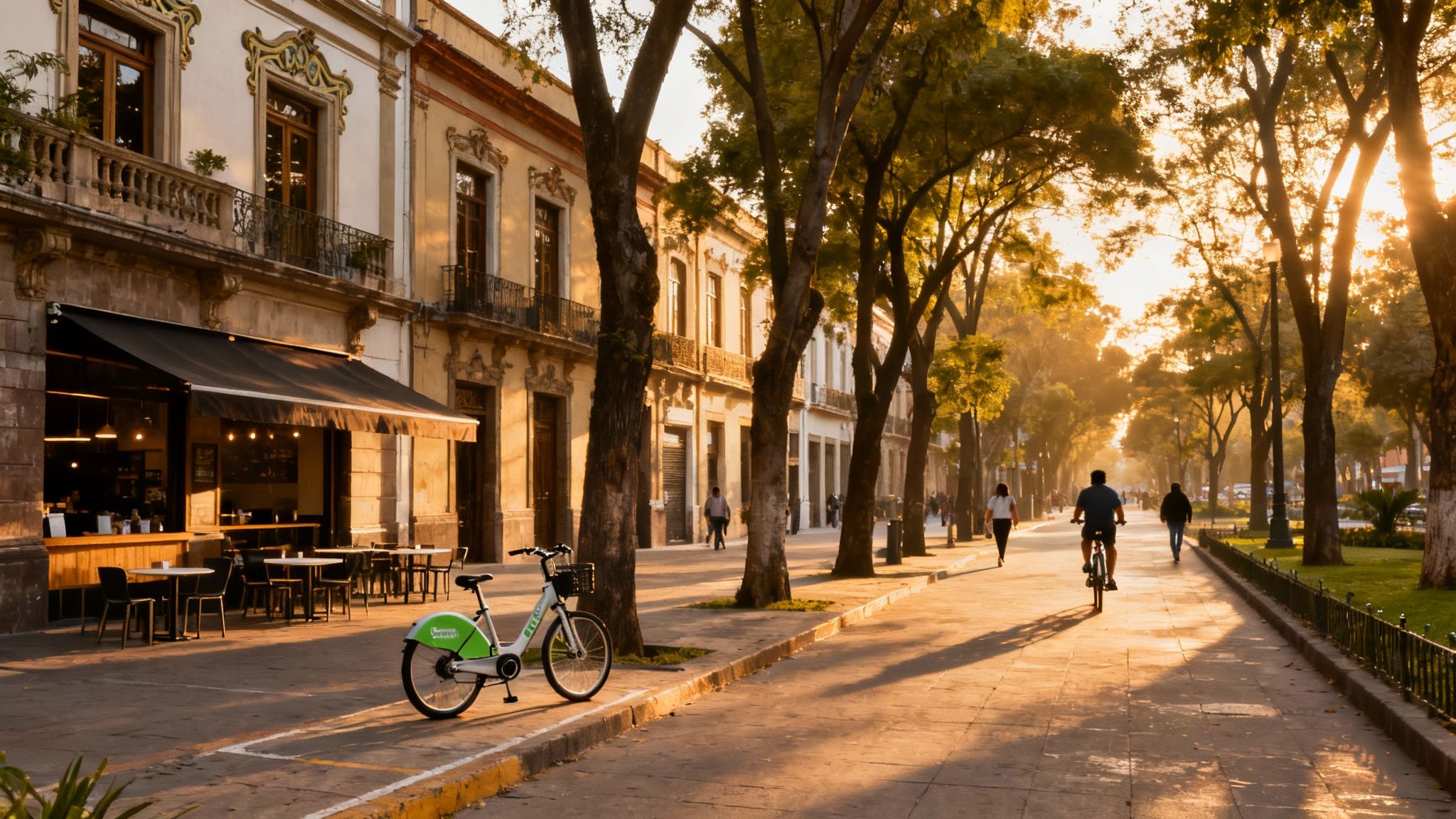
The city’s temperate, spring-like climate means you can pack light, avoiding bulky winter clothes and fitting everything into a well-organized carry on backpack. You’ll find a vibrant urban energy balanced with green living, from countless parks to a thriving plant-based food scene. This unique blend makes CDMX an ideal hub for eco-conscious travelers. Explore more urban destinations that prioritize sustainability by checking out these other top eco-cities perfect for digital nomads.
Why It’s a Top Sustainable Base
Basing yourself in CDMX allows you to drastically cut daily emissions. Using the metro system, for instance, reduces transport emissions by over 90% compared to ride-sharing services. Walkable neighborhoods like Roma Norte and Coyoacán offer pedestrian-friendly artistic communities with low daily costs. A one-month stay in a shared apartment in Roma Norte can cost around $325–$540 USD (€300–€500), making it an affordable and sustainable choice.
Actionable Tips for a Low-Impact Stay:
- Establish Your Base: Settle in Roma Norte or Condesa for unmatched walkability and abundant nomad-friendly cafes and co-working spaces.
- Embrace Car-Free Transit: Purchase a monthly metro card for roughly 100 MXN (about $5.50 USD) for unlimited city travel. Use the Ecobici bike-share system for shorter trips.
- Shop Sustainably: Visit local organic markets like Mercado de Medellín or Mercado Orgánico de Coyoacán for fresh, zero-waste groceries.
- Extend Your Stay: Plan for at least a two to four-week stay to justify the carbon footprint of a long-haul flight. Use the city’s bus terminals for low-impact regional trips.
2. Oaxaca City: The Ultimate Slow-Travel Cultural Hub
Oaxaca City, a UNESCO-listed colonial gem, is one of the most enriching Mexico tourism spots for an immersive, low-impact base. Its car-free historic center and deep-rooted indigenous culture make it a quintessential slow-travel destination. The city’s design encourages a pedestrian-first lifestyle, allowing digital nomads to connect with its artistic soul without needing a vehicle, fostering a sustainable, community-focused stay.

The city’s vibrant cultural rhythm is perfectly suited for long-term stays, where you can justify your travel emissions by truly settling in. With an affordable cost of living and a focus on local artisanship and cuisine, Oaxaca provides a rich, grounded experience. You can easily manage your life here with just a dependable carry on luggage, as the mild climate and walkable layout require minimal gear.
Why It’s a Top Sustainable Base
Basing yourself in Oaxaca City significantly reduces your daily footprint. The entire historic center is walkable, and affordable regional buses offer low-carbon connections to nearby craft villages and major cities. A one-month stay in a furnished shared apartment can cost as little as $215–$325 USD (€200–€300), making it an economically and environmentally sound choice. Opting for a six-hour ADO bus to Mexico City, for example, produces just 0.18 pounds (0.08 kg) of CO₂ per person.
Actionable Tips for a Low-Impact Stay:
- Establish Your Base: Stay near the Zócalo or in the artisan neighborhood of Jalatlaco for maximum walkability and access to cafes.
- Embrace Car-Free Transit: Use regional buses (ADO, AU) to connect to Puebla, Huatulco, or Mexico City. Rent a bicycle for day trips to nearby villages.
- Shop Sustainably: Visit Mercado Benito Juárez for organic, local produce and zero-waste options, and use a packable daypack for your groceries.
- Extend Your Stay: Plan for a one to three-month stay to immerse yourself in local culture, take Spanish or cooking classes, and support the community.
3. Playa del Carmen & Caribbean Coast: Reef-Conscious Exploration
The Caribbean Coast, with Playa del Carmen as its bustling hub, is one of the most famous Mexico tourism spots, offering a gateway to the Mesoamerican Reef. While known for its vibrant energy, the region provides a unique base for low-impact marine exploration and cenote adventures. Its semi-walkable layout, particularly the pedestrianized Quinta Avenida, combined with an efficient network of regional colectivos (shared vans), allows travelers to access natural wonders without a rental car.

This coastal corridor is ideal for digital nomads who want to balance work with world-class diving and snorkeling. By choosing eco-lodges and mindful tour operators, you can directly support conservation efforts. Packing essentials like a collapsible water bottle and reef-safe sunscreen helps minimize your plastic waste and protect fragile coral ecosystems. A well-planned stay here combines beach life with a deep respect for the region’s incredible biodiversity.
Why It’s a Top Sustainable Base
This region makes our list of top Mexico tourism spots because it empowers travelers to make low-impact choices. Opting for a local colectivo over a private taxi for a cenote day trip can reduce your carbon footprint significantly, with rides costing just $0.50–$2.00 USD (€0.45–€1.85). Furthermore, staying in an eco-lodge in Tulum with renewable energy and waste management systems can cost between $43–$86 USD (€40–€80) per night, offering a regenerative alternative to large resorts.
Actionable Tips for a Low-Impact Stay:
- Establish Your Base: For a quieter, more eco-conscious atmosphere, consider basing yourself in Tulum, just an hour south of Playa del Carmen.
- Embrace Car-Free Transit: Use the extensive network of colectivos for regional travel between towns, cenotes, and beaches. They are affordable and efficient.
- Shop Sustainably: Pack reef-safe sunscreen (zinc oxide, non-nano) to protect the delicate Mesoamerican Reef during any water activities.
- Visit Mindfully: Choose small-group tour operators (8–10 people max) for cenote and snorkeling trips to minimize your environmental impact and support local businesses. Visit during the shoulder seasons (April–May, September–November) to avoid over-tourism.
4. Cozumel & Mesoamerican Reef: A Hub for Mexico Tourism Spots
As a premier diving destination, Cozumel stands out among Mexico tourism spots for its commitment to marine conservation. Situated within the Mesoamerican Reef System, the second-largest barrier reef in the world, the island offers a unique opportunity for travelers to engage directly with vital ecosystems. Accessible via a low-impact ferry from Playa del Carmen, it serves as a fantastic base for underwater exploration while supporting local conservation efforts.

The island’s economy is deeply connected to the health of its coral, making sustainable tourism a priority. This focus allows visitors to enjoy world-class snorkeling and diving in a responsible way. To protect this fragile environment, it is essential to use only reef safe sunscreen, as common chemical sunscreens contain ingredients that cause coral bleaching. For more information, you can explore this detailed guide to choosing reef-safe sunscreens.
Why It’s a Top Sustainable Base
Cozumel provides a clear model for regenerative tourism where your visit directly contributes to marine preservation. Choosing certified eco-operators ensures your money supports reef monitoring and educational programs. Opting for the ferry and shared transport significantly cuts your carbon footprint compared to private charters or regional flights. A stay in a locally-owned guesthouse or small eco-hotel further ensures that your tourism dollars benefit the community directly, with nightly rates often ranging from $50–$90 USD.
Actionable Tips for a Low-Impact Stay:
- Choose Eco-Certified Operators: Select dive and snorkel companies with recognized certifications (e.g., PADI AWARE) that actively participate in reef conservation.
- Travel by Ferry: Take the frequent ferry from Playa del Carmen. It is a cost-effective and low-emission way to reach the island.
- Protect the Reef: Never touch or stand on coral. Use only mineral-based, non-nano zinc oxide sunscreen to prevent chemical damage.
- Support Local Conservation: Visit the Cozumel Parks and Museums Foundation (FPMCQ) to learn about local conservation projects and contribute to their efforts.
5. Chichén Itzá Archaeological Site
Chichén Itzá, one of the New Seven Wonders of the World, is a monumental Mayan city that stands as one of the most iconic Mexico tourism spots. Instead of a quick day trip, eco-conscious nomads can approach this site as the centerpiece of a multi-day, low-impact journey through the Yucatán Peninsula. By using regional buses and staying in nearby towns like Valladolid, you can create a thoughtful itinerary that minimizes your carbon footprint while maximizing cultural immersion.
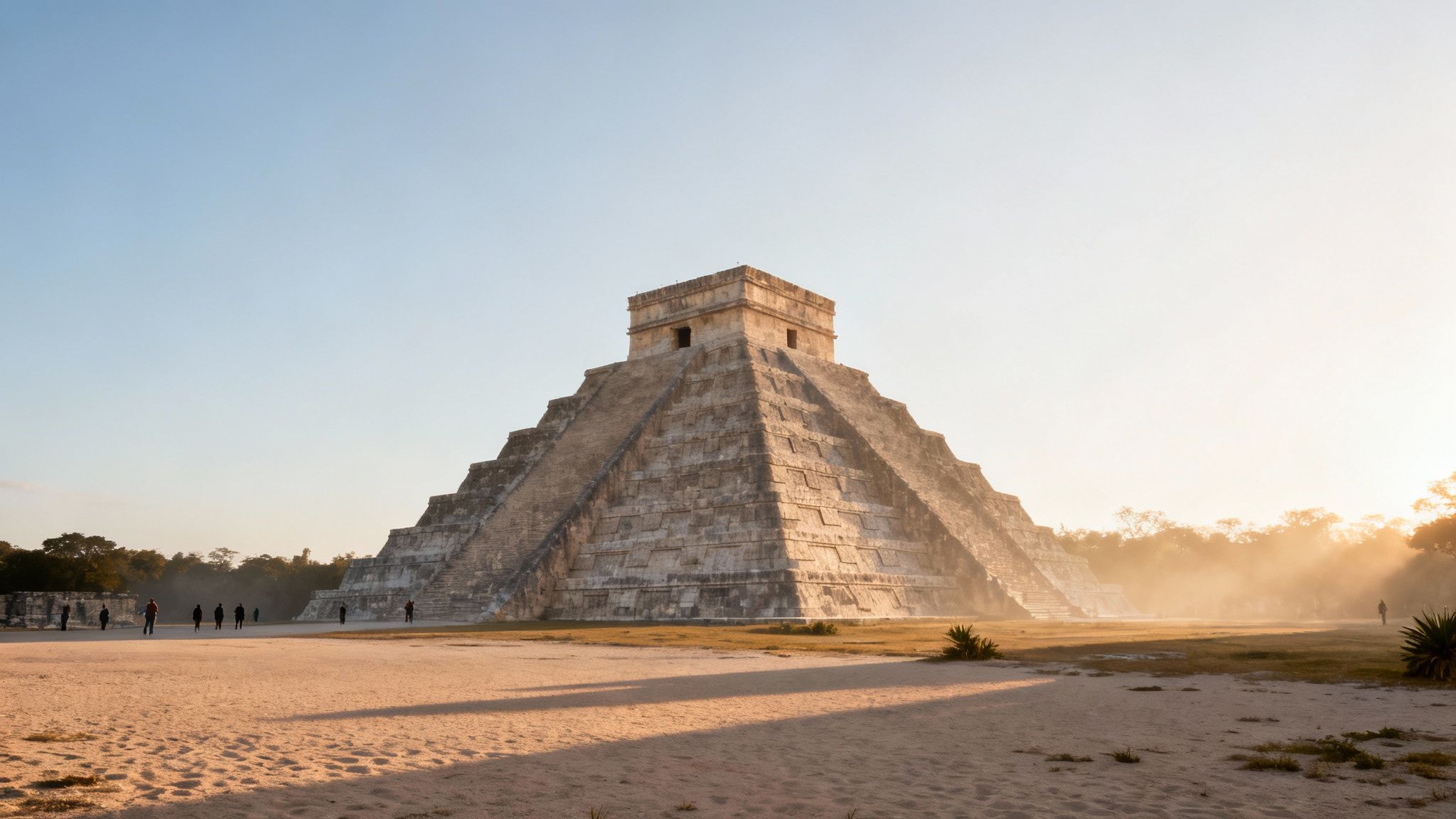
This approach transforms a tourist hotspot into a meaningful exploration of Mayan history and local life. Combining your visit with cenotes and colonial towns via public transport allows you to support local economies more directly. Exploring these kinds of community-focused travel routes deepens your connection to the region; you can learn more about similar community-based ecotourism in Latin America and how it benefits local people and environments.
Why It’s a Top Sustainable Base
A multi-day itinerary centered around Chichén Itzá drastically lowers your environmental impact. Taking a regional bus from Cancún (a 2.5-hour trip) costs just $5–9 USD (€5–8) and produces only 0.26 pounds (0.12 kg) of CO₂, compared to 1.76 pounds (0.8 kg) for a rental car. Extending your trip to include Valladolid and nearby cenotes via buses keeps total transport costs around $16–$27 USD (€15–€25), making sustainable travel affordable.
Actionable Tips for a Low-Impact Stay:
- Establish Your Base: Stay in Valladolid, a charming colonial town just 30 minutes away, for authentic and affordable accommodations.
- Embrace Car-Free Transit: Use the ADO bus network for comfortable, low-emission travel between Cancún, Valladolid, and Chichén Itzá.
- Time Your Visit: Arrive before 10 AM to avoid the large tour groups and midday heat. The shoulder seasons (April–May, September–November) offer fewer crowds.
- Combine and Conquer: Pair your visit with a swim at the nearby Cenote Ik Kil, 3 miles (5 km) away, for a perfect blend of archaeology and nature.
- Pack Smart: Bring an RFID blocking wallet to keep your cards safe, plenty of reef safe sunscreen, and sturdy walking shoes for the expansive grounds.
6. Valladolid (Yucatán): The Car-Free Colonial Hub
Valladolid stands out as one of the most charming Mexico tourism spots for its relaxed pace and car-free lifestyle. This colonial gem in the Yucatán is an ideal, affordable base for digital nomads looking to explore the region sustainably. Its highly walkable historic center means you can easily live without a vehicle, relying instead on bicycles and regional buses to visit ancient ruins and swim in pristine cenotes. This low-impact approach allows for a deeper connection to the local culture and environment.

The town’s compact design is perfect for minimalist travelers. You can fit everything you need into an anti theft backpack and settle in for a few weeks, enjoying the slow rhythm of Yucatecan life. Valladolid’s location makes it a strategic hub for overland travel, connecting you to major sites like Chichén Itzá while offering a peaceful retreat from the coastal crowds. It embodies a slower, more intentional form of travel.
Why It’s a Top Sustainable Base
Basing yourself in Valladolid significantly reduces your carbon footprint. A regional bus trip to Cancún (1.5 hours) produces just 0.22 lbs (0.1 kg) of CO₂ per person. The town is built for human-powered transport, and its central market supports a zero-waste lifestyle. A furnished apartment in the town center can cost as little as $195–$305 USD (€180–€280) per month, making it an incredibly budget-friendly and sustainable choice.
Actionable Tips for a Low-Impact Stay:
- Establish Your Base: Choose a guesthouse or apartment near the central square for ultimate walkability. Many are run by eco-conscious local families.
- Embrace Car-Free Transit: Rent a bicycle for just a few dollars a day to explore the town and nearby cenotes like Zací. Use colectivos (shared vans) for affordable day trips.
- Shop Sustainably: Buy fresh, package-free produce and local goods at the Mercado Municipal. Carry a reusable water bottle to refill and avoid plastic waste.
- Extend Your Stay: Plan for two to four weeks to justify your travel footprint, immerse yourself in the local culture, and explore the region’s wonders at a relaxed pace.
7. Copper Canyon (Barranca del Cobre): Regenerative Rail Travel
The Copper Canyon, a network of six interconnected canyons deeper than the Grand Canyon, offers one of the most profound Mexico tourism spots for regenerative, slow travel. This dramatic landscape is best explored via the El Chepe Express train, a low-impact journey connecting remote mountain towns and indigenous Rarámuri (Tarahumara) communities. The focus here is on multi-day, community-centric experiences rather than quick sightseeing, allowing you to immerse yourself in the region’s natural beauty and living cultures.

This destination is ideal for eco-conscious travelers who prioritize overland routes and cultural exchange. By choosing to stay in family-run lodges and hiring indigenous guides, your tourism dollars directly support local economies. The trip requires careful planning and packing; a durable packable daypack is essential for daily hikes, and you’ll need layers to handle the significant temperature swings between sun and shade.
Why It’s a Top Sustainable Base
Basing yourself for a few days in towns like Divisadero or Creel minimizes your travel footprint while maximizing cultural immersion. Unlike fly-in, fly-out destinations, the Copper Canyon encourages slow, overland travel that builds a deeper connection to the place. A stay in a mountain lodge, often costing around $43–$76 USD (€40–€70) per night, frequently includes meals and guided activities, simplifying your budget and reducing consumption.
Actionable Tips for a Low-Impact Stay:
- Establish Your Base: Stay at Divisadero for 2–3 nights to access the best hiking trails and viewpoints. It’s the perfect hub for exploring the canyon rim and visiting nearby Rarámuri villages.
- Support Indigenous Guides: Hire local Rarámuri guides for village tours and treks. This ensures your visit is respectful and that income flows directly to the community.
- Travel Off-Peak: Plan your trip for April–May or September–October. You’ll find pleasant weather for hiking and fewer crowds, reducing strain on local resources.
- Engage with Homestays: Opt for family-run lodges and homestays over larger hotels. This provides a richer cultural exchange and supports the local economy more effectively.
8. El Chepe Railway: Sustainable Journey Between Mexico Tourism Spots
El Chepe offers a remarkable overland alternative to domestic flights, solidifying its place among the essential Mexico tourism spots for slow travelers. This scenic railway connects Los Mochis on the Pacific coast with the northern city of Chihuahua, traversing the breathtaking Copper Canyon region. Opting for this train-first journey allows you to experience one of North America’s most dramatic landscapes while embracing a low-impact travel philosophy. The trip itself becomes the destination, a far cry from the hurried pace of air travel.

The journey is a testament to sustainable exploration, emitting just 0.18 pounds (0.08 kg) of CO₂ for the full 16-hour trip, a massive reduction compared to flying. It’s an ideal way to see a less-traveled part of Mexico, encouraging longer stays in remote communities along the route. For those committed to flight-free travel, El Chepe is a cornerstone experience. You can explore more overland routes like this in these inspiring flight-free travel itineraries.
Why It’s a Top Sustainable Route
Choosing El Chepe directly supports a more sustainable form of tourism that benefits remote communities within the Copper Canyon. A 16-hour Primera Express journey costs around $130 USD (€120), while shorter coach legs can be as low as $33–$54 USD (€30–€50). By traveling this way, you minimize your carbon footprint and distribute your tourism spending more evenly across the region, moving beyond the typical hotspots.
Actionable Tips for a Low-Impact Journey:
- Book in Advance: Reserve your El Chepe tickets 4–6 weeks ahead, especially for the Primera Express sleeper service, as departures are limited.
- Combine with Local Transit: Use the train for major legs and hop off to explore smaller villages like Creel or Divisadero using local colectivos and buses.
- Pack for the Ride: A portable power bank is essential for the long journey, and a quick dry travel towel comes in handy for multi-day stopovers.
- Verify Timetables: Always check the official El Chepe website for the most current schedules, as they can change seasonally.
9. Guanajuato (Colonial Silver City)
Guanajuato, a UNESCO World Heritage site, is one of the most unique Mexico tourism spots for an extended cultural stay. This former silver mining city is defined by its vibrant colonial architecture, winding subterranean streets, and a largely car-free historic center. Its pedestrian-first design makes it an excellent base for eco-conscious nomads looking to immerse themselves in a rich artistic environment for two to four weeks, minimizing their daily transport footprint.

The city’s compact and hilly layout encourages a slow, mindful pace of life. Days are best spent exploring its labyrinthine alleyways, enjoying the lively atmosphere of its plazas, and participating in its robust festival calendar. With everything packed neatly into packing cubes, you can easily settle in and live like a local. Guanajuato’s focus on arts and walkability provides a refreshing alternative to larger, more hectic destinations.
Why It’s a Top Sustainable Base
Basing yourself in Guanajuato means embracing a low-impact, pedestrian lifestyle. The historic center is almost entirely walkable, eliminating the need for daily vehicle use and its associated emissions. A furnished apartment in the city center can be found for just $270–$430 USD (€250–€400) per month, offering an incredibly affordable, sustainable living option. Regional bus connections are also highly efficient; a trip from Mexico City, for example, costs only $11–$16 USD (€10–€15) and produces a minimal 0.26 pounds (0.12 kg) of CO₂ per person.
Actionable Tips for a Low-Impact Stay:
- Establish Your Base: Stay near Jardín de la Unión to be at the heart of the city’s social and cultural activity, with everything just a short walk away.
- Connect and Work: Join a local co-working space like La Junta or Espacio Cowork for reliable internet and opportunities to network with other digital nomads.
- Shop Sustainably: Source fresh, local produce and reduce packaging waste by shopping at the historic Mercado Hidalgo.
- Explore Regionally: Use Guanajuato as a hub for low-carbon day trips. Take a one-hour colectivo to the contrasting colonial town of San Miguel de Allende or a 1.5-hour bus to Querétaro.
10. Cenotes (Yucatán Peninsula Natural Wonders)
The Yucatán Peninsula’s cenotes are natural freshwater sinkholes that offer a profound connection to the region’s ecology and Mayan heritage. These underground river systems are quintessential Mexico tourism spots for low-impact adventure, providing opportunities for swimming, snorkeling, and cave exploration that stand in sustainable contrast to crowded coastal resorts. Visiting these natural wonders supports a more distributed tourism model, directly benefiting local and indigenous communities away from the main tourist hubs.
Exploring these unique geological formations allows for a deeper appreciation of the delicate ecosystems that sustain the region. Unlike large-scale resort activities, a day spent at a cenote has a minimal environmental footprint, especially when you follow respectful practices. Many are managed by local Mayan families, offering an authentic cultural exchange. The experience is about immersion in nature, not just consumption, making it an ideal activity for the conscious traveler.
Why They Are a Top Low-Impact Activity
Cenote tourism redirects visitor spending to smaller, often rural communities, fostering local economic resilience. A day visiting multiple cenotes near Valladolid, like Zací, Dzitup, and Samulá, can cost less than $6.50 USD (about €6), demonstrating that sustainable travel can also be incredibly affordable. By choosing smaller, community-run cenotes over commercial mega-parks, you directly support conservation and cultural preservation efforts.
Actionable Tips for a Sustainable Cenote Visit:
- Choose Local Operators: Opt for small-group tours (8–10 people max) led by local indigenous guides who provide valuable cultural and ecological context.
- Travel Responsibly: Use colectivos (shared vans) to travel between cenotes, significantly reducing your transport emissions compared to private taxis.
- Protect the Water: Use only biodegradable soap and reef safe sunscreen (non-nano zinc oxide). Shower before entering to remove lotions and oils that harm the fragile ecosystem.
- Pack Accordingly: Bring your own snorkel gear and toiletry bottles reusable to minimize waste from single-use rentals and packaging.
- Respect Sacred Sites: Adhere to all posted rules. Some cenotes are sacred and may limit access to preserve indigenous cultural practices.
11. Popular Cenotes (Recommended Sites and Practical Notes)
The Yucatán Peninsula is famous for its cenotes, natural freshwater sinkholes that are essential to the region’s ecosystem and culture. These stunning swimming holes are among the most unique Mexico tourism spots, offering a refreshing and low-impact way to connect with nature. Visiting them responsibly is key, as they are fragile environments and considered sacred gateways to the underworld by the Mayan people. Their preservation depends on mindful tourism practices.
Many cenotes are accessible via public transport or bicycle, making them a perfect day trip for eco-conscious travelers. By choosing smaller, community-run cenotes over large, commercialized parks, you directly support local economies. Always use reef safe sunscreen (or better yet, none at all) and rinse off before entering to protect the delicate water quality. Remember to pack a quick dry travel towel for convenience after your swim.
Why It’s a Top Sustainable Activity
Visiting cenotes offers a profound connection to the natural and cultural heritage of the Yucatán. By choosing local operators and respecting the rules, you contribute to their conservation. A day trip using a colectivo (shared van) to visit Cenote Azul and Cenote Cristalino near Tulum can cost under 400 MXN (about $22 USD), including transport and entrance fees, minimizing both your expenses and carbon footprint.
Actionable Tips for a Low-Impact Visit:
- Choose Local Guides: Opt for small-group tours or hire local guides who prioritize ecological preservation and share authentic cultural knowledge.
- Go Pollutant-Free: Avoid all lotions, insect repellents, and chemical sunscreens before swimming. Shower at the facilities provided on-site.
- Use Shared Transport: Take a colectivo from hubs like Tulum or Playa del Carmen to reach cenotes along the main highway, significantly reducing transport emissions.
- Respect Sacred Sites: Some cenotes are used for ceremonies. Obey all posted rules, never touch fragile rock formations, and maintain a quiet, respectful presence.
12. Tulum Archaeological Site & Eco-Lodges
Tulum offers a unique blend of ancient history and modern regenerative tourism, making it one of the most compelling Mexico tourism spots for eco-conscious travelers. Perched on dramatic cliffs overlooking the Caribbean Sea, the late-Mayan ruins provide a stunning historical backdrop. The area is also a hub for a growing number of eco-lodges and zero-waste accommodations that prioritize renewable energy, rainwater harvesting, and composting systems, allowing for a low-impact beach stay.
This destination is ideal for travelers who want to combine cultural exploration with a commitment to sustainable lodging. The pedestrian-friendly town center allows you to navigate easily without a car, and its proximity to cenotes and other towns like Playa del Carmen makes it a great base for regional, low-carbon exploration. By choosing certified accommodations, you can directly support businesses that are actively working to preserve the region’s delicate ecosystem. Explore more options for sustainable stays by reading about top-rated eco-friendly lodging.
Why It’s a Top Sustainable Base
Tulum stands out for its concentration of verifiable regenerative travel options. Staying in a Global Sustainable Tourism Council (GSTC) certified eco-lodge ensures your visit supports verified best practices. A night in one can range from $55–$110 USD (€50–€100), a worthy investment in conscious tourism. Getting there is also low-impact; a regional bus from Playa del Carmen takes about an hour, costs just $3–$5 USD (€3–€5), and produces minimal emissions.
Actionable Tips for a Low-Impact Stay:
- Visit Ruins Strategically: Arrive at the archaeological site before 10 AM or after 4 PM to avoid the crowds and the midday heat.
- Stay Central: Book your accommodation in the walkable town center, not the car-dependent hotel zone, to reduce your reliance on taxis.
- Book Certified Lodges: Prioritize eco-lodges with certifications like GSTC to ensure they follow genuine regenerative practices.
- Use Colectivos: Utilize shared colectivo vans for affordable, low-impact day trips to nearby attractions like Cenote Tanque or Akumal Bay.
Comparison of 12 Mexico Tourism Spots
| Destination | Complexity 🔄 (implementation) | Resources ⚡ (cost / logistics) | Expected outcomes ⭐ (quality) | Ideal use cases 💡 | Key advantages 📊 |
|---|---|---|---|---|---|
| Mexico City (CDMX) | Moderate 🔄 — urban navigation, some air-quality planning | Low–Moderate ⚡ — cheap transit, varied accommodation, reliable internet | ⭐⭐⭐⭐ — high cultural density, low-carbon urban mobility | Long-term digital-nomad base, cultural immersion, regional hub | Extensive metro, walkable neighborhoods, strong nomad community |
| Oaxaca City | Low 🔄 — compact, car-free centre, easy slow-travel | Very low ⚡ — cheap living, local buses, co‑working available | ⭐⭐⭐⭐ — authentic culture, low impact slow travel | Slow travel, cultural & artisan immersion, budget nomads | Car-free historic centre, indigenous culture, very affordable |
| Playa del Carmen & Caribbean Coast | Moderate 🔄 — central walkable, outskirts car-dependent | Moderate ⚡ — mid-range costs, colectivos for regionals | ⭐⭐⭐ — strong nature access, seasonal crowds affect quality | Beach-based nomads, diving/snorkel trips, eco-tourism stays | Beach access, co-working, easy cenote/reef trips |
| Cozumel & Mesoamerican Reef | Low–Moderate 🔄 — ferry access, island logistics | Moderate ⚡ — ferry costs, dive operator fees | ⭐⭐⭐ — excellent marine experiences, variable sustainability | Diving/snorkeling focused trips, conservation-aware visitors | World-class reefs, ferry access, eco-focused operators |
| Chichén Itzá Archaeological Site | Moderate 🔄 — day/multi-day bus itineraries, site logistics | Low ⚡ — modest bus fares, higher entrance fee for foreigners | ⭐⭐⭐ — iconic archaeological value, seasonal crowding | Archaeological visits combined with cenotes/colonial towns | UNESCO site, easy regional-bus combos, conservation funding |
| Valladolid (Yucatán) | Low 🔄 — small, highly walkable town | Very low ⚡ — cheap accommodation, colectivos to sites | ⭐⭐⭐ — quiet regional hub for cenote/Chichén trips | Base for Chichén Itzá/cenotes, budget cultural stays | Walkable colonial centre, strategic location, low cost |
| Copper Canyon (Barranca del Cobre) | High 🔄 — limited schedules, advance planning required | Moderate ⚡ — train-first or mixed transport; lodge costs variable | ⭐⭐⭐⭐ — immersive landscape, strong community benefits | Slow-travel hiking, indigenous cultural exchange, eco-stays | Dramatic scenery, train/low-carbon access, community-led tourism |
| El Chepe Railway (Los Mochis → Chihuahua) | High 🔄 — infrequent departures, booking lead time | Moderate–High ⚡ — coach to sleeper fares; sleeper pricier | ⭐⭐⭐⭐ — scenic, low-carbon rail journey | Scenic train travel, slow itineraries, mountain access | Low per-person CO₂, overnight comfort, supports mountain towns |
| Guanajuato (Colonial Silver City) | Low 🔄 — compact historic centre, pedestrian tunnels | Low ⚡ — affordable living, regional bus links | ⭐⭐⭐⭐ — rich arts/cultural calendar, photogenic setting | 2–4 week cultural stays, festivals, creative residencies | Car-free centre, strong festival scene, nomad-friendly cafes |
| Cenotes (Yucatán natural wonders) | Low 🔄 — accesible by colectivos, some cave-entry logistics | Very low ⚡ — entry fees low; transport cheap by colectivo | ⭐⭐⭐ — high natural value, fragile ecosystems require care | Day trips, snorkeling, low-impact nature experiences | Unique freshwater systems, easy regional access, low cost |
| Popular Cenotes (recommended list) | Low 🔄 — site-specific access varies, combine trips | Very low ⚡ — minimal entry & short colectivo rides | ⭐⭐⭐ — varied experiences (open, cave, eco-parks) | Multi-cenote days, cultural guides, small-group tours | Curated sites for varied abilities, town-centre options |
| Tulum (Archaeological Site & Eco-Lodges) | Moderate 🔄 — walkable centre but suburban sprawl | Moderate–High ⚡ — higher living costs, eco-lodge premiums | ⭐⭐⭐ — strong nature+ruins mix but overtourism risk | Eco-lodge stays, beach+archaeology combos, regenerative lodging | Clifftop ruins, concentrated eco-lodges, strong regenerative options |
Low-Impact Travel Tools (Worth It)
Also, if you’re planning a trip and want to keep things simple, these tools help you travel smoother while staying mindful about impact.
Get an eSIM for reliable data → Disclosure: Partner link. No extra cost to you.
Pre-book a transfer for easy arrivals → Disclosure: Partner link. No extra cost to you.
Frequently Asked Questions (FAQ)
What are the best Mexico tourism spots for a first-time visitor?
For a first-time visitor looking for a mix of culture, history, and ease of travel, Mexico City (CDMX) and Oaxaca City are excellent starting points. CDMX offers incredible museums, food, and walkability, while Oaxaca provides a deep dive into indigenous culture and colonial architecture. Both are well-connected by bus for further exploration.
How can I travel sustainably in Mexico?
Focus on overland travel using the extensive ADO bus network, choose locally-owned eco-lodges or guesthouses, and support local markets and artisans. Also, pack essentials like a reusable water bottle, a solid shampoo bar, and reef-safe sunscreen to minimize your environmental footprint. Staying longer in one base city also significantly reduces your travel emissions.
Is it safe to travel solo in Mexico?
Yes, solo travel in Mexico can be very safe, especially in popular tourist areas and cities like Oaxaca, Guanajuato, and Valladolid. As with any destination, it is important to stay aware of your surroundings, avoid walking alone late at night in unfamiliar areas, and keep your valuables secure with an RFID blocking wallet.
What is the best time of year to visit Mexico?
The shoulder seasons—April to May and October to November—are often ideal. You will typically find pleasant weather, fewer crowds, and lower prices compared to the peak season (December to March). However, Mexico is a large country with diverse climates, so the best time can vary by region.
How much should I budget for a trip to Mexico?
Mexico can be very affordable. A budget traveler can manage on $30-$50 USD per day by staying in hostels, eating at local markets, and using public transport. A mid-range budget of $60-$100 USD per day allows for private rooms, restaurant meals, and guided tours. Costs are generally higher in popular coastal destinations like Tulum and Cancún.
Do I need to speak Spanish to travel in Mexico?
While you can get by with English in major tourist hubs, learning basic Spanish phrases will greatly enhance your experience. It shows respect for the local culture and will help you navigate markets, order food, and connect with people on a deeper level. A simple “hola,” “gracias,” and “por favor” goes a long way.
What are cenotes and how do I visit them responsibly?
Cenotes are natural freshwater sinkholes found in the Yucatán Peninsula. To visit responsibly, never wear chemical sunscreen, lotions, or insect repellent in the water, as these pollutants harm the fragile ecosystem. Shower before entering, choose smaller community-run cenotes, and never touch the rock formations.
What are some essential items to pack for Mexico?
Beyond clothes, pack a reusable water bottle, reef-safe sunscreen, a quick-dry travel towel, and a portable power bank. A universal travel adapter is also a good idea. For safety and convenience, consider an anti-theft backpack and a portable door lock for extra peace of mind in various accommodations.
Planning Your Sustainable Trip to Mexico
Choosing the right Mexico tourism spots is about more than just ticking off a list of places. It’s about embracing a mindset of slower, more intentional travel that benefits both you and the destinations you visit. This guide has journeyed from the vibrant, walkable neighborhoods of Mexico City to the breathtaking expanse of the Copper Canyon, showcasing how you can build a deeply enriching itinerary while treading lightly on the planet. By prioritizing overland transport, supporting locally-owned eco-lodges, and engaging with communities respectfully, your travel becomes a regenerative act.
The core principle is simple: your choices matter. Opting for a regional ADO bus over a short-haul flight significantly cuts your carbon footprint. Basing yourself in a cultural hub like Oaxaca or Guanajuato for an extended stay allows you to contribute meaningfully to the local economy, rather than just passing through. Similarly, packing smart with essentials like a universal travel adapter and biodegradable soap eliminates waste and protects fragile ecosystems, from the cenotes of Yucatán to the coral reefs of Cozumel.
Ultimately, a sustainable journey through Mexico is about connection. It’s about connecting with the ancient history at Chichén Itzá, the living cultures in Chiapas, and the pristine nature along the Pacific coast. It’s a travel style that values depth over distance, experiences over acquisitions. By mastering these approaches, you not only enjoy a more authentic and rewarding adventure but also actively participate in preserving the incredible biodiversity and cultural heritage that make Mexico so unique. This article was fact-checked using sustainability data from the World Green Building Council, the Global Ecotourism Network, and peer-reviewed architecture studies. All partner links are vetted for compliance with sustainable business certifications.
Key Takeaways
- Choose a Walkable Base: Prioritize cities like Oaxaca, Mérida, or Guanajuato for long stays to minimize daily transport needs and support local economies more deeply.
- Embrace Overland Transport: Utilize Mexico’s excellent ADO bus network and iconic train routes like El Chepe to significantly reduce your carbon emissions compared to flying.
- Support Regenerative Stays: Seek out eco-lodges, community-run cabañas, and locally-owned guesthouses that actively invest in conservation and social well-being.
- Pack for a Low Impact: Include items like a reef safe sunscreen, solid shampoo bar, and laundry detergent sheets to avoid single-use plastics and protect fragile ecosystems.
- Travel Seasonally: Visiting during the shoulder seasons (e.g., April-May, October-November) often means fewer crowds, less strain on infrastructure, and better prices.
- Engage Respectfully: Learn basic Spanish phrases, respect local customs, and always ask for permission before photographing people. This fosters positive cultural exchange.
Editor’s Pick: The El Chepe Express Journey
For a truly unique and low-impact travel experience, the El Chepe Express journey through the Copper Canyon is unparalleled. It’s more than just transport; it’s a destination in itself. The train offers a front-row seat to one of the world’s most spectacular landscapes, connecting remote communities and providing a sustainable alternative to exploring this rugged region. Opting for a multi-day ticket allows you to stop at key points like Creel and Divisadero, supporting Tarahumara artisans and local tourism initiatives along the way. It’s the perfect embodiment of slow, mindful travel.
Ready to plan your own sustainable journey? For more in-depth guides on low-impact travel, rail-first itineraries, and walkable base cities, explore the resources at Eco Nomad Travel. We provide the tools and insights you need to explore incredible Mexico tourism spots responsibly.
Join the Sustainable Work Movement
Want more rail-first itineraries, low-impact packing systems, and walkable base-city ideas?
