

Creating the perfect minimalist travel capsule wardrobe is simpler than you think. It’s a small, carefully chosen collection of around 15-25 versatile pieces that mix and match to create an surprising number of outfits. This isn’t just about packing light; it’s a completely different way of thinking about how you travel.
By getting intentional with your clothes, you can cut your luggage weight by up to 50%. Suddenly, navigating cobblestone streets, hopping on a train, or squeezing into a packed carriage becomes effortless instead of a workout. It’s all about choosing quality over quantity so you can move with freedom.
Switching to a minimalist travel capsule is less of a packing hack and more of a mindset shift. You stop wrestling with an overstuffed suitcase and start moving with a sense of ease and freedom. This is a game-changer for slow travelers, especially those of us who prefer rail-first itineraries and walkable cities where spontaneity is part of the adventure.
This approach is also a direct response to the wasteful cycle of fast fashion. When you focus on a few high-quality, durable pieces, you’re investing in clothing that’s built to last. This not only saves money in the long run but shrinks your environmental footprint, aligning perfectly with a more conscious way of seeing the world.
And it’s not just a niche idea anymore. The capsule wardrobe market is booming, growing from USD 1.3 billion in 2023 to a projected USD 2.6 billion by 2030. That incredible growth is fueled by travelers who are tired of being weighed down by their stuff and are choosing a lighter, more intentional path.
Why a Capsule Wardrobe Transforms Your Travels
The upsides go way beyond just carrying less. A well-planned minimalist travel capsule wardrobe brings practical benefits that make your entire trip better.
- Cuts Down on Decision Fatigue: With fewer, more versatile options, you spend less time staring into your bag wondering what to wear and more time actually enjoying your destination.
- Saves Time and Money: No more last-minute shopping for a forgotten item. Instead, you invest in quality pieces that will join you on trips for years to come.
- Promotes Sustainable Travel: Buying less and choosing durable clothing actively reduces textile waste and your overall impact. This is a core idea in building a complete zero-waste packing list.
Ultimately, this method frees you from the burden of things. It lets you focus on the experiences, the connections, and the moments that make travel so meaningful. Instead of worrying about your luggage, you can be fully present, ready for whatever the journey brings.
This guide will walk you through the practical steps to build your own functional, stylish, and incredibly freeing travel wardrobe.
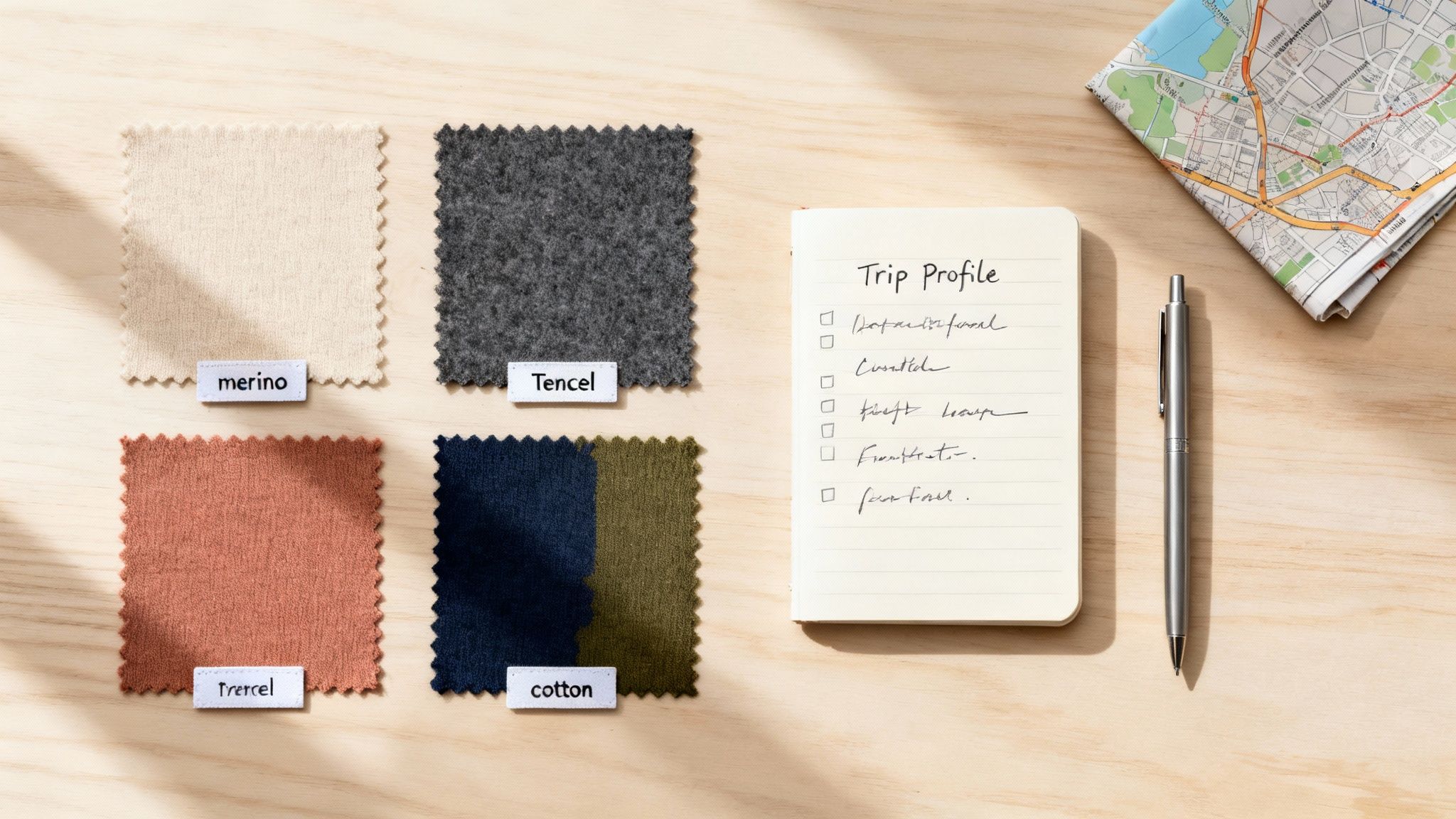
Laying the Foundation for Your Minimalist Travel Capsule Wardrobe
A truly functional minimalist travel wardrobe doesn’t just happen when you throw your favorite clothes into a bag. It’s built, piece by piece, long before you even think about packing. This early planning phase is where the magic lies—it’s less about picking clothes and more about designing a small, cohesive system that works perfectly for your specific trip.
It all starts with profiling your journey. Before you even look in your closet, take a moment to really think about where you’re going and what you’ll be doing. A 10-day rail trip through European capitals in May demands a very different wardrobe than a month spent in a walkable Southeast Asian city during monsoon season.
Your planned activities are just as important. Will you be hiking rugged trails, sitting in business meetings, or mostly exploring city streets on foot? The answers become the blueprint for every clothing choice you make. After planning your itinerary, you can easily book your flights through a platform like Aviasales and arrange your airport transfer with a service such as Welcome Pickups to start your trip smoothly.
Crafting a Versatile Color Palette
With a clear picture of your trip, the next step—and arguably the most critical—is defining your color palette. Get this right, and you’ll find that nearly every top works with every bottom, unlocking dozens of outfits from just a handful of items.
The most effective strategy is to build your wardrobe around a core of 3 to 4 neutral colors. Think of these as the reliable workhorses of your capsule. Good options include:
- Black
- Navy
- Grey
- Cream or White
- Khaki or Tan
Once your neutral base is set, you can bring in 1 to 2 accent colors. These are the pieces that add personality and keep your outfits from feeling repetitive. It could be a rust-colored sweater, an olive green top, or a patterned scarf. This simple formula is the key to a wardrobe that’s both endlessly practical and genuinely stylish.
This simple flow—curate, pack light, travel free—shows how intentional upfront planning leads directly to a smoother, more enjoyable experience on the road.
Selecting Smart and Sustainable Fabrics
The final piece of the foundation is your choice of fabric. The right materials can make a massive difference in comfort, durability, and how much time you spend doing laundry. For a minimalist travel wardrobe, you want to prioritize fabrics that are lightweight, wrinkle-resistant, and quick-drying.
Merino wool is a traveler’s best friend. It’s a natural temperature regulator, keeping you warm when it’s cold and cool when it’s hot. Better yet, its antimicrobial properties mean you can wear it multiple times between washes without any issues.
Sustainable options like Tencel (lyocell) are also fantastic. Known for its soft feel, beautiful drape, and wrinkle resistance, it’s also produced in a closed-loop process, making it a much better choice for the planet than conventional cotton. Investing in quality fabrics is what makes the carry-on-only lifestyle not just possible, but genuinely comfortable.
Deciding on Your Ideal Item Count
With your trip profile, color palette, and fabric choices locked in, you can finally think about numbers. This isn’t about hitting a magic number but setting a practical guideline. For a 10-day trip across various European climates, a 15-piece capsule is a great target.
This table shows how that might break down for a two-week trip through Europe, mixing city exploration with cooler evenings.
Sample 15-Piece Capsule for a Two-Week European Trip
| Item Category | Specific Item Example | Key Features |
|---|---|---|
| Tops (5) | 2 Merino Wool Tees | Temperature-regulating, odor-resistant |
| 2 Tencel/Linen Blend Shirts | Breathable, stylish, quick-drying | |
| 1 Neutral Long-Sleeve Top | Layering base, versatile | |
| Bottoms (3) | 1 Pair of Dark Travel Trousers | Wrinkle-resistant, comfortable for walking |
| 1 Pair of Versatile Jeans | Durable, can be dressed up or down | |
| 1 Pair of Lightweight Shorts/Skirt | For warmer days or city parks | |
| Layers (3) | 1 Merino Wool Cardigan/Sweater | Warmth without bulk, pairs with everything |
| 1 Packable Rain Jacket | Windproof, waterproof, lightweight | |
| 1 Neutral Blazer or Utility Jacket | Smart layer for evenings or cooler cities | |
| Shoes (3) | 1 Pair of All-Day Sneakers | Comfortable, supportive for walking |
| 1 Pair of Smart Flats/Loafers | For dinners or dressier occasions | |
| 1 Pair of Sandals/Ankle Boots | Climate-dependent, versatile | |
| Accessory (1) | 1 Large Scarf/Pashmina | Adds color, warmth, doubles as a blanket |
This small collection can easily create over 30 different outfits, proving that you don’t need a lot of clothes to have a lot of options.
If you were heading to Southeast Asia for a month, you’d adjust. You might swap a heavy layer for another pair of linen shorts or an extra breathable top. The goal is never to hit an arbitrary number but to build a small, highly functional collection of clothes that supports your specific journey. That’s what allows you to move freely and live fully on the road.
Curating Your Core Travel Pieces
Now that you have your trip profile and color palette locked in, we get to the fun part: picking the actual clothes for your minimalist travel capsule wardrobe. This is where the planning becomes real. Every single piece you select needs to be a workhorse—versatile, comfortable, and good-looking.
Think of this as curating a small collection of your absolute favorite, most reliable items, not just grabbing whatever’s clean. Investing in high-quality staples means they’ll last for years of travel. This mindset directly pushes back against the wasteful cycle of fast fashion. When you choose durable, well-made clothes from conscious brands, you’re voting for a better industry.
And it’s a trend that’s catching on. Capsule wardrobes are now a serious market segment, projected to hit USD 15.7 billion by 2033. This isn’t just a niche idea anymore; it reflects a huge shift in how people travel. We’re building small, high-quality collections—like a great t-shirt, dark jeans, and a classic tote—that create endless combinations for multi-city rail journeys. While fast fashion churns out 92 million tons of textile waste a year, capsule adopters can slash their clothing purchases by up to 70%.
The Ultimate Travel Tops
Your tops are the backbone of your daily outfits, so they absolutely have to be versatile. The goal is a mix of shapes, fabrics, and sleeve lengths to handle different weather and occasions. Most importantly, every top should pair effortlessly with all of your bottoms.
A great starting point looks something like this:
- Neutral T-Shirts: Pack two or three high-quality tees in your base neutrals (think white, black, grey, or navy). Look for materials like organic cotton, Tencel, or a merino wool blend, which are breathable and resist odor. A well-fitting tee is a true travel chameleon.
- A Long-Sleeve Layer: A classic striped long-sleeve shirt or a solid merino wool base layer is perfect for cooler days and layering. You can wear it on its own or pop it under a sweater or jacket when the temperature drops.
- One “Smarter” Option: Include a single blouse or button-down shirt in a fabric like silk, Tencel, or a quality synthetic blend. This is the piece that can dress up a pair of jeans for dinner or be worn casually with shorts.
Versatile and Hardworking Bottoms
When it comes to bottoms, comfort and adaptability are everything. You really only need two or three pairs if you choose them well. You want pieces that can handle a full day of walking but still look sharp enough for an evening out.
A solid trio could be:
- Dark Wash Jeans or Trousers: A pair of well-fitting dark-wash jeans is a travel classic for a reason. As an alternative, technical travel trousers are amazing—they resist wrinkles, have some stretch, and are sometimes even water-resistant.
- Black Tailored Pants: A simple pair of black pants in a wrinkle-resistant fabric might be the most versatile item in your bag. They look great with sneakers for a day of museum hopping and just as good with flats or boots for a more polished setting.
- A Climate-Appropriate Option: Depending on where you’re headed, this could be a pair of tailored shorts, a simple midi skirt, or some lightweight linen trousers.
Editor’s Pick: The Multi-Purpose Travel Jacket
The Patagonia Torrentshell 3L Jacket is a standout investment for any minimalist traveler. It’s so much more than a rain jacket; it’s a lightweight, packable, and seriously effective windproof and waterproof shell. Made with a 100% recycled nylon face fabric and meeting the H2No® Performance Standard, it aligns perfectly with sustainable values. It layers beautifully over a sweater for warmth or can be thrown over a t-shirt in a surprise downpour, making it a true four-season workhorse. Its simple design means it looks just as at home on a mountain trail as it does on a city street. This isn’t a flashy piece of gear, but a practical, reliable layer that you’ll be grateful to have in your bag.
Essential Outerwear and Layers
Outerwear is your shield against the elements, but it shouldn’t add a ton of bulk. Layering is always the smartest strategy for dealing with unpredictable weather.
- A Versatile Sweater: A cashmere or merino wool sweater in a neutral color provides incredible warmth for its weight. It can be worn over a t-shirt or layered under your main jacket.
- A Technical Jacket: As highlighted in the Editor’s Pick, a waterproof and windproof shell is non-negotiable for most trips. It’ll keep you dry and comfortable, and it packs down to almost nothing.
- A Smart Third Layer: This could be a neutral cardigan, a relaxed blazer, or even a denim jacket, depending on your style and destination. It’s that final piece that pulls an outfit together for an evening out or adds a bit of warmth indoors.
The Three-Shoe Rule
Shoes take up the most space in a bag, so you have to be ruthless. For almost any trip, three pairs are all you need to cover every possible scenario.
A common mistake is packing for “what-if” scenarios that rarely happen. By sticking to three versatile pairs of shoes, you cover your bases for walking, dressier occasions, and specific weather, ensuring you’re prepared for 99% of your trip without excess weight.
Your ideal trio should include:
- Comfortable Walking Shoes: A pair of supportive, already broken-in sneakers is non-negotiable. These are comfortable enough for a 10-mile (about 16-kilometer) walking day.
- Weather-Appropriate Footwear: This might be waterproof ankle boots for a European autumn or a pair of stylish sandals for a trip to the coast.
- A Dressier Option: Pack a pair of comfortable flats, loafers, or low-profile boots that can be worn for a nice dinner or event without killing your feet.
By picking each piece with this much intention, you build a small but mighty wardrobe that’s ready for anything. Every item has a job, works with everything else, and helps you travel lighter and more sustainably.
Nailing the Pack-Down and On-the-Go Maintenance
Once you’ve curated your wardrobe, the next trick is getting it all into a single carry-on. A truly functional minimalist travel capsule wardrobe is as much about smart packing and road maintenance as it is about the clothes themselves. Mastering these skills is what makes carry-on-only travel not just possible, but genuinely easy—especially when you’re navigating busy train stations and walkable cities.
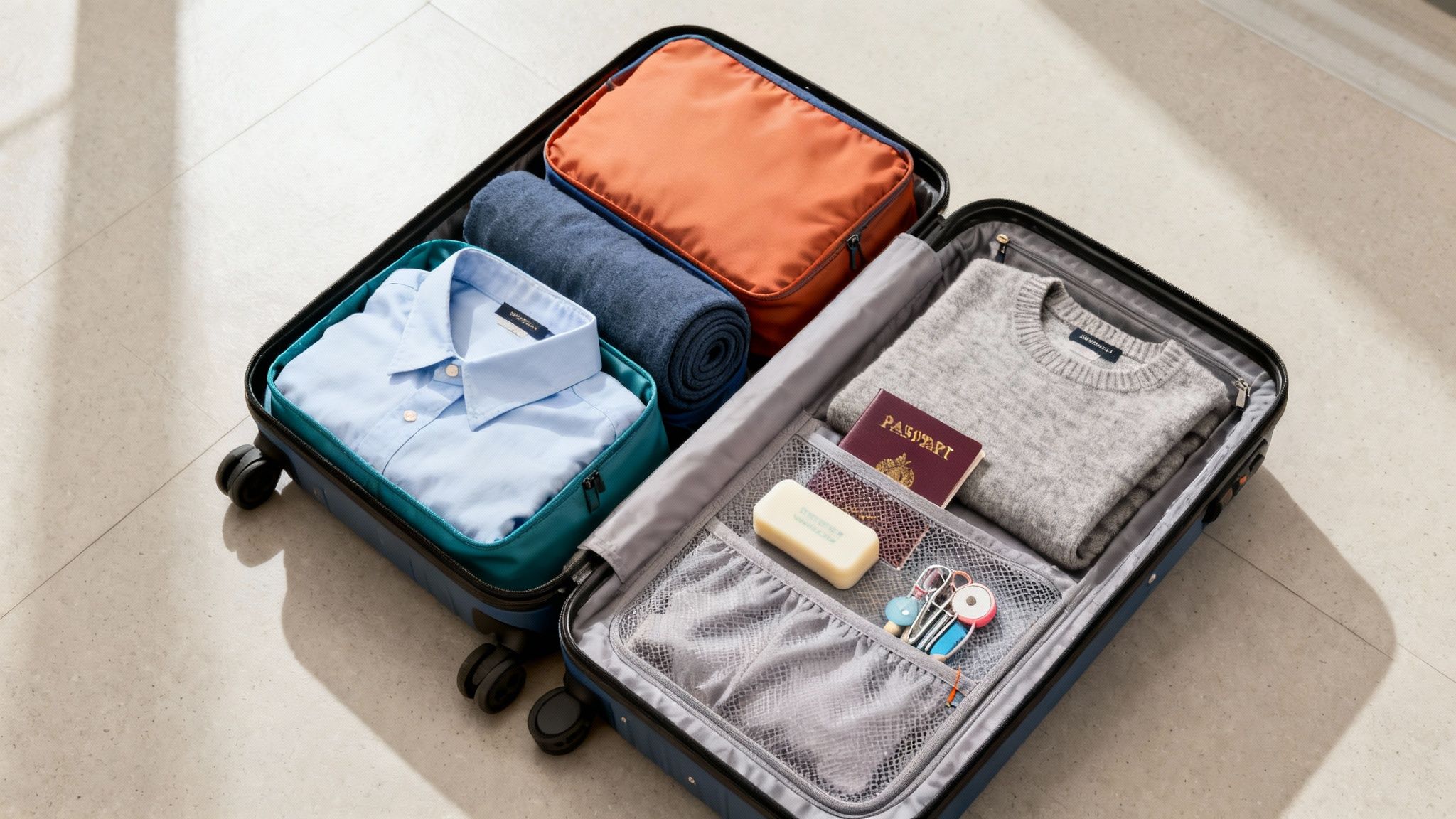
The right packing method can completely change how much you can fit and keep your clothes in great shape. Forget basic folding; rolling each garment tightly is the single most effective technique I’ve found. It minimizes hard creases and lets you slot everything into your bag like a puzzle.
To really dial in your organization, use packing cubes. For me, these are non-negotiable for a streamlined bag. I group similar items together—tops in one, bottoms in another—creating a modular system that just works. This not only compresses your clothing but makes finding a specific item dead simple, so you’re not tearing your whole bag apart for one t-shirt. Staying connected is also simple with an eSIM from Airalo or Yesim, which keeps you online without the hassle of physical SIM cards.
The Art of Garment Care on the Road
Packing is only half the story. The real secret to living comfortably out of a small bag for weeks or months is learning to maintain your clothes as you go. This skill frees you from a constant reliance on energy-hungry laundromats and keeps your few, precious items in top condition.
One of the biggest shifts you can make is simply to wash less. It all starts with your fabric choices. As we’ve covered, materials like merino wool are naturally antimicrobial and odor-resistant, meaning you can get several wears out of them before they even think about needing a wash. This simple choice drastically cuts down on laundry chores during a trip. You can find more practical advice in our guide detailing how to pack for low-impact travel.
For those times when a wash is unavoidable, you’ve got a few solid options:
- Hand-Washing: This is the most accessible and eco-friendly method by far. I always pack a solid laundry soap bar to avoid liquid spills. You can wash items in a hotel sink in the evening, roll them tightly in a towel to squeeze out most of the water, and then hang them to dry overnight.
- Eco-Friendly Stays: Many sustainable hotels and guesthouses offer laundry services that use eco-friendly detergents and energy-efficient machines. It’s always worth asking when you check in.
- Local Services: On longer stays, finding a local fluff-and-fold service is a great move. It’s a simple way to support a small local business and get everything fresh at once, freeing you up for more important things.
Zero-Waste Maintenance Tips
Beyond washing, a few tiny additions to your pack can extend the life of your clothes and stop minor issues from becoming trip-ruining problems. A tiny sewing kit, weighing less than an ounce (28 grams), is invaluable. A loose button or a small tear can be fixed in five minutes, saving a garment that would otherwise be unwearable.
Another pro tip is to pack a small spray bottle with a mix of water and a few drops of an essential oil like lavender or tea tree. A light spritz can instantly refresh a garment between wears, neutralizing odors and giving it a clean scent. This simple practice further reduces the need for frequent washing, saving water, energy, and the fabric’s integrity. By adopting these small habits, you ensure your minimalist capsule not only travels light but also leaves a lighter footprint on the places you go.
Building a Sustainable Wardrobe That Lasts
A minimalist travel capsule isn’t just a packing hack; it’s an investment in a more sustainable way of moving through the world. The aim is to build a small collection of pieces you truly love—items that are tough enough to last for years of adventures. This means shifting your mindset from chasing trends to valuing longevity.
The most sustainable piece of clothing is always the one you already own. Before you even think about buying something new, take a good look at what’s already in your closet. You might be surprised to find a few hidden gems that, with a small fix like sewing a button or mending a seam, can become a reliable travel staple.
This simple act of repair is a powerful step toward a more conscious relationship with your clothes. It’s also a core principle in learning how to reduce our ecological footprint on every journey.
A Hierarchy for Sustainable Sourcing
When you do need to add something to your wardrobe, follow this simple hierarchy to make the most responsible choice. This approach prioritizes keeping existing garments in circulation before creating demand for new production.
- First, Shop Secondhand: Thrifting or browsing online resale platforms is a fantastic way to find high-quality, pre-loved clothing. You can often score durable pieces from top-tier brands for a fraction of the original price, giving a well-made garment a well-deserved second life.
- Next, Invest in Ethical Brands: If buying new is your only option, seek out brands that are transparent about their supply chains and use sustainable materials. Look for trusted certifications—they’re a clear signal of a company’s commitment to ethical practices.
Decoding Sustainable Certifications
Navigating the world of eco-friendly fashion can feel a little tricky, but a few key certifications can steer you in the right direction. Think of them as a reliable third-party verification, ensuring a product meets high environmental and social standards.
Keeping an eye out for labels like GOTS (Global Organic Textile Standard) ensures the fabric is genuinely organic and processed responsibly. Similarly, the Fair Trade Certified™ seal guarantees that the people who made your clothes were paid fair wages and work in safe conditions.
These certifications take the guesswork out of sustainable shopping. They allow you to invest with confidence in brands that align with your values.
Long-Term Garment Care for Longevity
How you care for your clothes has a massive impact on how long they last. Proper maintenance can easily double the lifespan of a garment, protecting your investment and dramatically reducing waste.
Always start by reading the care label—it’s there for a reason. Simple habits like washing clothes in cold water with a gentle detergent can prevent fading and fabric breakdown. And whenever possible, skip the dryer. Air-drying is much kinder to fabrics, prevents shrinking, and saves a surprising amount of energy. For delicate items like merino wool sweaters, lay them flat to dry to help them keep their shape.
By sourcing responsibly and caring for your items properly, your minimalist travel capsule wardrobe becomes a collection of cherished pieces ready for countless journeys to come.
Wrapping Up Your Capsule Wardrobe Journey
Building a minimalist travel capsule wardrobe is about so much more than just packing light. It’s a shift in mindset—a flexible framework that completely changes how you experience your travels. The point isn’t to follow some rigid set of rules, but to create a system that lets you move more freely, lightly, and responsibly through the world.
When you make this choice, you’re not just saving space in a bag; you’re aligning your journey with your values. It’s a practical step toward making slower, smarter, lower-carbon travel feel normal and accessible. You’re trading the dead weight of a heavy suitcase for the freedom to navigate a new city with total ease.
This approach strips away everything non-essential. It leaves more room for what actually matters: the experiences, the connections, and the simple joy of discovery. It’s about being present in your adventure, not weighed down by your belongings.
Adopting a Lighter Mindset
The real change happens when you feel the freedom that comes from having just enough. You stop wasting precious time and mental energy deciding what to wear each morning. Instead, your curated collection just works. Every piece has a purpose, every combination looks good, and getting ready takes minutes.
That intentionality starts to creep beyond your suitcase, too. It pushes back against the fast-fashion cycle that prizes disposability over durability. You learn to appreciate well-made items, care for them on the road, and invest in quality that will last for years of journeys to come.
By traveling with less, you open yourself up to more. More spontaneity, more mobility, and more focus on the rich tapestry of experiences that await. It’s the ultimate travel upgrade.
Ultimately, building your capsule wardrobe is a personal process. Curating your items helps you reconnect with your own style and understand what you truly need to feel comfortable and confident. It’s a rewarding skill that makes every future trip simpler and more enjoyable. Ready to find your base? You can start looking for eco-friendly stays on Trip.com, find low-impact travel options, or make sure you’re covered with reliable insurance from VisitorsCoverage.
Common Questions on Minimalist Travel Wardrobes
It’s normal to have a few questions before you commit to packing this light. Let’s walk through some of the most common ones that come up when people are building their first travel capsule.
How Many Items Should I Actually Pack?
There isn’t a single magic number, but a solid range to aim for is 15 to 25 total items, and that includes your shoes and outerwear. For a trip of a week or two, you’ll often find 15 pieces is plenty.
The real goal isn’t hitting a specific number. It’s making sure every single item in your bag is a workhorse that can be mixed with at least three other pieces. This way, your luggage stays light—usually under 20 pounds (about 9 kilograms)—which makes navigating train stations or city streets a breeze. The focus is always on versatility, not the final count.
Won’t I Get Bored Wearing the Same Few Clothes?
Not at all. In fact, it’s quite the opposite. A well-planned minimalist wardrobe is designed from the ground up for maximum versatility. When you build from a neutral base and then add personality with just one or two accent colors and simple accessories like a scarf, you can create dozens of distinct outfits.
If you think about it, true “boredom” often comes from a closet stuffed with trendy, one-off items that don’t actually go together. A capsule is a cohesive system that’s creatively freeing, not restrictive.
How Do I Handle More Formal Dress Codes?
This is where your choices in fabric and style really matter. A great pair of well-fitting black trousers made from a wrinkle-resistant material is the perfect example. You can dress them down with sneakers for a day of sightseeing and then easily dress them up with a nice blouse and flats for dinner.
The same logic applies to a simple, solid-colored dress in a quality fabric—it can work for both a casual afternoon and a more formal evening. It all comes down to choosing multi-purpose items that can transition from day to night without any fuss.
What if I’m Traveling Somewhere with Unpredictable Weather?
Layering is your best friend. Instead of packing a single, heavy coat that only serves one purpose, the smarter move is to bring several lighter layers that you can combine as needed.
A merino wool base layer, a versatile sweater or cardigan, and a lightweight waterproof or windproof shell can be combined to handle a huge range of temperatures. You can tackle anything from a cool evening to a chilly, rainy day. This system gives you incredible adaptability without adding any real bulk to your bag.
Key Takeaways
- Plan Before You Pack: Always start by profiling your trip—destination, climate, and activities—to build a wardrobe that actually works.
- Choose Versatile Pieces: Every item should match at least three others. Stick to a neutral color palette with one or two accent colors you love.
- Prioritize Quality Fabrics: Invest in materials like merino wool and Tencel. They’re durable, comfortable, and far more sustainable.
- Pack Smart, Not Just Light: Use packing cubes and roll your clothes. It maximizes space, keeps you organized, and prevents wrinkles.
- Care for Your Clothes: Extend the life of your garments with smart on-the-go maintenance and responsible long-term care.
This article was fact-checked using sustainability data from the World Green Building Council, the Global Ecotourism Network, and peer-reviewed architecture studies. All partner links are vetted for compliance with sustainable business certifications.
Join the Sustainable Work Movement
Want more rail-first itineraries, low-impact packing systems, and walkable base-city ideas?
Minimalist Travel Capsule Wardrobe Basics
Clear answers to help you build a minimalist travel capsule wardrobe that packs light, looks good, and works for real trips.
1) What is a minimalist travel capsule wardrobe?
A minimalist travel capsule wardrobe is a small, curated set of versatile clothing (usually 15–25 items) that mix and match into many outfits. The goal is simple: fewer pieces, more combinations, and less luggage stress.
2) How many items should be in a minimalist travel capsule wardrobe?
Most travelers do best with 15–25 total pieces (including shoes and outerwear). For 7–14 days, 15 pieces is often plenty if each item matches at least 3 others.
3) How do I avoid getting bored wearing the same clothes?
You won’t if your capsule is built as a system. Use 3–4 neutrals plus 1–2 accents, then rotate outfits by changing layers, shoes, and one accessory (like a scarf).
4) What’s the easiest way to start building my capsule?
Start with your trip profile: climate, activities, dress expectations, and laundry access. Then pick a neutral color base and add only pieces that match multiple outfits.
Fabrics, Packing, and Laundry
Smart fabric choices and low-effort care make your minimalist travel capsule wardrobe work on longer trips.
5) What are the best fabrics for capsule travel?
Merino wool, Tencel (lyocell), and quality blends are ideal because they’re breathable, wrinkle-resistant, and easy to wash-and-dry fast.
6) How often do I need to do laundry with a capsule wardrobe?
Usually every 4–7 days. If you use odor-resistant fabrics (like merino), you can stretch wear-time and do fewer washes.
7) What’s the best way to pack a minimalist travel capsule wardrobe?
Roll your clothes and use packing cubes. This prevents wrinkles, maximizes space, and keeps your bag organized (tops in one cube, bottoms in another).
8) How do I keep clothes fresh without washing constantly?
Air them out nightly. Hang items for ventilation, spot-clean small stains, and rotate pieces so nothing gets overused.
Outfits, Shoes, and Weather
Build outfits that handle walking cities, trains, and unpredictable weather without overpacking.
9) What is the best color palette for a minimalist travel capsule wardrobe?
Choose 3–4 neutrals (black, navy, grey, cream, tan) and add 1–2 accent colors you love. This creates effortless outfit combinations.
10) What is the “three-shoe rule” for travel capsules?
Three pairs cover almost everything: (1) supportive walking shoes, (2) weather-appropriate footwear, and (3) one dressier option for evenings.
11) How do I handle unpredictable weather with a capsule?
Use a layering system: a breathable base, a warm mid-layer (sweater), and a packable waterproof shell. This adapts to a huge temperature range without bulk.
12) How do I dress up a capsule wardrobe for nicer restaurants?
Pack one “smart” piece (button-down, blouse, simple dress, or blazer) plus a dressier shoe. Your dark trousers/jeans become evening-ready instantly.
Sustainability and Shopping Smarter
Capsule wardrobes reduce waste, cut impulse buying, and make your travel footprint lighter.
13) Why is a capsule wardrobe more sustainable for travel?
Because you buy fewer items and use them longer. A minimalist travel capsule wardrobe reduces overconsumption, supports durability, and helps cut textile waste.
14) Should I shop secondhand for capsule wardrobe pieces?
Yes. Secondhand lets you find high-quality staples at lower cost while keeping clothes in circulation instead of buying new.
15) What sustainable certifications should I look for?
Look for labels like GOTS and Fair Trade Certified™ to help verify responsible materials and ethical working conditions.
16) Is buying “travel clothes” necessary for a capsule wardrobe?
No. The most sustainable approach is using what you already own first. Add only what you truly need to fill a functional gap.
Common Mistakes and Pro Tips
These quick answers prevent overpacking and keep your minimalist travel capsule wardrobe effortless.
17) What’s the biggest mistake people make with travel capsules?
Packing for “what-if” scenarios. A capsule works when you pack for what you’ll actually do 90% of the time, not rare edge cases.
18) How do I keep my capsule wardrobe from feeling repetitive?
Rotate your “statement” layer (scarf, jacket, or top) and change shoes. Your base pieces stay consistent, but the overall look changes fast.
19) How do I plan a capsule for longer trips (1–3 months)?
Keep the capsule small, increase laundry rhythm. Build for 7–10 days, then wash weekly. Add only one seasonal layer if climates change.
20) What’s one item that adds the most versatility to a capsule?
A large scarf or pashmina. It adds warmth, changes an outfit’s look, works as a blanket on trains, and takes very little space.
