
Thinking about planning a trip to Scotland often brings up images of dramatic landscapes, ancient castles, and windswept lochs. The best way to stitch all those scenes together? By train. A rail-first trip lets you soak in the views without the white-knuckle stress of navigating narrow, unfamiliar roads. It’s not just a more relaxing way to travel; it’s a more mindful one, connecting you to the country’s heart while lightening your environmental footprint.
Choosing to explore Scotland by train is about more than just getting from A to B. It’s a deliberate decision to travel more slowly and thoughtfully. When you opt for rail over a rental car or a short-haul flight, you’re picking one of the most sustainable ways to see the country, directly cutting your carbon emissions. It’s a move that aligns perfectly with a responsible travel mindset, helping to ensure the landscapes you came to see remain just as stunning for generations to come.
This mode of transport is clearly gaining traction. In fact, Scotland is the only UK nation to see a recent rise in overnight domestic trips. A report from VisitScotland shows 7.7 million journeys generated £2.8 billion (about $3.5 billion USD) in just three quarters—a 22% increase in visitor spending. This surge underlines the country’s appeal and the growing desire for more sustainable ways to explore it.
Key Takeaways
- Prioritize Rail Travel: Scotland’s train network is extensive and scenic, offering a low-stress, low-carbon alternative to driving, especially for iconic routes like the West Highland Line.
- Book in Advance: Secure train tickets 3-4 months ahead and accommodation 2-3 months out, especially for popular routes and seasons, to get the best prices and availability.
- Use Cities as Hubs: Base yourself in walkable cities like Edinburgh or Glasgow, which have excellent rail connections for car-free day trips to places like Loch Lomond and Stirling.
- Travel in Shoulder Seasons: Visit in spring (April-May) or autumn (September-October) for fewer crowds, better prices, and to avoid the summer midges in the Highlands.
- Pack Smart and Light: A minimalist packing list focused on layers, waterproof gear, and reusable items is essential for easy train travel and navigating Scotland’s variable weather.
Why Plan a Rail-First Trip to Scotland?
Choosing to explore Scotland by train is about more than just getting from A to B. It’s a deliberate decision to travel more slowly and thoughtfully. When you opt for rail over a rental car or a short-haul flight, you’re picking one of the most sustainable ways to see the country, directly cutting your carbon emissions. It’s a move that aligns perfectly with a responsible travel mindset, helping to ensure the landscapes you came to see remain just as stunning for generations to come.
This article was fact-checked using sustainability data from the World Green Building Council, the Global Ecotourism Network, and peer-reviewed architecture studies. All partner links are vetted for compliance with sustainable business certifications.
What to Keep in Mind
- Embrace the Scenic Routes: Scotland’s rail network is famous for its world-class scenery. Journeys like the West Highland Line offer views you simply can’t get from a car.
- Lower Your Carbon Footprint: Train travel is a significantly lower-carbon way to move around compared to driving, which helps protect Scotland’s pristine natural environments.
- Use Walkable Cities as Your Base: Hubs like Edinburgh and Glasgow have fantastic rail connections, making it easy to plan car-free day trips and really immerse yourself in local life.
- Travel Without the Stress: Forget about navigating tight country lanes or hunting for parking. Just find your seat, settle in, and let the train do the work.
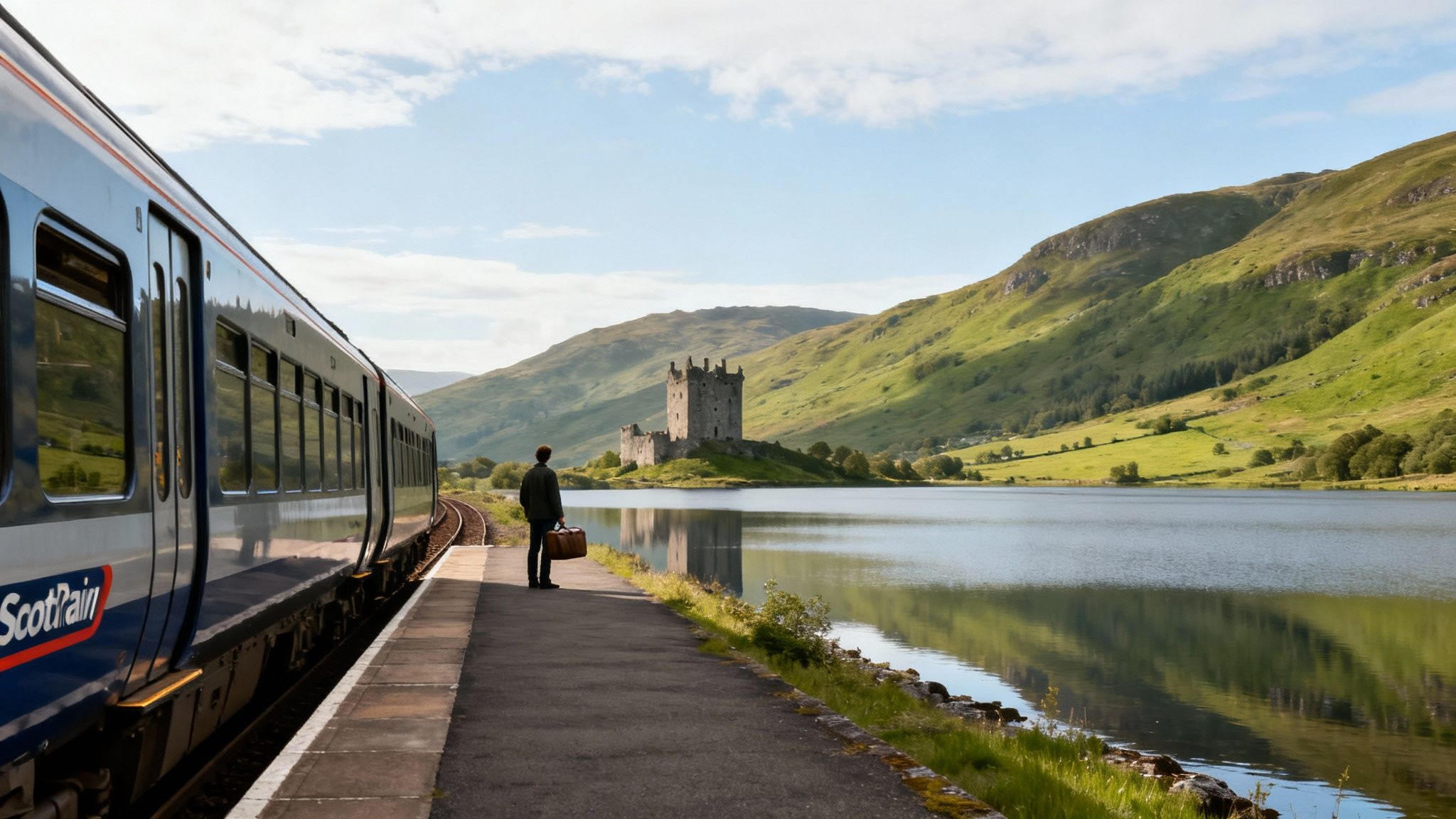
Here’s a quick overview to get you started.
Scotland Trip Planning at a Glance
| Planning Aspect | Key Recommendation | Why It’s Sustainable |
|---|---|---|
| Transport | Prioritize rail for inter-city and Highland travel. | Dramatically lower CO₂ emissions per passenger-kilometer vs. driving. |
| Base Cities | Use Edinburgh or Glasgow as hubs for day trips. | Excellent train links reduce the need for a rental car entirely. |
| Itinerary | Build your route around key train lines like the West Highland. | Maximizes scenic views and supports regional rail infrastructure. |
| Accommodation | Choose stays near train stations. | Promotes walkability and supports local businesses in central districts. |
This simple framework helps keep your trip both low-stress and low-impact from the very first step.
Scotland’s Surprisingly Great Rail Network
Many travelers assume you need a car to explore beyond the big cities, but Scotland’s train network is surprisingly extensive. It connects every major city and slices right through the heart of the Highlands, putting iconic destinations within easier reach than you might think. From your window, you can watch the landscape shift from bustling urban centers to rugged coastlines and soaring Munros in just a few hours.
Best Tool for Rail Planning
For booking train tickets across Scotland and the UK, Trip.com’s rail booking platform is an excellent resource. It simplifies the process of comparing routes and prices, allowing you to secure tickets for scenic journeys like the West Highland Line well in advance. Its straightforward interface makes it easy to manage your itinerary from one place.
Ultimately, a rail-first strategy is a core part of the best way to travel in Europe, fostering a slower, more connected experience. By building your Scotland trip around the train, you’re not just planning a vacation; you’re designing a more immersive and responsible adventure.
Choosing When to Visit and How to Book Your Scotland Trip
Deciding when to go is the first real move you’ll make in planning a trip to Scotland. Summer brings long days and big festivals, but the shoulder seasons—spring (April-May) and autumn (September-October)—offer a different kind of magic with fewer crowds, better prices, and incredible natural light.
Spring is all about blooming wildflowers and crisp, clear air, perfect for hiking before the summer midges show up. Autumn, on the other hand, paints the Highlands in deep golds and reds, creating a moody, atmospheric landscape that photographers and quiet-seekers love.
For digital nomads and remote workers, winter (November-March) can be an unexpectedly perfect time. Cities like Edinburgh and Glasgow feel genuinely local, and cozy pubs with crackling fires become incredible ad-hoc workspaces. You’ll also find the best deals on longer-term stays—a chance to experience Scotland without the tourist crush.
Securing Your Travel: A Low-Stress Timeline
A common mistake is underestimating just how far in advance you need to book, especially for a rail-first journey. Scotland’s popular scenic routes, like the iconic West Highland Line from Glasgow to Mallaig, have limited seats and sell out fast.
As a general rule, aim to book your key train tickets 3 to 4 months ahead of your travel dates. This is especially critical if you’re eyeing an overnight journey like the Caledonian Sleeper from London, as its berths are highly sought after. For detailed strategies on securing these unique journeys, our guide to booking European sleeper trains offers invaluable tips.
Recent data highlights this growing need for advance planning. According to the Scottish Tourism Index, travelers are booking domestic holidays around 13 weeks in advance, a timeline that extends to 19 weeks for European trips. You can explore more about these booking trends to better inform your own timeline. This foresight ensures you get the best fares and don’t miss out on iconic experiences.

Booking Platforms and Tools
To keep things simple, use a reliable booking platform. For comprehensive rail options across Scotland and the UK, services like Trip.com are incredibly useful. They let you compare routes, view timetables, and purchase tickets for multiple legs of your journey all in one place.
If you’re arriving from further afield, start looking at flights 5 to 6 months out. Use a flight aggregator like Aviasales to compare prices and—this is key—set up price alerts. This simple action can save you hundreds, as the tool will notify you when fares drop for your chosen dates.
Similarly, book your accommodation 2 to 3 months in advance, particularly if you have specific eco-lodges or city-center apartments in mind. The best sustainable stays with good transit access are often the first to go. A structured approach to booking removes last-minute stress and helps you lock in better prices across the board.
Crafting Your Perfect Scotland Rail Itinerary
This is where the plan starts to feel like a real adventure. While a road trip has its appeal, planning a trip around Scotland’s rail network offers a different kind of freedom—freedom from traffic, parking headaches, and the stress of navigating unfamiliar roads. A rail-first mindset lets you sink into the journey itself, turning travel days into part of the experience.
The trick is to build an itinerary with a solid structure but enough flexibility to breathe. By using Scotland’s main cities as your anchors, you can piece together a trip that feels both expansive and completely manageable. We’ve mapped out three starting points here, designed for different timelines—from a week-long city deep-dive to a month of slow, nomadic exploration.
Think of these as blueprints. Mix them, match them, and tweak them until they fit your own vision for a low-impact Scottish adventure.
The Central Belt Explorer (7 Days)
If you’re visiting for the first time or working with a tighter schedule, this route is a perfect introduction. It sticks to Scotland’s buzzing urban heart, basing you in Glasgow and Edinburgh. From there, the ScotRail network makes it incredibly easy to take day trips that dive into the country’s history, all without ever needing a car.
- Days 1-3 Glasgow Base: Arrive and settle into Glasgow. Spend your days exploring its incredible free museums like the Kelvingrove Art Gallery and Museum, hunting for street art, and soaking up the city’s legendary music scene.
- Day Trip to Loch Lomond: A direct train from Glasgow Queen Street gets you to Balloch in about 50 minutes. From there, you can easily explore the southern shores of Loch Lomond & The Trossachs National Park.
- Days 4-7 Edinburgh Base: The train connecting Glasgow and Edinburgh is fast and frequent, taking around 50 minutes. Once you’ve checked in, you’ve got the Royal Mile, Edinburgh Castle, and the atmospheric Old Town on your doorstep.
- Day Trip to Stirling: A 45-minute train ride from Edinburgh Waverley takes you straight to Stirling, home to the magnificent Stirling Castle and the National Wallace Monument.
The Highland Rail Adventure (10-14 Days)
For anyone dreaming of those epic, moody landscapes, this itinerary is built around one of the world’s most spectacular train journeys: the West Highland Line. It’s a breathtaking ride through remote glens, past deep lochs, and over the iconic Glenfinnan Viaduct.
- Start in Glasgow (2 Days): Take a couple of days to acclimatize in Glasgow. It’s a great place to pick up any outdoor gear or supplies you might need for the Highland leg of your trip.
- Glasgow to Fort William (4-5 Days): Board the train at Glasgow Queen Street for the jaw-dropping 4-hour journey to Fort William. Use the town as your basecamp for hiking Ben Nevis, exploring Glen Coe by local bus, or just enjoying the UK’s outdoor capital.
- The “Hogwarts Express” Leg: The journey continues from Fort William to Mallaig on the final, famous stretch of the West Highland Line, crossing the Glenfinnan Viaduct. This is the same route used by the Jacobite Steam Train.
- Isle of Skye Connection (3-4 Days): From the port in Mallaig, it’s a short ferry ride over to Armadale on the Isle of Skye. Local buses can connect you to the main town of Portree, a perfect base for exploring the island’s dramatic landscapes.
The Nomad’s Slow Travel Base (3-4 Weeks)
This approach is designed for digital nomads and slow travelers. Instead of constantly moving, you settle into one city for an extended period, using the rail network for deeper regional exploration. It cuts down on the constant packing and unpacking, letting you build a routine while still seeing a huge amount of the country.
A slow travel base lets you live more like a local. You discover the best neighborhood cafes for working, find your favorite running routes, and build a genuine connection to a place that short trips often miss.
Choosing Your Base:
- Glasgow: Tends to be slightly more affordable, with a creative, edgy vibe and fantastic rail links west toward the coast and up into the Highlands.
- Edinburgh: Unbeatably beautiful and historic, with excellent connections heading east to the coast and north toward Aberdeen and Inverness.
From your chosen base, you can plan weekly rail excursions. One week might be dedicated to the Fife coast, the next to the Cairngorms National Park, and another to exploring the Borders. It’s a rhythm that balances work and discovery perfectly.
The infographic below gives you a simple visual for the key booking stages in your Scotland travel plan.
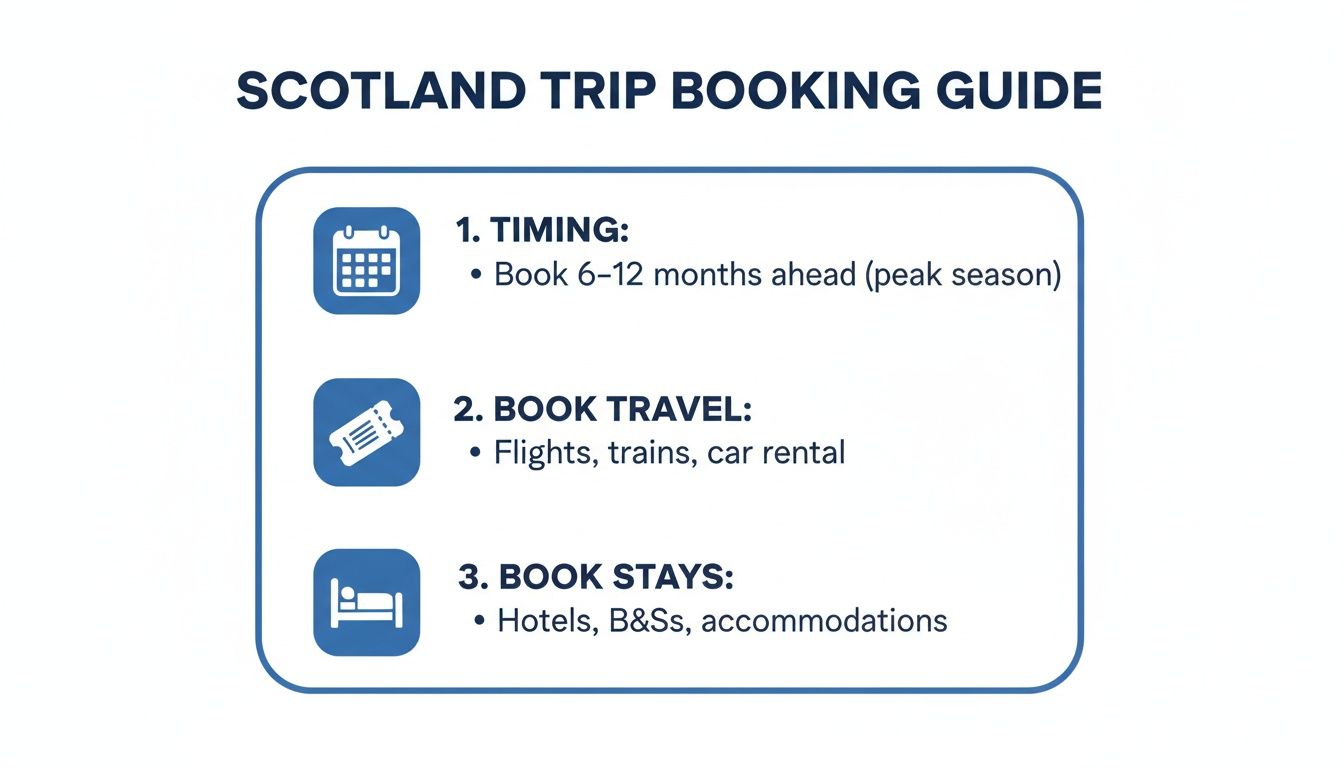
This visual breaks the process down into three core steps, laying out a logical sequence from setting your dates to securing your transport and lodging.
The Caledonian Sleeper: An Eco-Chic Arrival
For a truly memorable and low-carbon start to your trip, consider arriving on the Caledonian Sleeper. This overnight train service connects London Euston with major Scottish cities like Edinburgh, Glasgow, Fort William, and Inverness.
Traveling overnight saves you the cost of a night’s accommodation and, more importantly, a significant amount of CO₂ compared to a short-haul flight. You fall asleep in one country and wake up in another, refreshed and ready to explore. Booking your ticket well in advance on a platform like Trip.com is key, as berths can sell out quickly. You can explore more options for building complex journeys with our train travel route planner.
Finding Sustainable Stays and Getting Around
Once your rail itinerary is sketched out, the next pieces of the puzzle are where you’ll stay and how you’ll explore your base cities. These two choices have a huge say in both your budget and your environmental footprint.
Opting for genuinely sustainable accommodation and sticking to local, low-carbon transport are some of the most powerful moves you can make for a more responsible trip. Scotland makes this surprisingly easy, with a growing number of eco-conscious hotels and guesthouses. Better yet, its main cities are incredibly walkable, backed up by solid public transport that makes getting around without a car feel like the natural choice.
This isn’t just about booking a room; it’s about supporting businesses that align with a slower, more thoughtful way of traveling.
What to Look For in a Sustainable Stay
Finding a genuinely sustainable place to stay means looking past the hotel that just asks you to reuse your towels. It takes a bit more digging to sidestep the greenwash and find properties making a real difference.
When you’re researching, keep a simple mental checklist handy. You’re looking for real evidence, not just vague promises.
A quick checklist for spotting a truly green stay:
- Renewable Energy: Do they mention using solar panels, wind power, or sourcing electricity from a green provider?
- Waste Reduction: Look for specifics like composting, comprehensive recycling, and clear efforts to ditch single-use plastics.
- Local Sourcing: Does the restaurant shout about its local suppliers? Do they actively promote other nearby businesses?
- Community Roots: Is the property locally owned? Do they have programs that tangibly support the local community and its economy?
- Green Certifications: Keep an eye out for credible certifications. In Scotland, Green Tourism is a prominent and well-respected standard.
Learning how to spot these markers is a critical skill. For a much deeper dive, our guide on how to find sustainable stays and avoid greenwash gives you a complete framework for making smarter choices.
Navigating Scotland’s Cities Car-Free
Once your train pulls into Glasgow or Edinburgh, that sustainable mindset just keeps rolling. Scotland’s cities were built for walking, but they also have fantastic public transport for when your feet need a break.
In Glasgow, the subway system—known affectionately as the “Clockwork Orange”—is one of the simplest in the world. It’s a perfect circle connecting the city centre with the cool West End and the vibrant Southside. You literally can’t get lost.
Edinburgh is all about the Lothian Buses. Their network is seriously extensive and can get you almost anywhere, from the waterfront restaurants in Leith to the trailheads for Arthur’s Seat.
For a bit more freedom, hop on a bike. Both cities have public bike-share schemes that are a fun, active way to connect the dots between sights. A quick glance at a transit app will show you just how easy it is to get around without even thinking about a car.
Connectivity for the Digital Nomad
For any remote worker, solid internet is non-negotiable. While most cafés and hotels have Wi-Fi, having your own reliable mobile data is key for navigating, booking tickets on the fly, or tethering your laptop when the café connection gets flaky. This is where an eSIM becomes your best friend.
Best Tool for Staying Connected
For seamless connectivity without the plastic waste of a physical SIM card, an Airalo eSIM is an excellent choice. You can purchase and install it before you even leave home, activating it the moment you land in Scotland. It offers reliable data plans at local prices, making it easy to stay online for work and navigation.
A good strategy to balance work and exploring is to find work-friendly cafés near the main train stations, like Glasgow Queen Street or Edinburgh Waverley. This lets you smash out a few hours of focused work right before or after a day trip by rail, keeping your travel rhythm smooth and efficient.
Budgeting and Packing for Your Scotland Journey
Okay, you’ve got your route sketched out and some great sustainable stays on your list. The last piece of the puzzle is figuring out your budget and what to pack. Nailing these two things is the key to a stress-free rail trip—it means you can handle Scotland’s famously fickle weather without lugging a giant suitcase through a train station.
A solid budget lets you relax and enjoy the ride without sweating every purchase. And packing light? That’s not just about convenience. It’s a core part of travelling this way. Less stuff means easier train hops and a smaller footprint, which is exactly what a rail-first philosophy is all about.
The first step in building a budget is knowing what things actually cost. For a comfortable, mid-range trip, a daily budget of $75–$150 USD (roughly £60–£120 GBP) is a realistic starting point. This should easily cover a decent place to sleep, food, local transport, and a few tickets to castles or museums.
Estimating Your Daily Costs
Breaking down your spending helps you see where the money goes. Scotland has options for every style, from budget hostels and grocery store lunches to boutique hotels and fancy pub dinners.
Here’s a sample breakdown of what you might spend per person each day, in both USD and GBP:
- Accommodation: $40–$100 USD (£32–£80 GBP) will get you a spot in a hostel, a room in a guesthouse, or a budget-friendly hotel.
- Food: $30–$60 USD (£24–£48 GBP) is doable if you mix café lunches, pub dinners, and a bit of self-catering.
- Activities & Transport: $15–$40 USD (£12–£32 GBP) covers things like city bus passes, museum tickets, or a local walking tour.
For a bit of context, recent tourism data shows that visitors to Scotland spent an average of £129 GBP (about $160 USD) per night. This makes it a pretty accessible place for longer, slower trips. You can dig into the full annual performance report from VisitScotland if you want to see more detailed spending habits.
Your Minimalist Packing List for Train Travel
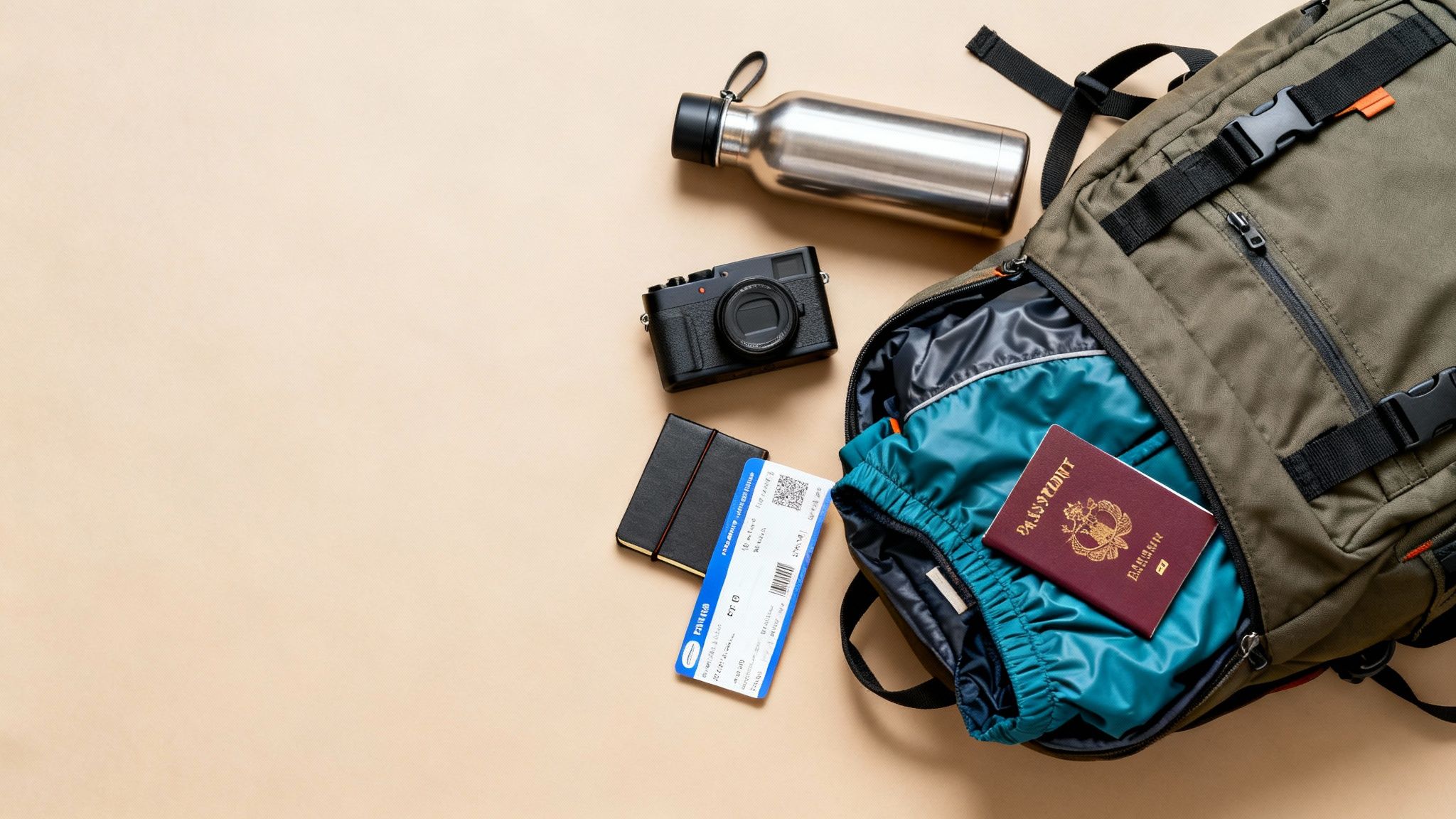
When you’re travelling by train, packing light is the goal. Everything you bring should fit into a single, tough backpack that’s easy to carry and stash on board. Think versatile, high-quality items you can layer.
Clothing Essentials:
- Waterproof Outer Shell: Seriously, don’t leave home without this. It’s Scotland.
- Fleece or Insulated Mid-Layer: Perfect for warmth and layering up or down.
- Merino Wool Base Layers: These are brilliant—breathable, warm, and they don’t get smelly.
- Waterproof Hiking Shoes: Your feet will thank you, both on city cobblestones and muddy Highland trails.
- Versatile Trousers: One pair of durable hiking trousers and another for walking around town should do it.
Zero-Waste & Tech Gear:
- Reusable Water Bottle: The tap water in Scotland is excellent and safe to drink.
- Solid Toiletries: Shampoo bars and solid toothpaste mean less plastic and no liquid restrictions.
- Portable Power Bank: A lifesaver for keeping your gear charged on long train journeys.
- eSIM: An Airalo eSIM gives you instant data when you arrive, with zero plastic waste.
Picking the right bag makes all the difference. Our guide to the best luggage for train travel has a rundown of carry-on-sized backpacks that are ideal for a Scottish rail adventure.
Got Questions About Your Scotland Trip?
It’s that last phase of planning when the final details start to bubble up. Your route is mostly locked in, the bags are almost packed, but a few nagging questions are still floating around. Let’s get those sorted so you can travel with confidence.
Do I Really Need a Car to See the Highlands?
Honestly? No. While a car offers its own kind of freedom, you absolutely do not need one to experience the Highlands. Scotland’s train network gets you into the heart of some of the country’s most breathtaking landscapes.
Routes like the West Highland Line and the Kyle Line are destinations in themselves, letting you soak in the scenery without gripping a steering wheel on winding, single-track roads.
From hub towns like Fort William or Aviemore, you can easily combine train journeys with local buses and day tours to explore the region. It’s not only more relaxing but also lets you fully immerse yourself in the journey itself.
What’s the Best Way to Handle Money in Scotland?
Scotland uses the Pound Sterling (GBP), not the Euro. Credit and debit cards, especially with contactless payment, are accepted almost everywhere in cities and larger towns.
Still, it’s always a good idea to have a small amount of cash on hand—maybe £50-£100 GBP ($60-$125 USD)—for those moments in smaller villages, independent cafes, or rural pubs that might be cash-only.
A quick pro tip: let your bank know your travel dates before you leave. It’s a simple step that helps avoid your card getting flagged for unusual activity right when you need it.
How Bad Are the Midges, Really?
The infamous Scottish midges are tiny biting insects that are most active in the Highlands during the summer, typically from June to August. They tend to hang around still water, especially at dawn and dusk.
They aren’t a problem in cities like Edinburgh or Glasgow. If your Highland adventure is set for summer, just pack a reliable insect repellent. Smidge is a popular local brand that actually works.
Even better? Plan your trip for the spring or autumn shoulder seasons, and you can sidestep them almost completely.
Is Train Travel in Scotland Reliable?
For the most part, yes. ScotRail runs a pretty comprehensive network that links all the major cities and reaches deep into many of the scenic rural areas. Mainline services between hubs like Glasgow, Edinburgh, and Inverness are frequent and generally stick to the schedule.
Booking tickets ahead of time through a platform like Trip.com is the smartest move. It secures the best fares and guarantees you a seat, especially on the more popular scenic routes. While the occasional delay can happen, the train remains one of the most efficient, comfortable, and low-stress ways to see Scotland.
This article was fact-checked using sustainability data from the World Green Building Council, the Global Ecotourism Network, and peer-reviewed architecture studies. All partner links are vetted for compliance with sustainable business certifications.
Join the Sustainable Work Movement
Want more rail-first itineraries, low-impact packing systems, and walkable base-city ideas?
Explore Eco Nomad Travel
📚 Core Guides
🧭 Planning & Logistics
🗺️ Destinations & Seasons
Jeremy Jarvis — founder of Eco Nomad Travel, sustainable travel writer, and advocate for regenerative tourism. His work focuses on low-impact mobility, eco-friendly digital nomad life, and climate-positive travel.
Legal
Affiliate DisclaimerPrivacy Policy
Terms of Service
Image & Media Notice
Cookie Policy
Contact
Affiliate Disclosure: Some links on Eco Nomad Travel are affiliate links, meaning we may earn a small commission at no extra cost to you. This supports our mission to inspire responsible and low-impact travel worldwide.
Connect
✅ Trusted Official Sources
Plan smarter eco trips
Try our free Sustainable Travel Tools for Digital Nomads – carbon calculator, train vs plane comparator, and more.
Open Tools Hub