

Embarking on a solo journey offers unparalleled freedom, but choosing from the safest cities to travel alone is the critical first step in crafting a restorative, low-stress adventure. For the eco-conscious digital nomad or slow traveler, safety isn’t just about low crime rates. It’s about seamless, car-free mobility, walkable neighborhoods, and reliable public transit that lets you explore with confidence and a light footprint. True safety means feeling secure enough to connect with a place, whether you’re navigating a new metro system after dark or settling into a neighborhood for a few weeks.
This guide moves beyond generic safety scores to offer a curated list of cities where solo travel is not only secure but also deeply aligned with sustainable values. We’ll explore destinations celebrated for their exceptional rail connectivity, regenerative tourism practices, and infrastructure that empowers you to travel slower, smarter, and more intentionally. From Nordic capitals with world-class cycling lanes to Mediterranean hubs with ancient, walkable cores, each city on this list has been selected for its proven safety record and its commitment to a greener, more accessible future.
Safest Cities to Travel Alone: Neighborhoods, Low-Impact Stays, and Essential Safety Tips
We’ll dive into practical details for each destination, including the best neighborhoods for solo stays, low-impact accommodation ideas, and essential safety tips tailored for the independent traveler. Our focus is on empowering you with the knowledge to build a safe and sustainable itinerary from the ground up, turning your solo travel dreams into a well-planned reality. This article was fact-checked using sustainability data from the World Green Building Council, the Global Ecotourism Network, and peer-reviewed architecture studies. All partner links are vetted for compliance with sustainable business certifications.
1. Copenhagen, Denmark – The Bicycle-Safe Nordic Hub
Copenhagen consistently ranks as one of the safest cities to travel alone, largely due to its strong culture of social trust and world-class infrastructure. Its reputation as the world’s most bike-friendly capital makes it an ideal destination for solo travelers seeking safe, car-free mobility. The city’s extensive network of protected bike lanes means you can explore with confidence, getting from the colourful houses of Nyhavn to the alternative vibe of Freetown Christiania without ever needing a car.

This commitment to low-impact transport extends to its excellent public transit system, making it a perfect base for digital nomads. For extended stays, consider neighborhoods like Vesterbro or Nørrebro, which offer a more local experience than the tourist-heavy city center. Here, you’ll find organic cafes, zero-waste shops like Løs Vægt, and community-focused co-living spaces perfect for longer work-and-travel trips.
Actionable Tips for Solo Travel in Copenhagen:
- Transportation: For stays over three weeks, rent a city bike for about $86 USD/month. For shorter trips or regional travel, the Copenhagen Card (72-120 hours) offers unlimited public transport and museum access. The DSB app is essential for booking seamless train tickets to nearby cities like Malmö, Sweden.
- Sustainable Stays: Digital nomads can find long-stay discounts on Airbnb (often 20% off for 28+ days). Eco-conscious travelers should look for accommodations with the Green Key certification.
- Connectivity: Stay connected easily with an eSIM. Check out options from providers like Airalo or Yesim to get data access as soon as you land.
Copenhagen’s focus on regenerative tourism and its excellent rail connections make it a top choice for a safe and sustainable solo adventure. As detailed by Jeremy Jarvis, founder of Eco Nomad Travel, it serves as a fantastic hub for slow-travel routes across Scandinavia, and you can learn more about its appeal for remote workers on economadtravel.com.
2. Lisbon, Portugal – An Affordable and Safest City to Travel Alone
Lisbon offers a compelling blend of excellent safety ratings and remarkable affordability, making it one of the safest cities to travel alone. Its walkable hillside neighborhoods feel intimate despite it being a capital city, and a daily budget of $27-$43 USD (€25-€40) is feasible. The city’s historic tram system, combined with a geography that naturally limits cars in core areas, creates a pedestrian-friendly environment perfect for solo exploration. It’s a welcoming destination with a strong solo female traveler community.
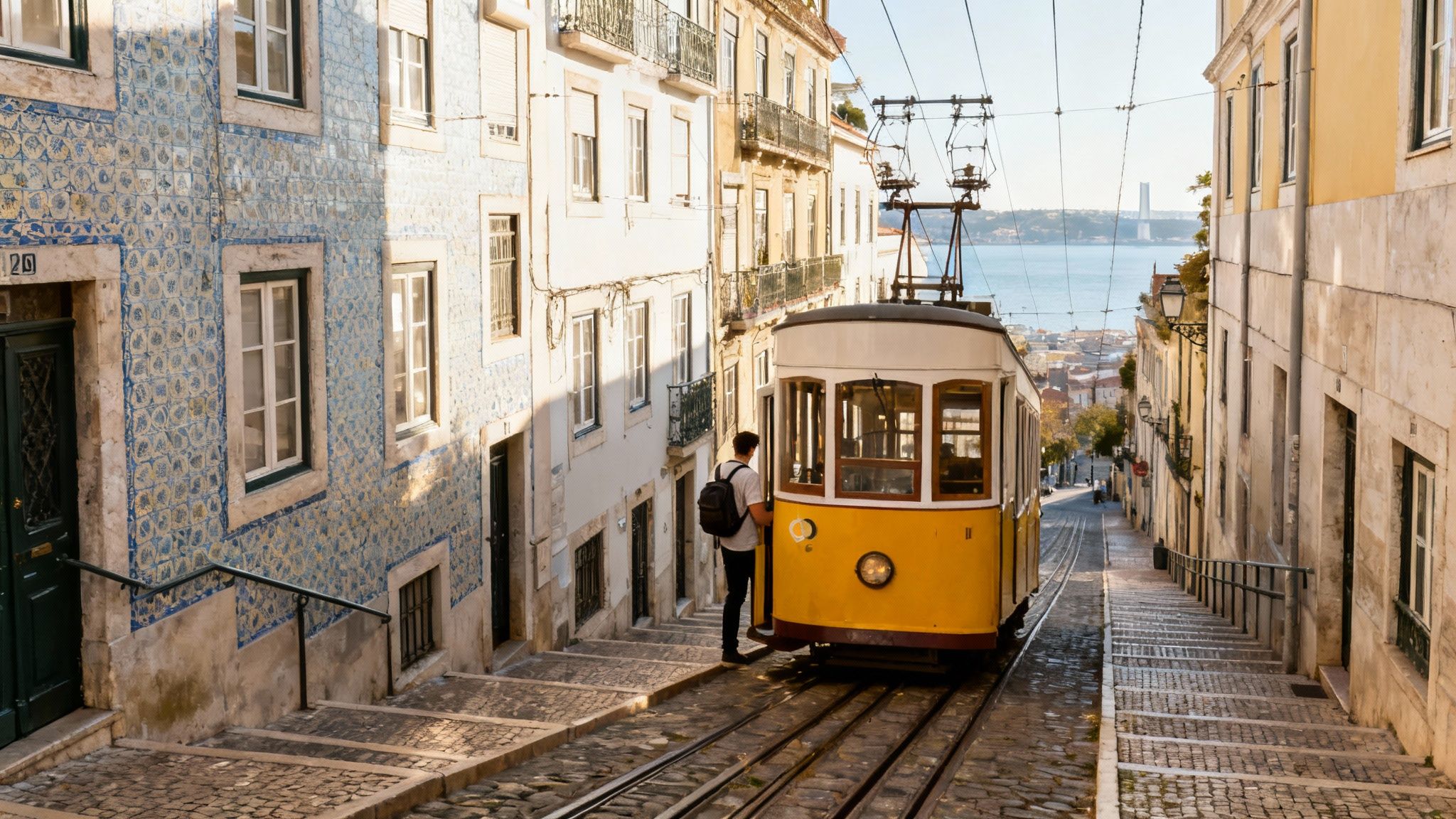
This accessibility makes Lisbon a key southern anchor for low-carbon European itineraries. For longer stays, digital nomads can find apartments in neighborhoods like Príncipe Real for around $650-$975 USD (€600-€900) per month. For a calmer, more local vibe away from the tourist-heavy Alfama district, consider basing yourself in Belém. It offers excellent walkability and easy access to historic sites. Zero-waste explorers can visit community-focused shops like Comida Viva, a plastic-free grocery cooperative.
Actionable Tips for Solo Travel in Lisbon:
- Transportation: For stays over five days, the unlimited 7-day transport pass (
$42 USD or €39) is a great value. Otherwise, single journeys are €1.65. Avoid the crowded Tram 28 during peak hours (10 am-5 pm); Tram 12 offers a similar scenic route with fewer people. For car-free day trips, regional rail is efficient and affordable, with round-trip tickets to Cascais or Sintra costing around $5 USD (€4.65). - Sustainable Stays: Look for eco-lodges certified by the government’s ‘Turismo de Natureza’ program in the nearby Sintra mountains, just an hour away by train. Book accommodations 4-6 weeks in advance during shoulder seasons (April-May, September-October) for the best availability.
- Connectivity: To get data service immediately upon arrival, consider an eSIM from a provider like Airalo or Yesim.
Lisbon serves as an exceptional European rail hub, with overnight trains connecting to Madrid and Barcelona, making it ideal for extended slow-travel journeys. Its combination of safety, affordability, and car-free mobility makes it a prime destination for remote workers, as you can learn more about its appeal as a workation city on economadtravel.com.
3. Vienna, Austria – The Cultural-Transit Solo City
Vienna stands out as one of the safest cities to travel alone, boasting Europe’s safest major capital status and a world-class public transit system. The city’s compact core, extensive cycling infrastructure, and legendary coffeehouse culture create a low-stress environment perfect for solo exploration. Its walkability means you can wander from the grandeur of the Hofburg Palace to the trendy boutiques of the 7th district with ease and confidence.
For digital nomads, Vienna’s central location makes it an essential rail hub. Its efficiency serves as a launchpad for slow-travel itineraries, with overnight trains connecting to Prague, Budapest, and Venice. This makes it ideal for remote workers looking to establish a comfortable base in a neighborhood like Neubau for a few weeks before continuing their car-free journey across Central Europe. The city perfectly balances imperial history with modern, sustainable living.
Actionable Tips for Solo Travel in Vienna:
- Transportation: For stays of five days or more, the 7-day Vienna pass (about $39 USD or €36) offers incredible value. Otherwise, single trips cost around $3 USD (€2.80). Use the Citybike system for short trips; registration allows the first hour to be free.
- Affordable Stays: Prioritize neighborhoods like Neubau (7th district), Leopoldstadt (2nd), or Mariahilf (6th) for better value and walkability over the pricier Innere Stadt. You can often find great accommodations for $20-$30 USD (€18-€28) per night.
- Connectivity: Ensure you have data from the moment you arrive with an eSIM. Providers like Airalo or Yesim offer convenient plans for Austria and Europe.
As a major junction for sustainable travel, Vienna is a cornerstone of any multi-city European rail adventure. You can learn more about using it as a hub for trip-chaining rail adventures on economadtravel.com. For the best prices on night trains, be sure to book 6-8 weeks in advance.
4. Barcelona, Spain – The Coastal Solo-Traveler Hub
Barcelona offers a compelling mix of vibrant urban culture and relaxed coastal living, making it one of the safest cities to travel alone for those seeking both city and sea. With a solid safety score, its comprehensive metro system and pedestrian-friendly neighborhoods allow for confident exploration. The city also serves as a major rail hub, providing excellent connections to France, Italy, and other parts of Spain for car-free, multi-city itineraries.
The city’s commitment to regenerative tourism, showcased by its Superblock initiative creating car-free green zones, aligns perfectly with sustainable travel values. For longer stays, consider neighborhoods like Gràcia or Poblenou, which offer a more authentic and safer experience than the pickpocket-heavy Gothic Quarter. These areas are rich with vegetarian cafes and local markets, ideal for a solo traveler or digital nomad settling in for a few weeks to use Barcelona as a southern European anchor.
Actionable Tips for Solo Travel in Barcelona:
- Transportation: Purchase a T-Casual 10-ride pass for about $12.25 USD (€11.35 EUR), which is valid on the metro, buses, and trams. For regional travel, use the BlaBlaCar rideshare app for affordable trips to Madrid or Valencia, or book night trains to Paris or Zurich 6-8 weeks in advance for the best prices.
- Sustainable Stays: Focus your search for long-stay accommodations in Gràcia, Poblenou, or Sant Antoni. These neighborhoods provide a local feel, better safety, and are filled with sustainable shops and eateries.
- Connectivity: To ensure you have data from the moment you arrive, get an eSIM. Providers like Airalo and Yesim offer convenient plans for Spain.
5. Prague, Czech Republic – The Walkable Medieval Solo Gateway
Prague stands out as one of the safest cities to travel alone, blending medieval charm with exceptional affordability and modern safety. Its historic city center is almost entirely pedestrian-friendly, with minimal car traffic and an efficient metro system that makes navigating the city effortless for solo visitors. The low crime rate and welcoming atmosphere allow for confident exploration, from the iconic Charles Bridge at dawn to the winding cobblestone streets of the Lesser Town.

This walkability, combined with its position as a major Central European rail hub, makes Prague a natural anchor for slow-travel itineraries. For digital nomads, the city’s low cost of living makes it an ideal base for extended stays of six to twelve weeks. From Prague, you can easily take overnight trains to Vienna, Berlin, or Budapest, creating a sustainable, flight-free European adventure. Its balance of safety, cost, and connectivity makes it a top choice for a solo trip.
Actionable Tips for Solo Travel in Prague:
- Transportation: For stays over four weeks, a 30-day public transport pass costs around $37 USD (€34). For shorter visits, individual tickets are just $1.30 USD (€1.20). The České dráhy (ČD) app is essential for booking seamless train tickets, with night trains to Vienna often costing $32-$55 USD (€30-50).
- Affordable Stays: To get a more local and affordable experience, stay in neighborhoods like Vinohrady or Žižkov. They are located just 1.2 miles (2km) from the Old Town and offer better value than central tourist hostels. Digital nomads can find long-stay discounts on Airbnb.
- Connectivity: Ensure you have data from the moment you arrive with an eSIM. Providers like Airalo or Yesim offer convenient plans for the Czech Republic.
Prague’s walkability and excellent rail connections make it a prime hub for exploring Central Europe without relying on flights. As highlighted by Eco Nomad Travel, it serves as a perfect starting point for multi-city journeys, and you can discover more about its pedestrian-friendly layout.
6. Montreal, Canada – The North American Car-Free Solo City
Montreal stands out as one of North America’s safest cities to travel alone, boasting exceptional walkability and a comprehensive metro system that makes car-optional living a reality. The city’s unique French-English bilingual culture creates a welcoming atmosphere, while its extensive underground city network (the RESO) offers a climate-controlled way to navigate downtown during cold winters, adding a layer of comfort and safety for solo explorers.

This easy mobility and secure environment make Montreal an ideal North American base for digital nomads and slow travelers. For longer stays, consider vibrant neighborhoods like Plateau-Mont-Royal or Le Marais, which offer a more authentic experience than the tourist-heavy Old Montreal. These areas are filled with local restaurants, independent shops, and a strong community feel, perfect for those looking to immerse themselves in the city’s culture while working remotely.
Actionable Tips for Solo Travel in Montreal:
- Transportation: For stays over three weeks, the monthly OPUS metro card is a great value at about $72 USD ($97 CAD). For shorter trips, a single ride costs about $2.75 USD ($3.75 CAD). Use the metro after dark for safe transit, though late-night safety can depend on whether cars are crowded or empty.
- Sustainable Stays: Digital nomads can find long-stay discounts on Airbnb (often 20% off for 28+ days). Look for accommodations near a metro station in Plateau-Mont-Royal to maximize walkability and access to local amenities.
- Connectivity: Get connected the moment you arrive with an eSIM. Providers like Airalo or Yesim offer convenient data plans for Canada.
Montreal’s commitment to regenerative tourism, highlighted by its partnership with UNESCO, makes it a top choice for a safe solo trip. It serves as an excellent gateway for North American slow-travel routes via VIA Rail to cities like Toronto and Ottawa, offering a sustainable alternative to air travel.
7. Istanbul, Turkey – The Transcontinental Solo-Explorer Hub
Istanbul offers a unique transcontinental appeal, bridging Europe and Asia with a remarkable level of safety for a city its size. Its affordability and vibrant atmosphere make it one of the best and safest cities to travel alone, especially for those seeking a gateway to Central Asia, the Caucasus, and the Balkans. The city’s walkable historic neighborhoods are complemented by an efficient network of metros, trams, and iconic ferries, making solo exploration both easy and scenic.
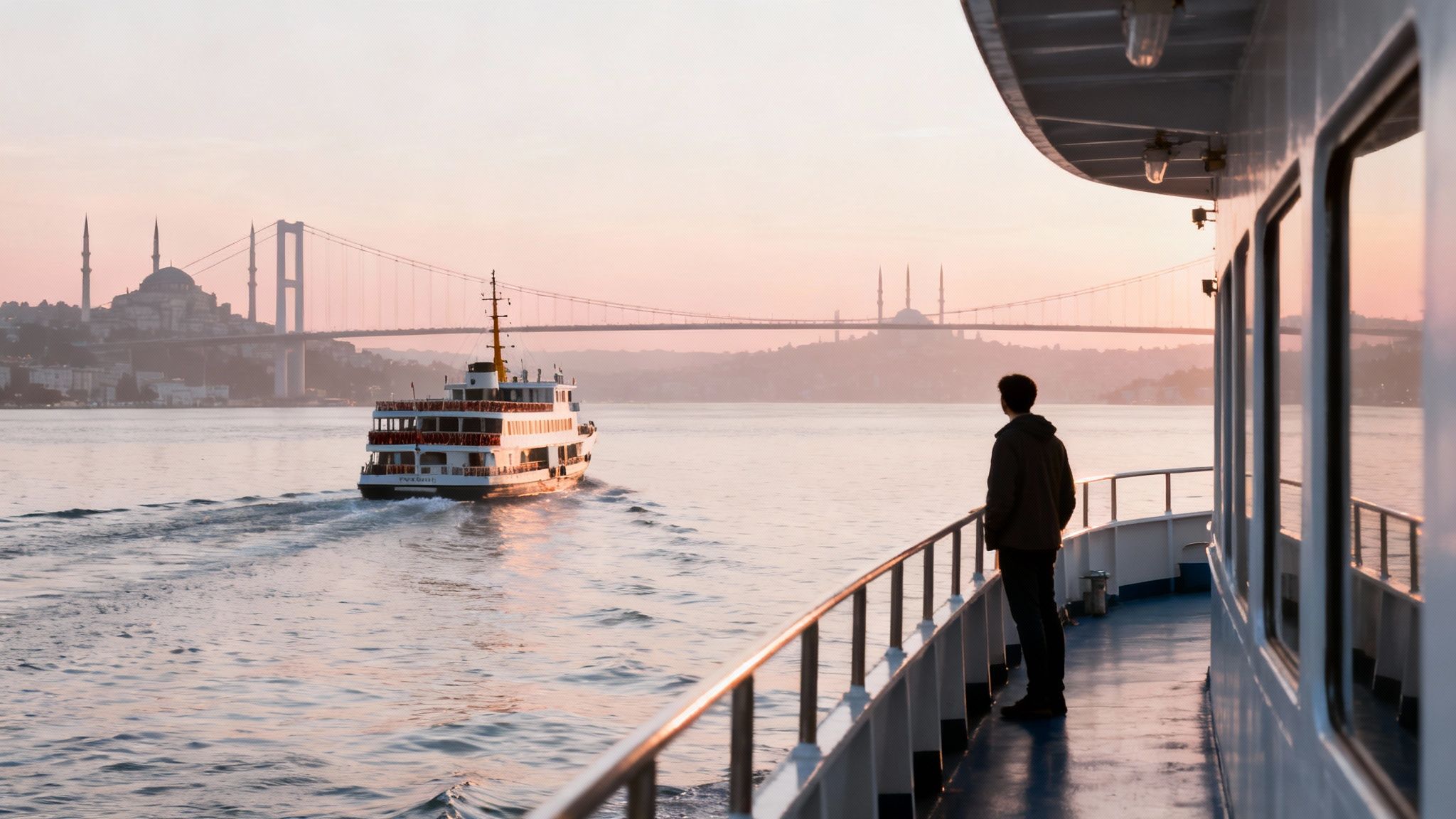
As a major rail junction, Istanbul is a natural anchor for multi-continent, slow-travel itineraries. Digital nomads leverage the extremely low cost of living for extended 8 to 12-week stays while using the city as a base to explore the region. You can easily plan a zero-flight, multi-country trip, like the popular Istanbul-Sofia-Bucharest triangle, entirely via scenic and affordable overnight trains. This positions Istanbul as an essential hub for sustainable, long-term travel.
Actionable Tips for Solo Travel in Istanbul:
- Transportation: For frequent travel, buy an unlimited daily pass for about $7.50 USD (€7) or a 7-journey pass for around $9.70 USD (€9). Use the scenic T1 and T3 trams for a safer and more enjoyable commute than the underground metro. For overnight train travel, book tickets 4-6 weeks in advance, as summer prices can spike.
- Sustainable Stays: For an authentic and safe experience, stay in the walkable neighborhoods of Balat or Beyoğlu on the European side. They offer a local vibe and are far less crowded than the tourist-heavy Sultanahmet area, which can have issues with petty crime.
- Connectivity: Get connected as soon as you land with a travel eSIM. Providers like Airalo or Yesim offer affordable data plans for Turkey, so you can navigate and stay in touch without hassle.
Istanbul’s strategic location and excellent rail connections make it a top choice for a safe, affordable, and sustainable solo adventure. It serves as the perfect starting point for deeper, low-impact journeys across two continents.
8. Valencia, Spain – The Underrated Coastal Solo Base
Valencia stands out as one of the safest cities to travel alone, offering a perfect blend of Mediterranean beach culture and urban safety without the intense crowds of Barcelona. Its high safety rating (Numbeo Safety Index: 73) and excellent rail connectivity make it an ideal solo travel hub. You can explore the futuristic City of Arts & Sciences, cycle through the expansive Turia Garden, and relax in the walkable beach neighborhood of Malvarrosa, all while feeling secure and at ease.
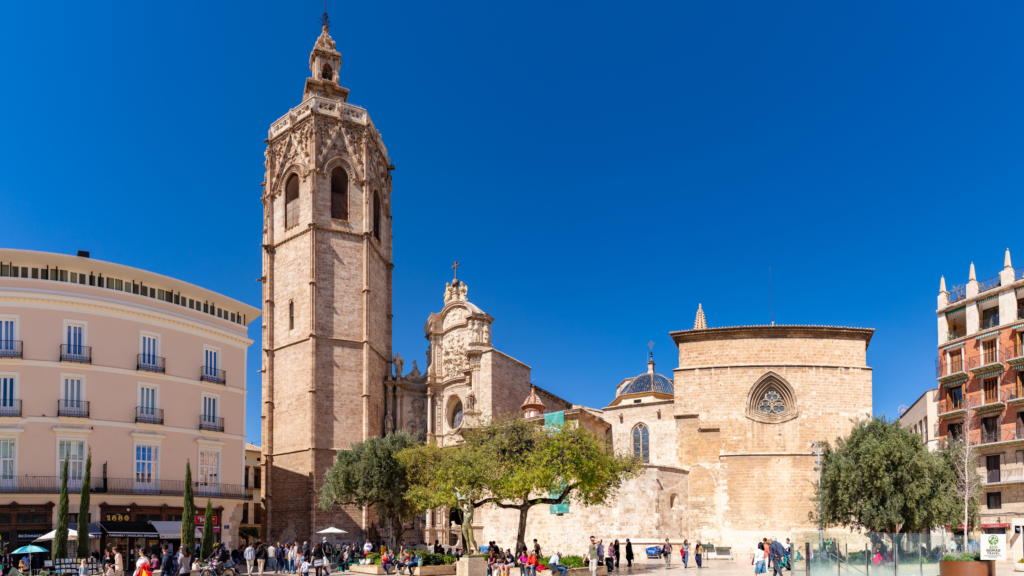
This city is a fantastic alternative for digital nomads seeking Barcelona’s connectivity with a more relaxed pace. Its position as a secondary Spanish rail hub allows for seamless day or night train connections to Madrid, Barcelona, and Andalusia, encouraging flight-free, multi-city slow travel. For extended stays, the artsy Ruzafa district provides a local vibe with independent cafes and boutiques, just a short metro ride from the city center, making it a comfortable and affordable base for remote work and exploration.
Actionable Tips for Solo Travel in Valencia:
- Transportation: For short trips, buy a 10-journey “SUMA 10” pass for around $11.40 USD (€10.65). For stays of three weeks or more, the monthly “SUMA Mensual” pass at about $36.40 USD (€34) offers unlimited travel. For easy exploration, rent a bike for just $5-9 USD (€5-8) per day and use the free, 5.6-mile (9km) Turia Garden bike path to get around.
- Sustainable Stays: Consider long-stay apartments in neighborhoods like Ruzafa or Malvarrosa instead of the more touristy central area. These districts offer better value and a more authentic local experience.
- Connectivity: Get connected the moment you arrive with an eSIM. Providers like Airalo or Yesim offer convenient data plans so you can navigate and stay in touch without hassle.
Valencia’s affordability and strategic rail access make it a prime choice for a sustainable solo journey. It serves as a perfect starting point for a rail-based exploration of Spain, such as the Valencia-Madrid-Seville triangle, completely avoiding domestic flights.
9. Krakow, Poland – The Medieval Hub to Eastern Europe
Krakow stands out as one of the safest cities to travel alone, offering a blend of rich history and remarkable affordability. Its low crime rate (Numbeo Safety Index 76/100) provides peace of mind, while its UNESCO-protected Old Town is entirely walkable and car-free, allowing for safe, independent exploration. The city’s excellent tram and bus network makes navigating beyond the center effortless, and it serves as a major Central European rail hub for solo adventurers.

This strategic location makes Krakow an ideal anchor for slow-travel routes across the region. Digital nomads leverage the city’s low cost of living for extended stays, often using it as a base for day trips to the Wieliczka Salt Mine or poignant visits to Auschwitz-Birkenau. It’s a perfect destination for those wanting to build a multi-week Eastern European circuit via overnight trains to Vienna, Prague, and Budapest.
Actionable Tips for Solo Travel in Krakow:
- Transportation: For stays over a few weeks, a monthly tram and bus pass is highly economical at around $35 USD (€33). Single journeys cost just $0.97 USD (€0.90). Use the Koleje Małopolskie (Polish Rail) app for seamless booking of regional train tickets for day trips.
- Sustainable Stays: For walkability and access to nightlife, stay in the historic Kazimierz (Jewish Quarter) or the Old Town. For a quieter, more local vibe, consider the Podgorze district. Look for long-stay discounts on Airbnb, which are common for trips of 28+ days.
- Connectivity: To ensure you have data upon arrival without searching for a local SIM, consider an eSIM. Providers like Airalo or Yesim offer convenient plans for Poland and the wider European region.
Krakow’s affordability and extensive rail connections make it a prime choice for a safe, budget-friendly solo journey. As a gateway to Eastern Europe, it demonstrates how you can travel extensively without a high budget, and you can learn more about affordable European travel strategies here.
10. Amsterdam, Netherlands – The Canal & Bike Solo Hub
Amsterdam combines a famously relaxed culture with top-tier infrastructure, making it one of the safest cities to travel alone. Its compact, walkable neighborhoods and world-class cycling network allow solo explorers to navigate with confidence. The city is a model for low-carbon urban living, where you can easily get from the historic Jordaan district to the vibrant De Pijp market entirely by bike or on foot.
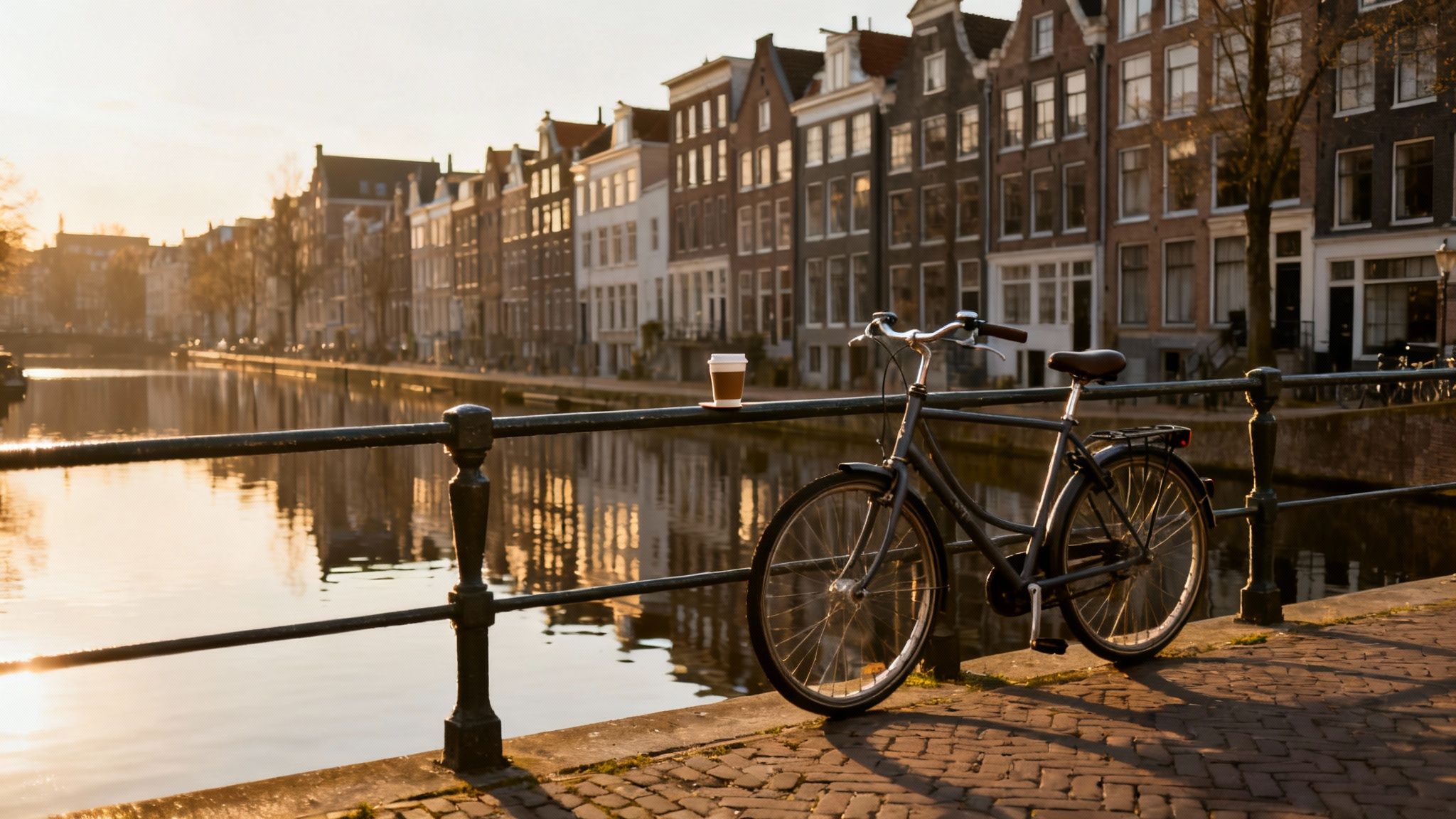
This focus on sustainable mobility is complemented by an excellent rail system, positioning Amsterdam as a prime hub for digital nomads. For longer stays, consider neighborhoods like Jordaan or De Pijp for their local cafes and walkability, which offer a more authentic experience away from the tourist-heavy Centraal area. Here, you’ll find zero-waste shops, community-focused co-working spaces, and plenty of green parks perfect for a work-and-travel lifestyle.
Actionable Tips for Solo Travel in Amsterdam:
- Transportation: For seamless travel, get an OV-chipkaart for all public transit. For longer trips, consider a monthly GVB pass for around $107 USD (€100 EUR). Rent a reliable city bike to truly live like a local, but always lock it securely to prevent theft.
- Sustainable Stays: Digital nomads can find long-stay discounts on platforms like Airbnb, often with significant savings for stays of 28 days or more. Prioritize accommodations in walkable neighborhoods like De Pijp to reduce your carbon footprint.
- Connectivity: Ensure you have data from the moment you arrive with an eSIM. Providers like Airalo or Yesim offer convenient plans for the Netherlands and Europe.
- Regional Travel: Use the efficient Intercity and Thalys trains for easy trips to nearby cities like Brussels or Paris. Book international tickets in advance for the best prices.
Amsterdam’s efficient rail connections and strong cycling culture make it an unbeatable choice for a safe, sustainable solo adventure. Its role as a central European rail hub makes it an ideal starting point for slow-travel routes, allowing you to explore multiple countries without ever stepping on a plane.
Top 10 Cities for Solo Travel Safety
| City | 🔄 Implementation Complexity | ⚡ Resource Requirements | ⭐ Expected Outcomes | 💡 Ideal Use Cases | 📊 Key Advantages |
|---|---|---|---|---|---|
| Copenhagen, Denmark | 🔄 Low — world-class protected bike lanes and 24/7 transit make car-free travel straightforward | ⚡ High daily cost (€40–80/day); bike rentals €12–20/day or €80/month | ⭐⭐⭐⭐⭐ — Safety 76/100; 45% bike commuters; low CO2 (2.1 t) | Eco-conscious solo travelers & digital nomads seeking bike-first city bases | Extensive bike network; rail links to Scandinavia; strong regenerative tourism; English widely spoken |
| Lisbon, Portugal | 🔄 Medium — hilly terrain increases mobility complexity despite good tram/rail | ⚡ Low–Medium (€25–40/day); cheap transport passes (€1.65 single, €39 weekly) | ⭐⭐⭐⭐ — Safety 74/100; good public transport; CO2 2.8 t | Affordable solo gateways, vegan/zero‑waste travelers, regional rail day-trips | Very affordable; coastal/regional rail access; strong vegan scene; compact walkable bairros |
| Vienna, Austria | 🔄 Low — highly integrated transit and cycling options; bureaucratic norms only minor friction | ⚡ Medium (€35–50/day); weekly/7-day passes economical | ⭐⭐⭐⭐⭐ — Safety 78/100; full transit coverage; CO2 2.2 t | Cultural travelers and rail-based Eastern Europe itineraries | World-class transit; safe neighborhoods; gateway to Prague/Budapest/Venice; museum/cultural access |
| Barcelona, Spain | 🔄 Medium — excellent transit and walkability but pickpocket risk and tourist crowds raise vigilance needs | ⚡ Medium (€20–30/night outside center); good metro fares (T‑Casual) | ⭐⭐⭐⭐ — Safety 72/100; coastal access; CO2 3.0 t | Beach + city solo travelers; Mediterranean climate year-round itineraries | Beaches + city life; strong night-train links; vegetarian culture; car-free districts (Gràcia) |
| Prague, Czech Republic | 🔄 Low — compact, highly walkable Old Town with simple public transport | ⚡ Low (€20–35/day); cheap local transport (≈€1.20 single) | ⭐⭐⭐⭐ — Safety 71/100; exceptional walkability; CO2 2.5 t | Budget solo travelers, medieval/cultural exploration, Eastern Europe rail hubs | Very affordable; UNESCO Old Town (car-free); strong night-train connections to Vienna/Berlin |
| Montreal, Canada | 🔄 Medium — excellent metro and PATH underground reduce weather friction but bilingual navigation needed | ⚡ Medium (€40–60/day); monthly OPUS passes useful for longer stays | ⭐⭐⭐⭐ — Safety 75/100; strong walkability; CO2 3.8 t | North American car-free base for digital nomads; winter-protected exploration | Extensive underground network; bilingual culture; strong arts scene; good metro coverage |
| Istanbul, Turkey | 🔄 High — complex city layout, language gaps and longer overnight rail routes increase planning complexity | ⚡ Low (€20–30/day); cheap local transport (€1.50) but long rail durations to Europe | ⭐⭐⭐ — Safety 67/100 (tourist areas safe); very low CO2 (1.8 t) | Transcontinental explorers, budget travelers connecting Balkans/Asia | Extremely affordable; ferry commutes across continents; gateway to Balkans and Asia via rail/bus |
| Valencia, Spain | 🔄 Low — relaxed urban layout, good local transit; fewer international rail directives require transfers | ⚡ Low (€18–25/night); 10-journey/metro passes economical | ⭐⭐⭐⭐ — Safety 73/100; coastal + urban balance; CO2 2.7 t | Quieter coastal base for digital nomads and slow-travelers | Less crowded than Barcelona; Turia Garden pedestrian corridor; fast high-speed link to Madrid |
| Kraków, Poland | 🔄 Low — pedestrian Old Town and affordable tram/bus network simplify car-free travel | ⚡ Low (€20–30/day); cheap local fares (€0.90 single) | ⭐⭐⭐⭐ — Safety 76/100; walkable UNESCO core; CO2 2.4 t | Budget Eastern Europe hub, cultural travelers, overnight train circuits | Very affordable; UNESCO Old Town (car-free); strong tram network and night‑train connections |
| Amsterdam, Netherlands | 🔄 Low — integrated OV system and dominant cycling culture reduce complexity for car-free visitors | ⚡ High cost of living; bike rental/ownership recommended | ⭐⭐⭐⭐⭐ — High quality mobility; 38% bike commuters; CO2 2.9 t | Bike-first urban explorers and rail-based Benelux/France travel | Exceptional cycling infrastructure; international rail (Thalys/Eurostar); near-universal English proficiency |
Final Thoughts on Choosing Your Solo Travel Destination
Embarking on a solo journey is a powerful act of self-reliance and discovery. Choosing from the safest cities to travel alone is the foundational step that gives you the confidence to explore freely and immerse yourself fully. As we’ve seen, destinations like Copenhagen, Vienna, and Montreal offer more than just low crime rates; they provide robust public transit, walkable neighborhoods, and a culture that supports independent, sustainable travel. Your safety isn’t just a statistic, it’s a feeling of ease that allows you to connect with a new place on a deeper level.
This list was curated with a specific vision in mind: empowering digital nomads and eco-conscious travelers to move through the world intentionally. By prioritizing rail-first itineraries and car-free city centers, you’re not just ensuring your own safety and convenience. You are actively participating in a more regenerative form of tourism. Each train ticket you book over a short-haul flight and every locally-owned, low-impact accommodation you choose sends a clear message. It’s a vote for a travel industry that respects local communities and protects our planet.
Ultimately, the best solo travel destination is one that aligns with your personal values and travel style. Whether you are captivated by the historical depth of Prague, the coastal energy of Lisbon, or the canal-lined charm of Amsterdam, the common thread is accessibility. These cities make it easy to live like a local, navigate without a car, and build a routine that feels both adventurous and secure. This balance is the true essence of a successful solo trip.
Editor’s Pick: Best Tool for Seamless Connectivity
For solo travelers and digital nomads, staying connected is non-negotiable for safety and logistics. My top recommendation is an eSIM service like Airalo. It allows you to download a local data plan directly to your phone upon arrival, eliminating the need to hunt for a physical SIM card. You can have affordable internet access the moment you step off the train, which is invaluable for navigating to your accommodation, checking transit schedules, or contacting someone in an emergency. It’s a simple, low-waste solution for global connectivity.
Key Takeaways for Your Solo Journey
To help you plan with confidence, here are the most important principles to remember:
- Prioritize Walkability and Transit: A city’s safety is deeply connected to its infrastructure. Choose destinations with world-class public transportation and walkable central districts to minimize reliance on cars or rideshares, especially at night.
- Research Neighborhoods Before Booking: Don’t just book the cheapest stay. Research the best neighborhoods for solo travelers, focusing on areas with good lighting, local amenities, and easy access to metro or tram lines.
- Embrace a “Rail-First” Mindset: For multi-city trips, plan your route using high-speed and regional trains. This is often safer, more scenic, and significantly more sustainable than booking multiple short-haul flights.
- Pack Light and Smart: A minimalist packing approach makes you more mobile and less of a target. A single, manageable bag allows you to navigate crowded train stations and cobblestone streets with ease.
- Trust Your Intuition: Data and safety rankings are crucial, but always listen to your gut. If a situation or area feels unsafe, remove yourself from it. Your personal awareness is your most valuable safety tool.
Join the Sustainable Work Movement
Want more rail-first itineraries, low-impact packing systems, and walkable base-city ideas?
Frequently Asked Questions
These FAQs help you choose from the safest cities to travel alone while keeping your trip low-impact, walkable, and easy to navigate without a car.
Choosing the Safest Cities to Travel Alone
1) What makes a city one of the safest cities to travel alone?▾
Look for low violent-crime rates, strong public transit, well-lit walkable streets, and a culture of social trust. For sustainable solo travel, add car-free mobility (metro/trams/bike lanes) and neighborhoods that stay active in the evening.
2) Are safety indexes enough to pick a destination?▾
Combine city-level scores with neighborhood research, transit reliability, and your own comfort factors (language, accessibility, mobility needs). A “safe city” can still have petty theft hotspots around tourist corridors.
3) Which matters more for solo safety: crime rate or mobility?▾
Reliable transit, walkability, and clear wayfinding reduce the situations where travelers feel vulnerable (late-night walks, isolated rideshares, confusing transfers). In practice, mobility often determines whether you feel safe enough to explore.
4) What are the most common safety issues in major solo-travel cities?▾
Expect pickpocketing in crowded transit, tourist squares, and nightlife areas. Use a crossbody bag, keep your phone off café table edges, and avoid leaving bags on chairs.
5) How do I choose the best neighborhood for solo stays?▾
Pick areas with good lighting, late-running transit, nearby groceries, and consistent foot traffic. Being 1–3 metro stops outside the tourist core often means fewer scams, better value, and a calmer vibe.
Low-Impact, Car-Free Solo Travel Planning
6) How can I make solo travel more sustainable?▾
Use trains instead of short-haul flights where possible, base yourself near transit nodes, and “trip-chain” nearby cities by rail. Staying longer reduces transport emissions per day and makes travel less stressful.
7) What’s the safest way to get from the airport to my accommodation?▾
If public transport is direct and well-signed, use it. Otherwise, book a reputable transfer ahead of time, confirm the pickup point, and avoid unsolicited “taxi helpers.”
8) Are night trains safe for solo travelers?▾
Choose reputable operators, keep valuables close, and use a small luggage cable lock. If you want maximum comfort and privacy, book a single-berth or women-only compartment (when available).
9) How do I stay safe using public transit at night?▾
Sit near other riders or the driver, keep your phone accessible but not distracting, and avoid empty platforms when possible. If transit frequency drops late, time your departure around the schedule to avoid long waits.
10) What’s the best way to stay connected for navigation and safety?▾
Having maps, transit apps, and messaging available as soon as you land reduces stress and helps you move confidently. If you use Travelpayouts links, your post already references options like Airalo or Yesim.
Solo Safety Habits That Actually Work
11) What should I do on my first day in a new city?▾
Walk the route between your stay, the nearest transit stop, and a grocery store in daylight. Save key places (pharmacy, police station, hospital) in your maps. This builds confidence fast.
12) How do I avoid pickpockets without being paranoid?▾
Keep your phone in a zipped pocket, use a crossbody bag worn in front in crowds, and don’t place items on café tables near edges. Most petty theft is opportunistic—remove the opportunity.
13) Is it safe to go out at night alone?▾
Stay on well-lit main routes, keep your drink in sight, and decide in advance how you’re getting back. If something feels “off,” leave early. Your intuition is data.
14) What are smart habits for solo dining and cafés?▾
Avoid hanging bags on chair backs in busy areas. If you’re working, use a simple routine: phone + wallet zipped away when you stand up, every time.
15) What should I do if I feel unsafe?▾
Step into a shop, hotel lobby, or busy café. Re-route to a main street, call a reputable taxi/ride, or use a nearby transit stop. Safety is usually about reducing isolation fast.
Budget, Work, and Longer Stays for Digital Nomads
16) Are hostels safe for solo travelers?▾
Look for 8.5+ ratings, keycard access, and secure storage. If you’re a light sleeper, a private room in a hostel can balance safety, community, and rest.
17) How long should I stay in one city to make solo travel easier?▾
Longer stays reduce daily decision fatigue, help you learn transit patterns, and often unlock monthly accommodation discounts. It’s also a lower-impact way to travel.
18) What should remote workers look for in a “safe base city”?▾
Choose places near metro/tram lines, with cafés and groceries within a short walk. A safe base city reduces stress and makes work routines easier to maintain.
19) How can I balance safety with spontaneity?▾
Know where you’re sleeping and how you’re getting back. With those locked in, spontaneity becomes enjoyable instead of stressful.
20) What’s the simplest solo safety checklist I can follow?▾
Before you head out: (1) confirm your route back, (2) zip valuables, (3) keep data/battery, (4) choose well-lit streets, (5) trust your intuition.
Tip: If you want your FAQ subheadings optimized further for Yoast, keep the keyword “safest cities to travel alone” in the main FAQ H2 and use “solo travel safety” and “car-free travel” in the H3s (already done above).
