
Sustainable tourism in Costa Rica isn’t just a buzzword; it’s a national identity, a way of life built on the simple philosophy of Pura Vida, or “pure life.” This deep-rooted principle shapes the country’s entire approach to travel. It weaves environmental preservation and genuine community connection into experiences that are both unforgettable and truly responsible.
The Pura Vida Approach to Travel: More Than a Motto
Welcome to your guide to sustainable tourism in Costa Rica, a country where conservation is part of the national fabric. This isn’t just another beautiful destination. Instead, it’s a world leader in ecotourism, proving that a healthy travel industry can thrive in harmony with nature. The national motto, Pura Vida, is much more than a friendly greeting—it’s the philosophy that guides how Costa Rica welcomes the world.
And this philosophy translates into real, measurable action. After decades of deforestation, Costa Rica has managed to regenerate its forests to cover over 50% of its landmass. The country has also designated over 25% of its territory as a network of protected national parks and reserves. This commitment means your journey here goes beyond just seeing the sights. Consequently, it becomes an active part of preserving lush rainforests and protecting an incredible diversity of life.
This guide will show you how to explore this green paradise with intention. We’ll look at how your choices—from the lodge you book to the local guide you hire—can directly support local communities and safeguard fragile ecosystems. Understanding what is sustainable travel is the first step toward making a positive impact. By the end, you’ll be ready for an adventure that is not just stunning, but deeply meaningful.

What Makes Costa Rica a Leader in Sustainable Tourism
Costa Rica’s dedication to the environment isn’t a new trend. The country famously abolished its army back in 1949. It chose to redirect those funds toward education, healthcare, and environmental protection. This single, foundational decision paved the way for its modern identity as a peaceful, eco-conscious nation.
Here’s what really sets its tourism model apart:
- Government-Led Initiatives: The country didn’t just hope for change; it created it. Aggressive reforestation programs actually pay landowners to restore and protect their forests. This makes conservation an economically smart choice for local families.
- Community Integration: Ecotourism is a core pillar of the economy. It creates thousands of jobs for local Costa Ricans—known as “Ticos”—as guides, park rangers, and hospitality staff. This ensures that the money you spend benefits the communities you’re visiting.
- A Culture of Conservation: From strict national park rules that ban single-use plastics to the widespread embrace of renewable energy, the commitment to sustainability is everywhere you look. This shared cultural mindset ensures conservation efforts are consistent and have strong community support.
How Costa Rica Defines Sustainable Tourism
Costa Rica’s commitment to sustainable tourism isn’t just a feel-good slogan; it’s a structured, nationwide system. Instead of letting businesses make vague “eco-friendly” claims, the country pioneered a framework called the Certification for Sustainable Tourism (CST). This isn’t just some obscure government policy—it’s a practical guide for travelers like you.
Think of the CST as a report card for hotels, tour operators, and even car rental agencies. It scores them on their real-world impact using a simple rating system of one to five “leaves.” This makes it easy to see who is actually walking the talk. A five-leaf rating means you’re looking at an exemplary business that has woven sustainability into everything it does.
For travelers, this system is a powerful tool against “greenwashing.” When you spot the official CST logo, you know the business has been rigorously vetted. It gives you the confidence to put your travel dollars toward operations that are actively protecting Costa Rica’s natural wonders and cultural fabric. Find great deals on flights with Aviasales to start your journey.
The Four Pillars of the CST Program
The CST program is built on four core pillars. Each one measures a different side of a company’s sustainable operations. Understanding these helps you see just how deep the certification goes. It’s a holistic view ensuring sustainability is baked into the business, not just sprinkled on top.
This hierarchy shows how the country’s famous “Pura Vida” philosophy translates directly into tangible actions for preservation and community support.
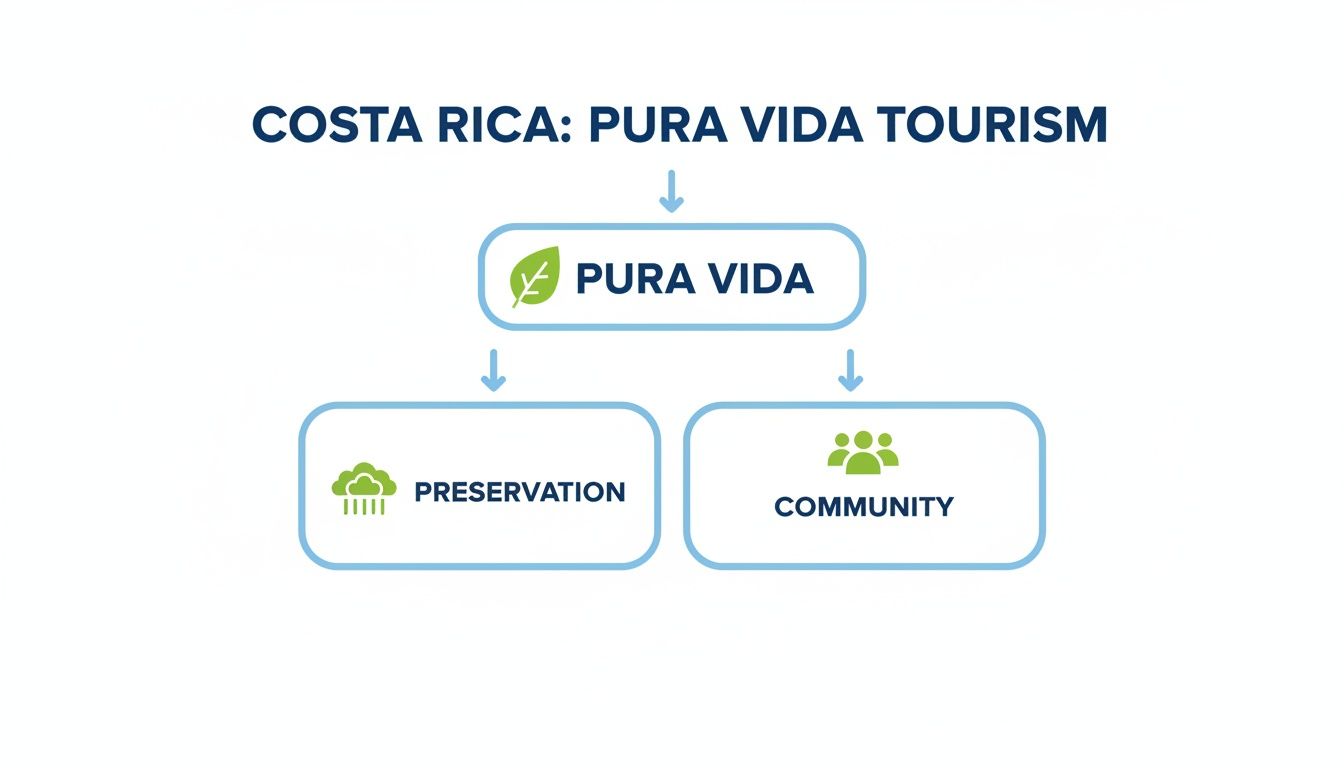
The diagram makes it clear: the nation’s ethos directly fuels its commitment to both environmental protection and social well-being.
To help you make sense of it all on the ground, I’ve put together a simple table breaking down what the CST certification really measures.
Decoding Costa Rica’s Certification for Sustainable Tourism (CST)
Here’s a simple breakdown of the CST program’s evaluation areas. This helps you understand what the certification truly means for your trip.
| CST Evaluation Area | What It Measures | Why It Matters to You |
|---|---|---|
| Environmental Impact | Waste management, water and energy conservation, ecosystem protection, and wildlife policies. | Your stay has a smaller footprint. Certified businesses actively reduce pollution and protect the habitats you came to see. |
| Community Engagement | Hiring local staff, sourcing from local farms, supporting community projects (schools, clinics), and preserving cultural traditions. | Your money stays in the local economy, strengthening the communities you visit and creating more authentic experiences. |
| Service & Guest Involvement | Quality of service, safety, and how well the business educates guests on its sustainable practices and invites them to participate. | You become an active participant, not just a passive observer. The business empowers you to contribute to conservation efforts. |
These pillars ensure that a certified business isn’t just protecting a patch of rainforest but is also a good neighbor and a responsible host.
H3: Environmental Impact
This is the pillar most people think of first. It’s all about how a business interacts with the physical environment. The CST looks at everything from waste management and water conservation to the protection of local wildlife.
A certified hotel, for example, might use solar panels for hot water. It might also treat its wastewater on-site or take part in local reforestation projects. This ensures your stay minimizes its footprint on the very ecosystems you’re there to enjoy.
H3: Community Engagement
True sustainability has to benefit local people. This pillar measures a company’s relationship with its community. For instance, it looks at whether it hires local staff, sources food from nearby farms, and supports projects like schools or health clinics.
When you choose a CST-certified operator, your money is far more likely to stay local. Therefore, it strengthens the very communities you’ve traveled so far to experience.
H3: Service and Guest Involvement
Finally, the CST evaluates the guest experience itself. This covers service quality and safety. But also—importantly—how a business invites you to participate in its sustainability mission.
This could be through educational nature walks or offering volunteer opportunities. It could even be providing simple tips on how to conserve resources during your stay. This pillar is what turns you from a passive tourist into an active partner in the conservation effort.
You can learn more about how these concepts fit into the bigger picture in our guide to sustainability in travel and tourism.
Choosing Your Eco-Lodge and Regenerative Stay
In Costa Rica, where you lay your head at night can be just as important as your daytime adventures. True sustainable tourism here isn’t just about leaving no trace. It’s about actively contributing to the local ecosystem and community. This means choosing a place that is not just in nature, but for nature.
The best eco-lodges and regenerative stays are woven into the fabric of their surroundings. They run on principles of conservation, community support, and genuine environmental education. Instead of just a room with a view, you get a story. You also get a real connection to the wildlife, the people, and the land.
Many of these places were pioneers, set up long before “eco-friendly” became a travel buzzword. They are often family-owned or run by local cooperatives. So your money directly supports the guardians of these precious environments. From rustic jungle bungalows to beautifully designed lodges powered by the sun, the options are as diverse as the country’s own microclimates. Find your perfect stay with Trip.com.
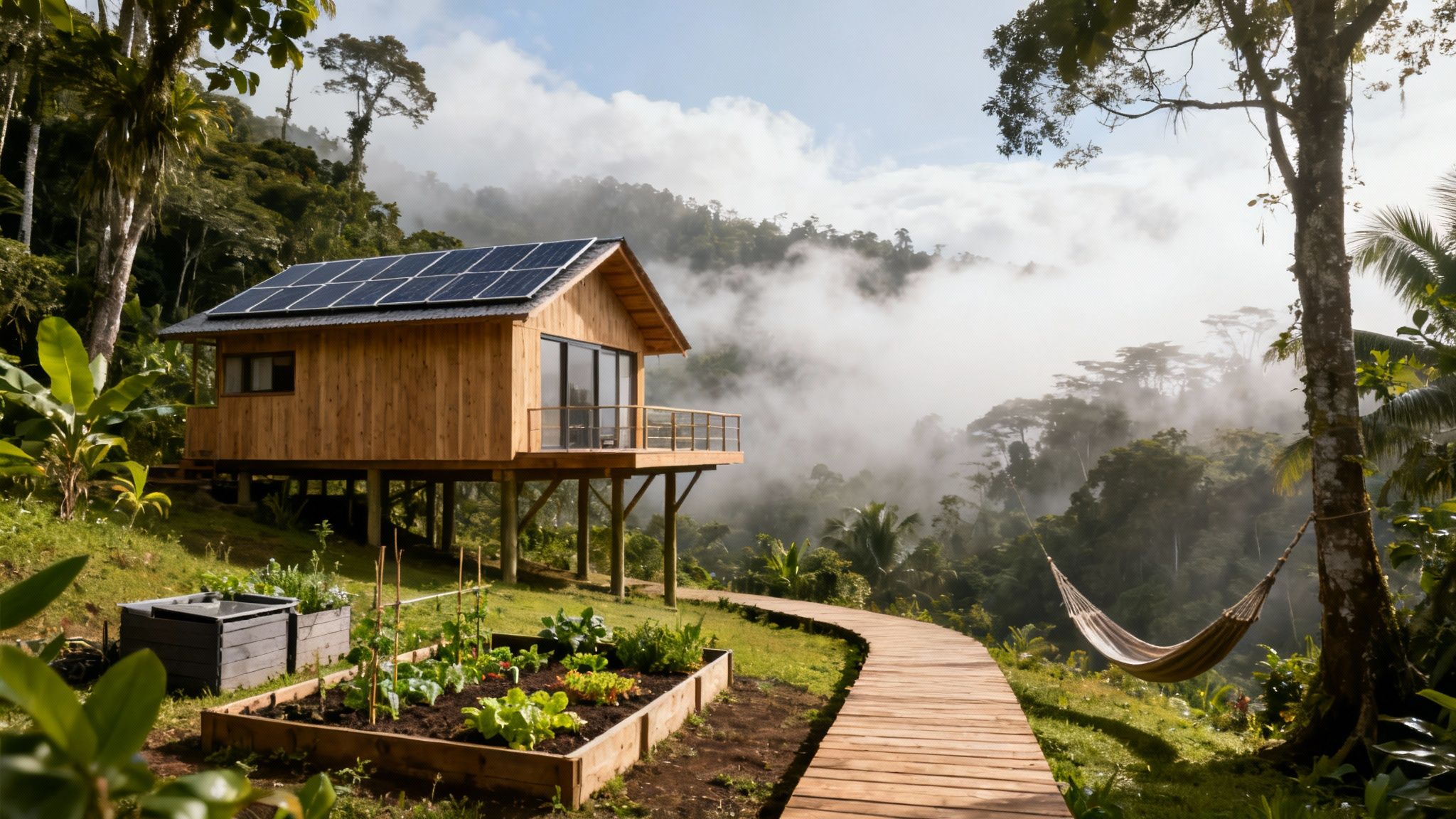
Regenerative Stays by Region
Finding the right stay often comes down to the kind of experience you’re after. Whether it’s the rugged, untamed biodiversity of the Osa Peninsula or the misty cloud forests of Monteverde, each region offers a unique way to connect with nature responsibly.
- Osa Peninsula: Known as one of the most biodiverse places on the planet, this is a hub for serious conservation. Lodges here are often remote and deeply integrated with wildlife corridors. They are also actively involved in protecting species like jaguars and scarlet macaws.
- Monteverde Cloud Forest: This high-altitude region is famous for its ethereal cloud forests. Eco-lodges here focus on preserving this unique habitat. They often have their own private reserves, farm-to-table restaurants, and strong ties to local conservation research.
- Caribbean Coast (Puerto Viejo de Talamanca): The vibe here is more laid-back, but the commitment to sustainability is just as strong. You’ll find community-run cabinas, Afro-Caribbean cultural projects, and places dedicated to protecting marine life like sea turtles and coral reefs.
When you’re choosing, look for properties that are open about what they do. A truly regenerative stay will be proud to share details about its waste management, water conservation, local hiring policies, and community projects. For more ideas, check out our guide to finding exceptional eco-friendly lodges that line up with your values.
What to Look For in a Sustainable Stay
Beyond official certifications, a few key details signal a genuinely sustainable operation. These are the things that show a deep, long-term commitment rather than just surface-level marketing.
Look for these signs of an authentic eco-lodge:
- Local Sourcing and Employment: Does the lodge hire staff from the local community? Is the food sourced from nearby farms? This is a crucial sign that tourism dollars are benefiting the people who call the area home.
- Conservation and Reforestation Efforts: Many top lodges manage their own private reserves or actively participate in reforestation projects. They might fund local conservation NGOs or even run wildlife rehabilitation centers on-site.
- Guest Education Programs: A great eco-lodge wants you to leave with more than just photos. They offer guided nature walks with local experts, workshops on conservation, and information about the local culture. This turns your stay into a real learning experience.
- Low-Impact Infrastructure: The buildings themselves should respect the environment. This means using sustainably harvested local materials, designing for natural airflow to cut down on air conditioning, and using renewable energy like solar power.
Exploring Costa Rica With a Lighter Footprint
How you move through a country is a huge part of your travel footprint. Luckily, Costa Rica is well set up for sustainable travel. It has great public transport and a culture that celebrates a slower pace. Traveling with a lighter footprint here isn’t about giving things up. Rather, it’s about digging deeper into the places you visit.
One of the best choices you can make is to take shared transport instead of renting a private car. While driving yourself feels freeing, it adds a lot of carbon emissions and traffic to the roads. Shared shuttles or the public bus system are fantastic, low-cost options. They shrink your impact and give you a more authentic local experience.
This shift naturally leads to slow travel. Instead of rushing between spots every couple of days, try staying longer in fewer places. This doesn’t just cut your travel emissions. In addition, it lets you truly sink into the local rhythm, support small businesses, and find hidden corners you’d otherwise speed past.
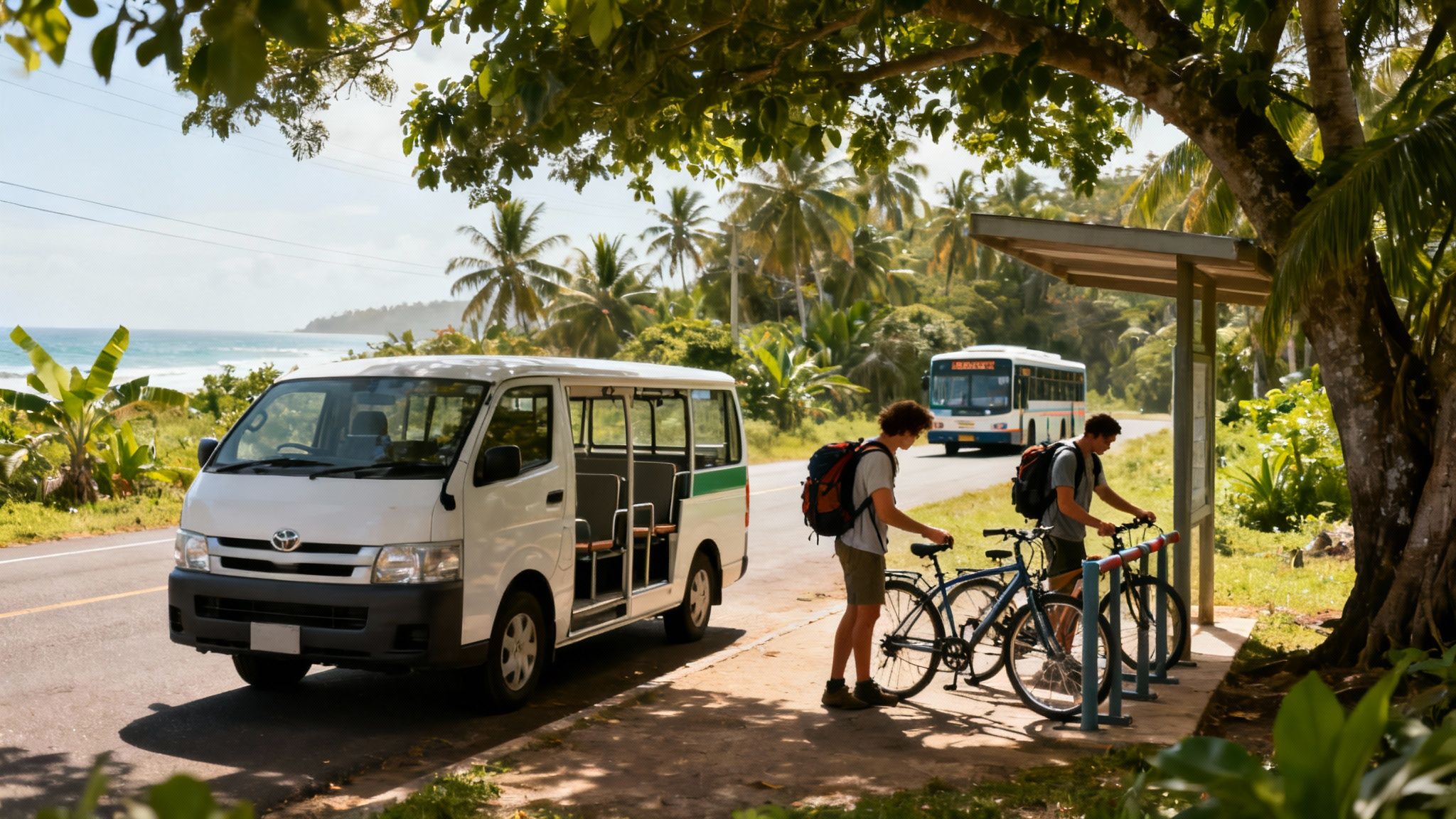
Low-Impact Transport Options
Getting around Costa Rica responsibly is easier than you might think. The country has plenty of choices for different budgets and travel styles. All of which help you keep your environmental impact low.
Here are the main ways to get around:
- Public Buses: This is the greenest and most budget-friendly way to travel. The bus network is surprisingly extensive. It connects major towns and even tiny villages. It’s a genuine way to travel alongside Ticos and see daily life unfold.
- Shared Shuttles: A great middle ground. Shared shuttles offer door-to-door service between popular tourist spots. You share the ride with other travelers, which drastically cuts the per-person carbon footprint compared to a private car. Companies like Welcome Pickups offer reliable, pre-booked services.
- Rental Cars (Used Mindfully): If you really need a car, go for a smaller, more fuel-efficient model. Use it for those hard-to-reach areas. Then park it for a few days and explore your home base on foot or by bike. This hybrid approach gives you convenience without sacrificing responsibility.
By sticking to shared options, you’re helping reduce traffic on Costa Rica’s beautiful roads and lowering overall emissions. You can get a sense of your travel impact by using a travel carbon footprint calculator to compare different transport modes before you even book.
Ideal Walkable Bases for Long Stays
For digital nomads and slow travelers, choosing the right home base is everything for a low-impact lifestyle. A walkable town means you can handle daily life—groceries, cafes, beach trips—without ever needing a car.
Puerto Viejo de Talamanca, on the Caribbean coast, is a perfect example. Its small town center is made for walking or cycling. In fact, this is how locals and visitors prefer to get around anyway. On the Pacific side, towns like Tamarindo or Jacó have lively, pedestrian-friendly centers where everything you need is just a short stroll away.
Staying connected is simple and sustainable, too. Using an eSIM from providers like Yesim gets rid of the plastic waste that comes with physical SIM cards.
The Benefits of the Green Season
Finally, when you visit can be just as important as how you visit. Costa Rica’s “green season,” which runs roughly from May through November, offers a uniquely sustainable travel experience. The afternoon rains bring the rainforests to life. This makes everything incredibly lush and vibrant.
More importantly, traveling during this off-peak time means fewer crowds in national parks and at popular sights. This reduces the strain on fragile ecosystems and local infrastructure. Your visit also provides a steadier, year-round income for local guides, lodges, and tour operators. This helps to build a more resilient tourism economy.
How Your Choices Support Communities and Conservation
Every dollar you spend on a trip tells a story. In Costa Rica, you have the power to make sure that story is a good one. A story that benefits the local communities and the incredible ecosystems you’ve come to see. This isn’t about grand, complicated gestures. Instead, it’s about the small, intentional choices you make every single day.
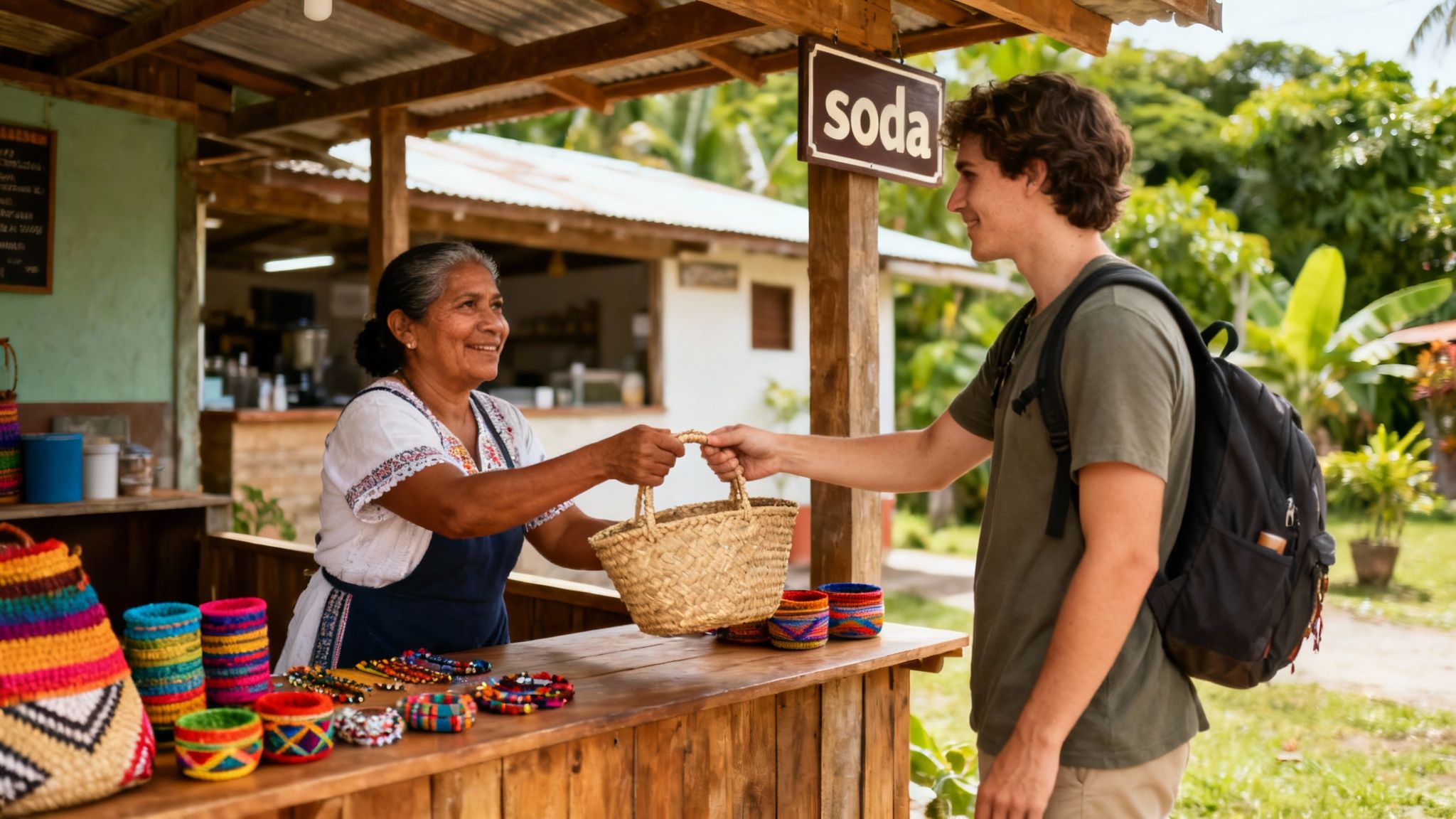
When you decide to eat at a family-owned restaurant—what locals call a soda—your money goes straight to that family. When you buy a hand-carved wooden bowl from a local artisan, you’re not just getting a souvenir. You’re supporting a traditional craft and ensuring a fair wage.
These decisions ripple through the community. They help build a stable local economy that’s based on preserving culture and nature, not exploiting it.
This kind of direct support is more critical than ever. In the past year, Costa Rica saw its tourism revenue drop significantly, with foreign spending falling by $60 million USD. This hit small, independent operators—local guides, family-run lodges, small-town artisans—the hardest. By choosing local, you help build resilience and ensure the guardians of Costa Rica’s natural wonders can keep doing their vital work. And always protect your trip with travel insurance from VisitorsCoverage.
A Simple Checklist for Daily Impact
Making a positive impact is refreshingly straightforward. It’s really just about being mindful of how your actions affect the people and places around you. Some of these things might feel like common sense. But together, they add up to a powerful collective effort.
Think about hiring a certified local naturalist guide for your rainforest hike. Their expertise will bring the forest to life in ways you could never experience on your own. Plus, your fee directly supports their family and validates their specialized knowledge. This creates a powerful incentive for conservation—when nature provides a good livelihood, it gets protected.
You can even take this a step further by getting involved in local conservation work. Many lodges and tour operators partner with community projects, from beach clean-ups to sea turtle monitoring. Joining in transforms you from a visitor into a valued contributor. Learn more about how you can get involved in our guide to eco-volunteering and regenerative travel.
To make it even easier, here are some simple, practical actions you can build into your daily routine. Think of it as a quick mental checklist before you head out for the day.
Your Daily Checklist for Responsible Travel
| Action | The Positive Impact |
|---|---|
| Choose CST-Certified Businesses | This is your most reliable shortcut. It directs your money to operators verified for their environmental and social commitments. |
| Hire Local Guides & Eat at Sodas | This powerful choice ensures your spending directly benefits local families and strengthens the community’s economy. |
| Keep a Respectful Distance from Wildlife | Never feed wildlife or chase a selfie. This protects animals from stress and prevents them from becoming dangerously dependent on humans. |
| Carry Reusable Items | A water bottle, shopping bag, and travel utensils are small items that make a huge difference in reducing single-use plastic waste. |
| Ask Permission Before Photographing People | This fundamental act of respect honors individual privacy and shows you value local culture. A simple question can lead to a wonderful interaction. |
| Conserve Water and Energy | Turn off lights and A/C when you leave your room and take shorter showers. This lessens the strain on local infrastructure. |
These small habits might not feel like much on their own. However, when practiced by thousands of visitors, they collectively protect the natural and cultural fabric that makes Costa Rica so special.
A Quick Checklist for Your Costa Rican Adventure
Making your trip a positive force for good in Costa Rica really comes down to a few simple habits. Think of these as a mental checklist to guide your planning and on-the-ground choices. They’re a straightforward way to make sure your adventure supports the country’s famous Pura Vida spirit.
Prioritize Officially Certified Businesses
When you’re booking hotels, tours, or transport, keep an eye out for the official CST (Certification for Sustainable Tourism) logo. This is your single most reliable signal that a business isn’t just talking a big game. They’ve actually done the work to meet Costa Rica’s tough environmental and social standards. It’s the simplest way to sidestep greenwashing.
Support the Local Economy Directly
Where your money goes matters immensely. Make it a habit to choose family-run eco-lodges. Eat at the small local restaurants known as sodas. Hire guides who grew up in the community. This ensures your travel dollars stay local. It directly benefits the very people who act as guardians of the natural wonders you’ve come to see.
Travel With a Lighter Footprint
You can shrink your environmental impact in a few easy ways. Opt for shared transport instead of a private rental whenever you can. Pack reusable items like a water bottle and a shopping bag to cut down on plastic waste. Better yet, try embracing a bit of slow travel. Staying longer in fewer places not only reduces your travel emissions but also gives you a much deeper, more meaningful connection to each spot.
Observe Wildlife Responsibly
Protecting Costa Rica’s mind-blowing biodiversity is a shared responsibility. Always keep a respectful distance from animals in the wild. A strict “no feeding, no touching” rule is non-negotiable. The best way to ensure an ethical encounter is to hire certified guides. They live and breathe responsible wildlife viewing. Your restraint is what helps keep these incredible creatures wild and safe.
Consider the Green Season
Traveling between May and November might just be Costa Rica’s best-kept secret. It often means fewer crowds, better prices, and a more authentic, unhurried vibe. Visiting during the “green season” also helps spread tourism income more evenly across the calendar. As a result, this builds a more stable and resilient local economy for everyone.
Your Questions About Sustainable Travel in Costa Rica, Answered
Planning a trip that really honors Costa Rica’s Pura Vida spirit often brings up a few practical questions. It’s one thing to love the idea of sustainable travel. It’s another to know how to spot a genuinely eco-friendly lodge, view a sloth without disturbing it, or travel thoughtfully without breaking the bank.
Let’s get straight to the answers for the most common queries we see. Think of this as your field guide to making your trip as impactful and smooth as possible. From sidestepping “greenwashing” to packing gear that leaves no trace, these tips will help you put your good intentions into action.
Can I Travel Sustainably in Costa Rica on a Budget?
Absolutely. In fact, some of the most authentic and responsible ways to experience Costa Rica are also the most affordable. Sustainable travel isn’t just for high-end eco-resorts.
You can find charming, family-owned eco-cabinas for around $50-$100 USD a night. Choosing these smaller stays means your money goes directly into the hands of a local family. It does not go to a distant corporation.
The same goes for food. Eating at the local sodas—small, family-run restaurants—is a perfect example. It’s far cheaper than tourist-centric places. It also supports local households and cuts down on the carbon footprint of imported ingredients. Ditching private shuttles for the public bus system does the same, slashing both your emissions and your expenses.
For an even bigger win, consider traveling in the “green season” (May to November). You’ll find lower prices and fewer crowds. This makes a budget-conscious, sustainable trip even more achievable.
What’s the Best Way to View Wildlife Ethically?
The golden rule is simple: observe from a distance and never interfere. Your presence should be a quiet one.
The single best way to do this is to hire a certified local naturalist guide when you visit national parks and reserves. They are masters at spotting wildlife you’d otherwise miss. They also know precisely how to do it without stressing the animals. They’ll show you where to look, explain the animal’s behavior, and keep both you and the wildlife safe.
It’s crucial to resist the urge to feed, touch, or chase a selfie with any animal. These actions can make them sick, aggressive, or dangerously dependent on humans. Always stick to marked trails to avoid trampling fragile ecosystems or nesting sites.
Your best tools for an incredible encounter? A good pair of binoculars and a camera with a zoom lens. They let you get that amazing close-up view without ever invading an animal’s space.
How Do I Avoid Greenwashing in Costa Rica?
“Greenwashing” is the frustrating practice of a business marketing itself as eco-friendly without doing the real work. It’s all talk, no action.
The most reliable way to cut through the noise is to look for Costa Rica’s official Certification for Sustainable Tourism (CST). This government-backed program is the real deal. It rigorously vets businesses on their actual environmental and social performance, not just their marketing claims.
If a hotel’s website is full of vague words like “green” or “eco-minded,” don’t be afraid to ask direct questions before you book. A truly sustainable business will be proud to tell you the details.
Try asking things like:
- How do you manage your wastewater and solid waste?
- Can you tell me about your water and energy conservation programs?
- Do you hire your staff mostly from the local community?
Their transparency—or lack thereof—is one of the clearest signs of their true commitment.
What Essential Items Should I Pack for a Sustainable Trip?
A sustainable packing list is all about reducing waste and respecting the environment.
The number one item is a reusable water bottle, ideally with a built-in filter. This one piece of gear will help you completely avoid single-use plastic bottles, which are a huge problem.
Next, make sure you bring reef-safe sunscreen. Standard sunscreens contain chemicals that are incredibly damaging to coral reefs and other marine life. Also, consider solid toiletries like shampoo and conditioner bars; they eliminate plastic packaging entirely.
A reusable shopping bag is a must for picking up souvenirs or groceries at local markets. Finally, for your own comfort and the health of the ecosystem, pack an effective insect repellent that uses gentler ingredients than heavy DEET formulas.
Editor’s Pick for Sustainable Travel Gear
Product: Airalo eSIM
Staying connected without creating plastic waste is a simple sustainable win. The Airalo eSIM lets you download a data plan straight to your phone, getting rid of the need for a physical SIM card and its plastic packaging. It’s a practical, low-impact tool for modern travelers.
Key Takeaways
- Prioritize CST Certification: Look for the official Certification for Sustainable Tourism (CST) logo when booking hotels and tours to sidestep greenwashing.
- Support Local Directly: Choose family-owned lodges, eat at local ‘sodas’, and hire local guides. This ensures your money stays in the community.
- Travel Lighter: Opt for shared transport, pack reusables like a water bottle and shopping bag, and embrace slow travel by staying longer in fewer spots.
- Observe Wildlife Responsibly: Never feed or touch animals. Hire certified guides and keep a respectful distance to protect Costa Rica’s incredible biodiversity.
- Consider the Green Season: Traveling between May and November often means fewer crowds and a more authentic experience, spreading tourism income more evenly through the year.
- Pack Mindfully: Bring reef-safe sunscreen, a reusable water bottle, and solid toiletries to shrink your environmental footprint.
Join the Sustainable Work Movement
Want more rail-first itineraries, low-impact packing systems, and walkable base-city ideas?
This article was fact-checked using sustainability data from the World Green Building Council, the Global Ecotourism Network, and peer-reviewed architecture studies. All partner links are vetted for compliance with sustainable business certifications.
FAQ: Planning Sustainable Tourism in Costa Rica
These quick answers help you plan responsibly, avoid greenwashing, and travel with a lighter footprint.
Certifications, CST, and How to Avoid Greenwashing
What is the CST certification in Costa Rica? ⌄
How do I know if a hotel is truly eco-friendly? ⌄
What questions should I ask to spot greenwashing? ⌄
Is “eco-lodge” always better than a regular hotel? ⌄
Do CST-certified stays cost more? ⌄
Transport, Slow Travel, and Low-Impact Logistics
What’s the most sustainable way to get around Costa Rica? ⌄
Do I need to rent a car for a sustainable trip? ⌄
What is “slow travel” and why is it more sustainable? ⌄
Which places are best for car-free, walkable stays? ⌄
How can I calculate the carbon footprint of my trip? ⌄
Eco Lodges, Regenerative Stays, and Responsible Booking
What should I look for in a truly sustainable eco-lodge? ⌄
What does “regenerative tourism” mean in Costa Rica? ⌄
Is it better to book direct or through a booking site? ⌄
Are eco stays kid-friendly and comfortable? ⌄
How can my lodging choice support conservation directly? ⌄
Wildlife Ethics and National Park Rules
What’s the ethical way to see sloths, monkeys, and toucans? ⌄
Can I take wildlife photos without harming animals? ⌄
Why is feeding wildlife harmful, even if it seems harmless? ⌄
Are national parks strict about sustainability rules? ⌄
Is reef-safe sunscreen really necessary? ⌄
Budget Tips, Green Season, and Smart Packing
Can I do sustainable tourism in Costa Rica on a budget? ⌄
When is the best time to visit for fewer crowds? ⌄
What are the top “must-pack” items for a low-impact trip? ⌄
How do I stay connected without extra plastic waste? ⌄
What’s one simple habit that makes the biggest difference? ⌄
