
Planning a trip and searching for meaningful things to do in Peru? This guide moves beyond the standard tourist trail to uncover a dozen low-impact, regenerative experiences that directly support local communities and help preserve Peru’s incredible biodiversity. We’re focusing on a different way to travel: one that prioritizes rail transport, community-based tourism, and immersive adventures that minimize your carbon footprint while maximizing your connection to this extraordinary country. From the high Andes to the deep Amazon, we’ll explore how to travel slower, smarter, and more sustainably.
Things to Do in Peru: A Low-Impact, Culture-First Blueprint for Sustainable Travel
This isn’t just another list. It’s a practical blueprint for the eco-conscious digital nomad, the car-free couple, and any traveler seeking a deeper engagement with Peruvian culture. We’ve designed this roundup for those who prefer walkable base cities, luggage-light packing systems, and point-to-point itineraries that avoid unnecessary flights. You’ll find actionable details for each activity, including why it’s a sustainable choice, the best low-impact transport options like regional buses and trains, recommended stay lengths, and tips for contributing positively to the local economy.
We’ll cover everything from classic treks and Machu Picchu alternatives to immersive homestays on Lake Titicaca and ethical wildlife tours in the Amazon basin. Each entry provides a framework for building a trip that is not only unforgettable but also responsible. Forget the generic advice; this guide gives you the specific insights needed to plan a journey that respects both the ancient landscapes and the modern communities of Peru.
Key Takeaways
- Prioritize Ground Travel: Opt for scenic trains and long-distance buses over domestic flights to reduce your carbon footprint and see more of the country.
- Support Community Tourism: Choose homestays, locally-guided tours, and artisan cooperatives to ensure your money directly benefits Indigenous and local communities.
- Acclimatize Slowly: Many of Peru’s top attractions are at high altitudes. Plan for 2-3 days of rest in cities like Cusco or Arequipa to prevent altitude sickness.
- Travel in Shoulder Seasons: Visiting in April-May or September-October often means fewer crowds, better weather, and less environmental strain on popular sites.
- Choose Regenerative Operators: Research tour companies and lodges with verifiable sustainability certifications and fair-wage practices for local staff.
- Pack Light and Zero-Waste: A lighter pack is easier to carry and reduces loads for porters. Bring a reusable water bottle and filter to avoid single-use plastics.
1. Things to do in Peru: Machu Picchu Trek via the Inca Trail
The classic four-day Inca Trail trek is one of the most iconic things to do in Peru, guiding hikers along ancient stone paths through cloud forests and high-altitude passes to the legendary citadel. This 26-mile (42-kilometer) journey reaches elevations over 13,800 feet (4,200 meters), culminating in a breathtaking sunrise view from the Sun Gate over Machu Picchu. It’s a physically demanding but profoundly rewarding experience that connects you directly with Incan history and the Andean landscape.
Choosing this trek responsibly means prioritizing operators that implement low-impact practices and support local communities. By doing so, you contribute to the preservation of this fragile ecosystem and ensure tourism revenue benefits the region’s Indigenous stewards.
Sustainable Trekking & Practical Tips
- Choose Regenerative Operators: Seek out companies with proven sustainability credentials. For instance, Llama Trek Peru establishes direct partnerships with Indigenous communities for equitable revenue sharing, while others may hold Global Sustainable Tourism Council (GSTC) certification.
- Acclimatize Properly: Spend at least two to three days in Cusco before your trek to adjust to the altitude. This dramatically reduces the risk of altitude sickness.
- Travel with a Lighter Footprint: Minimize your impact from the start. Consider taking a long-distance bus or train from Lima to Cusco instead of flying to reduce carbon emissions. Check schedules on sites like Trip.com.
- Pack for Low Impact: Your packing choices matter. Learn more about packing for low-impact travel to reduce your porter’s load and minimize waste on the trail. Bring a reusable water bottle and purification tablets to avoid single-use plastics.
- Travel in Shoulder Seasons: Book your trek for April, May, September, or October. You’ll encounter fewer crowds, which lessens the environmental strain on the trail and provides a more serene experience.
2. Uros Floating Islands Homestays (Lake Titicaca)
An immersive homestay on the Uros Floating Islands offers a unique cultural exchange on Lake Titicaca, the world’s highest navigable lake. These remarkable islands are handmade from buoyant totora reeds by the Uros people, who have maintained this ancestral way of life for centuries. Staying with a local family provides direct insight into their traditions, from reed harvesting to artisanal crafts, while ensuring your tourism spending directly supports the community.
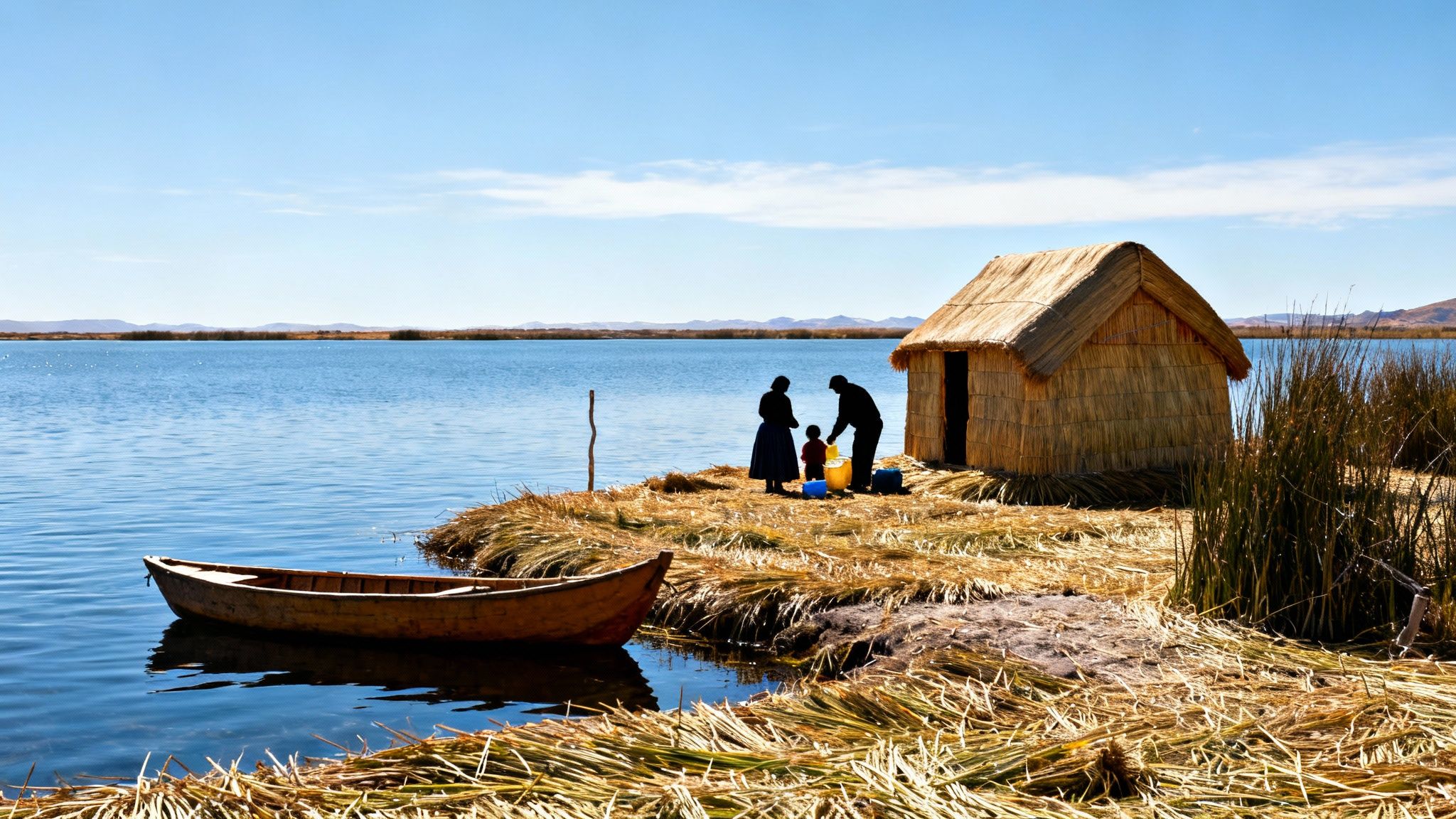
Choosing a community-led homestay over a brief day tour is a powerful act of regenerative travel. It fosters genuine connections, provides a more equitable income for host families, and reduces the environmental impact associated with high-volume, short-stay tourism. This low-infrastructure experience is one of the most memorable things to do in Peru for travelers seeking authentic cultural engagement.
Sustainable Stays & Practical Tips
- Choose Community-Owned Stays: Verify that your homestay is community-owned and operated, not just resold by a third-party tour agency. Cooperatives like those found through responsible travel platforms ensure revenue stays with the Uros families. Learn more about finding ethical community ecotourism projects.
- Travel by Scenic Train: For a low-carbon journey from Cusco, take the Andean Explorer train to Puno. This scenic daytime trip offers stunning views of the Altiplano and significantly reduces your travel emissions compared to flying.
- Bring Reusable Water Bottles: Many islands rely on rainwater collection or have limited access to filtered water. Bring your own reusable bottle and a purification system to minimize plastic waste and ensure you have a safe water supply.
- Learn Basic Phrases: While not required, learning a few basic Spanish or Aymara phrases can profoundly deepen your connection with your host family, showing respect and opening the door for more meaningful conversations.
- Confirm Fair Practices: Before booking, ask if the homestay is part of a cooperative that rotates hosting duties. This ensures income is distributed fairly among families rather than concentrated with just a few.
3. Taquile and Amantani Homestays (Lake Titicaca)
For an unparalleled cultural immersion, a multi-day homestay on the islands of Lake Titicaca is one of the most authentic things to do in Peru. Here, you can live alongside Indigenous Aymara and Quechua families on remote islands like Taquile and Amantani, sharing meals, learning traditional weaving techniques, and participating in daily agricultural life. This regenerative model ensures tourism revenue directly supports the communities, preserving their heritage and self-sufficiency away from commercial tourism.
Choosing a community-managed stay offers a genuine exchange that transcends a typical tourist experience. Islands like Amantaní operate with a zero-commercial-hotel policy, meaning your visit directly contributes to local households. It’s a profound opportunity to connect with ancient traditions on the world’s highest navigable lake while empowering its traditional stewards.
Sustainable Homestays & Practical Tips
- Book Directly with Community Cooperatives: Bypass commercial tour operators and book through community-led associations. The Taquile Island Community Tourism Association, for example, coordinates stays with over 80 families, ensuring equitable distribution of income.
- Acclimatize in Puno: Lake Titicaca sits at over 12,500 feet (3,810 meters). Spend at least one to two days in Puno before heading to the islands to properly adjust to the high altitude.
- Pack Light and Respectfully: There are no porters or vehicles on these islands; you will carry your own bag up steep paths. Pack only essentials in a small backpack to manage the climb and reduce your footprint.
- Travel in Shoulder Seasons: Plan your visit for April-May or September-October. The weather is generally calm, and smaller group sizes allow for a more intimate and less intrusive experience with your host family.
4. Sacred Valley Agricultural Tours and Farm Stays
Immersive farm stays offer one of the most authentic things to do in Peru, connecting you with the ancient agricultural heart of the Sacred Valley. These multi-day experiences allow you to stay with local families, participate in seasonal harvests of native potatoes and quinoa, and learn firsthand about traditional Incan terracing and agroecology. It’s a powerful alternative to conventional tourism, fostering genuine cultural exchange and providing direct economic support to Indigenous farming communities.
Choosing a community-based agricultural tour ensures your travel dollars directly empower local families preserving ancestral knowledge and biodiversity. By engaging in hands-on activities, from planting to preparing traditional meals, you gain a profound appreciation for the relationship between the Andean people and their land, all while contributing to a resilient, local food system.
Sustainable Farming & Practical Tips
- Partner with Community Networks: Book through established cooperatives like the Mama Runtu farm-stay network in Pisac. These organizations ensure fair wages and equitable benefits for participating families, moving beyond extractive tourism models.
- Acclimatize Before You Work: Spend at least two to three days in Cusco to adjust to the altitude before engaging in farm activities. The physical work is more demanding at elevations above 10,000 feet (3,000 meters).
- Use Low-Impact Local Transport: Travel from Cusco to Sacred Valley towns like Pisac or Urubamba using shared colectivos or regional buses. This one to two-hour trip costs only a few dollars ($2-$3 USD) and significantly reduces your carbon footprint compared to a private taxi.
- Pack for High Altitude & Farm Life: Bring sturdy hiking boots, layered clothing for drastic temperature shifts, and strong sun protection. Also, pack zero-waste items like a reusable water bottle and food containers to minimize your impact in these rural communities.
- Time Your Visit with the Seasons: Plan your trip for April or May to participate in planting seasons, or September and October for harvests. Traveling during these shoulder seasons also means fewer crowds and a more intimate experience.
5. Cusco Base City: Walking Tours, Architecture, and Market Immersion
As Peru’s archaeological capital, Cusco serves as an ideal low-impact base for slow travelers and remote workers. The city’s high altitude and historic core are best explored on foot, allowing for deep immersion into its layered history. You can spend weeks wandering through walkable colonial quarters like San Blas, discovering pre-Columbian ruins within city limits, and absorbing the vibrant energy of local markets, all without relying on motorized transport for daily activities.
Establishing Cusco as a temporary home base is inherently sustainable. It supports local economies through long-term apartment rentals, direct purchases from market vendors, and patronage of neighborhood cafes and laundromats. This approach reduces the high turnover and resource intensity of short-stay tourism, fostering a more meaningful connection with the city and its residents. It’s one of the best things to do in Peru for a truly immersive cultural experience.
Sustainable Stays & Practical Tips
- Choose a Walkable Home Base: Book a long-term rental in neighborhoods like San Blas or Magisterio. Opting for a locally owned Airbnb or a co-living space keeps your money in the community.
- Acclimatize Slowly: Dedicate your first two to three days to adjusting to the altitude. Rest, stay hydrated, and drink coca tea to prevent altitude sickness before undertaking extensive walking tours.
- Arrive by Land: Choose the scenic 10–12 hour bus journey over a flight from other parts of Peru to significantly lower your carbon footprint. Book tickets at least a week in advance. For connectivity on the go, consider an Airalo eSIM to manage bookings easily.
- Engage with Local Markets: Visit San Pedro Market early (6–8 AM) for the freshest produce and fewest crowds. Bring a reusable bag; many vendors appreciate and sometimes discount purchases for customers who avoid plastic.
- Connect with the Community: Join local digital nomad WhatsApp or Facebook groups. These are invaluable resources for finding apartment leads, co-working spaces, and community events, helping you integrate rather than just visit. Find out more about why Cusco is one of the best cities for digital nomads.
6. Amazing Things to do in Peru: Colca Canyon Trekking and Condor Viewing
Twice as deep as the Grand Canyon, the Colca Canyon offers one of the most dramatic landscapes and rewarding things to do in Peru. A multi-day trek here takes you from high-altitude plateaus down to a lush oasis at the canyon floor, passing through traditional villages and past ancient agricultural terraces. The journey’s highlight is witnessing the majestic Andean condor, the world’s largest flying bird, soaring on thermal updrafts from viewpoints like Mirador del Condor.

Choosing a community-focused trek ensures your visit directly supports the local Cabana and Collagua peoples who have inhabited this region for centuries. Operators prioritizing homestays and local guides help preserve cultural heritage and provide a more authentic, low-impact alternative to large-scale tourism centered in the main towns.
Sustainable Trekking & Practical Tips
- Choose Community-Based Operators: Seek out tour companies that facilitate genuine cultural exchange. For instance, Colca Trek Peru arranges community-based homestays in Maca and Achoma, while Wild Frontiers offers treks with specialized condor guides and partners with sustainable local lodges.
- Acclimatize in Arequipa: Spend at least two to three days in Arequipa to adjust to the altitude before heading to the canyon, which sits at an even higher elevation.
- Use Regional Transport: Opt for the scenic 10-hour regional bus from Cusco to Arequipa (around $20–$30 USD). From Arequipa, take a local colectivo bus to the canyon entrance at Chivay (a 3-hour trip for about $5–$8 USD).
- Time Your Condor Viewing: The condors are most active in the early morning. Plan to be at the Mirador del Condor viewpoint between 8 AM and 9 AM for the best chance to see them.
- Travel in Shoulder Seasons: Plan your trek for April, May, September, or October. You’ll find stable weather, fewer crowds, and a more peaceful canyon experience.
7. Peruvian Cooking Classes and Market-to-Table Food Experiences
Diving into Peru’s world-renowned culinary scene through a hands-on cooking class is one of the most immersive things to do in Peru. These market-to-table experiences typically begin with a guided tour of a local market to source fresh, regional ingredients, followed by step-by-step instruction on preparing iconic dishes like ceviche, lomo saltado, or causa rellena. It’s a direct way to connect with Peru’s incredible biodiversity and the Indigenous food systems that have sustained it for centuries.
Choosing a class that partners with local producers or operates within a community setting ensures your tourism spending supports the small-scale farmers and vendors at the heart of Peruvian cuisine. This approach moves beyond simple consumption, turning your meal into a meaningful cultural exchange and an act of sustainable travel.
Sustainable Food Experiences & Practical Tips
- Book Directly with Local Chefs: Whenever possible, bypass large tour agencies and book directly with small, independent operators like Alma Peru Culinary Experiences in Cusco or a farm-to-table class in the Sacred Valley. This ensures the majority of your payment goes to the instructor and local suppliers.
- Embrace Early Market Visits: Arrive at the market with your class before 7 AM. You’ll experience the vibrant morning rush, see the best selection of produce, and navigate with smaller crowds.
- Choose Seasonality: Ask instructors what ingredients are currently in season. Opting for classes that highlight seasonal and locally foraged foods supports sustainable agriculture and reduces the carbon footprint associated with food transport.
- Come Prepared for Low Waste: Bring a reusable bag for market shopping and request that vendors wrap ingredients in paper instead of plastic. This small action helps minimize single-use waste from your experience.
- Learn the Language of Food: Take a moment to learn the Spanish names for key vegetables, fruits, and ingredients. This not only enhances your class experience but also empowers you for future solo market explorations.
8. Peruvian Amazon Basin Eco-Lodges and Low-Impact River Tours (Puerto Maldonado / Tambopata)
Immersing yourself in the Tambopata National Reserve from a community-owned eco-lodge is one of the most impactful things to do in Peru for conservation-minded travelers. Multi-day stays focus on low-impact river tours and guided rainforest hikes, offering unparalleled opportunities for wildlife observation while directly supporting habitat preservation. Basing your adventure in this region allows you to witness the Amazon’s biodiversity, from giant river otters to macaw clay licks, through an ethical and sustainable lens.
Choosing this experience means investing in a model where tourism revenue funds conservation and empowers local communities. Lodges like Posada Amazonas, co-owned by the Indigenous Ese’eja community, ensure that your visit contributes to cultural preservation and provides a sustainable alternative to resource extraction. It transforms your trip from a simple vacation into a meaningful contribution to the Amazon’s future.
Sustainable Stays & Practical Tips
- Choose Community-Based Lodges: Prioritize lodges with Rainforest Alliance certification or direct Indigenous partnerships. Examples include the community-owned Posada Amazonas or the science-focused Tambopata Research Center, which reinvests profits into wildlife monitoring. Learn more about how to find top-tier eco-friendly lodges that prioritize conservation.
- Opt for Overland Travel: Reduce your carbon footprint by taking an overnight bus from Cusco to Puerto Maldonado (approx. $20–$30 USD) instead of a regional flight (often over $150 USD). From there, your lodge will arrange low-impact boat transport.
- Plan a Longer Stay: To justify the travel emissions, book a stay of at least 4 to 7 days. This allows for a deeper, more relaxed immersion and makes your carbon footprint per day significantly lower.
- Travel During the Dry Season: For better wildlife visibility and more accessible trails, visit between April and October.
- Pack for Health and Comfort: Consult a travel doctor well in advance of your trip. Pack lightweight, long-sleeved clothing, breathable fabrics, and a potent insect repellent with at least 30% DEET or Picaridin.
9. Nazca Lines Archaeological Tours and Desert Exploration
Etched into the arid coastal plains, the Nazca Lines are enormous pre-Columbian geoglyphs created over 1,500 years ago. This UNESCO World Heritage site is one of the most enigmatic things to do in Peru, with hundreds of figures ranging from simple lines to complex depictions of animals and plants. While traditionally viewed from small aircraft, exploring this archaeological wonder from the ground offers a lower-impact and equally fascinating perspective on the Nazca culture.
Choosing ground-based alternatives not only reduces carbon emissions but also helps protect the fragile desert floor from unnecessary foot traffic and vehicle disturbance. By focusing on viewing towers, museums, and nearby sites, you can gain a deep appreciation for the geoglyphs and their creators while supporting the preservation of this irreplaceable landscape for future generations.
Sustainable Exploration & Practical Tips
- Opt for Ground-Level Views: Skip the flight and head to the Mirador Tower on the Pan-American Highway. It provides an excellent perspective of three major geoglyphs (the tree, the hands, and the lizard) without the associated carbon footprint.
- Travel by Overnight Bus: The most efficient and low-impact way to reach Nazca is via an overnight bus from Lima. The journey takes around 7-8 hours, arriving in the morning, which perfectly positions you for a full day of exploration.
- Visit the Maria Reiche Museum: Gain crucial context by visiting the museum dedicated to the German mathematician who devoted her life to studying the lines. This helps you understand their significance without disturbing the site itself.
- Explore Beyond the Main Lines: Discover lesser-known sites like the Cantalloc Aqueducts (puquios), ancient pre-Incan hydraulic systems you can explore on foot. This offers a walkable, crowd-free archaeological experience.
- Stay 1–2 Nights: Plan a short stay in Nazca town. This breaks up the long journey between Lima and Southern Peru and allows you to explore the area at a relaxed pace, supporting local hotels and restaurants.
10. Chinchero Rail Town: Textile Markets and High-Altitude Culture
Perched in the Sacred Valley at a breathtaking 12,343 feet (3,762 meters), Chinchero offers an authentic window into high-altitude Andean culture and is one of the most enriching things to do in Peru for those seeking genuine local interaction. This small town is renowned for its vibrant Sunday market, where local weavers demonstrate traditional dyeing and weaving techniques passed down through generations. Beyond the market, you can explore pre-Columbian agricultural terraces and a beautiful colonial church built atop Incan foundations.
Choosing to visit Chinchero supports the preservation of Indigenous textile traditions and injects tourism revenue directly into the local economy. Its accessibility via regional buses and colectivos makes it an excellent low-impact alternative to private tours, allowing for a slower, more immersive cultural exchange that benefits the community directly.
Sustainable Exploration & Practical Tips
- Visit a Weaving Cooperative: Instead of just browsing the market, visit a local cooperative like the Centro de Textiles Tradicionales del Cusco. These organizations ensure fair wages for artisans and help preserve ancient techniques.
- Arrive Early for the Market: For the best selection and a more authentic experience, visit the Sunday market between 6 AM and 8 AM. This is when locals do their shopping before the tourist crowds arrive.
- Use Local Transport: Take a colectivo (shared taxi) or a regional bus from Cusco. It’s a low-cost, low-carbon way to travel and offers a glimpse into daily life in the Sacred Valley.
- Bring Cash and Negotiate Respectfully: Small bills in Peruvian Soles are essential for market purchases. While bargaining is common, do so respectfully, remembering the incredible skill and time invested in each handmade textile.
- Explore Beyond the Plaza: Take a short walk from the main square to discover ancient Incan terracing and stunning viewpoints of the surrounding snow-capped peaks. The town itself is easily explored on foot.
11. Ollantaytambo Rail Town: Incan Fortress and Gateway to Machu Picchu
Often treated as a mere stopover, Ollantaytambo is a living Inca town offering one of the most immersive cultural experiences in the Sacred Valley. Its formidable fortress, steep agricultural terraces, and original stone waterways provide a profound glimpse into Incan urban planning. As a key rail hub connecting Cusco to Aguas Calientes, it serves as a slower, more authentic gateway to Machu Picchu, inviting travelers to explore its cobbled streets and engage with a community that maintains ancient traditions.
Choosing to stay in Ollantaytambo supports a more distributed tourism model, spreading economic benefits beyond the crowded hubs of Cusco and Aguas Calientes. The town is entirely walkable, eliminating the need for taxis and reducing your carbon footprint while you explore its historic core and surrounding ruins. It’s a key destination for anyone planning things to do in Peru with a focus on heritage and slow travel.
Sustainable Stays & Practical Tips
- Take the Train: The most scenic and low-impact way to arrive is by regional train. Both PeruRail and Inca Rail offer services from Cusco’s San Pedro or Poroy stations, with fares typically ranging from $50 to $70 USD for the scenic two-hour journey.
- Stay Longer for Deeper Connection: Plan for at least one or two nights. This allows you to explore the main fortress, climb the Pinkuylluna storehouses for panoramic views, and visit the town’s vibrant market without rushing.
- Book Accommodation Directly: Support local businesses by booking directly with locally-owned hostels or homestays. This avoids commissions charged by online travel agencies, ensuring more of your money stays within the community.
- Embrace Homestays: For an authentic cultural exchange, consider an Ollantaytambo homestay. Many local families offer simple, clean rooms and home-cooked meals, providing direct economic support and a chance to learn about Quechua daily life.
12. Iquitos and the Amazon Riverboat Journey
Journeying into the northern Peruvian Amazon from Iquitos via a multi-day riverboat cruise is one of the most immersive things to do in Peru. These voyages navigate remote tributaries of the Amazon River, offering unparalleled access to pristine rainforest ecosystems. Travelers can observe iconic wildlife like pink river dolphins and macaws, visit remote Indigenous communities respectfully, and learn from naturalist guides about the complex biodiversity of this vital region.
Choosing a riverboat journey supports a low-impact tourism model that brings economic benefits directly to isolated areas. By selecting operators committed to conservation and community partnerships, you help preserve the Amazon’s fragile environment and support the cultural heritage of its local stewards, ensuring that your travel has a positive, lasting impact.
Sustainable Cruising & Practical Tips
- Choose Regenerative Operators: Seek out companies verified for low-density tourism and Indigenous partnerships. For example, Rainforest Expeditions is celebrated for its community-based model with the Ese’eja people, while Delfin Amazon Cruises offers high-end, small-group excursions with expert naturalist guides.
- Fly Smart: The only practical access to Iquitos is by air. To minimize your carbon footprint, fly directly from Lima instead of adding connecting flights from other regions like Cusco. You can compare flight options on services like Aviasales.
- Consult a Travel Clinic: It’s essential to consult a travel medicine professional well in advance of your trip to discuss necessary vaccinations and malaria prophylaxis, which is strongly recommended for this region.
- Travel in Shoulder Seasons: Plan your visit for the shoulder seasons (April-May or October-November). These periods offer a great balance of favorable water levels for navigation and prime wildlife visibility.
- Pack for the Rainforest: Bring lightweight, quick-drying clothing suitable for high humidity and frequent rain. A reusable water bottle is essential to stay hydrated and avoid single-use plastics in this sensitive ecosystem.
Comparison of 12 Things to Do in Peru
| Experience | Implementation Complexity 🔄 | Resource Requirements & Cost ⚡ | Expected Outcomes ⭐📊 | Ideal Use Cases 💡 | Key Advantages |
|---|---|---|---|---|---|
| Machu Picchu Trek via the Inca Trail | High — 4‑day guided trek, permit planning and altitude management 🔄🔄🔄 | High cost ($600–$1,200 USD); permits months ahead; guided/porters required ⚡ | Exceptional cultural + landscape immersion; strong conservation funding ⭐⭐⭐⭐ 📊 | Experienced hikers seeking iconic, low‑carbon trekking experience 💡 | Authentic Incan route, archaeological sites, regulated permit system |
| Uros Floating Islands Homestays (Lake Titicaca) | Low — short boat transfers, simple homestay logistics 🔄 | Low cost (day visits); train+boat access; basic facilities ⚡ | High cultural exchange; direct household income; low infrastructure impact ⭐⭐⭐ 📊 | Short cultural visits, budget travelers, low‑impact day trips 💡 | Car‑free, Indigenous‑run islands; direct economic benefit |
| Taquile & Amantani Homestays (Lake Titicaca) | Moderate — multi‑day community coordination and lodging 🔄🔄 | Very affordable ($25–$50 USD/night); boat transfers; basic amenities ⚡ | Deep cultural immersion; homestay fees support families directly ⭐⭐⭐⭐ 📊 | Travelers seeking multi‑day immersion and cultural preservation experiences 💡 | Regenerative tourism model; cultural preservation and direct fees to families |
| Sacred Valley Agricultural Tours & Farm Stays | Moderate — seasonal scheduling, hands‑on labor, seasonal constraints 🔄🔄 | Low–moderate ($40–$80 USD/night); regional bus access; physical participation ⚡ | Educational agroecology, supports local food systems; hands‑on outcomes ⭐⭐⭐ 📊 | Learners, volunteers, regenerative‑tourism participants during planting/harvest seasons 💡 | Hands‑on farming, low carbon, supports organic livelihoods |
| Cusco Base City: Walking Tours & Market Immersion | Low — urban logistics, acclimatization recommended 🔄 | Low monthly cost ($500–$800 USD); train access; walkable amenities ⚡ | Strong base for productivity and cultural access; consistent services ⭐⭐⭐ 📊 | Digital nomads, short‑term residents, cultural explorers needing connectivity 💡 | Walkable UNESCO center, affordable co‑living, strong nomad community |
| Colca Canyon Trekking & Condor Viewing | High — steep descents, altitude risk; demanding trek 🔄🔄🔄 | Moderate cost ($300–$600 USD); regional bus access; camping/homestays ⚡ | Spectacular scenery and reliable condor sightings; fewer crowds ⭐⭐⭐ 📊 | Experienced trekkers wanting wildlife viewing and dramatic scenery 💡 | Condor viewpoints, hot springs, lower permit pressure than Inca Trail |
| Peruvian Cooking Classes & Market‑to‑Table | Low — half‑day to full‑day, simple logistics 🔄 | Low cost ($30–$80 USD); market access; minimal gear ⚡ | High cultural learning; supports vendors and seasonal produce ⭐⭐⭐ 📊 | Foodies, short‑stay travelers, schedule‑flexible visitors 💡 | Hands‑on culinary learning, direct support to market vendors |
| Peruvian Amazon Eco‑Lodges & Low‑Impact River Tours | High — remote logistics, health precautions, lodge certifications 🔄🔄🔄 | High cost ($1,500–$3,000 USD for 3–4 days) or long overland alternatives; possible flight emissions ⚡ | Transformative biodiversity experience; funds conservation and Indigenous rights ⭐⭐⭐⭐ 📊 | Conservation‑minded travelers able to absorb cost/carbon for deep rainforest immersion 💡 | High biodiversity, community‑based conservation, expert naturalist guides |
| Nazca Lines Archaeological Tours & Desert Exploration | Low — ground visits simple; aircraft option raises complexity 🔄 | Low cost by bus/tower ($20–$30 USD); small aircraft increases cost and carbon ⚡ | Unique archaeological interest; viewing quality varies by method ⭐⭐ 📊 | Budget archaeology enthusiasts and low‑carbon travelers preferring ground options 💡 | Affordable ground viewing alternatives; extensive geoglyphs and museum context |
| Chinchero Rail Town: Textile Markets & Culture | Low — day trip logistics, train accessible 🔄 | Low cost; train/bus access; cash markets ⚡ | Authentic textile interactions; supports artisan income ⭐⭐⭐ 📊 | Short cultural stops, textile shoppers, Sacred Valley day‑trippers 💡 | Traditional textiles, cooperative markets, scenic rail access |
| Ollantaytambo Rail Town: Incan Fortress & Gateway | Low — straightforward transit, short stays recommended 🔄 | Low–moderate ($50–$70 USD train); budget lodging available ⚡ | Good access to archaeological sites and Machu Picchu rail links ⭐⭐⭐ 📊 | Base for hikes, gateway to Aguas Calientes, cultural explorers 💡 | Gateway by train, Incan fortress, terraced landscapes |
| Iquitos & Amazon Riverboat Journey | High — remote travel logistics, health and boat logistics 🔄🔄🔄 | Moderate–high (regional flight emissions; boat cruise costs variable) ⚡ | Immersive riverine biodiversity and Indigenous visits; variable operator impact ⭐⭐⭐ 📊 | Longer stays seeking river travel and Indigenous cultural exchange 💡 | River access to remote Amazon, lower lodge costs, strong local guide employment |
Your Next Step for a Regenerative Peruvian Adventure
Peru presents a dazzling spectrum of adventures, a land where ancient history breathes in the high-altitude air and vibrant ecosystems pulse with life. From the misty peaks surrounding Machu Picchu to the deep greens of the Amazon Basin, the sheer number of things to do in Peru can feel overwhelming. Yet, as this guide has shown, the most profound experiences are often found by choosing a path of intention and sustainability. By prioritizing rail travel, supporting community-owned tourism, and engaging with local economies, you transform your journey from a simple visit into a meaningful exchange.
This isn’t just about seeing Peru; it’s about experiencing it in a way that honors its people and protects its landscapes. Opting for a homestay on the floating islands of Lake Titicaca instead of a large hotel directly supports a family and preserves a unique way of life. Choosing a low-impact river tour in the Amazon with an Indigenous guide ensures that tourism benefits the ancestral stewards of the rainforest. Selecting a farm stay in the Sacred Valley provides a firsthand education in regenerative agriculture while putting money directly into the hands of local farmers. These choices create a powerful ripple effect.
Your travel decisions are your vote for the kind of tourism you want to see in the world. They signal a demand for experiences that are authentic, respectful, and regenerative.
Things to Do in Peru: Travel Like a Temporary Custodian and Leave the Place Better
By integrating these strategies, you are not just a tourist but a temporary custodian of the places you visit. You become a partner in preservation, helping to ensure that the wonders of Peru-its culture, its wildlife, and its ancient ruins-can be cherished by generations to come. Your adventure becomes a testament to the fact that travel can be a force for good, creating connection and fostering a healthier planet. The best things to do in Peru are those that leave both you and your destination enriched.
This article was fact-checked using sustainability data from the World Green Building Council, the Global Ecotourism Network, and peer-reviewed architecture studies. All partner links are vetted for compliance with sustainable business certifications.
Peru Travel FAQs
1) What is the best time of year to visit Peru?
The dry season (April to October) is generally the best time for most activities, especially for trekking in the Andes like the Inca Trail. The Amazon is hot and humid year-round, but the dry season sees lower water levels, making jungle trails more accessible.
2) How many days do I need to see Peru?
A minimum of 10 to 14 days is recommended to experience key highlights like Cusco, the Sacred Valley, and Machu Picchu without rushing. For a more comprehensive trip that includes Lake Titicaca, the Amazon, or Colca Canyon, plan for at least 3 weeks.
3) Is Peru a safe country for tourists?
Yes, Peru is generally safe for tourists, especially in popular areas. However, like any travel destination, it’s important to be aware of your surroundings. Use reputable transportation, avoid displaying valuable items, and be cautious in crowded areas and at night.
4) What is the main currency in Peru?
The official currency is the Peruvian Sol (PEN). While US Dollars are sometimes accepted in tourist-heavy areas for larger purchases, it’s best to use Soles for daily expenses like food, transport, and markets for the best rates.
5) Do I need to speak Spanish to travel in Peru?
While you can get by with English in major tourist hubs and hotels, learning some basic Spanish phrases will significantly enhance your experience, especially in rural areas and local markets. It’s greatly appreciated by locals.
6) Do I need a visa to enter Peru?
Citizens of the USA, Canada, the UK, Australia, and the European Union do not need a visa for tourist stays of up to 90 days. Always check the latest requirements with your local Peruvian embassy before traveling.
7) How do I deal with the high altitude in Peru?
Acclimatize slowly. Spend at least two to three days at a high-altitude city like Cusco before starting any strenuous activity. Drink plenty of water, avoid heavy meals and alcohol, and consider drinking coca tea, a traditional local remedy.
8) What should I pack for a trip to Peru?
Pack layers, as temperatures can vary drastically. Essentials include sturdy hiking shoes, a rain jacket, warm layers (fleece or down), sun protection (hat, sunscreen, sunglasses), insect repellent for the Amazon, and a reusable water bottle with a filter.
9) Is it necessary to book tours and treks in advance?
Yes, especially for the Inca Trail. Permits can sell out 6 months or more in advance. It’s also wise to book other popular tours, train tickets, and accommodation ahead of time, particularly during the peak season (June to August).
10) What kind of power outlets are used in Peru?
Peru uses Type A and Type C outlets, with a standard voltage of 220V. If you’re coming from the US (120V), you’ll need a voltage converter for devices that aren’t dual-voltage, as well as a plug adapter.
11) Is Peru an expensive country to travel in?
Peru can accommodate all budgets. A backpacker might spend around $30-$40 USD per day, while a mid-range traveler could budget $70-$100 USD per day. High-end treks and luxury Amazon lodges will significantly increase the cost.
12) Is the tap water safe to drink in Peru?
No, do not drink the tap water. Always drink bottled, boiled, or filtered water. Using a water bottle with a built-in filter is a sustainable and cost-effective way to ensure you always have safe drinking water.
13) What is the best way to get around Peru?
For long distances, luxury long-distance buses (like Cruz del Sur) are a comfortable, safe, and affordable option. For a more scenic and low-carbon journey in the Andes, the train system is excellent. Domestic flights are available but have a higher carbon footprint.
14) Should I tip in Peru?
Tipping is not obligatory but is appreciated for good service. In restaurants, a 10% tip is standard. For tour guides and porters on multi-day treks, it’s customary to tip, and your tour company will often provide guidelines.
15) Are credit cards widely accepted?
Credit cards are accepted in larger hotels, upscale restaurants, and tour agencies in cities like Lima and Cusco. However, you will need cash (Peruvian Soles) for smaller restaurants, local markets, taxis, and in rural areas.
16) How can I find ethical tour operators?
Look for companies with certifications like Rainforest Alliance or Travelife. Read reviews to see if they prioritize local guides, fair wages, and low-impact practices. Booking directly with community-owned tourism projects is also a great option.
17) How do I respect local culture in Peru?
Always ask for permission before taking photos of people, especially in Indigenous communities. Dress modestly when visiting religious sites. Learn a few words of Spanish or Quechua, and always be respectful when bargaining in markets.
18) Is it okay to buy souvenirs from street vendors?
Yes, buying directly from artisans and vendors is a great way to support the local economy. Look for handmade items and cooperatives where you know the money is going directly to the person who made the product.
19) How can I minimize my plastic waste in Peru?
Carry a reusable water bottle and filter, a reusable shopping bag, and a reusable coffee cup. Politely refuse plastic bags and straws. Packing solid toiletries (shampoo bars, etc.) also helps reduce plastic bottle waste.
20) Are there responsible wildlife viewing opportunities?
Absolutely. Choose tours in the Amazon or places like Colca Canyon that are led by trained naturalist guides. Never feed, touch, or get too close to wildlife. A good operator will prioritize the well-being of the animals over a close-up photo opportunity.
Join the Sustainable Work Movement
Want more rail-first itineraries, low-impact packing systems, and walkable base-city ideas?
Explore Eco Nomad Travel
📚 Core Guides
🧭 Planning & Logistics
🗺️ Destinations & Seasons
Jeremy Jarvis — founder of Eco Nomad Travel, sustainable travel writer, and advocate for regenerative tourism. His work focuses on low-impact mobility, eco-friendly digital nomad life, and climate-positive travel.
Legal
Affiliate DisclaimerPrivacy Policy
Terms of Service
Image & Media Notice
Cookie Policy
Contact
Affiliate Disclosure: Some links on Eco Nomad Travel are affiliate links, meaning we may earn a small commission at no extra cost to you. This supports our mission to inspire responsible and low-impact travel worldwide.
Connect
✅ Trusted Official Sources
Plan smarter eco trips
Try our free Sustainable Travel Tools for Digital Nomads – carbon calculator, train vs plane comparator, and more.
Open Tools Hub