
Exploring the best tourism spots in India does not have to mean rushing through crowded sites. This guide focuses on a slower, more intentional way to travel, using India’s incredible rail network to connect with its cultural and natural wonders. From the spiritual ghats of Varanasi to the misty tea gardens of Darjeeling, we will show you how to design a low-impact itinerary that supports local communities and minimizes your carbon footprint. This article provides a comprehensive, sustainably focused roundup of top locations across the country, optimized for rail-first and low‑impact travel.
Each entry includes why a destination is special, the best seasons for visiting, and its nearest rail links. We also provide sample slow-travel routes and recommend regenerative eco-stays or community projects. You will find practical tips for low-waste, long-stay nomads, ensuring your journey is both meaningful and mindful. Whether you are a digital nomad looking for a walkable base city or a traveler seeking authentic connections, these destinations offer a richer, more sustainable way to see the country. To make planning easier, we have included details on the nearest train stations and sample routes for a seamless experience.
Tourism Spots in India: Start Your Journey by Train With Smart, Eco-Friendly Essentials
Every journey begins with a single step, and for a country as vast as India, the best first step is often onto a train. As you plan your trip, consider packing light with essentials like a reusable water bottle and a reliable carry on backpack to keep your journey smooth and eco-friendly. It is also wise to secure travel insurance for peace of mind from a provider like VisitorsCoverage, and an eSIM from a provider like Airalo ensures you stay connected without plastic waste. You can even pre-book an airport transfer for a stress-free arrival, allowing you to begin your adventure with ease and comfort.
1. Taj Mahal, Agra: An Iconic Wonder Best Seen by Rail
The Taj Mahal is undeniably one of the most iconic tourism spots in India, but a thoughtful approach transforms it from a simple checklist item into a meaningful, low-impact experience. This 17th-century marble mausoleum, built by Mughal Emperor Shah Jahan, is a testament to eternal love and architectural genius. Located just 128 miles (206 kilometers) from Delhi, Agra is a perfect first stop for a rail-first journey, allowing you to bypass domestic flights and road congestion.
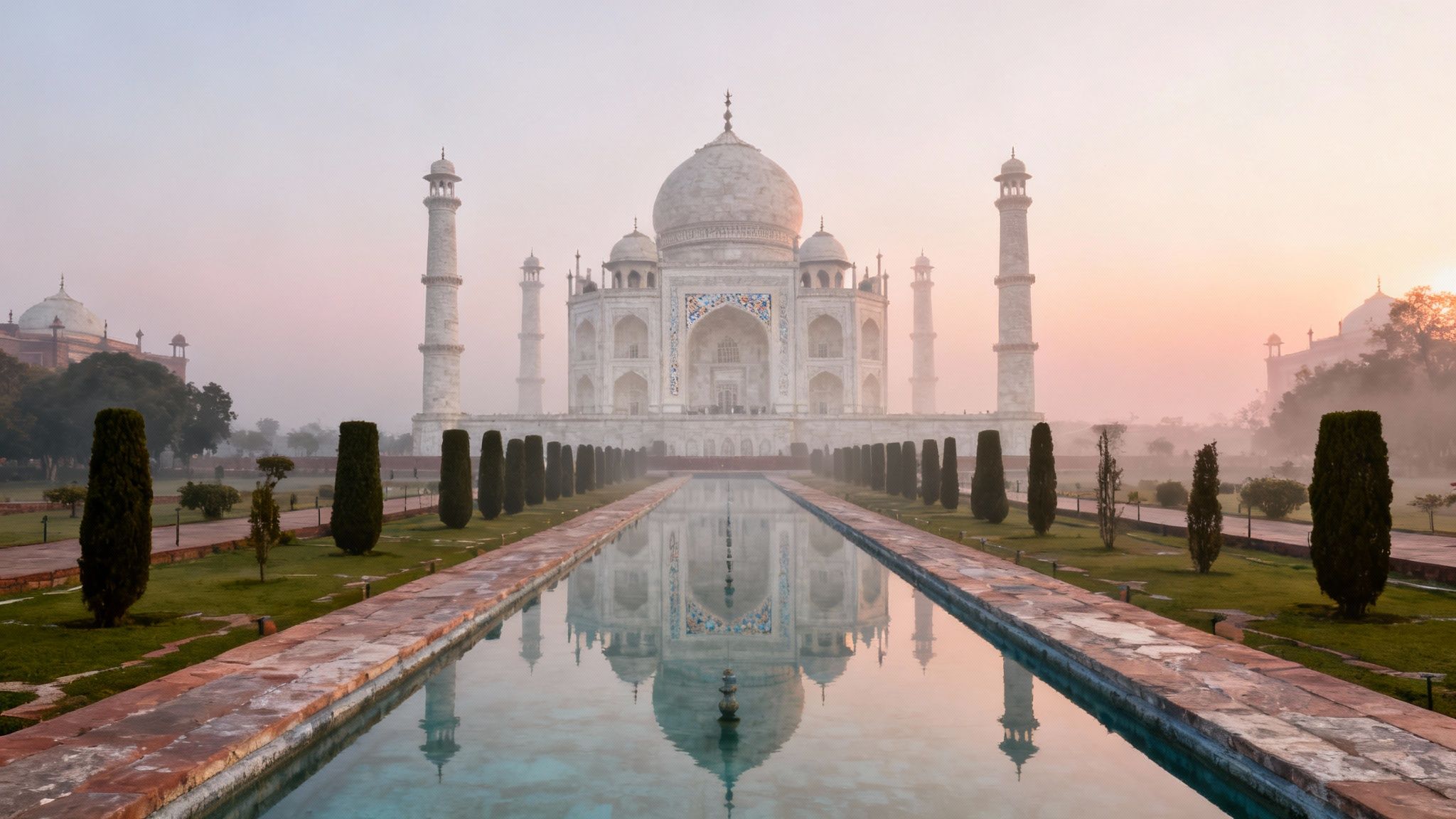
Its timeless beauty shines brightest when visited with intention. For example, digital nomads often base themselves in Agra’s walkable neighborhoods for 3-4 days. They can combine work with visits to the Taj and Agra Fort before continuing by train to Varanasi. This slow-travel approach supports local economies and reduces the environmental strain of rapid, multi-city travel. For a deeper dive into regenerative practices, check out this sustainable travel guide.
Best Season & Rail Connectivity
- Best Time to Visit: October to March offers pleasant, cool weather perfect for exploring.
- Nearest Major Railhead: Agra Cantt (AGC) is the primary station. It is centrally located and well-connected to major cities like Delhi, Jaipur, and Varanasi. Using this station often eliminates the need for a taxi or auto-rickshaw to your accommodation.
- Sample Slow-Travel Route: Take the Gatimaan Express or Shatabdi Express from Delhi for a quick, comfortable 2-hour journey. From Agra, you can catch an overnight train to Varanasi, saving on a night’s accommodation and minimizing your carbon footprint.
Regenerative Stays & Low-Impact Tips
- Eco-Stays: Consider homestays or eco-guesthouses in surrounding villages like Fatehabad. This allows you to experience authentic local life and contribute directly to the rural economy.
- Book Online: Purchase your Taj Mahal tickets online at least 24 hours in advance. This helps you skip long queues and reduce paper waste.
- Visit at Sunrise: Arrive between 6-8 AM. Not only is the light magical, but crowds are up to 60% smaller, offering a more serene experience.
- Pack Light: A collapsible water bottle is essential for staying hydrated in the Indian sun. Meanwhile, a packable daypack is perfect for carrying only what you need.
- Go Local: Combine your visit with a 2-3 day trip to the nearby temple towns of Mathura and Vrindavan. These are easily accessible via short, frequent local train services for an immersive cultural experience.
2. Varanasi (Benares): Spiritual Depth on the Ganges
Varanasi is one of the most profound tourism spots in India, offering a journey into the heart of Hindu spirituality. As one of the world’s oldest continuously inhabited cities, its essence unfolds along the sacred ghats of the Ganges River. For digital nomads and slow travelers, it presents a unique opportunity to immerse in ancient rituals and cultural authenticity, far from the typical tourist trail. A multi-week stay in a quieter neighborhood like Assi Ghat allows you to connect with the city’s rhythm while working remotely.
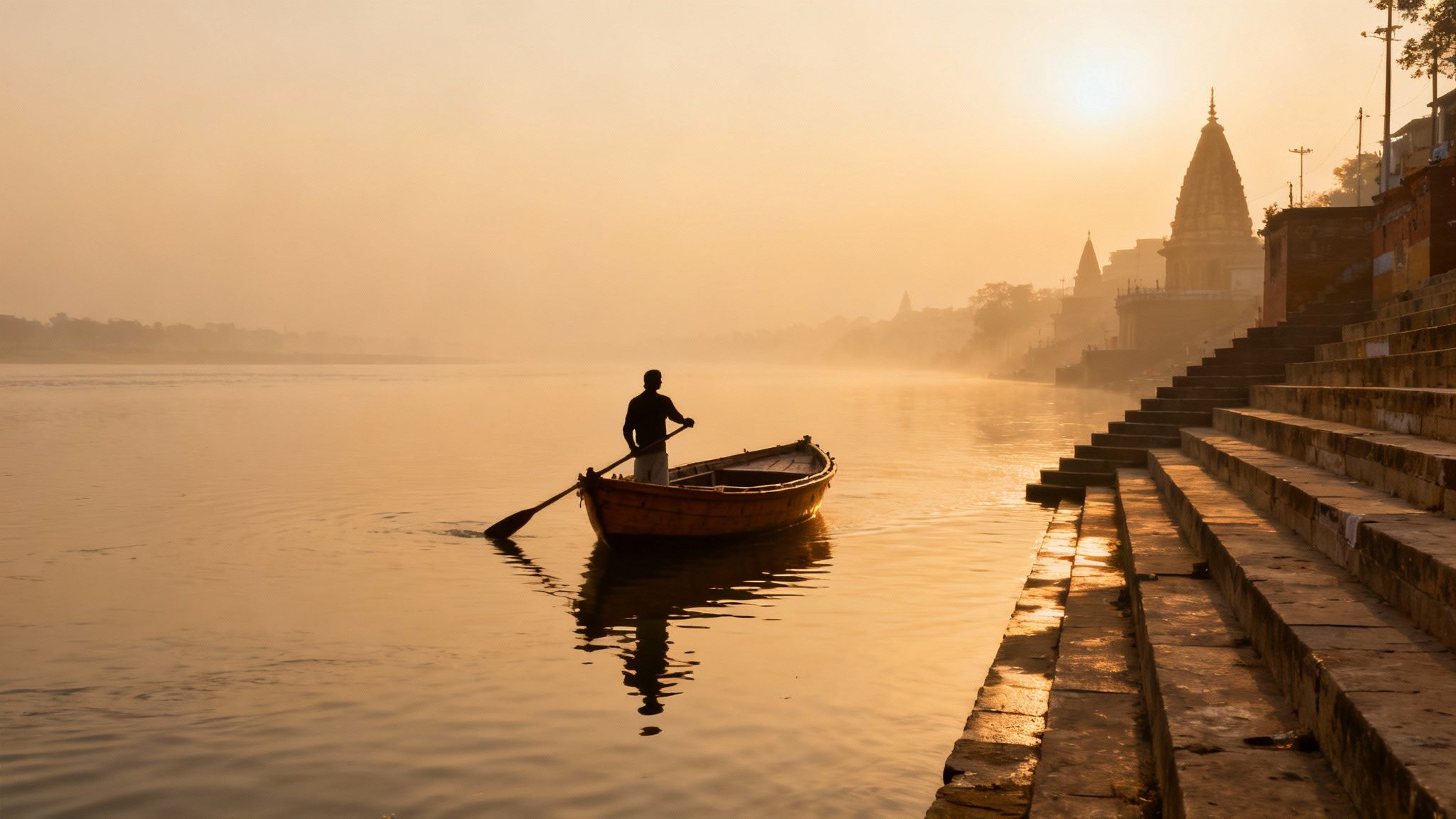
This city embodies the principles of deep, mindful travel. Instead of a rushed visit, consider a 5-day yoga retreat combined with a rail journey. Alternatively, you can simply let the city’s narrow alleyways guide your exploration. Arriving by night train from Delhi or Kolkata not only saves on a night’s accommodation but also minimizes your environmental impact. To understand more about this approach, discover these slow travel principles.
Best Season & Rail Connectivity
- Best Time to Visit: October to March offers cool, dry weather. For a more local experience with fewer crowds, consider the shoulder season (March-April) or monsoon (July-August).
- Nearest Major Railhead: Varanasi Junction (BSB) and Pt. Deen Dayal Upadhyaya Junction (DDU), formerly Mughalsarai, are the main stations. Both offer excellent connectivity to Delhi, Kolkata, and Agra.
- Sample Slow-Travel Route: Take the overnight Rajdhani or Mahakal Express from Delhi. You’ll arrive rested and ready to explore, having experienced authentic Indian rail culture while reducing your carbon footprint.
Regenerative Stays & Low-Impact Tips
- Community-Based Stays: Opt for guesthouses or homestays in the Assi Ghat or Shivala Ghat areas. These quieter neighborhoods support local families directly, offering a more authentic stay than the crowded Godaulia district.
- Respectful Observation: Attend the serene morning Ganga Aarti around 5:30 AM to avoid the much larger evening crowds. Hire a private rowboat (approx. $2.50-$4.00 USD or ₹200-₹300 INR) to support local boatmen directly.
- Modest Attire: Pack lightweight, modest clothing that covers shoulders and knees, especially for temple visits. Always respect photography restrictions, particularly at the cremation ghats.
- Stay Hydrated: Carry a reusable water bottle to refill at your guesthouse, reducing plastic waste. A solid shampoo bar is another great way to minimize plastic on your travels.
- Explore Beyond: Use local trains for short, low-impact day trips to nearby Sarnath (8 miles or 13 kilometers). This is a significant Buddhist pilgrimage site, or you can visit the historic Ramnagar Fort.
3. Jaipur, Rajasthan: The Pink City Gateway to Slow Travel
Jaipur, Rajasthan’s vibrant capital, is one of the most compelling tourism spots in India for a deep cultural immersion. Known as “The Pink City” for its distinctive terracotta-pink buildings, this 18th-century marvel blends Mughal and Rajasthani architecture with bustling bazaars. It’s a perfect hub for digital nomads and slow travelers looking to establish a walkable base before venturing deeper into Rajasthan by rail.
Its planned grid layout makes it surprisingly easy to navigate on foot, especially if you stay in central neighborhoods like C-Scheme. A 4-5 day stay allows for unhurried exploration of its forts and palaces, combined with productive work sessions. From Jaipur, scenic overnight trains connect you to Jodhpur or Udaipur. This makes it an essential and sustainable stop on any rail-first itinerary through the region.
Best Season & Rail Connectivity
- Best Time to Visit: October to March offers dry, pleasant weather ideal for sightseeing and walking.
- Nearest Major Railhead: Jaipur Junction (JP) is the main station. It is well-connected to Delhi, Agra, Mumbai, and other Rajasthani cities.
- Sample Slow-Travel Route: Complete the classic Golden Triangle by taking a morning train from Agra Fort (AF) to Jaipur (4 hours). After a few days, board an overnight train to Jodhpur or Udaipur, saving on accommodation and travel time.
Regenerative Stays & Low-Impact Tips
- Eco-Stays: Look for heritage havelis converted into guesthouses. Many prioritize traditional building methods and local employment. You can also find great options for eco-friendly lodging that support community-based tourism.
- Shop Smart: Explore Bapu Bazaar’s side streets to buy textiles directly from artisans. This supports local craftspeople and often yields better quality and prices than main tourist shops.
- Early Bird Exploration: Visit Jantar Mantar or Amber Fort right at opening (around 8 AM). This lets you enjoy the golden morning light with up to 70% fewer people.
- Pack for the Climate: Lightweight, breathable cotton clothing is a must. A reusable water bottle is crucial for staying hydrated in the dry Rajasthani air.
- Go Rural: Combine your city stay with a 2-day trip to nearby villages like Samode or Kishangarh for an authentic farm experience. These are easily reachable by local train or bus.
4. Rishikesh, Uttarakhand: The Yoga Capital of the World
Rishikesh is one of the most transformative tourism spots in India, especially for those seeking wellness and a slower pace. Known as the ‘Yoga Capital of the World,’ this sacred town on the banks of the Ganges offers a unique blend of spiritual immersion and Himalayan nature. It’s an ideal base for digital nomads and eco-conscious travelers who can settle in for weeks at a time, often without needing any motorized transport.

The town’s walkable layout encourages a low-impact lifestyle. Remote workers often enroll in 3-4 week yoga teacher training programs while maintaining their work schedules. This creates a sustainable work-life balance. This long-stay model directly supports the local economy of ashrams, guesthouses, and cafes. Wellness travelers can combine ashram stays with short treks, finding both inner peace and adventure.
Best Season & Rail Connectivity
- Best Time to Visit: October to April provides clear skies and pleasant temperatures, ideal for yoga and outdoor activities.
- Nearest Major Railhead: Rishikesh (RKSH) has its own station. However, Haridwar (HW) is the major hub just 15 miles (25 kilometers) away, with better connectivity. From Haridwar, shared jeeps and local buses offer a low-cost, authentic transfer.
- Sample Slow-Travel Route: Take an overnight train from Delhi to Haridwar. Spend 4-6 weeks in Rishikesh, then continue your journey by rail north to Shimla (via Kalka) or east towards Varanasi for a comprehensive North India circuit.
Regenerative Stays & Low-Impact Tips
- Ashram Stays: Book programs directly with ashrams like Parmarth Niketan or Sivananda Ashram. Booking platforms take a commission, so direct booking ensures your money supports the community.
- Go Local: Use shared jeeps and local buses instead of private taxis for trips to nearby waterfalls or temples. It’s cheaper and reduces traffic congestion.
- Stay West: The western bank of the Ganges (around Laxman Jhula) is generally quieter. It is less commercialized than the eastern bank, offering a more serene experience.
- Pack Mindfully: Bring a collapsible water bottle to refill and a quick dry travel towel. Respect ashram dress codes by packing modest, comfortable yoga wear.
- Free Sessions: Attend the free evening Ganga Aarti (river worship ceremony) or meditation sessions offered at many ashrams. This is a great way to try them before committing to paid multi-day courses.
5. Haridwar, Uttarakhand: A Spiritual Hub on the Ganges
Haridwar serves as a powerful gateway to the Himalayas and is one of the most sacred tourism spots in India. As one of the seven holiest places for Hindus, this ancient city offers an immersive spiritual experience centered around the sacred River Ganges. Its rail-centric location makes it a perfect anchor for a slow-travel journey. You can combine deep cultural immersion with easy onward connections to ashram towns like Rishikesh.
Digital nomads and wellness travelers often use Haridwar as a base for 2-3 days before heading to Rishikesh, just 12 miles (20 kilometers) away. This approach allows you to witness the profound rituals at Har-ki-Pauri ghat before transitioning to a quieter, yoga-focused environment. This two-stop itinerary supports local transport operators and guesthouses in both hubs, distributing economic benefits more evenly.
Best Season & Rail Connectivity
- Best Time to Visit: September to April provides cool and pleasant weather, ideal for exploring the ghats and temples.
- Nearest Major Railhead: Haridwar Junction (HW) is the primary station. It is exceptionally well-connected to Delhi, Kolkata, and Mumbai. The station’s central location makes it easy to reach most accommodations on foot or via a short cycle-rickshaw ride.
- Sample Slow-Travel Route: Board an early morning Shatabdi Express from Delhi for a comfortable 4.5-hour journey. After exploring Haridwar, take a short, scenic local train or shared taxi to Rishikesh to continue your spiritual and wellness journey.
Regenerative Stays & Low-Impact Tips
- Eco-Stays: Opt for stays in local ashrams or guesthouses that prioritize sustainable practices. Look for rainwater harvesting and waste segregation to support responsible tourism.
- Attend Ganga Aarti: The evening Aarti at Har-ki-Pauri is a must-see. Arrive early to find a spot and experience the ceremony respectfully without flash photography.
- Travel Light: With frequent short journeys between towns, traveling with a minimalist carry on luggage makes navigating crowded stations and local transport much simpler.
- Stay Hydrated: Carry a reusable water bottle and refill it at your guesthouse or designated water stations to avoid single-use plastics.
- Combine Experiences: Use Haridwar as your launchpad. From here, you can easily arrange low-impact trips to Rishikesh for yoga or embark on longer pilgrimage trails into the Himalayas.
6. Darjeeling Tea Gardens: A Slow Journey Through India’s Green Hills
The misty, rolling hills of Darjeeling are one of the most serene tourism spots in India, offering a slow-travel experience steeped in history and flavor. This iconic hill station in West Bengal is renowned for its world-class tea plantations, which cling to steep slopes with views of the snow-capped Kanchenjunga. A rail-first approach here is not just practical; it’s an integral part of the experience, culminating in a ride on the historic Himalayan Railway.
This region is perfect for digital nomads and eco-conscious travelers looking to immerse themselves in nature and local culture. By basing yourself in a homestay for 4-5 days, you can participate in tea-picking seasons, learn about organic farming, and contribute directly to the community. This approach turns a simple visit into a regenerative exchange. It supports the families who are the custodians of these world-famous gardens.
Best Season & Rail Connectivity
- Best Time to Visit: March to May offers clear mountain views and spring blooms. September to October provides crisp, pleasant weather post-monsoon.
- Nearest Major Railhead: New Jalpaiguri (NJP) is the main gateway. It connects Darjeeling to major cities like Kolkata and Delhi.
- Sample Slow-Travel Route: Take an overnight train like the Darjeeling Mail from Kolkata to NJP. From NJP, board the iconic Darjeeling Himalayan Railway (the “Toy Train”) for a scenic, historic 7-hour journey up the mountains to Darjeeling town.
Regenerative Stays & Low-Impact Tips
- Eco-Stays: Choose authentic homestays within tea estates, such as those in the Happy Valley or Glenburn areas. Booking directly or via the Darjeeling Tourism Bureau ensures your money supports local families.
- Hire Local Guides: For garden tours and tastings, hire a guide from the local community instead of using large tour operators. Their knowledge is unparalleled, and it provides direct economic benefit.
- Pack Smart: Sudden mountain showers are common, so lightweight rain gear is a must. A lightweight travel backpack is ideal for carrying essentials on walks between misty tea gardens.
- Go Local: Explore smaller, less-visited tea estates and villages on foot. This minimizes your carbon footprint and offers a more authentic glimpse into the rhythm of life in the Himalayas.
7. Darjeeling Himalayan Railway, West Bengal: A UNESCO Rail Journey
The Darjeeling Himalayan Railway is one of those rare tourism spots in India where the journey itself is the destination. This UNESCO World Heritage narrow-gauge railway, lovingly called the “Toy Train,” has been chugging along its mountain route since 1881. It offers an unparalleled slow-travel experience, climbing from New Jalpaiguri (NJP) to the misty hills of Darjeeling through lush tea plantations and breathtaking Himalayan landscapes.
For digital nomads and conscious travelers, the railway presents a perfect interlude. Instead of a quick, carbon-intensive flight or a bumpy road trip, you can dedicate a full day to this historic ride. This approach embraces a slower pace, allowing you to fully absorb the scenery and support a piece of living history. It’s an ideal way to transition between a work-focused stay in a city like Siliguri and a mountain retreat in Darjeeling.
Best Season & Rail Connectivity
- Best Time to Visit: October to May offers clear skies for stunning Himalayan views and pleasant weather for the train journey.
- Nearest Major Railhead: New Jalpaiguri (NJP) is the primary broad-gauge station. It connects the region to major cities like Kolkata, Delhi, and Guwahati. The Toy Train begins its ascent from here.
- Sample Slow-Travel Route: Arrive at NJP via an overnight train from Kolkata. Dedicate the next full day to the Toy Train journey up to Darjeeling. Spend several days exploring Darjeeling before taking the train back down or continuing by road to Sikkim.
Regenerative Stays & Low-Impact Tips
- Eco-Stays: Stay at a tea estate homestay like those in Kurseong or near Darjeeling. This helps support local agriculture and allows you to experience the region’s primary industry firsthand.
- Book Ahead: Toy Train tickets, especially for the first-class observation cars, sell out quickly. Book online via the IRCTC website at least 7-10 days in advance.
- Split the Journey: For a truly relaxed pace, break the 7-hour journey with an overnight stop in a town like Kurseong. This reduces travel fatigue and allows for deeper exploration.
- Pack Smart: Bring a packed lunch in reusable containers to avoid single-use plastic. Weather changes fast in the mountains, so pack layers and a good carry on backpack for essentials.
8. Kerala Backwaters: A Regenerative Waterway Journey
The Kerala Backwaters offer one of the most unique tourism spots in India, trading hectic cityscapes for serene, palm-fringed canals. This vast network of lagoons, lakes, and rivers is best experienced slowly, making it an ideal destination for digital nomads and eco-conscious travelers. A thoughtful journey here means embracing a slower pace, directly supporting local communities, and choosing operators committed to preserving this fragile ecosystem.
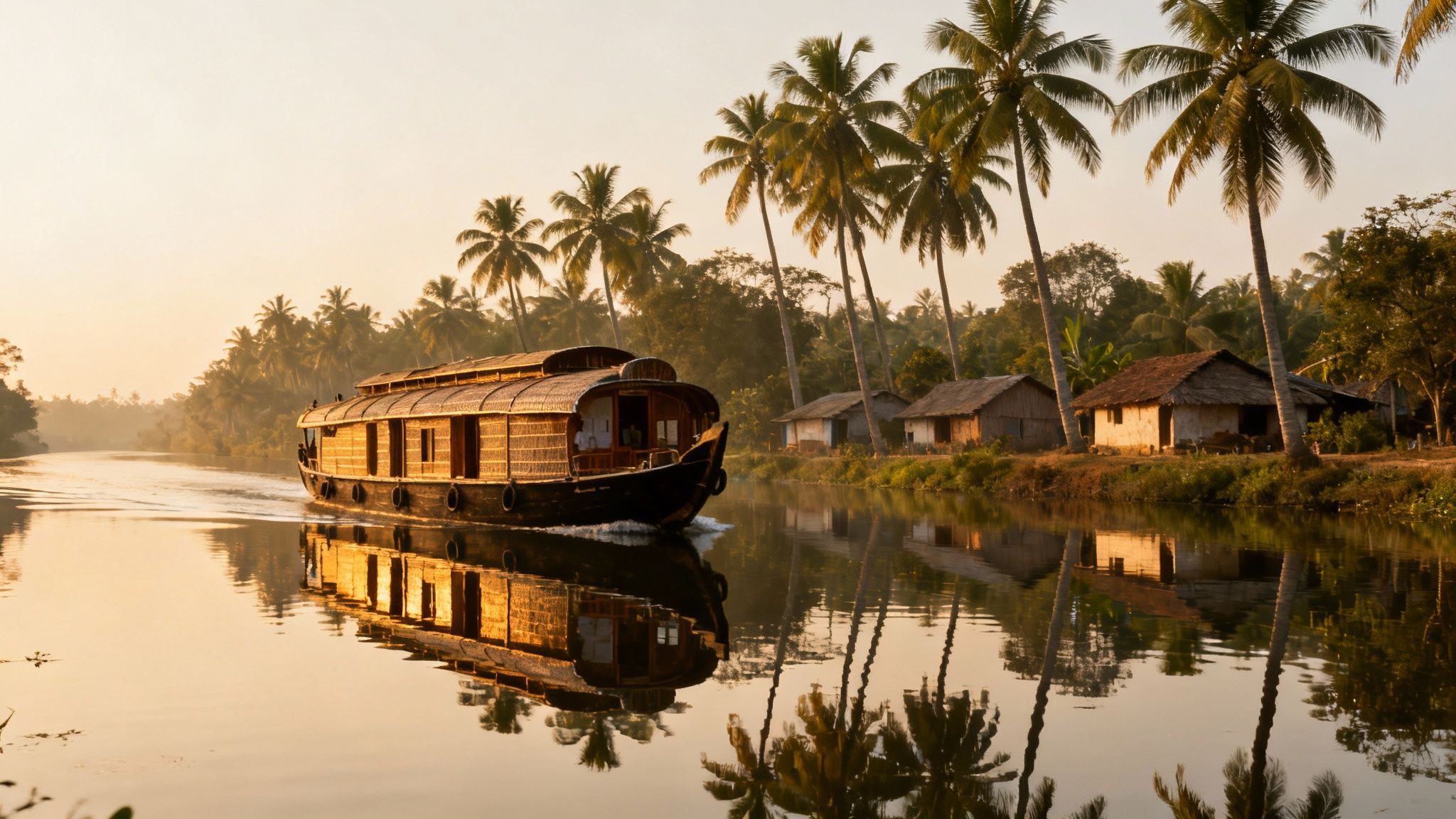
Instead of a quick overnight trip, slow travelers often dedicate 7-10 days to the region. This allows for multi-night houseboat stays combined with village homestays, providing a deep, immersive cultural experience. This approach not only minimizes your environmental impact but also ensures your tourism spending benefits the families who call these waterways home.
Best Season & Rail Connectivity
- Best Time to Visit: September to March provides dry, pleasant weather. For a unique experience with fewer crowds and lush, dramatic scenery, consider the monsoon season from June to August.
- Nearest Major Railhead: Alappuzha (ALLP), also known as Alleppey, is the primary gateway to the backwaters. It is very well-connected to major cities like Kochi (Ernakulam), Trivandrum, and Bangalore.
- Sample Slow-Travel Route: Take a train to Ernakulam Junction (ERS) to explore Fort Kochi for 2-3 days. Then, catch a short, scenic 1.5-hour train to Alappuzha. From there, you can begin your backwater journey.
Regenerative Stays & Low-Impact Tips
- Eco-Stays: Seek out community-run homestays or operators using solar-powered houseboats. Booking directly ensures more of your money supports the local economy.
- Hire Local Guides: When your houseboat docks, hire a guide from the village for shore excursions. This provides authentic insights and supports local employment.
- Travel Light: A packable daypack is perfect for shore visits. It can carry essentials like a reusable water bottle and camera. Find the right luggage for this type of trip with this guide on the best luggage for train travel.
- Verify Credentials: Choose houseboat operators with clear sustainability policies. Ask about waste management and fuel usage before booking to ensure they align with your values.
9. Kochi (Cochin): Kerala’s Historic Backwater Gateway
Kochi is a prime hub for exploring southern India. It blends colonial history with vibrant local culture, making it one of the most compelling tourism spots in India. This port city on the Malabar Coast layers Portuguese, Dutch, and British influences in its architecture, seen in the charming streets of Fort Kochi. It serves as the perfect rail gateway to Kerala’s famous backwaters, offering a slow, immersive alternative to regional flights.
Digital nomads often choose Fort Kochi for long stays, using its walkable layout as a base for weeks at a time while taking day trips to backwater launch points. This approach supports small-scale local operators and homestays. Slow travelers can use Kochi as a starting point for multi-day houseboat journeys, connecting with authentic village life and contributing directly to the local economy.
Best Season & Rail Connectivity
- Best Time to Visit: September to March provides cool and dry weather, ideal for exploring the city and backwaters.
- Nearest Major Railhead: Ernakulam Junction (ERS) and Ernakulam Town (ERN) are the two main stations serving Kochi. They have excellent connectivity to major cities like Mumbai, Bangalore, and Chennai.
- Sample Slow-Travel Route: Arrive at Ernakulam via an overnight train from Bangalore. Spend 4-5 days exploring Fort Kochi on foot. Then, take a short local train to Alleppey (Alappuzha) to begin a backwater houseboat tour.
Regenerative Stays & Low-Impact Tips
- Eco-Stays: Opt for a community-run homestay in Fort Kochi or a village along the backwaters. This ensures your money directly supports local families.
- Ethical Spice Markets: Visit the spice markets early to see them in full swing. When purchasing, ask about provenance to support local growers over large-scale distributors.
- Community-Led Tours: Arrange backwater trips through local community operators or co-ops instead of large tour agencies for a more authentic and impactful experience.
- Pack Smart: A reusable water bottle is vital for staying hydrated in the humid climate. Using packing cubes will keep your gear organized for easy transfers between the city and houseboats.
- Wildlife Viewing: Explore the nearby Mangalavanam Bird Sanctuary, a protected area within the city. To learn how to observe wildlife without causing harm, read this guide on responsible wildlife tourism.
10. Jodhpur (The Blue City): Desert Heritage by Regional Rail
Jodhpur, Rajasthan’s iconic “Blue City,” is one of the most captivating tourism spots in India, offering a perfect base for desert exploration and slow travel. Its labyrinth of indigo-painted houses, dominated by the formidable Mehrangarh Fort, creates a medieval atmosphere best explored on foot. For digital nomads and conscious travelers, Jodhpur serves as a key node in a classic Rajasthan rail circuit, connecting seamlessly with Jaipur and Udaipur.

The city encourages a slower pace, with many travelers spending 4-5 days here. They split their time between exploring the vibrant bazaars around the Clock Tower and venturing into the Thar Desert for a night at a community-run camp. This approach supports local artisans and ethical desert tourism operators. It ensures your visit contributes positively to the region’s unique culture and fragile ecosystem.
Best Season & Rail Connectivity
- Best Time to Visit: October to March provides cool, dry weather. This is ideal for exploring the fort and desert without the intense summer heat.
- Nearest Major Railhead: Jodhpur Junction (JU) is the main station. It is well-linked to Delhi, Jaipur, Jaisalmer, and Mumbai. Its proximity to the Old City makes it easy to reach walkable guesthouses.
- Sample Slow-Travel Route: Take an overnight train like the Mandore Express from Delhi to Jodhpur. After exploring, board the Intercity Express to Jaipur or a local train to Jaisalmer, creating a low-carbon, multi-city Rajasthan itinerary.
Regenerative Stays & Low-Impact Tips
- Eco-Stays: Choose family-run guesthouses or heritage havelis in the Old City. These stays offer authentic experiences and keep tourism revenue within local families.
- Visit Fort Early: Arrive at Mehrangarh Fort right at its opening time. You’ll avoid the midday sun and the largest tour groups, making for a more peaceful visit.
- Ethical Desert Trips: Opt for community-run desert camps and ethical camel operators. They prioritize animal welfare and fair wages for local guides.
- Pack Smart: A reusable water bottle is crucial for staying hydrated in the desert climate. A universal travel adapter will also be very useful for keeping your devices charged.
- Walk & Explore: The Blue City is best seen on foot. Stay near the Clock Tower to easily walk to markets, step-wells, and local eateries, reducing your reliance on auto-rickshaws.
11. Udaipur (Lake & Palace City)
Known as the “Venice of the East,” Udaipur is one of the most romantic tourism spots in India, offering a serene alternative to the usual desert landscapes of Rajasthan. This 16th-century city, built around the shimmering Lake Pichola, is a mosaic of white marble palaces, ancient temples, and waterfront havelis. Its walkability and vibrant arts scene make it an ideal base for digital nomads and slow travelers exploring the region by rail.

Udaipur invites a slower pace, rewarding those who linger. Art-focused nomads often stay for weeks, visiting local artisan workshops and galleries. Meanwhile, monsoon travelers witness the dramatic transformation as the Aravalli Hills turn a lush green. By basing yourself in the Old City, you can combine work with immersive cultural experiences. You can also easily connect to other Rajasthani gems like Jodhpur and Jaipur via the extensive train network.
Best Season & Rail Connectivity
- Best Time to Visit: September to March provides cool, dry weather ideal for sightseeing. The monsoon season (July-August) is also beautiful, with fewer crowds and lush landscapes.
- Nearest Major Railhead: Udaipur City (UDZ) is conveniently located. It connects directly to major hubs like Delhi, Mumbai, Jaipur, and Agra.
- Sample Slow-Travel Route: Arrive on an overnight train from Delhi or Jaipur. Spend 4-5 days exploring Udaipur before taking a scenic morning train to Jodhpur (approximately 5 hours). This creates a seamless, low-carbon Rajasthan circuit.
Regenerative Stays & Low-Impact Tips
- Eco-Stays: Choose a family-run guesthouse or haveli in the Lal Ghat or Hanuman Ghat areas. These stays offer direct economic benefits to local families and place you within walking distance of key sights.
- Support Locals: Book boat rides directly with small, local operators along the ghats. Avoid large tour agencies to ensure your money supports the community.
- Smart Sightseeing: Visit the City Palace in the late afternoon for golden-hour light and smaller crowds. For the Monsoon Palace (Sajjangarh), take a local bus or shared auto-rickshaw to reduce vehicle emissions.
- Essential Gear: A reusable water bottle is crucial for staying hydrated. Carry your essentials in an anti theft backpack to remain secure and mobile while exploring the city’s narrow lanes.
12. Kolkata (Calcutta) – Cultural Hub
Kolkata is a captivating tourism spot in India that offers a deep dive into the nation’s literary and cultural soul. Unlike the fast-paced energy of other metros, Kolkata invites a slower, more immersive experience, making it perfect for rail-first travel. The former capital of British India, its streets are a living museum of colonial architecture, intellectual heritage, and vibrant artistic traditions. These are easily explored on foot from well-connected neighborhoods.
This city is a prime base for digital nomads looking to connect with India’s creative pulse. By staying for a week or more, you can explore historic sites like the Victoria Memorial and Howrah Bridge. You can also support local artisans, booksellers on College Street, and community-run cafes. Its role as a major rail gateway to Eastern and Northeastern India allows for seamless, low-impact onward journeys, avoiding the need for domestic flights.
Best Season & Rail Connectivity
- Best Time to Visit: October to February provides a pleasant, cool, and dry climate ideal for city walking tours.
- Nearest Major Railhead: Howrah Junction (HWH) and Sealdah (SDAH) are two of India’s busiest stations. They offer extensive connectivity across the country. Trams and the metro offer excellent, low-cost local transit.
- Sample Slow-Travel Route: Arrive on an overnight train like the Rajdhani Express from Delhi. After exploring Kolkata, take the Darjeeling Mail, an iconic overnight journey to New Jalpaiguri (NJP), the gateway to the Himalayas.
Regenerative Stays & Low-Impact Tips
- Eco-Stays: Look for heritage guesthouses in areas like Ballygunge or traditional homestays. These directly support local families and preserve architectural history.
- Book Online: Secure tickets for museums and events online to reduce paper waste and avoid long queues, especially during festival seasons like Durga Puja.
- Visit at Off-Peak Times: Explore popular spots like the Marble Palace or Indian Museum on weekdays. This allows for a more contemplative experience with smaller crowds.
- Pack Smart: A packable daypack is perfect for carrying essentials while exploring the city’s sprawling markets. A reusable water bottle helps you stay hydrated.
- Go Local: Immerse yourself in the culture by taking a local ferry across the Hooghly River. You can also ride the historic tram network and explore the pottery quarter of Kumartuli.
Comparison of 12 Iconic Indian Tourist Spots
Taj Mahal, Agra
- 🔄 Complexity / Access: Moderate — direct trains from Delhi (2.5–3h); central access
- ⚡ Resource Requirements (time / cost / effort): Low–Medium — short stay (2–3 days), budget options, walkable
- 📊 Expected Outcomes (experience & impact): Iconic architectural photography, manageable short itinerary
- 💡 Ideal Use Cases: Day trips, rail-first sustainable travelers, short cultural stopovers
- ⭐ Key Advantages: ⭐ UNESCO site; perfect symmetry; strong rail connectivity
Varanasi (Benares)
- 🔄 Complexity / Access: Moderate–High — long direct trains (Delhi ~12h); Old City walkable
- ⚡ Resource Requirements (time / cost / effort): Low — affordable longer stays (5–7 days); sensory intensity requires time
- 📊 Expected Outcomes (experience & impact): Deep spiritual immersion, daily rituals, layered cultural insights
- 💡 Ideal Use Cases: Spiritual seekers, slow cultural immersion, extended stays
- ⭐ Key Advantages: ⭐ Ancient ghats & nightly Ganga Aarti; authentic living traditions
Jaipur (The Pink City)
- 🔄 Complexity / Access: Moderate — express trains (Delhi ~4–4.5h); walkable center
- ⚡ Resource Requirements (time / cost / effort): Low–Medium — 3–4 day stays; affordable accommodations
- 📊 Expected Outcomes (experience & impact): Heritage architecture, bazaars, strong craft economy
- 💡 Ideal Use Cases: Cultural gateways, shopping-focused travelers, Golden Triangle circuit
- ⭐ Key Advantages: ⭐ Distinctive pink architecture; Jantar Mantar; strong bazaars
Rishikesh (Yoga Capital)
- 🔄 Complexity / Access: Low — rail via Haridwar (5–6h) + short transfer; walkable ashram areas
- ⚡ Resource Requirements (time / cost / effort): Low — economical multi-week programs; minimal transport needs
- 📊 Expected Outcomes (experience & impact): Wellness immersion, yoga/meditation, Himalayan access
- 💡 Ideal Use Cases: Yoga teacher training, digital nomads seeking wellness bases
- ⭐ Key Advantages: ⭐ Concentration of ashrams; affordable long-stay options
Haridwar (Pilgrimage Hub)
- 🔄 Complexity / Access: Low — major rail junction; easy transfers
- ⚡ Resource Requirements (time / cost / effort): Low — short pilgrim stays (1–3 days); festival booking required
- 📊 Expected Outcomes (experience & impact): Intense ritual experience, pilgrimage infrastructure
- 💡 Ideal Use Cases: Pilgrims, complementary stop with Rishikesh, ritual-focused visits
- ⭐ Key Advantages: ⭐ Har-ki-Pauri Aarti; major pilgrimage gateway
Darjeeling Tea Gardens
- 🔄 Complexity / Access: Moderate — approach via Siliguri + hill transfer; walking between estates
- ⚡ Resource Requirements (time / cost / effort): Medium — 4–7 days, homestays; advance booking in peak
- 📊 Expected Outcomes (experience & impact): Tea tourism, homestay cultural exchange, mountain vistas
- 💡 Ideal Use Cases: Tea enthusiasts, slow travelers, homestay experiences
- ⭐ Key Advantages: ⭐ Regenerative tea homestays; scenic Kanchenjunga views
Darjeeling Himalayan Railway (Toy Train)
- 🔄 Complexity / Access: High complexity — slow narrow-gauge (7–8h), variable service
- ⚡ Resource Requirements (time / cost / effort): Low cost but time‑intensive; best as a dedicated day/overnight
- 📊 Expected Outcomes (experience & impact): Heritage rail experience, scenic slow travel, strong nostalgia
- 💡 Ideal Use Cases: Train enthusiasts, slow-travel interludes, scenic day trips
- ⭐ Key Advantages: ⭐ UNESCO heritage railway; iconic scenic route
Kerala Backwaters
- 🔄 Complexity / Access: Moderate — reach via Kochi then boat logistics; seasonal variations
- ⚡ Resource Requirements (time / cost / effort): Medium — 7–10 day itineraries, houseboat nights; vet operators
- 📊 Expected Outcomes (experience & impact): Tranquil slow travel, village engagement, biodiversity viewing
- 💡 Ideal Use Cases: Eco-conscious travelers, multi-day relaxation, community stays
- ⭐ Key Advantages: ⭐ Community-run houseboats; potential low‑carbon solar options
Kochi (Cochin)
- 🔄 Complexity / Access: Low — major rail & air hub; walkable Fort Kochi
- ⚡ Resource Requirements (time / cost / effort): Low–Medium — 3–7 day base for backwaters; affordable stays
- 📊 Expected Outcomes (experience & impact): Colonial heritage, spice markets, gateway to backwaters
- 💡 Ideal Use Cases: Digital nomads, slow travelers using Kochi as a hub
- ⭐ Key Advantages: ⭐ Strong connectivity; walkable historic district
Jodhpur (The Blue City)
- 🔄 Complexity / Access: Moderate — regional rail links; walkable Old City
- ⚡ Resource Requirements (time / cost / effort): Low–Medium — 3–4 day core stay; heat considerations in summer
- 📊 Expected Outcomes (experience & impact): Fort-centric history, authentic bazaars, desert access
- 💡 Ideal Use Cases: Authentic Rajasthani experiences, desert camp combos
- ⭐ Key Advantages: ⭐ Mehrangarh Fort; authentic blue old city; good value
Udaipur (Lake & Palace City)
- 🔄 Complexity / Access: Moderate — rail connections; lakeside walkability
- ⚡ Resource Requirements (time / cost / effort): Medium — 4–5 day core stay; boat rides and palace fees
- 📊 Expected Outcomes (experience & impact): Romantic lakeside ambience, palaces, local arts scene
- 💡 Ideal Use Cases: Romantic stays, art-focused nomads, slow travellers
- ⭐ Key Advantages: ⭐ Lake Pichola & City Palace; strong artisanal culture
Kolkata (Calcutta) – Cultural Hub
- 🔄 Complexity / Access: Low — major eastern rail hub; extensive urban transit
- ⚡ Resource Requirements (time / cost / effort): Low–Medium — city stays vary (3–7 days); walkable neighborhoods
- 📊 Expected Outcomes (experience & impact): Rich cultural, literary, and colonial-era exploration
- 💡 Ideal Use Cases: Cultural researchers, gateway to eastern India & NE networks
- ⭐ Key Advantages: ⭐ Deep literary/cultural traditions; tram and colonial heritage
Your Next Steps for a Mindful India Adventure
You’ve journeyed through this guide to the most captivating tourism spots in India. We covered everything from the tranquil Kerala backwaters to the spiritual ghats of Varanasi and the colonial charm of Kolkata. We’ve explored how to connect these diverse landscapes not just with flights, but with the rhythmic, low-impact sway of India’s incredible rail network. Consequently, this isn’t just a list of places; it’s a blueprint for a more intentional, sustainable, and deeply enriching way to travel.
By prioritizing train travel, you are actively choosing to reduce your carbon footprint. You also engage more authentically with the landscape and experience the journey as part of the adventure itself. Pairing this with regenerative stays, community-based tourism projects, and mindful daily practices transforms your trip. Using a reusable water bottle instead of buying plastic is a great example. You turn your trip from a simple vacation into a positive force for local economies and ecosystems. Your travel choices matter, and each decision contributes to a more sustainable tourism industry. For instance, packing a biodegradable soap or selecting a homestay makes a difference.
This guide provides the framework, but the real magic happens when you start building your own slow-travel itinerary. The goal is to move beyond a checklist of sights. Instead, embrace a slower, more deliberate pace. This approach allows for spontaneous detours, longer conversations, and a genuine connection with the places you visit. It’s about finding the best tourism spots in India for you, not just the ones on every postcard.
Turning Inspiration into Action
The next step is to translate this inspiration into a tangible plan. Begin by sketching out a potential route that connects two or three of the destinations we’ve covered. Use the Indian Rail network as your connective tissue. Plan overnight journeys to save on accommodation and daytime travel to watch the countryside unfold.
Think about your travel style. Are you a digital nomad looking for a walkable base in a city like Kochi or Udaipur? Or are you a backpacker aiming for a multi-week journey connecting Rishikesh with Darjeeling? Start researching train schedules, booking your initial stays, and organizing your gear. A well-organized carry on backpack fitted with compression packing cubes and a reliable portable power bank will be your best friend on long train rides.
Editor’s Pick: The Slow Route from North to South
For a truly immersive, low-impact Indian rail adventure, our top recommendation is the “Spiritual Peaks to Placid Waters” route.
Editor’s Pick: The Slow Route from North to South
- Route: Rishikesh → Agra → Varanasi → Kochi (Kerala)
- Why It’s Special: This itinerary connects the Himalayan foothills’ spiritual energy with the Mughal grandeur of the plains, the ancient soul of the Ganges, and the serene backwaters of the south. It’s a journey of profound contrasts, all linked by India’s efficient rail network.
- Implementation: Use overnight trains for the long legs (e.g., Varanasi to Kochi via a connecting city like Chennai) to maximize your time and minimize your accommodation costs. Pack light in a single lightweight travel backpack to make train transitions seamless. This route is perfect for a 4-6 week trip, allowing you to truly settle into each location.
Key Takeaways for Your Sustainable India Trip
- Embrace Rail Travel: Prioritize India’s extensive train network for long-distance travel. It is a cost-effective, low-carbon alternative to domestic flights and offers a unique cultural experience.
- Support Local and Regenerative Stays: Choose homestays, eco-lodges, and community-run guesthouses. Your money directly supports local families and businesses committed to sustainable practices.
- Pack Mindfully and Minimize Waste: Carry reusable items like a water bottle, travel utensils, and a quick dry travel towel. Opt for solid toiletries to reduce plastic and liquid restrictions, and pack a cable organizer travel case to keep your electronics tidy.
- Travel Slower and Stay Longer: Instead of rushing between cities, spend more time in fewer locations. This reduces your overall travel footprint and allows for deeper cultural immersion.
- Protect Your Valuables: While India is generally safe, it’s wise to use an anti theft backpack and a RFID blocking wallet in crowded areas for peace of mind.
- Plan for Connectivity: Reliable internet is crucial for modern travel. Consider getting an eSIM from a provider like Yesim (partner link) for seamless data access upon arrival.
By integrating these principles, your exploration of the best tourism spots in India becomes a more meaningful exchange. You’ll leave with more than just photos. You’ll carry stories, connections, and the knowledge that your adventure contributed positively to the places you were fortunate enough to visit.
Low-Impact Travel Tools (Worth It)
Also, if you’re planning a trip and want to keep things simple, these tools help you travel smoother while staying mindful about impact.
Get an eSIM for reliable data → Disclosure: Partner link. No extra cost to you.
Pre-book a transfer for easy arrivals → Disclosure: Partner link. No extra cost to you.
Frequently Asked Questions (FAQ)
What is the best month to visit India?
The best time to visit most tourism spots in India is during the winter months, from October to March. During this period, the weather is cool and pleasant, making it ideal for sightseeing and outdoor activities across most of the country.
Is India safe for tourists?
Yes, India is generally safe for tourists. However, like any large country, it’s important to take standard precautions. Stick to well-traveled areas, be aware of your surroundings, and protect your valuables with items like an RFID blocking wallet. It is also helpful to research local customs and dress modestly, especially in religious sites.
How can I travel sustainably in India?
To travel sustainably, prioritize the extensive train network over domestic flights. Stay in locally-owned homestays or eco-lodges, and support community-based tourism initiatives. Also, minimize waste by carrying a reusable water bottle and avoiding single-use plastics.
What should I pack for a trip to India?
Pack lightweight, breathable clothing that covers your shoulders and knees. Essential items include comfortable walking shoes, a universal travel adapter, a portable power bank, and any necessary medications. For a more eco-friendly trip, consider packing a solid shampoo bar and laundry detergent sheets.
Do I need a visa to travel to India?
Most foreign nationals require a visa to enter India. The e-Visa is available for tourists from many countries and can be applied for online. Always check the latest visa requirements from your country’s Indian embassy or consulate well in advance of your trip.
How much should I budget for a trip to India?
India can be a very affordable destination. A budget traveler can manage on $30-$50 USD per day. A mid-range budget would be around $60-$100 USD per day. This budget would cover accommodation, food, transport, and activities. Prices can vary significantly between cities and rural areas.
What are the best ways to get around in India?
For long distances, the train network is the best option. It is extensive, affordable, and a cultural experience in itself. You can find great flight deals on Aviasales. For shorter distances within cities, auto-rickshaws, ride-sharing apps, and local buses are common. In many destinations, walking is the best way to explore.
Is it easy to find vegetarian food in India?
Absolutely. India is one of the most vegetarian-friendly countries in the world. A significant portion of the population is vegetarian, so you will find delicious and diverse vegetarian options available in almost every restaurant and region.
Join the Sustainable Work Movement
Want more rail-first itineraries, low-impact packing systems, and walkable base-city ideas?
This article was fact-checked using sustainability data from the World Green Building Council, the Global Ecotourism Network, and peer-reviewed architecture studies. All partner links are vetted for compliance with sustainable business certifications.
