
Traveling in an eco-friendly way isn’t about giving up comfort or breaking your budget. It’s about shifting your mindset—moving from a consumer to a contributor. This guide will show you how to make smarter, more intentional choices about how you see the world. It’s a way to explore that minimizes your negative impact. It also maximizes the good you can do for the environment, culture, and economy of the places you visit.
This guide will walk you through exactly how to do that, step by step. We’ll show you how to travel eco friendly in a practical, achievable way.
The Realities of Sustainable Journeys
Let’s be clear: a lot of travelers get the impression that responsible exploration means sacrifice. But it’s really about making better, more informed decisions. The goal here isn’t perfection; it’s about progress. After all, small changes can lead to a much more rewarding journey.
We’ll unpack the core pillars of modern sustainable travel. These pillars range from strategic planning and mindful packing to conscious on-the-ground choices. You’ll see how small shifts can make a big difference. For instance, choosing a train over a plane or packing a reusable water bottle has a positive impact. Staying in one place a little longer also contributes to a better travel experience.
Every decision contributes to a larger effect. This guide provides a clear roadmap to help you navigate those choices with confidence.
Why Eco-Friendly Travel Matters Now More Than Ever
What was once a niche interest has exploded into a global movement. The sustainable tourism market is projected to hit a staggering $11.53 trillion by 2033. This isn’t just an industry trend. Instead, it’s a fundamental shift in how people want to travel.
Recent research shows that 90% of consumers are now actively looking for sustainable travel options. That kind of demand sends a powerful message to hotels, airlines, and tour operators. It pushes them to adopt greener practices. When you choose a sustainable option, you’re not just shrinking your own footprint. You’re casting a vote for a more responsible tourism industry worldwide.
Understanding Your Travel Carbon Footprint
The first, most critical step toward traveling more consciously is understanding your own impact. Your travel carbon footprint is the total amount of greenhouse gases generated by your trip. For most of us, transportation—especially flying—is the biggest piece of the pie.
Making informed choices is impossible without knowing the real-world difference between your options.
For example, swapping a short-haul flight for a high-speed train can slash your emissions for that leg of the journey by up to 90%.
Getting familiar with these numbers is empowering. It allows you to build itineraries that are not only incredible but also genuinely lighter on the planet. You can learn more about calculating your travel carbon footprint in our detailed guide, which breaks down the data and gives you the tools to plan smarter.
Designing a Low-impact Itinerary to Travel Eco Friendly
The biggest chunk of your travel footprint comes from getting from point A to point B. This is where your choices can make a massive difference. Designing a low-impact itinerary means thinking about low-carbon transport first. Importantly, you can do this without giving up the adventure you’re after.
A rail-first approach is one of the most powerful strategies you can use. It’s simple: you choose trains over planes whenever it’s practical. This is especially true for journeys under 500 miles (around 800 kilometers). The drop in emissions is huge, making it a go-to for any conscious traveler.
When you build your trip around train routes, you also unlock a slower, more immersive way to see a region. You watch the landscape change and stop in smaller towns you’d otherwise fly right over. You also arrive directly in city centers, saving you time and cash on those annoying airport transfers. To book flights when needed, a platform like Aviasales can help you compare options.
Embracing the Rail-First Mindset
Adopting a rail-first mindset is more than just booking a train ticket. It’s a real shift in how you plan your journey. It nudges you to think about the in-between spaces, not just the big destinations. This makes it easier to connect multiple cities or regions sustainably.
For example, instead of flying from Paris to Amsterdam, a high-speed train connects the two city centers in just over three hours. That single choice cuts out all the time wasted getting to and from airports. It also eliminates shuffling through security and waiting at the gate. It’s not just greener; it’s often way more efficient and a lot less stressful.
The data backs this up. Recent studies show a clear trend: travelers are actively looking for more sustainable options. This is why the rail-first approach is moving from a niche idea to a mainstream choice.
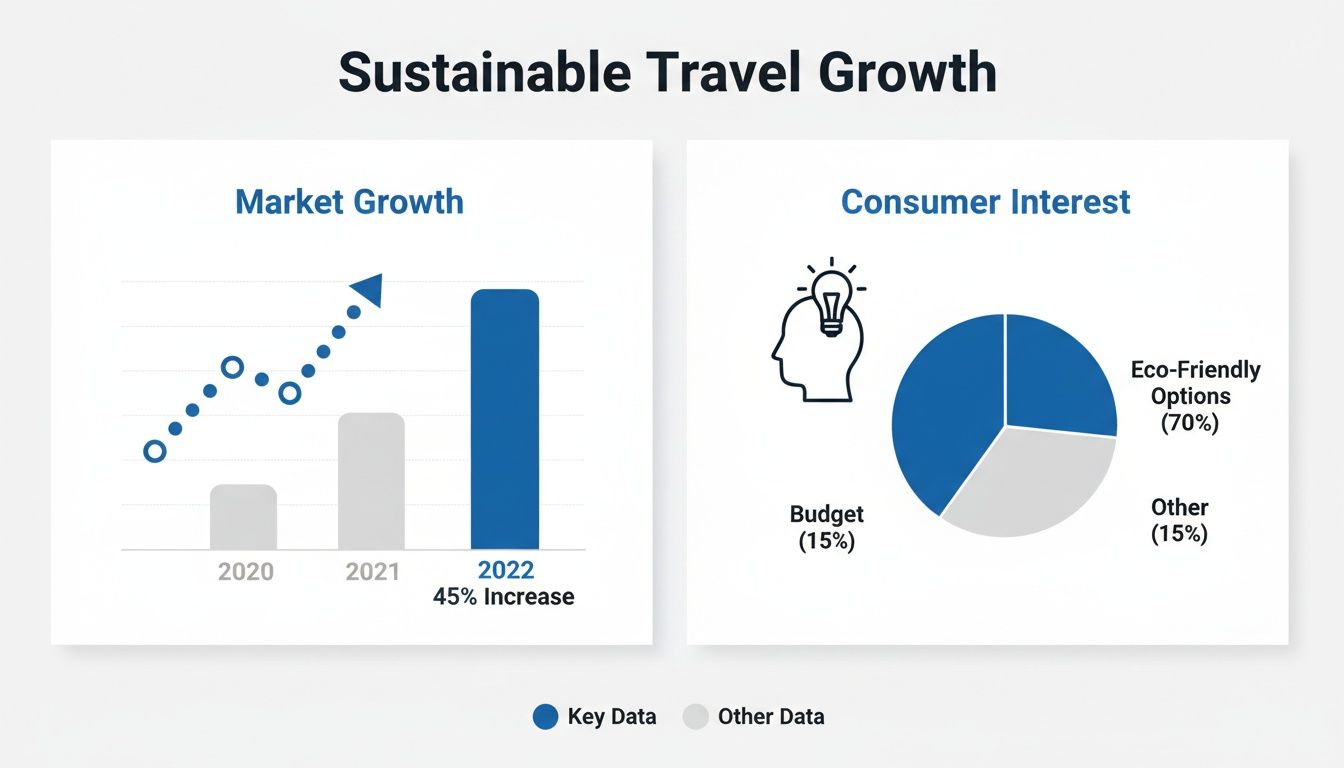
This shift in the market means it’s easier than ever to find and book eco-friendly travel options that fit your plans.
Comparing Travel Modes Carbon Footprint Per Passenger
To really understand the impact of your travel choices, it helps to see the numbers side-by-side. Air travel, particularly on short-haul routes, pumps out significantly more carbon dioxide per passenger than rail. This table shows just how stark the difference can be on common routes, helping you make a more informed decision.
| Route | Travel Mode | Approximate Distance | Estimated CO2 Emissions (per person) |
|---|---|---|---|
| London to Paris | Short-Haul Flight | 213 miles (343 km) | ~122 lbs (55 kg) |
| London to Paris | High-Speed Rail | 213 miles (343 km) | ~9 lbs (4 kg) |
| Tokyo to Osaka | Short-Haul Flight | 250 miles (402 km) | ~141 lbs (64 kg) |
| Tokyo to Osaka | High-Speed Rail (Shinkansen) | 250 miles (402 km) | ~20 lbs (9 kg) |
| Rome to Florence | Short-Haul Flight | 145 miles (233 km) | ~104 lbs (47 kg) |
| Rome to Florence | High-Speed Rail (Frecciarossa) | 145 miles (233 km) | ~11 lbs (5 kg) |
The data speaks for itself. Choosing the train can slash your carbon emissions for a single leg of your journey by over 90%. This is one of the most impactful decisions you can make as a traveler.
If you’re ready to dive deeper into planning, check out our guide on creating amazing flight-free travel itineraries for 2025.
Practical Strategies for Low-Impact Itineraries
Putting these ideas into practice is easier than it sounds. Here are a few tactics that work.
Use Night Trains for Longer Routes: Look for overnight trains on longer journeys, like Vienna to Rome. This is a brilliant travel hack. You combine your transport and accommodation in one. This saves the cost of a hotel and a full day of travel. You fall asleep in one city and wake up refreshed and ready to explore another.
Leverage Regional Rail Passes: Passes like the Eurail Pass in Europe or the Japan Rail Pass offer incredible value and flexibility. They are perfect for multi-city trips. They actively encourage you to explore more places by train. This makes spontaneous side trips easy and affordable.
Choose Walkable Base Cities: Pick a central location for your stay. This allows you to explore huge areas on foot, cutting down on taxis or ride-shares. A central base not only shrinks your local transport footprint. It also helps you stumble upon hidden alleys, local cafes, and authentic moments you’d otherwise miss. For a simple arrival, a service like Welcome Pickups can pre-book a transfer for you.
Mastering Zero-Waste and Minimalist Packing
Packing light isn’t just a trick to dodge baggage fees. It’s a cornerstone of smarter, more eco friendly travel. A lighter bag makes everything easier, from navigating a busy train station to exploring a walkable city. It also massively cuts down on the temptation to just grab a taxi.
But this goes deeper than just rolling your clothes tightly. It’s about building a packing system. This system actively eliminates single-use plastics and the need to buy disposable junk when you arrive. When you’re intentional about what you bring, you end up with a travel style that’s lighter, smarter, and way kinder to the planet.
The whole point is to pack durable, multi-functional items built to last. This doesn’t just shrink your environmental footprint; it simplifies your entire trip. This leaves you free to focus on the actual journey. A great cable organizer travel case can help keep all your tech neat and tidy.

Building a Versatile Capsule Wardrobe
A capsule wardrobe is the secret weapon of minimalist packing. Think of it as a small, curated collection of high-quality, versatile clothes. You can mix and match them endlessly. The right capsule helps you sidestep the cycle of buying cheap, disposable “fast fashion” just because you feel like you have nothing to wear.
Forget packing for every single “what if” scenario. Instead, focus on pieces that work in different settings. This includes neutral colors, classic cuts, and fabrics that are tough and easy to wash on the go. A well-planned capsule can easily fit into a single piece of carry on luggage, even for a month-long trip. And a good set of compression packing cubes is non-negotiable for organizing everything and squeezing out every last bit of air.
Eliminating Single-Use Plastics and Embracing Solids
Single-use plastics are probably the biggest source of needless travel waste. But they’re also one of the easiest to ditch with a bit of prep. The single most impactful swap you can make is trading bottled water for a durable collapsible water bottle. With refill stations now common in airports, train stations, and cities, this one change can save dozens of plastic bottles on a single trip.
Next up, it’s time to give your toiletry bag a makeover.
- Swap Liquids for Solids: Ditch the leaky plastic bottles of shampoo, conditioner, and body wash for solid bars. A solid shampoo bar lasts for ages, won’t explode in your bag, and creates zero plastic waste. The same goes for a good block of biodegradable soap.
- Refill, Don’t Replace: For any liquids you absolutely can’t live without, like a specific face wash, invest in a quality set of toiletry bottles reusable that will last for years.
- Rethink Your Routine: Look for other easy swaps. Bamboo toothbrushes, toothpaste tablets, and laundry detergent sheets are all lightweight, plastic-free alternatives that make a real difference.
These small shifts add up fast, dramatically cutting down the trash you leave behind. For a complete checklist to get you started, check out our detailed guide on building a zero-waste packing list for 2025.
Packing Smart and Sustainable Tech
Tech is a modern travel essential, but your kit doesn’t need to be heavy or wasteful. A minimalist approach to your electronics reduces weight, clutter, and eventual e-waste. It’s all about streamlining.
A high-quality universal travel adapter is a must-have, letting you plug in anywhere in the world with a single gadget. Pair it with a reliable portable power bank to keep your devices juiced up on long train rides or during days spent exploring far from an outlet.
By consolidating your charging setup, you carry fewer cables and plugs. This makes your pack lighter and more organized. A simple RFID blocking wallet is also a great idea for keeping your cards secure while on the move. Staying connected is easy with an eSIM from a provider like Airalo or Yesim, ensuring you have data without physical SIM cards.
Choosing Regenerative Stays and Supporting Local Economies
Making choices that actually support local communities is a huge part of what it means to travel eco friendly. It’s not just about shrinking your environmental footprint. It’s about making sure your trip is a positive force for the people and places you visit. This idea is often called regenerative travel—basically, leaving a destination better than you found it.
This isn’t about some grand, complicated gesture. It’s about the small, deliberate decisions you make every day. These include where you sleep, where you eat, and where you spend your money. Each choice can either send your travel dollars to a big international corporation or put it directly into the local economy, where it really counts.
When you start thinking this way, your trip becomes more than a vacation. It transforms into a meaningful exchange that helps protect local culture and natural resources while creating genuine connections.
Finding Authentic, Low-Impact Accommodations
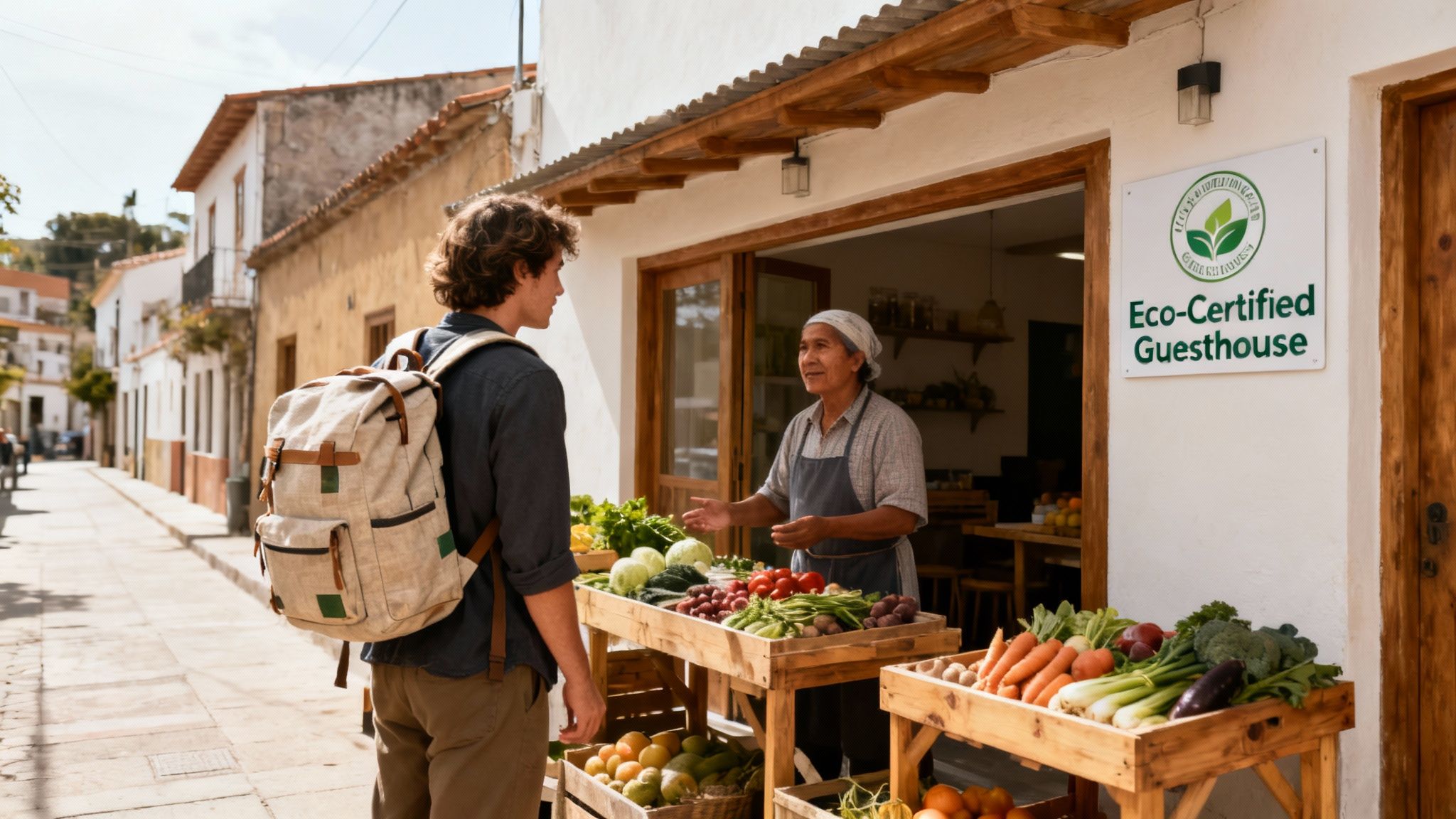
Where you stay sets the tone for your whole trip. Instead of defaulting to a major hotel chain, try to find places that have a real stake in the local community. This could be anything from a family-run guesthouse or a locally-owned apartment to an eco-lodge with third-party sustainability certifications. You can find many of these options on platforms like Trip.com.
Keep an eye out for credentials like B Corp, Green Key, or EarthCheck. These labels aren’t just marketing fluff. They mean a property has met tough standards for environmental performance, fair labor, and community engagement. Booking a stay at one of these spots is a great way to ensure your money is supporting a business committed to making a positive impact.
If you want to go deeper on this, you can learn more about finding environmentally friendly accommodation in our detailed guide.
Prioritize Walkable Neighborhoods
One of the best things you can do to lower your local impact is to pick a base in a walkable neighborhood. When your accommodation is centrally located, you can explore on foot, by bike, or using public transit. This dramatically cuts down your reliance on taxis or ride-shares.
This approach does more than just shrink your carbon footprint, though. It immerses you in the daily rhythm of a place. You end up discovering hidden cafes, stumbling upon local markets, and experiencing the city at a much slower, more intimate pace.
The Shift Toward Community-Conscious Travel
Traveler awareness has come a long way. It’s no longer just about protecting the environment. There’s a growing understanding of tourism’s social impact, too. Research shows that by 2025, more than half of travelers (53%) are now conscious of how their trips affect local communities.
Even more telling, a remarkable 69% now say they want to leave the places they visit better than when they arrived. It’s a clear move toward this regenerative mindset. You can read the full research about these evolving travel trends on Booking.com.
How to Directly Support the Local Economy
Putting your money directly into the hands of local people is one of the most powerful things you can do as a traveler. It’s a simple strategy with a huge positive ripple effect.
Here are a few easy, actionable ways to do it:
- Eat at Family-Owned Restaurants: Skip the familiar global chains and look for small, independent eateries. The food is almost always better and more authentic. Plus, your bill directly supports a local family.
- Shop at Local Markets: Instead of buying generic souvenirs from airport shops, pick up crafts, produce, and goods from local markets. You’ll find unique items and contribute to the livelihood of local artisans and farmers.
- Hire Local Guides: When booking tours or activities, choose small, locally-run operators. Their knowledge is usually deeper, the experience feels more personal, and your money stays right there in the community.
- Pay with Local Currency: Whenever possible, pay with cash in the local currency. This helps small businesses avoid the high credit card transaction fees charged by international banks, meaning more of your money stays with them.
How to Travel Eco-Friendly on a Realistic Budget
One of the biggest myths keeping people from greener travel is the idea that you need a premium budget to make it happen. The truth? It’s often the exact opposite. Many of the most impactful low-carbon choices don’t just shrink your footprint. They can also lead to serious savings, making sustainable travel far more accessible than you’d think.
This isn’t about paying extra for a “green” label. It’s about a fundamental shift in how you plan and spend on the road. When you start prioritizing slower, more intentional travel, your expenses naturally drop. You begin to see how simple swaps create daily savings that add up fast over a whole trip.
The key is aligning your spending with your values. Conscious travel doesn’t demand a bigger wallet—it just asks for more thoughtful planning.
Debunking the High Cost of Sustainable Travel
While most travelers want to make better choices, price often ends up being the tie-breaker. Research from ITB Berlin reveals a fascinating gap. 93% of travelers say they want sustainable options. However, only about 20% are willing to pay more for them. This highlights a huge need for affordable, eco-friendly solutions that don’t force a choice between your budget and your values. You can read more on the price vs. sustainability trend at itb.com.
The great news is that the most impactful sustainable choices are often free—or even save you money. Choosing a train over a plane, for instance, is frequently cheaper on shorter routes. This is especially true once you add up the hidden costs of airport transfers and baggage fees.
A rail-first itinerary is a perfect example of this principle in action. By design, it encourages slower travel, which almost always translates to a lower cost-per-day.
Practical Tips for Budget-Friendly Eco Travel
Making sustainable travel affordable is all about smart, simple strategies. These tactics reduce both your impact and your spending at the same time. These are the strategies that actually work.
- Travel During the Shoulder Season: Ditch the peak tourist months. Flights and accommodation are significantly cheaper. Destinations are way less crowded, and your visit puts less strain on local resources.
- Embrace Public Transportation: Get familiar with local buses, trams, and subways instead of defaulting to taxis or ride-shares. It’s a fraction of the cost and gives you a much more authentic glimpse into daily life.
- Stay in Apartments and Cook: Booking a place with a small kitchen means you can prep some of your own meals. Hitting the local market is a great cultural experience and way cheaper than eating out three times a day.
- Pack Smart to Avoid Purchases: Carrying a few key items like packing cubes and a quick dry travel towel means you never have to buy single-use plastic bottles or rent towels. It’s a small habit with a big impact.
By adopting these habits, you can seriously lower your daily expenses while traveling more responsibly. If you’re looking for more ways to make your trips affordable, check out our comprehensive guide on essential budget travel tips.
Editor’s Pick: The Best Carry-On for Sustainable Travel
Our recommendation is a carry on backpack made from recycled materials by a certified B Corporation. This certification ensures the company meets high standards for environmental and social performance. Its design is ideal for rail-first journeys, fitting perfectly in overhead bins to help you avoid checked bag fees. Features like smart compartments and comfortable, ergonomic straps make it a practical tool for exploring walkable cities on foot, genuinely enhancing a low-impact travel style.
Your Next Trip: A Quick Action Plan
Think of this as your pre-flight checklist for a lower-impact trip. These are the small, deliberate choices that, when you make them consistently, really add up. They’re the core habits that shift your travels toward being a positive force in the places you love to explore.
Here’s where to focus your energy for the biggest wins.
Go Rail-First, Flight-Last: Your single biggest lever is transportation. Always look for the train option before booking a short flight. This one decision slashes your travel footprint more effectively than almost anything else.
Pack Lighter and Ditch Disposables: Build your system around reusables. A solid lightweight travel backpack paired with reef safe sunscreen and other zero-waste toiletries means less plastic, less weight, and less waste left behind.
Find Regenerative Stays: Look for locally owned guesthouses, small hotels, or places with credible eco-certifications. This simple filter ensures your money goes to businesses that are genuinely invested in their local community and environment.
Spend Directly with Locals: Make your spending count. Eat at family-run restaurants, book tours with local guides, and buy art directly from the person who made it. Your wallet is a powerful tool for supporting the local economy.
Low-Impact Travel Tools (Worth It)
Also, if you’re planning a trip and want to keep things simple, these tools help you travel smoother while staying mindful about impact.
Get an eSIM for reliable data → Disclosure: Partner link. No extra cost to you.
Pre-book a transfer for easy arrivals → Disclosure: Partner link. No extra cost to you.
Frequently Asked Questions About How to Travel Eco Friendly
Planning a trip with a lighter footprint often brings up a few questions. Here are some of the most common ones we hear, with straightforward answers to help you get started.
What’s the Single Most Impactful Way to Reduce My Travel Footprint?
Hands down, it all comes down to how you choose to get from A to B.
Your mode of transportation has the biggest impact. Swapping even one short-haul flight for a high-speed train is the most effective change you can make. That single decision can slash your emissions for that leg of the journey by up to 90%.
Is It Really Cheaper to Travel by Train Than by Plane?
More often than you’d think, yes. A flight might look cheaper at a glance, but the total cost is rarely just the ticket price.
You have to factor in expensive airport transfers. Airports are almost always miles from the city. You also have baggage fees that seem to grow every year. Finally, consider the cost of getting from that remote airport into the city center. Train tickets, especially if you book ahead or use a rail pass, often come out cheaper. Plus, they drop you right in the heart of your destination. For example, a last-minute flight from London to Paris can easily cost more than the Eurostar train.
How Can I Find Genuinely Sustainable Places to Stay?
Look for third-party certifications that do the heavy lifting for you. Labels like B Corp, Green Key, or EarthCheck aren’t just clever marketing. They mean a property has met tough standards for environmental and social responsibility.
Booking platforms are also getting better at this. Sites like Booking.com now have filters that help you find properties with verified sustainability practices. This makes it easier to sort the real deals from the greenwash.
What’s the Difference Between Ecotourism and Sustainable Travel?
It’s a matter of scope. Ecotourism is a specific niche focused on responsible travel to natural areas. Think wildlife conservation tours or hikes in protected parks where your visit supports the environment and local communities.
Sustainable travel is the bigger umbrella. It applies to any kind of trip—a city break, a beach holiday, even a business trip. It’s about finding ways to minimize your negative impact and maximize your positive contributions, no matter where you’re going.
Can One Person’s Travel Choices Really Make a Difference?
Absolutely. It’s easy to feel like your choices are a drop in the ocean, but they create ripples.
Every time you choose a train, buy from a local artisan, or carry a reusable water bottle, you’re sending a signal. This message tells the travel industry that consumers demand better options. Consumer demand is what drives change. When millions of us make these small, conscious choices, the collective impact is massive. It pushes the entire industry to adopt more responsible practices.
Are Carbon Offsets a Good Way to Travel Greener?
Think of them as a last resort, not a free pass. Your first priority should always be to reduce your emissions in the first place. This means you should fly less, take trains, and pack light.
If you absolutely must fly, then purchasing high-quality, verified offsets can help mitigate the emissions you can’t avoid. But it’s the final step you take after you’ve already made the most sustainable choices available to you.
What Are the Best Apps for Planning a Low-Impact Trip?
A few apps make a huge difference. For booking ground transport, Trainline and Omio are fantastic. They help you compare and book train and bus tickets across Europe.
To find great local spots, FairTrip helps you discover authentic, sustainable businesses. And if you’re eating more plant-based meals to lower your food footprint, HappyCow is essential for finding vegan and vegetarian restaurants anywhere in the world.
How Do I Handle Waste in Countries with Bad Recycling?
The best strategy is to avoid creating waste to begin with. This is where a zero-waste mindset becomes a traveler’s best friend.
Your goal is to reduce and reuse above all else. Always refuse single-use plastics. Carry your own reusable bags and containers. Also, pack things like laundry detergent sheets and solid toiletries that don’t come in plastic packaging. If you don’t create the trash, you don’t have to worry about where it ends up.
Key Takeaways for Eco-Friendly Travel
- Prioritize Ground Transport: Choosing trains over short-haul flights is the single most effective way to reduce your travel carbon footprint, often by up to 90%.
- Pack Light and Zero-Waste: A minimalist packing system built around reusable items like a water bottle, solid toiletries, and packing cubes reduces waste and makes travel easier.
- Support Local Economies: Stay at locally-owned accommodations, eat at family-run restaurants, and buy from local artisans to ensure your money benefits the community directly.
- Slow Travel Saves Money: Traveling during the shoulder season, using public transit, and staying longer in one place are eco-friendly habits that also significantly lower your trip costs.
- Certifications Matter: Look for trusted eco-labels like B Corp, Green Key, or EarthCheck on accommodations and tour operators to avoid greenwashing and support genuinely sustainable businesses.
- Your Choices Drive Change: Every sustainable decision sends a message to the travel industry, contributing to a collective demand that pushes companies toward better practices.
Join the Sustainable Work Movement
Want more rail-first itineraries, low-impact packing systems, and walkable base-city ideas?
This article was fact-checked using sustainability data from the World Green Building Council, the Global Ecotourism Network, and peer-reviewed architecture studies. All partner links are vetted for compliance with sustainable business certifications.
