

The quick answer on UK train tickets
Britain has one of the most complicated rail fare systems in the world, and the complication is where the savings hide. Because UK train tickets are priced by rules rather than by distance, two people on the same train can pay wildly different amounts.
The system punishes travellers who turn up and buy, and rewards those who understand four or five specific mechanisms. Meanwhile none of those mechanisms are secret, and all of them are available to visitors as well as residents.
- Advance fares are the cheapest and are released a set period ahead, selling out as the train fills.
- Walk-up fares are regulated but high, particularly on long-distance peak services.
- Railcards give a substantial discount to several groups, including visitors, and usually pay back quickly.
- Split ticketing is legal and often cheaper than a single through fare for the same journey.
- Off-peak and super off-peak restrictions are where most of the price difference lives.
Affiliate disclosure: Some links in this guide are affiliate links. If you book through them, Eco Nomad Travel may earn a commission at no extra cost to you, and it does not change what we recommend.
Free download: Eco Rail-First Trip Planner
A fast, practical checklist + templates for planning low-impact trips (without decision fatigue).
Learn the fare types, get a railcard if you qualify, and check split tickets on long journeys. Consequently a journey that looks eye-watering at the machine is often half the price bought properly.
How UK train tickets are actually priced
Understanding the logic prevents the sense that the system is random, which is what most travellers conclude.
Britain’s railway is operated by multiple train companies under contract, but fares are set within a national framework. Consequently the ticket types are broadly consistent across the country even though the operators differ.
Fares fall into two families. Walk-up fares, which are flexible and valid on any train within their restrictions, and advance fares, which are tied to a specific train and are the cheapest.
Within walk-up fares, the distinction is time-based: anytime fares are valid whenever, off-peak fares exclude the busiest periods, and super off-peak fares exclude more. Therefore the same journey has several prices depending purely on when you travel.
Advance fares are quota-controlled rather than simply timed. Meanwhile that means the cheap ones disappear as the train fills, so the price rises as you delay.
Crucially, a through ticket is not always the cheapest combination of UK train tickets for a journey, because fares are set between station pairs rather than calculated per mile. So the gaps in that pricing are what split ticketing exploits.
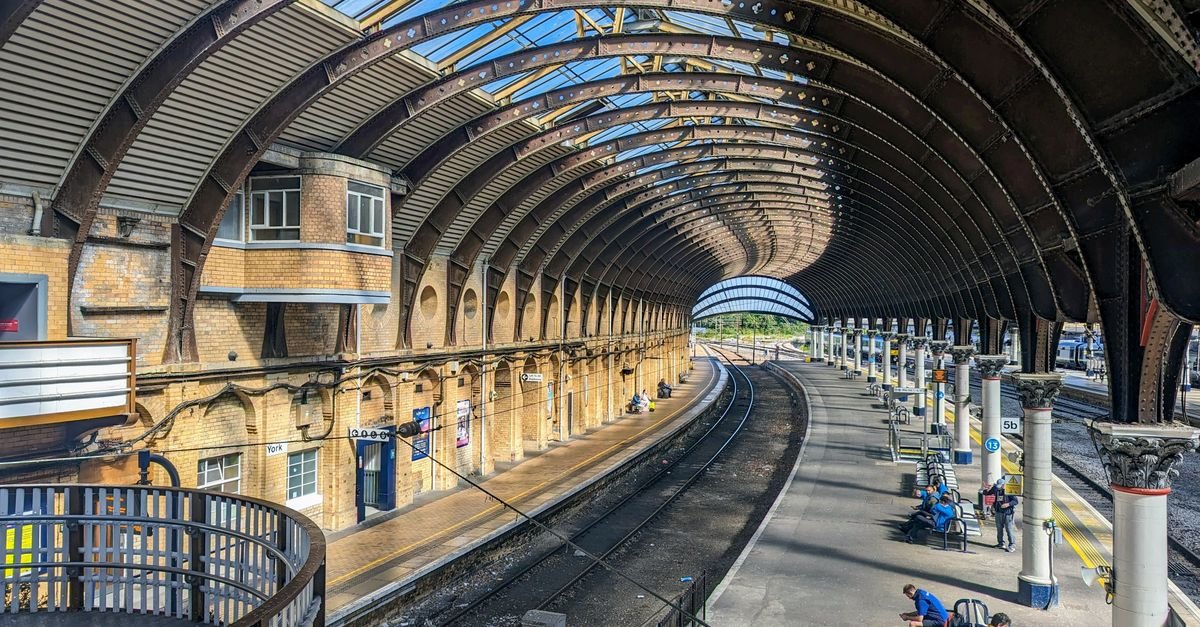
Comparing UK train tickets by type
The table compares the main fare types on the dimensions that decide which to buy.
| Ticket type | Flexibility | Relative price | Refundable? | Best for |
|---|---|---|---|---|
| Advance single | Specific train only | Cheapest | Usually not, changes for a fee | Fixed plans booked early |
| Off-peak return | Any train outside peaks | Moderate | Often refundable before travel | Day trips, flexible plans |
| Super off-peak | Tighter time restrictions | Lower than off-peak | Often refundable | Mid-morning and late travel |
| Anytime single or return | Any train, any time | Most expensive | Usually refundable | Unavoidable peak travel |
| Split tickets | Depends on components | Often cheaper than through | Depends on components | Long journeys through hubs |
| Rover or ranger | Unlimited within an area | Varies | Varies | Multi-journey days in a region |
A framework for buying UK train tickets
Five checks in order will get you close to the lowest legitimate price every time.
Railcards: the first thing to check
Buying a railcard is the highest-return single action on UK train tickets for most travellers, and it is widely missed by visitors who assume it is residents-only.
Railcards give a substantial percentage discount on most leisure fares for a year, in exchange for an upfront fee. Consequently two or three long journeys typically cover the cost.
Several categories exist, covering younger travellers, older travellers, two people travelling together, families with children, disabled passengers and people in certain regions. Therefore most travellers fall into at least one.
Residency is generally not a requirement for the main cards, which is the detail visitors most often get wrong. Meanwhile some cards have age or documentation conditions, so check the specific terms.
The discount applies to off-peak and advance fares and is restricted on peak travel, with a minimum fare on some cards. So the card does not remove the logic of avoiding peaks, it compounds the saving.
Buy and register the card before you book, because the discount has to be applied at purchase and you must carry the card when travelling. Consequently an unregistered card found later does not retroactively reduce a ticket.
Advance UK train tickets and when to book
Advance fares are where the real savings sit on long-distance journeys, and the timing rules are worth knowing.
They are released a set period before travel, after the timetable for that date is confirmed, and that release point is the cheapest moment. Therefore booking as soon as the window opens gives the best price.
Quotas are tiered, so the cheapest allocation sells out first and subsequent tiers cost more. Consequently the price you see rises over time rather than dropping as departure approaches.
Advance tickets are tied to the specific train, and boarding a different one makes the ticket invalid. Meanwhile changes are usually possible for a fee plus any fare difference, and refunds generally are not.
They are sold as singles, so an outbound and a return are two separate purchases and can use different fare types. So mixing an advance outbound with a flexible return is often the sensible combination.
On very short journeys advance fares often do not exist at all, because the walk-up fare is already low. Consequently the mechanism matters most on the long intercity runs.
Split ticketing explained
Split ticketing is the mechanism that surprises people most, and it is an entirely legitimate way to buy UK train tickets.
Because fares are set between station pairs rather than calculated per mile, the sum of two tickets covering parts of a journey is sometimes less than one ticket covering the whole. Therefore buying two or more tickets for a single journey can be cheaper.
The condition is that the train must call at the station where the tickets split. Consequently you do not need to get off, only to pass through a stop where your tickets meet.
Several websites and apps now find splits automatically, which removes the guesswork. Meanwhile the station ticket machine will not show them, which is a large part of why machines look expensive.
Splits work particularly well on long journeys crossing a major hub, and on routes where a short section carries an unusually high fare. So the longer and more complex the journey, the better the odds of a saving.
Keep all the tickets and know which covers which section, because inspectors will check them. Consequently a little organisation is the only real cost of the method.
Peak and off-peak, and why it matters so much
The time restrictions carry more of the price difference than any other single factor on walk-up UK train tickets.
Peak periods broadly cover weekday commuting times, though the exact definition varies by route and operator. Therefore the only reliable method is to check the restriction on the specific fare you are buying.
Off-peak fares exclude those busiest periods and cost substantially less. Consequently shifting a departure by an hour can change the price dramatically.
Super off-peak fares exist on some routes with tighter restrictions again, usually excluding a late-morning band as well. Meanwhile where they exist, they are the cheapest walk-up option.
Weekends and public holidays are generally off-peak throughout, which makes them good value for flexible travel. So a Saturday long journey is often far cheaper than the same journey on a Tuesday morning.
Return journeys can be caught by restrictions in both directions, and the restriction applies to the leg you are travelling. Consequently checking the return time as carefully as the outbound avoids an excess fare.
Where to buy UK train tickets, and what it costs you
The retailer you choose affects convenience and sometimes price, though fares themselves are mostly consistent.
Train operator websites and apps sell the national network, not just their own trains, and generally charge no booking fee. Therefore buying from any operator’s site is a reasonable default.
Third-party retailers add convenience features, including split-ticket finders and price alerts, and some charge a fee while others do not. Consequently the fee, where it exists, can still be worth paying if the split saves more.
Station ticket offices and machines sell at the same regulated fares but will not find splits or always surface the cheapest advance option. Meanwhile the office staff can and will help if you ask about cheaper alternatives.
Contactless and smartcard travel works on urban networks and some regional routes, with daily capping in several cities. So for local travel, tapping in may beat buying a ticket at all.
Always check whether an e-ticket or a collect-at-station ticket is issued, since some advance fares are still collection-only. Consequently arriving without time to collect can cost you the train.
Rovers, rangers and regional passes
Rovers and rangers are the least-known UK train tickets and sometimes the best value.
Rovers and rangers give unlimited travel within a defined area for a day, a few days or a week. Therefore they suit exploring a region rather than crossing the country.
Several cover genuinely large areas, including whole regions and national networks in parts of the country. Consequently a few days of touring can cost less than two long singles.
Time restrictions usually apply, excluding morning peaks. Meanwhile that fits leisure travel well in practice.
They are poorly advertised and often not surfaced by booking engines at all. So finding them means looking at the national rail retailing information or asking at a ticket office.
For a rail-first trip built around one region, this is frequently the cheapest structure available. Consequently it is worth ten minutes of research before booking singles.
Delays, cancellations and your money back
Britain has a relatively generous compensation framework attached to UK train tickets, and most travellers never claim.
Delay compensation schemes pay back a proportion of the fare depending on the length of the delay, and the thresholds vary by operator. Therefore the first step is to identify which company operated your train.
Claims are made to that operator, usually online, with your ticket or booking reference. Consequently keeping the ticket after travel is worth doing rather than discarding it.
If a train is cancelled or severely delayed, you are generally entitled to travel on an alternative service, and advance ticket restrictions are typically relaxed. Meanwhile confirming that with staff on the day protects you.
Where a journey becomes impossible, a full refund is usually available rather than a change fee. So the rules are more favourable than the fine print suggests.
Time limits apply to claims, so submit promptly rather than at the end of a trip. Consequently a photograph of the ticket and a note of the train is a sensible habit.
Scenic routes worth the fare
Britain packs an unusual number of spectacular lines into a small country, and most are priced as ordinary journeys.
The west coast of Scotland, the line across the Pennines, the north Wales coast and the far southwest all carry scenery that would be ticketed as an attraction elsewhere. Consequently a regional rover can turn these into a very cheap few days.
Several heritage railways operate alongside the national network and charge separately, which is a different proposition. Therefore do not confuse a preserved line with a scheduled service when planning.
Sleeper services run between London and Scotland and between London and the southwest, both of which replace a travel day with a night. Meanwhile berths sell out well ahead in summer.
Many of the best lines are single-track and infrequent, so the timetable rather than the fare is the planning constraint. So check the last service of the day before committing to a walk at the far end.
Why rail is the lower-impact choice in Britain
For a low-carbon trip within the UK, rail is the clear answer on almost every route.
Rail produces substantially lower emissions per passenger kilometre than driving alone or flying domestically, which is the central reason to prefer it. Therefore a rail-first British trip is the straightforwardly lower-impact option.
The main intercity routes are electrified, and the electricity mix has decarbonised significantly over the past decade. Consequently the comparison has improved rather than stayed static.
Diesel still operates on many rural and regional lines, which narrows the gap on those routes without reversing it. Meanwhile a full diesel train still beats a car carrying one person.
Domestic flights within Britain compare badly with rail on almost every city pair where both exist. So for internal journeys the rail choice is both easier and cleaner.
For precise figures, use a current calculator from a reputable source rather than a remembered number, since the grid mix and rolling stock both change. Consequently the direction is reliable and the exact figure is not.
Practical notes on UK train tickets for visitors
A few details are specific to Britain and worth knowing in advance.
Ticket barriers are common at larger stations and require a valid ticket to enter and exit. Therefore keep your ticket accessible rather than packed away.
Reservations on long-distance services are usually free and sometimes automatic with an advance fare, but they are not always compulsory. Consequently a reserved seat is worth taking even when the ticket does not require it.
London has multiple terminal stations serving different parts of the country, and they are not adjacent. Meanwhile a cross-London transfer takes time and may need a separate underground fare or a through ticket.
Engineering works are concentrated at weekends and public holidays, with replacement buses on affected sections. So checking for planned disruption before a weekend long journey is genuinely necessary.
Luggage travels free with no weight limit, stored on racks and in end-of-carriage spaces. Consequently rail removes the baggage-fee calculation entirely.
Costs and budgeting for UK train tickets
British rail fares have a reputation for being expensive, which is true of walk-up peak fares and false of everything else.
Advance fares on long-distance routes are frequently cheaper than driving the same distance once fuel and parking are counted. Therefore the reputation reflects the worst case rather than the normal one.
A railcard plus advance fares plus off-peak timing produces a bill that bears little resemblance to the walk-up peak price. Consequently the gap between an informed and an uninformed traveller is larger here than almost anywhere in Europe.
Pan-European rail passes cover Britain only partially and rarely make sense for a UK-focused trip. Meanwhile British-specific passes aimed at visitors exist and can work for intensive itineraries.
Budget for cross-London transfers and for urban transport at each end, which are separate from the intercity fare. So the door-to-door cost is higher than the rail fare alone.
Fares, railcard terms and compensation thresholds all change, so treat this as the structure of the system rather than current pricing. Consequently check the national rail retailing information for today’s rules.
Booking checklist for UK train tickets
First, check whether you qualify for a railcard, and buy and register it before booking anything.
Second, decide whether each leg is fixed or flexible, taking advance fares for fixed and off-peak walk-up for flexible.
Third, move your departure out of the peak if you possibly can, because that single change often saves the most.
Fourth, run a split-ticket check on every long journey, since machines and some retailers will not show them.
Fifth, compare a regional rover or ranger against singles whenever you plan several journeys in a day or a region.
Finally, confirm whether your ticket is an e-ticket or collection-only, check for weekend engineering works, and keep your ticket after travel in case you need to claim for a delay.
Mistakes that cost travellers money
- Buying at the station machine on the day and paying an anytime peak fare.
- Assuming railcards are for residents only and skipping a discount you qualify for.
- Booking an advance ticket and then boarding an earlier train, invalidating it.
- Ignoring split ticketing on a long journey through a major hub.
- Travelling back during an evening peak on an off-peak return and paying an excess.
- Planning a tight cross-London transfer without allowing for separate stations.
- Throwing away the ticket after a delayed journey and losing the compensation claim.
Frequently asked questions about UK train tickets
Why are British train fares so variable?
Because fares are set by rules between station pairs rather than calculated by distance, and because advance fares are quota-controlled. The same journey therefore has an anytime price, an off-peak price, sometimes a super off-peak price, and a range of advance prices that rise as the train fills.
Is split ticketing legal?
Yes, provided the train actually calls at the station where your tickets split. You do not need to get off, only to pass through that stop. Several websites and apps find splits automatically, while station machines will not show them.
Can visitors buy a railcard?
Residency is generally not required for the main railcards, which is the detail most visitors get wrong. Specific cards have their own age or documentation conditions, so check the terms for the one you want, and buy and register it before booking so the discount applies.
When should I book to get the cheapest fare?
As soon as advance fares are released for your date, because the cheapest quota sells first and prices rise as the train fills. Advance fares are tied to a specific train, so book early only for legs where your plans are genuinely fixed.
What happens if my train is delayed?
Operators run delay compensation schemes that refund a proportion of the fare depending on how late you arrive, with thresholds that vary by company. Claim from the operator of your train, keep your ticket, and submit promptly because time limits apply.
Do I need a seat reservation?
Not usually, since reservations on British long-distance services are generally free and often optional rather than compulsory. Take one anyway where it is offered, because popular intercity trains can be standing-room only at busy times.
Where to stay along the route
Because cross-London transfers cost time and a separate fare, a hotel near your arrival terminal is worth more than it looks. Compare hotels near UK stations on Trip.com
How this guide was researched
This guide explains the structure of British rail fares rather than quoting prices: the division between walk-up and advance fares, the time-based peak, off-peak and super off-peak restrictions, the quota-controlled release of advance tickets, the station-pair basis of fare setting that makes split ticketing possible, and the railcard discount framework.
No fares, percentages, railcard prices, booking windows or compensation thresholds appear here, because all of them change and several vary by operator and route. The text directs readers to the official national rail retailing information and to the relevant operator for current terms, and to check the restriction on the specific fare being bought rather than relying on a general rule.
The emissions comparison is stated directionally. Rail is substantially lower-carbon per passenger kilometre than driving alone or flying domestically, with the gap narrower on diesel-operated rural lines, but exact figures depend on the grid mix, rolling stock and occupancy. Nothing here claims first-hand travel on every route described.
Useful official references: National Rail Enquiries for timetables, fare types and railcard information, the Office of Rail and Road for regulation and performance data, UK government energy and environment statistics for emissions factors, and European Environment Agency transport data for cross-mode comparisons.
Planning more rail travel? See our guides to European train trips from London, Scotland by train and rail passes for Europe.
Last updated .
