

One Travel Adapter That Covers Most Countries — Without the Brick-Sized Bulk
If you travel with a phone, earbuds, a power bank, and maybe a tablet, you already know the pain: too many plug heads, too few outlets, and slow charging when you need it most. This guide shows exactly how the Ceptics universal adapter fits into real travel, what it does well, what it won’t do, and the one safety check you must do before you pack it.
This is a plug adapter + USB charger, not a voltage converter. Always confirm your devices support 100–240V.
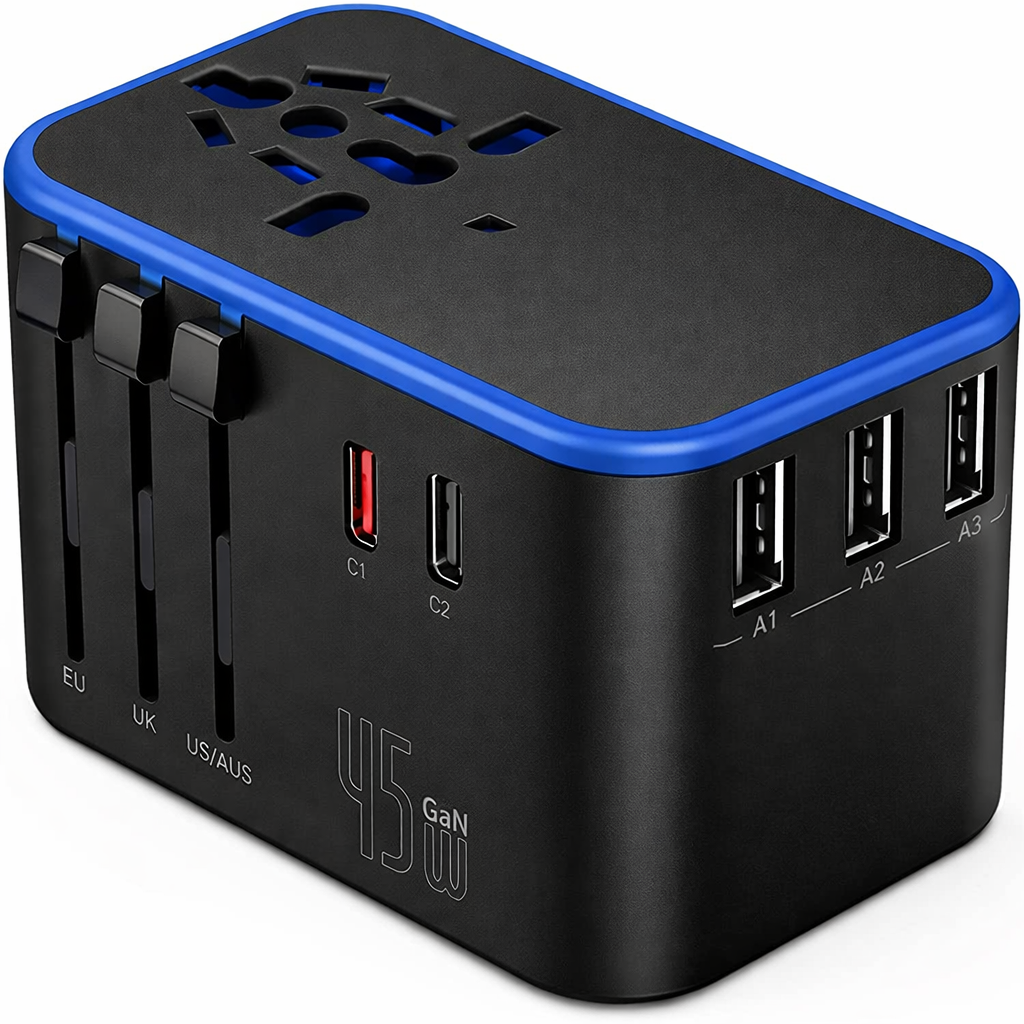
Quick Specs (What Matters in Real Travel)
Partner link. Pricing and availability can change.
Why This Adapter Earns Space in Your Bag
Most travelers don’t need more gear. They need fewer failure points. A reliable universal adapter removes an entire category of travel friction: dead phones, slow charging, and “wrong plug” surprises right when you land.
Best for
Multi-country travelers who want one compact charging hub instead of loose plug heads.
Real-world win
Fewer loose adapters + faster USB-C charging in one block when outlets are limited.
Non-negotiable
Your devices must support 100–240V. Hair tools usually need a converter.
Fast “Will This Work With My Device?” Safety Check
Do this once and you’ll avoid the most common travel charging mistake.
- Flip your charger over and find the input range.
- If you see 100–240V, you’re usually good worldwide.
- If you only see 110–120V, you need a proper voltage converter for 220–240V countries.
- Usually OK: phones, tablets, laptop chargers, cameras, power banks (most are 100–240V).
- Usually NOT OK without a converter: hair dryers, curling irons, straighteners (unless dual-voltage).
How to use it (simple, no surprises)
- Select the correct plug type for the country (EU/UK/US/AU).
- Plug the adapter into the wall outlet first (stable seat).
- Connect devices via USB-C/USB-A or the universal AC outlet if needed.
- Prioritize your “must-have” device first (phone + power bank is a strong combo).
- Unplug by holding the adapter body, not yanking cables (reduces wear).
The Low-Impact Angle (Why This Is a Sustainability Upgrade)
Buying fewer duplicate chargers and avoiding piles of single-region plug heads reduces clutter and material waste. If you travel often, one reliable “one adapter” hub is a small upgrade that lowers stress and consumption at the same time.
Who should buy
- International travelers doing multi-country routes (EU + UK + Asia-Pacific).
- Remote workers who need predictable charging in hotels and coworking spaces.
- Carry-on travelers who want one compact charging “home base.”
Who should skip
- Travelers whose main issue is using 110V-only hair tools overseas (you need a converter or dual-voltage tools).
- Anyone who must power very high-wattage appliances (use the right tool for that job).
FAQ: Ceptics Universal Travel Adapter (Real-World Questions)
Short, practical answers focused on safety and day-to-day travel use.
Is this a voltage converter?
Will it charge a laptop?
Can I charge multiple devices at once?
Does it work in Europe and the UK?
Does it work in the U.S. and Japan?
Is it safe to leave it plugged in overnight?
Will it work with a hair dryer or straightener?
What’s the biggest mistake travelers make with adapters?
Is one adapter enough for two travelers?
Partner link. Pricing and availability can change. Always verify device voltage compatibility before international use.
Further Reading & Sustainable Work Resources
- Eco-friendly travel tips
- Low-impact travel habits
- Train vs plane emissions (2025)
- Sustainable travel guide (2025)
