
Discovering the best walkable cities in Europe is a game-changer for digital nomads and eco-conscious travelers. Imagine exploring a new city where the best attractions, coziest cafes, and most vibrant neighborhoods are just a short stroll away. This isn’t just a pleasant thought; it’s the reality in these pedestrian-friendly hubs. For those of us looking to reduce our carbon footprint, choosing a city built for people, not cars, is a powerful way to connect with local culture and improve well-being. These urban centers prioritize pedestrian zones, extensive public transit, and smart, human-scale design, making them ideal bases for slower, more meaningful travel.
In this guide, we’ll journey through Europe’s most pedestrian-friendly hubs, from the cycling superhighways of Copenhagen to the medieval, car-free lanes of Ghent. Each city on this list has been selected not just for its high walkability score but for its commitment to sustainable infrastructure, excellent rail connections for low-impact onward travel, and a supportive environment for remote workers. We’ll dive into practical details like cost of living, the best neighborhoods for long stays, and eco-friendly accommodation, giving you the tools to plan a regenerative European adventure.
Walkable Cities in Europe: Fact-Checked Picks for Sustainable Workations
Our analysis is grounded in data from trusted sources like the World Green Building Council and the Global Ecotourism Network, ensuring every recommendation supports a more sustainable way to work and wander. This article was fact-checked using sustainability data from the World Green Building Council, the Global Ecotourism Network, and peer-reviewed architecture studies. All partner links are vetted for compliance with sustainable business certifications. Whether you’re planning a two-week workation or a six-month deep dive, these cities prove that the most enriching travel experiences are often found on foot, one cobblestone street at a time.
Key Takeaways for Your Walkable City Journey
- Prioritize People-Centric Design: Cities built around walking, cycling, and public transit offer a higher quality of life and a lower environmental impact.
- Look Beyond the City Center: While historic centers are often car-free, investigate neighborhoods with strong local amenities and transit links for more authentic and affordable long stays.
- Embrace the Rails: Europe’s extensive train network, especially night trains, is your most powerful tool for reducing travel emissions between cities.
- Match the City to Your Goals: Define your priorities first. Are you looking for affordability (Krakow), creative energy (Berlin), or coastal access (Split)?
- Pack for Mobility: A minimalist, lightweight packing system is essential for navigating cobblestone streets and train station stairs with ease.
- Travel Slower, Experience More: A walkable lifestyle is inherently slower. Embrace this pace to connect more deeply with your surroundings and reduce travel fatigue.
1. Copenhagen: A Top Walkable City with a Bicycle Capital Model
Copenhagen stands out as one of the most impressively walkable cities in Europe, but its true genius lies in its world-class bicycle infrastructure. With a staggering 62% of residents commuting by bike, the Danish capital offers a blueprint for low-carbon urban living, making it an ideal base for eco-conscious digital nomads and remote workers. The city is designed around the “Five Finger Plan,” which concentrates development along commuter rail lines, creating dense, walkable neighborhoods that are easily accessible without a car.
This human-centric design encourages exploration on foot or two wheels. The city’s dedication to pedestrian zones, protected bike lanes (cykelsuperstier or “cycle superhighways”), and efficient public transit creates a seamless, stress-free environment. This integrated system not only reduces carbon emissions but also enhances quality of life, offering a quiet, clean, and active setting for a long-stay visit.
Best Walkable Neighborhoods for Long Stays
- Nørrebro: A vibrant, multicultural district known for its independent shops, cozy cafes, and green spaces like Assistens Kirkegård. It’s a 15-minute walk or a quick bike ride to the city center, offering an authentic local vibe at a slightly lower price point.
- Vesterbro: Once a gritty industrial area, Vesterbro is now a trendy, gentrified neighborhood with car-free streets like Istedgade and Sønder Boulevard. Its proximity to the waterfront and Central Station makes it incredibly convenient.
- Islands Brygge: Located just across the harbor from the city center, this area features a stunning harborside promenade with zero vehicle traffic, popular for swimming in the summer and relaxed walks year-round.
Practical Tips for a Car-Free Stay
For a sustainable base, consider the apartment-style rooms at Zoku Copenhagen{rel=”nofollow sponsored noopener noreferrer”}, which is designed for long-stay professionals. To navigate the city, use a rechargeable Rejsekort for bundled access to trains, buses, and the metro. For real-time transit and bike routes, download the Citymapper or Rejseplanen app. The extensive S-train network also makes regional day trips simple; you can easily reach historic Roskilde or Helsingør in 30–45 minutes. You can learn more about its sustainable initiatives in our roundup of eco-cities perfect for digital nomads.
2. Barcelona: Mediterranean Walkable Grid & Transit Hub
Barcelona offers a brilliant model for urban living, making it one of the best walkable cities in Europe for a long-stay base. The city’s famous grid layout in the Eixample district is being reimagined through its innovative superilles (superblocks) program. This initiative reclaims intersections from cars, creating pedestrian-priority public spaces that foster community, reduce noise, and improve air quality, making it a dream for digital nomads focused on well-being.
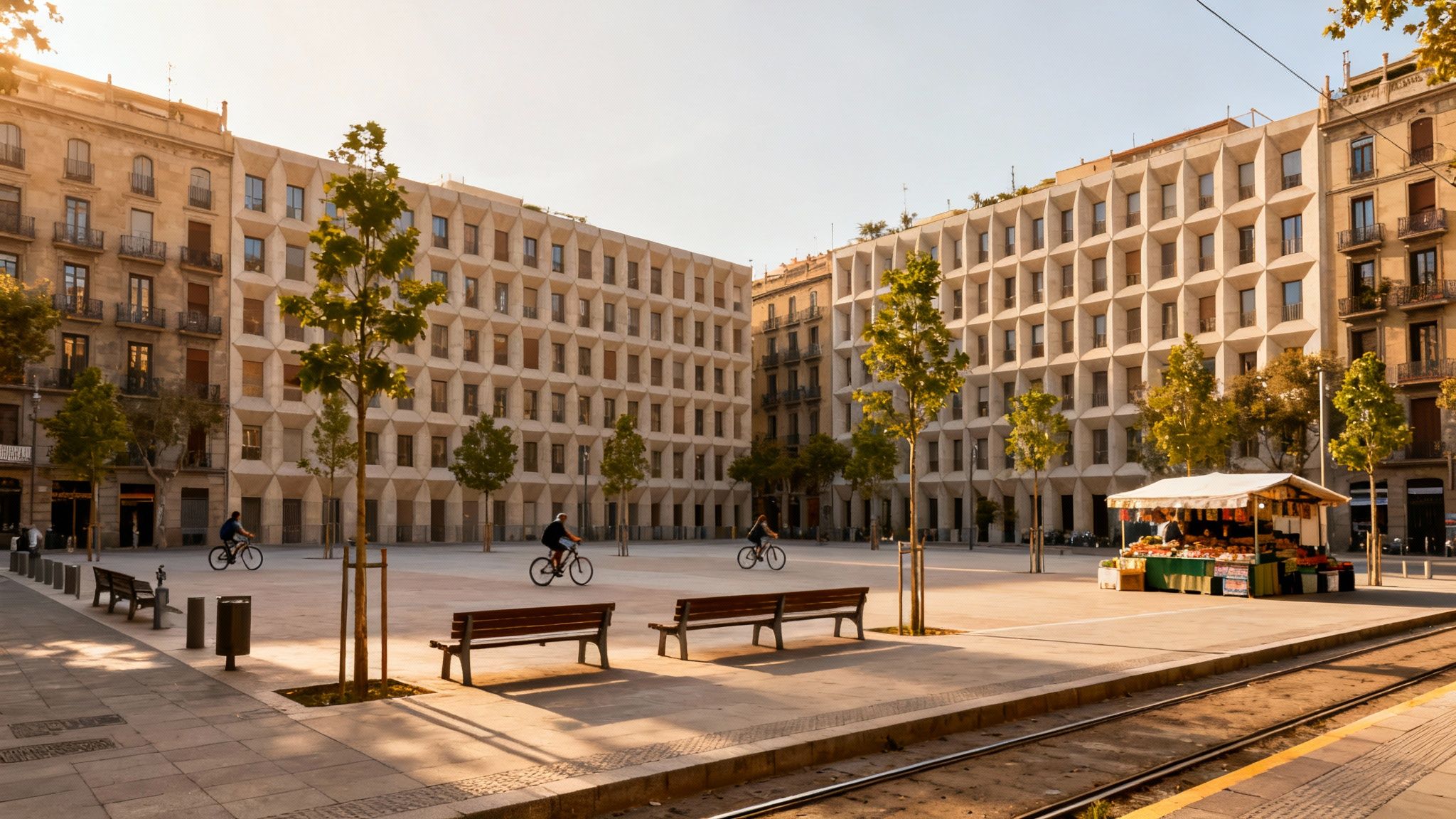
This human-centric urban design, combined with a highly efficient and extensive metro system, makes navigating Barcelona without a car incredibly simple. The city’s role as a major rail hub also positions it perfectly as a gateway for slower, low-carbon travel. From here, you can easily access other parts of Spain and venture into France via high-speed and regional trains, all while based in a vibrant, sun-drenched Mediterranean metropolis.
Best Walkable Neighborhoods for Long Stays
- Gràcia: With its village-like atmosphere, Gràcia is a maze of charming, narrow streets and inviting plazas that appear every few blocks. It feels like a separate town within the city, offering a strong sense of community and countless independent boutiques and cafes.
- Sant Antoni: This neighborhood is a prime example of the superblock concept in action. Centered around its beautifully restored historic market, Sant Antoni is filled with local vermouth bars, bookshops, and a relaxed, authentic vibe, all while being just a short walk from the city center.
- Poblenou: Once an industrial heartland, Poblenou has been transformed into a modern hub for tech and creativity. Its wide promenades, like the Rambla del Poblenou, lead directly to the beach and are lined with bike paths, making it a fantastic choice for those who want both city energy and seaside calm.
Practical Tips for a Car-Free Stay
For navigating the city’s excellent public transit, purchase a T-casual metro pass, which covers 10 journeys and is far more economical than single tickets. To experience the historic Gothic Quarter without the crowds, plan your walk for the early morning between 6 AM and 8 AM. Barcelona’s regional train network (Rodalies) makes day trips effortless; you can reach the mountain monastery of Montserrat in about an hour, the coastal town of Sitges in 30 minutes, or even the French border in around two hours.
3. Berlin: Post-Industrial Walkability & Bike Culture
Berlin masterfully combines dense, walkable neighborhoods with a robust cycling culture, making it one of the most accessible and affordable walkable cities in Europe. Its counter-cultural ethos and post-industrial reinvention have fostered a car-free lifestyle supported by a world-class public transit network. The city’s design, centered around the extensive S-Bahn and U-Bahn systems, makes it an ideal, low-impact base for digital nomads exploring Central and Eastern Europe by train.
This human-scale urban planning encourages foot and bike travel, with sprawling parks like Tiergarten and repurposed industrial spaces providing ample room to roam. The city is largely flat, which, combined with expanding bike lanes and a shared-bike culture, creates a seamless environment for getting around. This integrated approach not only minimizes your carbon footprint but also immerses you in the city’s dynamic, creative energy, offering a vibrant backdrop for a long-term stay.
Best Walkable Neighborhoods for Long Stays
- Kreuzberg: Known for its bohemian vibe, this district is packed with street art, vegan cafes, and lively, car-free streets. Its multicultural atmosphere and proximity to Tempelhofer Feld, a former airport turned public park, make it a top choice.
- Prenzlauer Berg: Featuring beautifully restored pre-war apartment buildings, this neighborhood is famous for its leafy streets, independent boutiques, and laid-back cafe culture. It offers a quieter, more residential feel while remaining highly walkable.
- Friedrichshain: Popular with young professionals and artists, this area is known for its vibrant nightlife and the iconic East Side Gallery. The RAW-Gelände, a repurposed train repair station, is now an urban creative space with markets and galleries.
Practical Tips for a Car-Free Stay
To navigate Berlin like a local, purchase a Monatskarte (monthly transit pass) for seamless travel on the S-Bahn, U-Bahn, trams, and buses. For cycling, consider a monthly bike rental from services like Nextbike, but always secure it with a high-quality U-lock. Consider booking a stay in Kreuzberg or Friedrichshain to balance excellent walkability with more affordable rent. From Berlin’s Hauptbahnhof (Central Station), you can plan easy rail day trips to Potsdam (30 minutes), Dresden (2 hours), or even take a night train to Prague, making regional exploration simple and sustainable.
4. Amsterdam: Water-Centric Walkability & Cycling Dominance
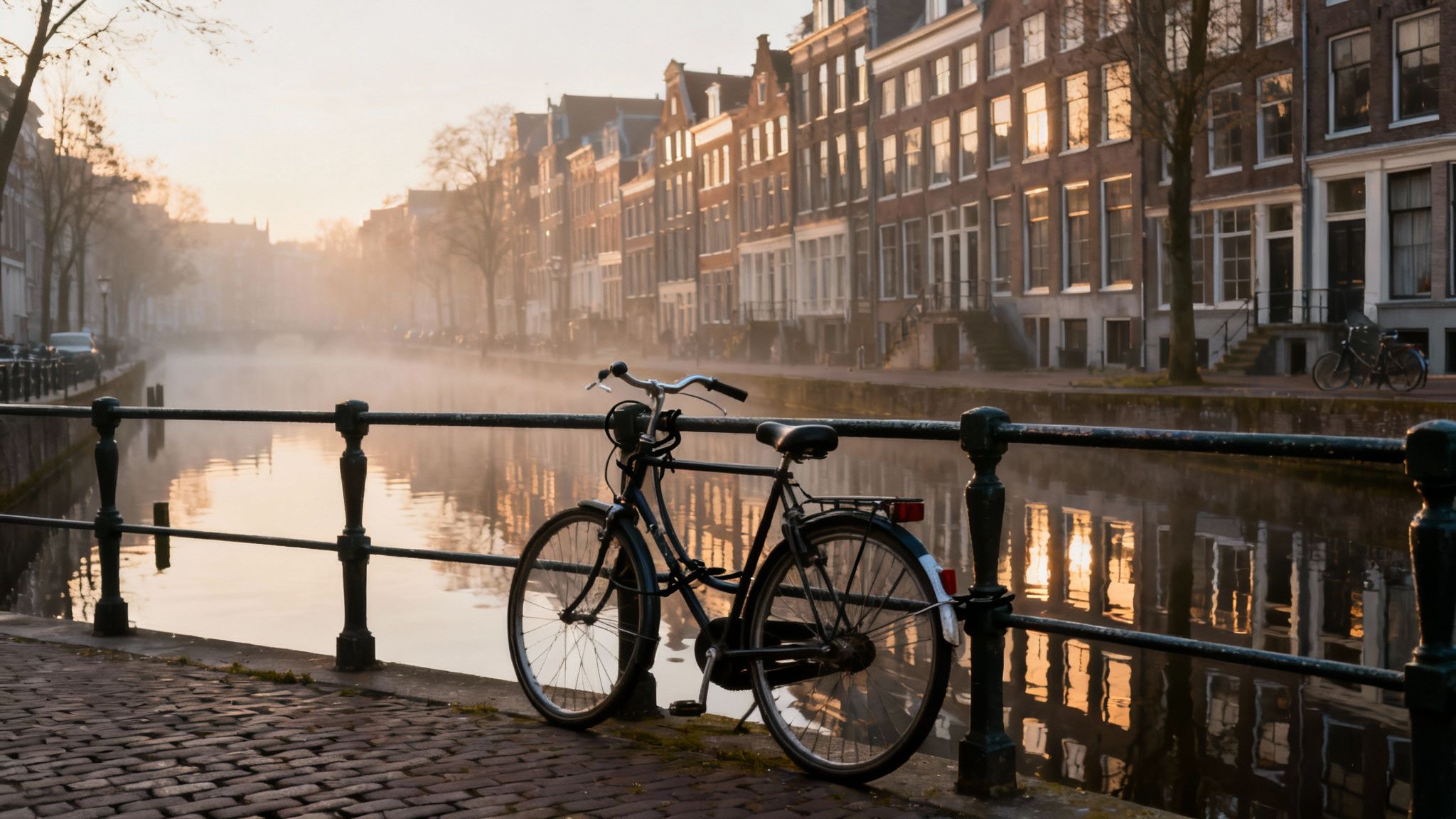
Amsterdam consistently ranks among the most walkable cities in Europe, but its identity is defined by a powerful combination of pedestrian-friendly streets and world-class cycling infrastructure. With over 310 miles (500 km) of dedicated bike lanes and a compact, flat layout, the city makes car-free living effortless. Its historic canal ring, a UNESCO World Heritage site, replaces busy roads with serene waterways, creating a unique urban environment where walking and cycling are the primary modes of transport.
This human-scale design is perfect for digital nomads and remote workers seeking a well-connected, low-impact base. Amsterdam’s impressive 93/100 Walk Score underscores its accessibility, allowing residents to complete daily errands without a vehicle. The city’s excellent rail connections from Amsterdam Centraal station also position it as a premier hub for slow travel, linking you to Brussels, Paris, and Cologne in just a few hours.
Best Walkable Neighborhoods for Long Stays
- De Pijp: Known for its famous Albert Cuyp Market and diverse culinary scene, De Pijp offers a bohemian, village-like atmosphere. It’s a short walk or tram ride from the center, providing residential calm with vibrant energy.
- Oud-West: A trendy area popular with young professionals, this neighborhood features regenerated warehouse spaces, independent boutiques, and the sprawling Vondelpark. It balances urban convenience with access to green space.
- Amstelkwartier: Situated along the Amstel River, this newer district offers peaceful riverside walks and modern housing. It’s quieter than the central canal belt but remains well-connected by metro and bike paths.
Practical Tips for a Car-Free Stay
For navigating the city’s extensive tram and bus network, a GVB day pass (around $8.50-$10.75 USD or €8–€10) is practical for short visits. For long stays, monthly bike rentals are economical, costing approximately $85-$107 USD (€80–€100). To avoid bike theft, always use a sturdy U-lock and park in designated racks. When booking your sustainable stay, consider the A-rated energy-neutral Hotel Jakarta Amsterdam{rel=”nofollow sponsored noopener noreferrer”}. From Centraal Station, you can easily book overnight trains to Vienna, Berlin, or Paris{rel=”nofollow sponsored noopener noreferrer”}, making multi-city European trips seamless and low-carbon.
5. Lisbon: Hill Neighborhoods & Slow Urban Transit
Lisbon offers a unique take on a walkable city, combining incredibly compact, historic neighborhoods with an affordable cost of living. Its famous seven hills encourage a lifestyle of short, frequent walks, while its charming network of trams and funiculars provides delightful, car-free mobility. For digital nomads seeking a vibrant base with excellent rail access to Portugal’s stunning coast and neighboring Spain, Lisbon’s unique topography and transit system make it a top contender among walkable cities in Europe.
The city’s design, particularly in its historic core, is inherently pedestrian-focused. Ancient, narrow cobblestone streets in areas like Alfama are largely inaccessible to cars, preserving their authentic character and making them a joy to explore on foot. This human-scale environment, paired with an extensive public transport system, allows residents and long-stay visitors to live a rich, full life without ever needing a vehicle. This slow-transit model fosters a deep connection to the city’s rhythm and culture.
Best Walkable Neighborhoods for Long Stays
- Alfama: Lisbon’s oldest district is a labyrinth of medieval streets, hidden courtyards, and stunning viewpoints (miradouros). Its steep, winding alleys are best explored in the early morning to avoid crowds, offering access to traditional Fado houses and local tascas (taverns).
- Príncipe Real: Known for its LGBTQ+-friendly atmosphere, beautiful gardens, and independent design shops, this neighborhood offers a relatively flat central square, making it a comfortable base. It blends a sophisticated, local feel with proximity to the lively Bairro Alto.
- Bairro Alto: Famous for its nightlife, this district transforms into a pedestrian-friendly zone in the evenings. By day, it’s a quieter area filled with vintage shops, bookstores, and scenic viewpoints, offering a dynamic environment for remote workers.
Practical Tips for a Car-Free Stay
For seamless travel, purchase a 7-day Viva Viagem pass, which covers the metro, buses, trams (including the famous Tram 28), and funiculars. For a base that combines flatter terrain with a great local atmosphere, consider Príncipe Real or neighboring Chiado. The regional train network from stations like Rossio or Cais do Sodré makes day trips incredibly simple; you can reach the UNESCO sites of Sintra in about 30 minutes or the beaches of Costa da Caparica in under an hour. You can discover more options like this in our guide to workation cities you can navigate without a car.
6. Vienna: A Walkable City with Rail Hub Excellence
Vienna is a prime example of one of the most walkable cities in Europe, masterfully designed around its famous Ringstrasse (Ring Road). This unique circular boulevard creates concentric zones that make navigating the city incredibly intuitive. The historic center, or District 1, is almost entirely pedestrianized, while the surrounding districts (2–9) are effortlessly accessible on foot or by the city’s iconic tram system. This elegant layout promotes a high quality of life and makes car-free living feel natural.
As Central Europe’s largest rail hub, Vienna is the ultimate base for remote workers looking to explore the Danube Valley, Eastern Europe, and the Balkans by train. The city’s commitment to public transport and its strategic location make it a powerhouse for sustainable, long-stay travel. This combination of historic charm, green public spaces, and unparalleled train connectivity provides a sophisticated yet practical environment for a low-impact stay.
Best Walkable Neighborhoods for Long Stays
- Mariahilf (District 6): Known for its vibrant local markets, independent cafes, and a pleasant mix of residents and tourists. Its mostly flat terrain makes it perfect for daily strolls, and it offers a genuine Viennese experience just outside the main tourist core.
- Neubau (District 7): A trendy, creative hub popular with young professionals. This district is packed with art galleries, design shops, and innovative restaurants, all connected by easily walkable streets.
- Josefstadt (District 8): A quieter, more residential area with beautiful architecture and a strong local character. It’s home to charming small theaters and museums, offering a peaceful retreat that is still just a short walk from the city center.
Practical Tips for a Car-Free Stay
For seamless travel, purchase a monthly Vienna Card (around $54 USD or €50), which gives you unlimited access to the U-Bahn, S-Bahn, trams, and buses. Base yourself in Districts 6, 7, or 8 for the ideal blend of walkability, affordability, and local atmosphere. For a scenic route, walk along the Danube Canal, or hop on tram lines 1 or 2 for a brilliant sightseeing tour around the Ringstrasse. From Vienna Hauptbahnhof (Central Station), you can easily take trains to Prague (4 hours), Budapest (3 hours), and even overnight services to Venice (10 hours) or Krakow (8 hours). Exploring the continent this way is central to the best ways to travel in Europe.
7. Ghent: Medieval Walkability & Car-Free City Center
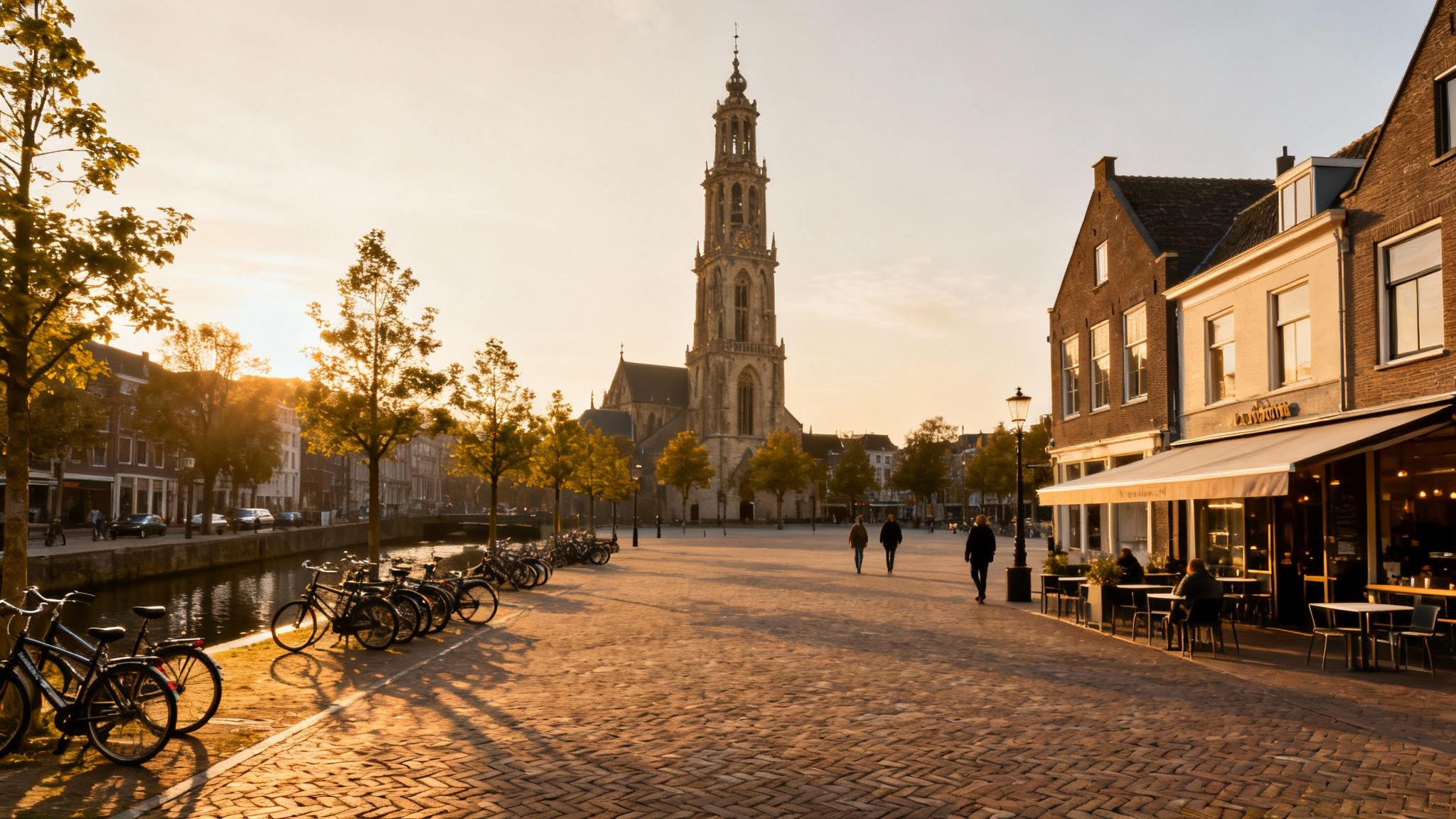
Ghent presents a compelling model for what Europe’s most walkable cities can achieve by prioritizing people over cars. Its historic core, the largest car-free zone in Belgium, has been a pedestrian paradise since 1997. This long-standing commitment to car-free living makes it an exceptionally low-stress and quiet base for digital nomads seeking an authentic Flemish experience. The city’s compact medieval layout, combined with extensive cycling infrastructure, makes getting around effortless and enjoyable.
The city’s design inherently encourages exploration on foot. Canalside paths, cobblestone streets, and a seamless network of trams and buses connect residential areas to the vibrant center. This integrated system not only preserves the city’s medieval charm but also creates a high quality of life, offering a clean, quiet, and active environment that’s ideal for a productive long-stay. For eco-conscious remote workers, Ghent is a standout choice among walkable cities in Europe.
Best Walkable Neighborhoods for Long Stays
- Sint-Jacobs: A residential neighborhood just a short walk from the historic center, known for its local bars, Sunday flea market, and less touristy atmosphere. It offers an authentic community feel with excellent walkability.
- Patershol: This ancient, labyrinthine quarter is filled with charming restaurants and historic homes. While popular with visitors, its car-free streets and proximity to the Gravensteen castle make it a uniquely atmospheric place to stay.
- Prinsenhof: A peaceful, almost village-like area north of the city center. It’s perfect for those seeking quiet waterfront walks along the canals while remaining within a 10-minute stroll of all major attractions.
Practical Tips for a Car-Free Stay
For navigating the city and surrounding region, a De Lijn monthly pass offers excellent value for unlimited tram and bus travel. While the city is best explored on foot, renting a bike is perfect for day trips to nearby villages. Ghent’s main station, Gent-Sint-Pieters, provides superb regional and international rail connections. You can reach Brussels in 30 minutes, while direct trains or simple connections put Amsterdam (about 2.5 hours) and Paris (about 2.5 hours) within easy reach for low-carbon weekend trips. You can book train tickets across Europe{rel=”nofollow sponsored noopener noreferrer”} to simplify your travel planning.
8. Krakow: Historic Walkability & Eastern European Rail Gateway
Krakow excels as one of the most affordable and walkable cities in Europe, offering a preserved medieval core that serves as a gateway to Central and Eastern Europe. Its compact Old Town (Stare Miasto) is entirely pedestrianized, allowing for seamless exploration of historic squares, cobblestone alleys, and Gothic architecture. This human-scale design, centered around the vast Main Market Square, makes Krakow an ideal base for digital nomads seeking an immersive, car-free experience without the high costs of Western European hubs.
The city’s layout is naturally conducive to walking, with key neighborhoods flowing into one another along the Vistula River. The preservation of car-free zones and a square-based urban plan create a quiet, clean environment perfect for long-stay remote workers. Krakow’s extensive tram network and its strategic position as a rail hub make it a practical and low-impact choice for exploring the region, connecting travelers to major cities with minimal emissions.
Best Walkable Neighborhoods for Long Stays
- Kazimierz: The historic Jewish quarter is a hub of creativity and culture, filled with independent galleries, atmospheric bars, and cozy cafes. It offers authentic local character and riverside walks just a 10-minute stroll from the Old Town, often at a lower price point.
- Podgórze: Situated across the river from Kazimierz, this emerging district offers a quieter, more residential feel. Its riverside promenades, local restaurants, and green spaces like Bednarski Park make it a relaxing base with great walkability.
- Nowa Huta: For a unique contrast, this Soviet-era district offers a fascinating glimpse into a different chapter of Polish history. While further from the center, it’s designed with wide avenues and expansive parks, making it highly walkable and explorable through guided tours.
Practical Tips for a Car-Free Stay
To navigate the city sustainably, purchase a 30-day Krakow Card for unlimited tram and bus travel. For longer stays, consider basing yourself in Kazimierz for its excellent walkability and vibrant local scene. To avoid the crowds in the Old Town, take a walk around Wawel Castle or the Main Square in the early morning (6–8 AM). Krakow’s main train station provides direct connections to Prague (8 hrs overnight), Warsaw (3 hrs), Budapest (8 hrs), and Vienna (8 hrs), making regional exploration simple. You can discover more options like this in our guide to the best places to travel in Eastern Europe.
9. Strasbourg: Franco-German Border Walkability & Rhine Cycling
Strasbourg presents a unique blend of Franco-German culture, making it one of the most compelling walkable cities in Europe for a long-term stay. Its UNESCO-listed Grande Île is a completely pedestrianized medieval core, where half-timbered houses and canals create a storybook setting perfect for exploration on foot. The city’s true strength lies in its seamless integration of walkability, an extensive cycling network, and its strategic position on Europe’s major rail corridors.
This human-scale design makes daily life effortless without a car. Canal-side promenades invite leisurely strolls, while dedicated bike paths connect residential areas to the city center and even cross the border into Germany. This commitment to low-carbon mobility, combined with its central European location, makes Strasbourg an ideal base for digital nomads looking to explore the Alsace region, Switzerland, and Germany using sustainable transport.

Best Walkable Neighborhoods for Long Stays
- Grande Île: The historic heart of the city is entirely car-free, offering unparalleled walkability amidst charming medieval streets, the famous cathedral, and riverside restaurants. It’s lively but can be more expensive for long stays.
- Neustadt (German Quarter): Just outside the main island, this area features grand Alsatian architecture, local cafes, and a more residential feel. It offers excellent walkability with slightly more affordable accommodation options.
- Orangerie: Known for its large park, museums, and proximity to the European institutions, this quieter district is perfect for riverside walks and offers a peaceful yet well-connected base.
Practical Tips for a Car-Free Stay
For navigating the city, a monthly public transport pass provides unlimited tram and bus access. To explore the wider region, rent a Vélhop bike for day trips to nearby Alsatian villages or even across the Rhine River into Germany. The central train station offers direct, high-speed connections, putting Paris (2.5 hours), Basel, Switzerland (1.5 hours), and Frankfurt, Germany (2 hours) within easy reach for weekend excursions. You can book regional and international train tickets{rel=”nofollow sponsored noopener noreferrer”} in advance for the best fares. For connectivity, consider getting an eSIM from a provider like Airalo{rel=”nofollow sponsored noopener noreferrer”} to stay online seamlessly as you cross borders.
10. Split: Mediterranean Walkability & Adriatic Base
Split offers a unique blend of ancient history and coastal living, making it one of the most compelling walkable cities in Europe for a long-term base. The heart of the city is Diocletian’s Palace, a UNESCO World Heritage site that is not a museum but a living, breathing labyrinth of car-free stone alleys, homes, and businesses. This ancient Roman core, combined with a stunning waterfront promenade, creates an urban environment built for pedestrians, not cars.
The city’s compact design means nearly everything you need is accessible on foot. From the central Green Market (Pazar) to the ferry port, the entire downtown area encourages a slow, mindful pace of life. This human-scale layout is ideal for digital nomads and remote workers seeking a Mediterranean lifestyle without the reliance on a vehicle. Split serves as a perfect gateway for exploring the Dalmatian coast, with its excellent ferry connections providing low-impact travel to the Adriatic islands and beyond.
Best Walkable Neighborhoods for Long Stays
- Old Town (Diocletian’s Palace): Living within the palace walls is an unparalleled experience. You are steps away from cafes, markets, and the Riva waterfront, though it can be busy in peak season. It’s the ultimate car-free immersion.
- Bačvice: Famous for its sandy beach and local bars, this neighborhood is a 10-minute walk from the Old Town. It offers a more relaxed, residential feel while maintaining excellent walkability along its beautiful seaside promenade.
- Marjan: For those who prioritize nature, the neighborhoods at the base of Marjan peninsula provide immediate access to its forested park, walking trails, and secluded beaches. It’s a quiet retreat still within walking distance of the city buzz.
Practical Tips for a Car-Free Stay
While Split is exceptionally walkable, a weekly bus pass for around €5 EUR (about $5.40 USD) can be useful for occasional trips to farther neighborhoods or the main bus station. For navigating the city, base yourself in the Old Town or Bačvice for seamless access to both the waterfront and daily amenities. A daily walk along the Riva and a climb up Marjan Hill for panoramic views are essential local routines. Ferries are your primary mode of slow travel; you can easily reach islands like Hvar and Vis or even take an overnight ferry to Ancona, Italy. For more ideas on exploring the region, see our guide to the Adriatic coastline.
Walkability Comparison of 10 European Cities
| City | Implementation Complexity 🔄 | Resource Requirements ⚡ | Expected Outcomes 📊 | Ideal Use Cases 💡 | Key Advantages ⭐ |
|---|---|---|---|---|---|
| Copenhagen: The Bicycle Capital Model | High — extensive street redesign, dense bike network | Large — 250+ miles (400+ km) bike lanes, S‑train/metro integration, ongoing car‑free expansion | Very high walkability (88); ≈75% transport emissions reduction | 2–12 week digital‑nomad stays; bike‑centric exploration | ⭐⭐⭐⭐ Safe year‑round cycling, strong rail links |
| Barcelona: Mediterranean Walkable Grid & Transit Hub | Medium–High — superblocks rollout + dense metro integration | Extensive — 12 metro lines, superblock infrastructure, tram/rail links | High walkability (85); local emissions −60% | 3–6 months; vibrant nomad scene and regional rail gateway | ⭐⭐⭐ Grid + metro + coastal access |
| Berlin: Post‑Industrial Walkability & Bike Culture | Medium — expand bike lanes and affordable housing measures | Moderate — 620+ miles (1,000+ km) bike lanes, S‑/U‑Bahn network, regional rail hub | High walkability (87); ≈70% transport emissions reduction; low living costs | 3–12 months; low‑cost base with Eastern Europe access | ⭐⭐⭐ Affordable, creative culture, rail gateway |
| Amsterdam: Water‑Centric Walkability & Cycling Dominance | High — strict car restrictions and integrated water/land transport | Large — 310+ miles (500+ km) bike lanes, Central Station Eurostar/Thalys, waterways | Very high walkability (93); ≈80% emissions reduction | 2–3 months; compact scenic base with excellent rail links | ⭐⭐⭐⭐ Top European walkability and rail access |
| Lisbon: Hill Neighborhoods & Slow Urban Transit | Medium — terrain‑adapted trams/funiculars, localized traffic calming | Moderate — historic trams, funiculars, regional rail; lower costs | Good walkability (82); tram‑based emissions −65%; mild climate | 3–6 months; affordable Mediterranean base with coastal rail trips | ⭐⭐⭐ Affordable, mild winters, coastal access |
| Vienna: Ring Road Walkability & Rail Hub Excellence | Medium — tram‑centric ring and integrated transit network | Moderate — extensive tram/U‑Bahn, Hauptbahnhof rail hub | High walkability (88); ≈70% transport emissions reduction; high QoL | 2–6 months; Central Europe rail hub and stable infrastructure | ⭐⭐⭐ Reliable transit, safety, healthcare |
| Ghent: Medieval Walkability & Car‑Free City Center | Low–Medium — car‑free center already implemented | Low — bike parking, local tram/regional rail; affordable upkeep | Exceptional walkability (95); 99.5% trips foot/bike/transit (near zero emissions) | 2–4 months; authentic medieval car‑free living, affordable | ⭐⭐⭐⭐ Completely car‑free center, high walkability |
| Krakow: Historic Walkability & Eastern European Rail Gateway | Low — preserved car‑free Old Town + tram network | Low — tram system, regional rail; very affordable | High walkability (87); tram cuts transport emissions ~70% | 2–4 months (visa constraints); affordable Central European base | ⭐⭐⭐ Historic character + very low cost |
| Strasbourg: Franco‑German Border Walkability & Rhine Cycling | Medium — preserve pedestrian island + expand cycling routes | Moderate — 124+ miles (200+ km) bike lanes, tram, SNCF regional/high‑speed links | Very high walkability (91); ≈75% emissions reduction via bike/tram | 3–6 months; Franco‑German base for rail/bike day trips | ⭐⭐⭐ UNESCO center, cross‑border rail access |
| Split: Mediterranean Walkability & Adriatic Base | Low — compact car‑free Old Town already in place | Low — ferry network, local buses; lower infrastructural needs | Very high walkability (92) in Old Town; walkable year‑round, reduced vehicle need | 2–4 months (visa limits); Adriatic base and island hopping | ⭐⭐⭐ Waterfront walkability, low living costs |
Your Next Step: Choosing a Walkable Base for a Low-Impact Journey
Choosing from the best walkable cities in Europe is more than a logistical decision; it’s a commitment to a slower, more intentional style of travel and work. By prioritizing urban environments designed for people over cars, you actively reduce your environmental footprint, support hyper-local economies, and create space for the spontaneous discoveries that only happen on foot. Each city we’ve explored, from Copenhagen’s unparalleled cycling infrastructure to Lisbon’s charming, tram-laced hills, offers a unique template for a sustainable digital nomad or long-stay remote work lifestyle. This approach moves beyond simple tourism, inviting you to integrate into the daily rhythm of a place in a way that respects its resources and culture.
Walkable Cities in Europe: How to Choose the Right Base for Your Next Chapter
As you plan your next European chapter, the key is to match a city’s strengths with your personal and professional priorities. This guide has provided the tools to do just that, moving beyond generic walkability scores to give you a detailed picture of what life on the ground looks like. We’ve examined everything from the best neighborhoods for a month-long stay and the cost-of-living estimates to the availability of regenerative accommodations and the crucial details of rail connectivity. This framework empowers you to build a low-impact itinerary that aligns perfectly with your values and work-life needs.
Are you seeking an affordable central hub with stellar night-train connections to Eastern Europe, like Krakow or Vienna? Or is the allure of a completely car-free medieval center, like Ghent’s, your top priority for focused work and quiet evenings? Perhaps the Mediterranean lifestyle of Barcelona or Split, with their seamless blend of urban grid and coastal access, is the perfect backdrop for your next project. By leveraging this detailed breakdown, you can craft a travel plan that is not only sustainable but also deeply fulfilling.
From Blueprint to Footsteps: Your Action Plan
The transition from planning to experiencing these incredible cities is where the real journey begins. Use the data in this article as your foundation. Start by shortlisting 2-3 cities that resonate most with your budget, desired lifestyle, and travel goals. Dig deeper into their public transport systems, investigate co-working spaces in your preferred neighborhoods, and start mapping out potential rail journeys to nearby destinations.
Editor’s Pick: The Power of eSIM for Seamless Connectivity
For multi-country trips, staying connected can be a hassle. An eSIM (embedded SIM) is a digital SIM that lets you activate a cellular plan without having to use a physical SIM card. It’s a game-changer for digital nomads. With providers like Airalo, you can download a regional data plan for Europe and switch networks seamlessly as you cross borders by train, ensuring you always have reliable internet for work and navigation without hunting for local SIMs.
Remember, the most sustainable trip is one that benefits both you and the destination. By choosing to walk, cycle, and utilize public transit, you’re not just a passive visitor; you become a temporary resident contributing to a healthier, more connected urban fabric. You support local bakeries, independent bookshops, and neighborhood cafes, all while minimizing your carbon output. This is the core principle of regenerative travel: leaving a place better, or at least no worse, than you found it.
Ready to build your own sustainable, rail-first itinerary? The resources and guides at Eco Nomad Travel are designed to help you plan low-impact journeys with confidence. From minimalist packing lists to detailed night-train guides, we provide the practical tools you need to explore the world’s best walkable cities in Europe and beyond, responsibly.
Join the Sustainable Work Movement
Want more rail-first itineraries, low-impact packing systems, and walkable base-city ideas?

Explore Eco Nomad Travel
📚 Core Guides
🧭 Planning & Logistics
🗺️ Destinations & Seasons
Jeremy Jarvis — founder of Eco Nomad Travel, sustainable travel writer, and advocate for regenerative tourism. His work focuses on low-impact mobility, eco-friendly digital nomad life, and climate-positive travel.
Legal
Affiliate DisclaimerPrivacy Policy
Terms of Service
Image & Media Notice
Cookie Policy
Contact
Affiliate Disclosure: Some links on Eco Nomad Travel are affiliate links, meaning we may earn a small commission at no extra cost to you. This supports our mission to inspire responsible and low-impact travel worldwide.
Connect
✅ Trusted Official Sources
Plan smarter eco trips
Try our free Sustainable Travel Tools for Digital Nomads – carbon calculator, train vs plane comparator, and more.
Open Tools Hub