
So, what does water waste actually mean when you’re out exploring the world? Understanding what is water waste is the first step toward a more mindful journey. In the simplest terms, it’s any water that gets used inefficiently or for no good reason. It’s the stuff we turn into a byproduct of convenience or habit, from a dripping hotel faucet to the staggering, hidden water footprint of a souvenir t-shirt.
Affiliate disclosure: This post may contain affiliate links. If you buy through them, Eco Nomad Travel may earn a small commission at no extra cost to you.
Defining Water Waste For The Mindful Traveler
When we hear “water waste,” most of us picture the obvious stuff—like leaving the tap on while brushing our teeth. And sure, that counts. But the real picture is so much bigger, especially when you’re on the road.
For a mindful traveler, getting a handle on water waste means looking beyond your own personal use. It’s about seeing how your journey ripples outward.
Every choice has a water cost, from the food you eat to the tours you book. A long, luxurious shower in a desert resort? That’s a clear example. But what about the less visible “virtual water” used to produce your dinner, launder hotel sheets every single day, or manufacture the gear in your suitcase? That’s often where the real impact lies.
Direct vs. Indirect Water Use
To really get it, it helps to split things in two:
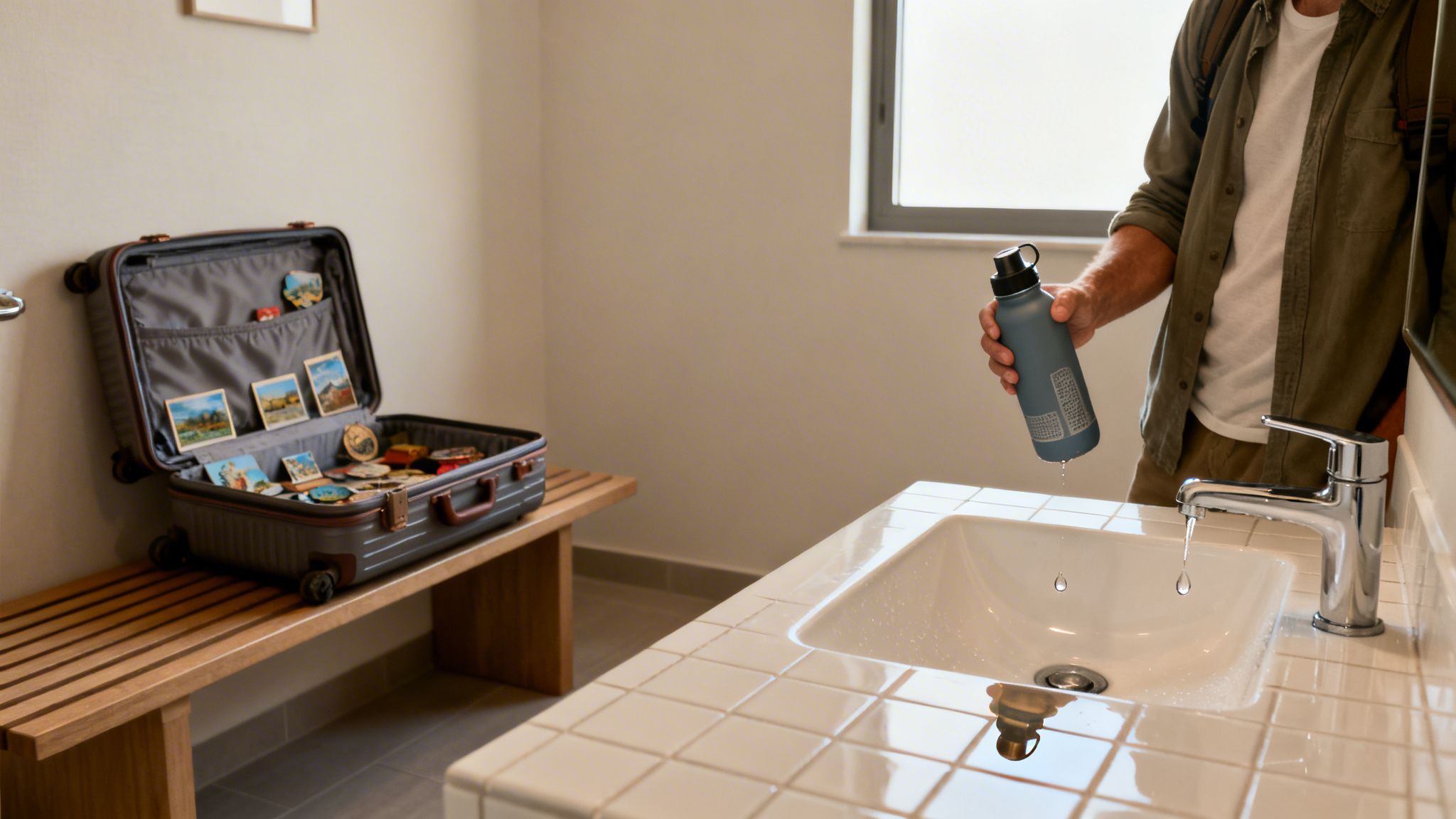
Direct Water Waste: This is the water you can see and control. Think excessively long showers, using the hotel laundry service for just a few items, or buying single-use plastic bottles instead of refilling your own. It’s the tangible stuff that happens in your hotel room, at a restaurant, or during an excursion.
Indirect Water Waste: This is the hidden water baked into the products and services you use. It’s the 2,700 liters (713 US gallons) of water it takes to make one cotton t-shirt, or all the water needed to grow, process, and ship the coffee in your morning cup. This unseen consumption is a huge part of your overall environmental footprint vs carbon footprint, and just becoming aware of it is a massive first step.
This distinction is everything. While taking a shorter shower is a fantastic habit, choosing a locally sourced, plant-based meal over a water-intensive steak can save exponentially more.
It reframes sustainable travel from being about small sacrifices to being about a series of powerful, informed choices. By simply carrying a great reusable water bottle, you’re not just avoiding plastic—you’re actively rejecting the entire wasteful water cycle of bottling and transportation.
The Unseen Water Footprint Of Your Travels: What is Water Waste in Tourism?
When we think about what is water waste, it’s easy to picture the obvious stuff, like a dripping tap in a hotel bathroom. But the truth is, the most significant water consumption during your travels often happens completely out of sight.
This hidden consumption is tied to something experts call “virtual water”—the staggering amount of water embedded in every product we use and every meal we eat. This concept changes everything. Suddenly, a simple choice at dinner becomes a major decision for water conservation.
To put it in perspective, producing a single steak can require over 1,800 US gallons (about 6,814 liters) of water. That number accounts for everything from growing the animal’s feed to its drinking water and processing. A locally sourced plant-based meal, by contrast, has a dramatically smaller water footprint. Understanding this helps you see how your choices ripple through the local environment you’re visiting.

Tourism’s Thirst: Water Waste In Hotels
The hospitality industry is a massive water consumer, and a lot of that use happens behind the scenes to maintain a certain standard of luxury. Daily laundering of bed linens and towels is one of the biggest culprits. A single hotel can churn through thousands of gallons of water each day just on laundry.
Think about these common yet water-intensive practices in tourism:
- Daily Housekeeping: Washing towels and sheets for every guest, every day, consumes enormous amounts of water and energy.
- Lavish Landscaping: Maintaining lush, green golf courses and tropical gardens—especially in arid destinations—puts immense strain on local water supplies.
- Swimming Pools: Constant refilling due to evaporation, plus the water needed for cleaning and maintenance, adds up significantly over a travel season.
Simply hanging your towel up to reuse it is a small but powerful act. Even better, packing your own quick dry travel towel can almost eliminate your contribution to this laundry cycle, freeing up a critical resource for the local community. It’s a simple swap that makes a real impact.
Industrial And Agricultural Water Use In Destinations
Beyond your hotel, the broader industrial and agricultural activities that support a tourism economy are also incredibly thirsty. The food served in restaurants, the textiles sold in souvenir shops, and even the energy powering your room all have a hidden water cost.
Agriculture, for example, often accounts for 70% of freshwater withdrawals globally. When you visit a region that exports water-intensive crops like almonds or cotton, tourism adds another layer of demand on already stressed systems.
Making mindful choices, like eating at restaurants that source ingredients from local, small-scale farms, supports more sustainable agricultural practices. Being aware of these larger systems is a key part of learning how to reduce your ecological footprint on the road.
It shifts the focus from just your direct actions to the impact of your spending. This broader view reveals how every traveler’s choice contributes to the overall water story of a destination.
Why Reducing Water Waste Truly Matters
It’s one thing to understand the hidden water costs of travel, but it’s another to connect those numbers to what’s actually happening on the ground. This is where we move from the ‘what’ to the ‘why’—and the picture it paints is stark.
Water waste isn’t just an abstract environmental problem; it’s a deeply human one. The choices we make, even the small ones, ripple out across the globe, touching vulnerable communities and fragile ecosystems in ways we rarely see.
Every gallon of water wasted fuels a growing global crisis. When we overconsume in one place, we directly shrink the supply of this life-sustaining resource for others. This isn’t theoretical. It means depleted rivers, dried-up aquifers, and damaged ecosystems that can no longer support local wildlife or agriculture.
For millions of people, this is the daily struggle. The environmental toll translates directly into human consequences, from health crises sparked by contaminated sources to brutal economic strain in developing nations.
The Human Cost Of Water Scarcity
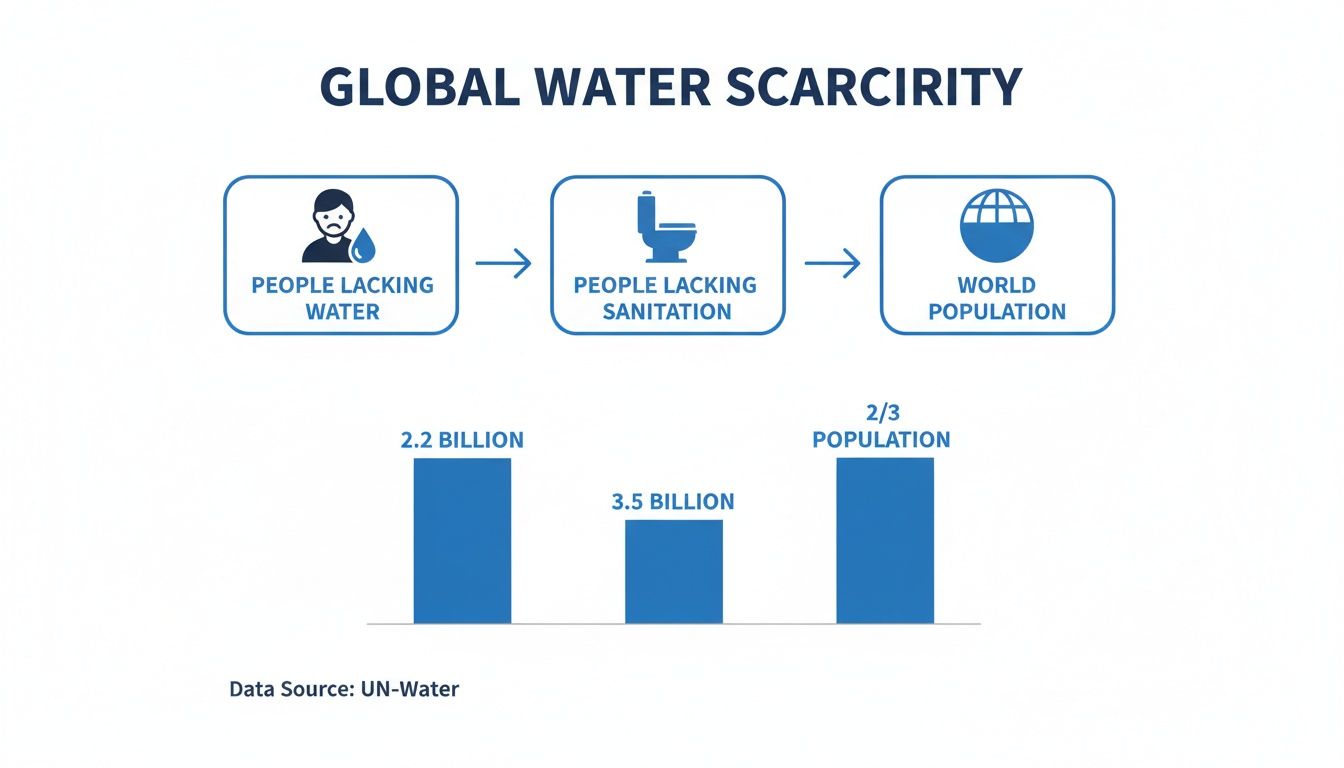
The reality of water scarcity is staggering. Right now, 2.2 billion people lack access to safely managed drinking water, and that number is climbing.
This isn’t a distant problem happening “somewhere else.” In 2022, roughly half the world’s population faced severe water scarcity for at least part of the year. It’s felt in Pakistan, where water availability per person has plummeted, and in rural Ethiopia, where communities depend on unsafe streams just to survive.
As travelers, these numbers should stop us in our tracks. They underscore just how critical it is to choose destinations and practices that support, rather than strain, local resources. These challenges are fundamentally reshaping the future of sustainable tourism.
This scarcity often triggers a cascade of social problems, intensifying competition for resources and leading to social conflict. It also places a disproportionate burden on women and children, who are often tasked with the grueling and dangerous job of collecting water from distant sources. That daily trek steals time that could be spent in school or earning an income, locking communities in a cycle of poverty.
Environmental Degradation And Its Ripple Effects
Beyond the immediate human toll, excessive water withdrawal has devastating consequences for the environment. When we pull more water from rivers and lakes than nature can replenish, entire ecosystems begin to collapse.
Wetlands dry up. Fish populations vanish. Biodiversity plummets. This isn’t just a loss for nature; it undermines the very environmental services that both local communities and the tourism industry depend on, like clean air, fertile soil, and natural flood control.
Pollution is the other critical piece of the puzzle. The water we use—whether in a hotel shower or a factory—doesn’t just disappear. It becomes wastewater, often carrying pollutants like detergents, chemicals, and human waste. When this greywater or blackwater is released back into the environment without proper treatment, it contaminates rivers and coastal areas, harming aquatic life and creating major public health risks.
This is where our personal choices become urgent. Seeing how our individual actions connect to this larger global picture transforms responsible habits into meaningful acts of solidarity. Each conscious decision to conserve water helps ensure this finite resource remains available for everyone, preserving both human dignity and the health of our planet.
Calculating Your Personal Travel Water Footprint
Thinking about water waste on a global scale can feel overwhelming. The numbers are huge, and it’s easy to feel disconnected from the problem. But real change happens when we bring the issue down to a personal level and ask: what is water waste in the context of our own travels?
To get a real handle on this, we need to look at our personal water footprint. This isn’t just about the water you see—it’s the total volume of fresh water used to produce every single thing you consume on the road.
It’s a concept that pulls back the curtain on the hidden water story behind your travel choices. Suddenly, it’s not just about turning off the tap. It’s about understanding the invisible water embedded in your morning coffee, your souvenir t-shirt, and your airport lunch. This shift in perspective is incredibly empowering.
Direct Use Versus Virtual Water
Your travel water footprint has two sides, and the difference between them is where the biggest savings are found.
Direct Water Use: This is the easy part—the water you can see and touch. It’s the water from the tap for drinking, the shower you take after a long travel day, and the toilet flush. This use is visible, measurable, and pretty straightforward to manage with a bit of mindfulness.
Indirect “Virtual” Water Use: This is where the staggering numbers are hiding. Virtual water is the immense amount of H₂O embedded in the production of your food, clothes, and gear. Think about the water needed to grow the cotton for your pants, process the beans for your coffee, or manufacture that single-use plastic bottle.
More often than not, our virtual water use completely dwarfs our direct use. Skipping one steak dinner on a trip can save more water than a week’s worth of shorter showers. This is why a simple swap, like packing your electronics in a cable organizer travel case instead of multiple plastic bags, is so powerful—it cuts out the entire virtual water footprint of making and shipping disposable products.
When you see that billions of people are directly affected by water scarcity, the simple act of conserving water feels less like a chore and more like a global responsibility.
The Shocking Reality of Everyday Water Waste
The gap between water abundance in some places and extreme scarcity in others is startling. Take the United States, for example. The average American family wastes around 180 gallons of water a week, which adds up to a mind-boggling 9,400 gallons every year. This isn’t from major leaks; it’s from everyday habits like flushing toilets and washing dishes.
That number is especially jarring when you learn more about the stark figures behind U.S. water consumption and realize that in many parts of the world, waterborne diseases are a daily threat.
As a traveler, knowing these stats helps frame your own habits in a global context. Suddenly, being mindful of water use in your hotel room becomes an act of solidarity with communities where every single drop is precious.
Editor’s Pick: Best Sustainable Travel Essential
Grayl GeoPress Water Purifier Bottle
The Grayl GeoPress is so much more than a water bottle—it’s a portable purification plant. Its simple one-press system removes global waterborne pathogens like viruses and bacteria. It also filters out particulates, chemicals, and heavy metals from almost any freshwater source.
For any traveler committed to ditching single-use plastic and slashing their virtual water footprint, this is non-negotiable gear. It gives you true peace of mind and hydration security, whether you’re trekking in the Andes or navigating a city with questionable tap water.
Comparing The Water Footprint Of Everyday Traveler Items
Seeing the virtual water cost of common items can be a real eye-opener. It makes the abstract concept of a water footprint tangible and shows how your daily choices add up.
This table breaks down the estimated ‘virtual water’ needed to produce common items you might use or eat while traveling. It’s a powerful reminder that small decisions can lead to massive water savings.
| Item/Product | Estimated Water Footprint (US Gallons) |
|---|---|
| One Cotton T-Shirt | ~713 gallons |
| One Pair of Jeans | ~2,000 gallons |
| 8-ounce Cup of Coffee | ~37 gallons |
| 8-ounce Glass of Beer | ~20 gallons |
| One Pound of Beef | ~1,847 gallons |
| One Pound of Rice | ~403 gallons |
| 1 Liter Plastic Bottle | ~1.3 gallons (to produce) |
| 8-ounce Cup of Tea | ~7 gallons |
From the clothes you pack to the food you order, every choice carries a water cost. The goal isn’t perfection, but awareness—and these numbers make it much easier to see where you can make the biggest difference.
Actionable Tips To Reduce Water Waste On The Road
Knowing your travel water footprint is one thing, but actually putting that knowledge into practice on the road is what makes a real difference. Think of this as your playbook for turning awareness into action. The good news? Shrinking your water waste doesn’t require drastic sacrifices.
It’s more about building a series of small, mindful habits that add up to a huge collective impact. From your hotel room to your dinner table, every decision is a chance to conserve this precious resource.
The goal here isn’t perfection; it’s progress. By focusing on simple, easy-to-implement changes, you can significantly cut your water consumption without watering down your travel experience.
In Your Accommodation
Your hotel room or rental is where most of your direct water use happens, making it the perfect place to start. Many of these tips are just simple tweaks to your daily routine—they take very little effort but deliver big water savings.
- Take Shorter Showers: This one’s a classic for a reason. Cutting just a few minutes off your shower can save gallons. Try timing yourself or putting on a short playlist to keep track.
- Reuse Towels and Linens: Hang your towels up after you use them. It’s the universal sign for housekeeping that you’re happy to reuse them, and it drastically cuts down on the hotel’s daily laundry—one of the biggest water consumers in the entire industry.
- Report Leaks Immediately: That dripping faucet or constantly running toilet can waste hundreds of gallons in a surprisingly short time. If you spot a leak, let the front desk or your host know right away.
- Turn Off the Tap: A simple one, but powerful. Don’t let the water run while you’re brushing your teeth, shaving, or washing your face. This tiny change can save up to 8 gallons of water a day.
These small actions add up fast, especially when travelers all over the world start doing them. They’re the foundation for more sustainable travel habits you can take with you on every trip.
Eating and Drinking Consciously
Your food and drink choices come with a massive hidden water footprint. Making conscious decisions about what you eat is one of the most powerful ways to slash your indirect water waste.
Think about the “virtual water” embedded in every meal. Choosing local, seasonal, and plant-based foods dramatically reduces the water needed for production and transportation. This is especially true compared to water-intensive options like red meat.
Another huge win is to ditch single-use plastic water bottles. Not only do they create a mountain of plastic pollution, but the process of manufacturing and transporting them uses far more water than they actually hold. Investing in a quality collapsible water bottle is one of the single best things you can do for the planet while saving space in your bag.
Packing and Gear for Less Water Waste
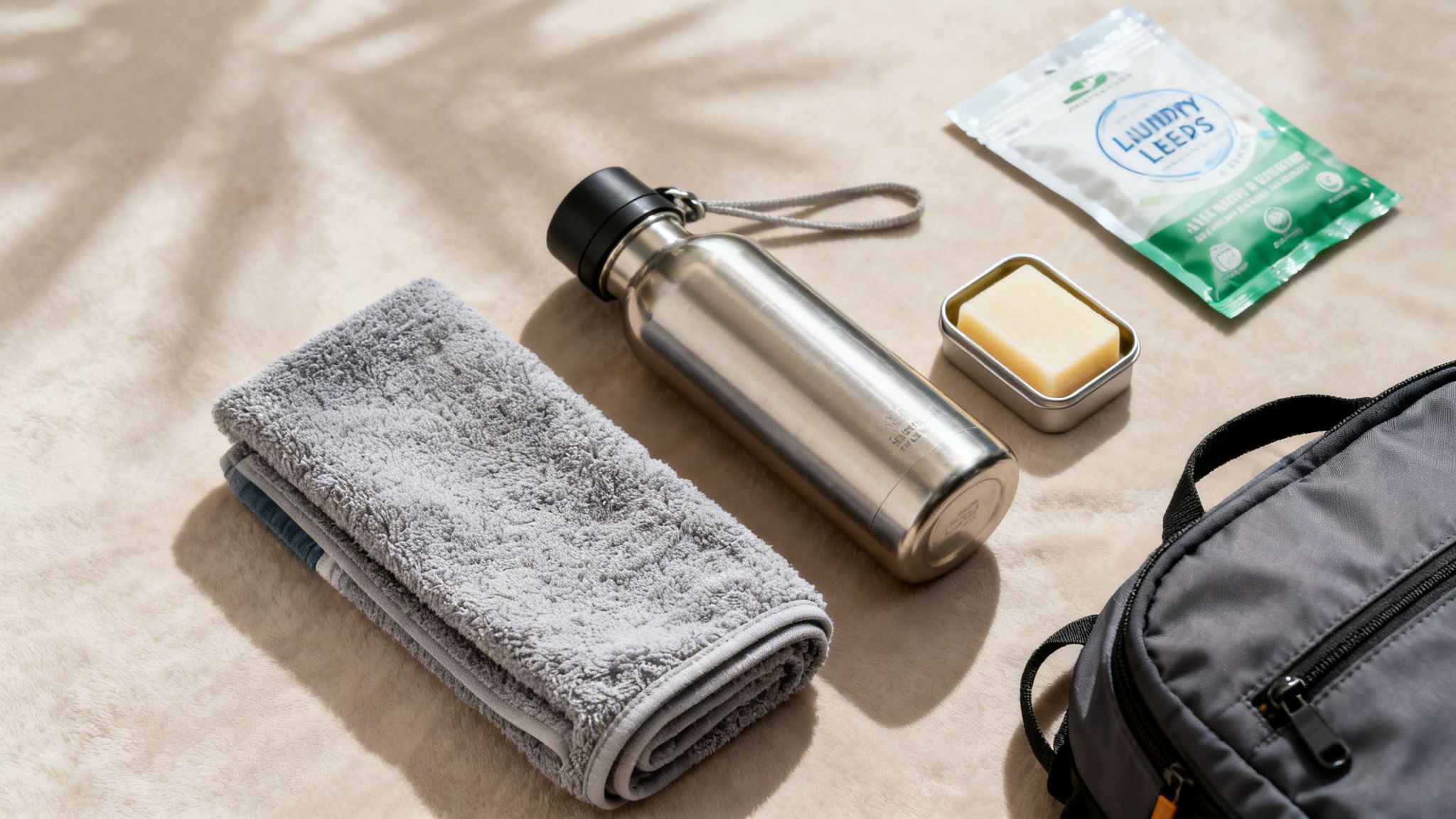
Smart packing is your secret weapon against water waste. The gear you bring can directly influence how much water you use and how much pollution you create. For example, choosing solid toiletries over liquids reduces plastic packaging and eliminates the risk of spills that can contaminate local water sources.
A solid shampoo bar is a perfect example. It gets rid of the plastic bottle and often uses biodegradable ingredients, which are much gentler on local water systems when they wash down the drain. Likewise, packing laundry detergent sheets instead of liquid is a brilliant move for longer trips; they’re lightweight, plastic-free, and pre-measured so you don’t use too much.
Other high-impact gear choices include:
- A Portable Water Filter or Purifier: This gives you the confidence to drink tap water anywhere, ending your reliance on bottled water for good. You can find reliable travel insurance for your trip through providers like Visitors Coverage.
- Packing Cubes: Using a set of compression packing cubes helps you fit more into a smaller bag, encouraging you to pack lighter and reducing the overall resource footprint of your luggage.
Low-Impact Travel Tools (Worth It)
Also, if you’re planning a trip and want to keep things simple, these tools help you travel smoother while staying mindful about impact.
Get an eSIM for reliable data → Disclosure: Partner link. No extra cost to you.
Pre-book a transfer for easy arrivals → Disclosure: Partner link. No extra cost to you.
Innovations And Policies Reshaping Water Conservation
While our individual actions are powerful, they’re part of a much bigger, more hopeful story unfolding worldwide. To truly tackle water waste at its roots, we need systemic change—and thankfully, a wave of innovation and smart policy is reshaping how we manage this precious resource.
From smart cities to regenerative resorts, solutions are popping up that move beyond simple conservation and toward a truly circular water economy. These are the large-scale efforts that make sustainable travel not just possible, but increasingly practical.
This global shift connects your personal choices to a much larger movement. Every time you consciously use less water on the road, you’re adding momentum to a broader effort to build a more water-secure future for everyone.
Technological Breakthroughs in Water Management
Technology is at the forefront of this transformation, giving us powerful new tools to monitor, treat, and reuse water on a scale we’ve never seen before. AI-powered systems can now detect underground pipe leaks with incredible precision, preventing the colossal losses that plague aging city infrastructure.
In agriculture, smart irrigation systems use real-time soil and weather data to deliver water exactly where and when it’s needed, slashing waste. At the same time, huge leaps in wastewater treatment are turning what we once considered sewage into a valuable resource for industry and farming.
This isn’t a niche field; it’s a sign of a massive global commitment. The market for water and wastewater treatment technologies was valued at $321 billion and is projected to nearly double by 2030, driven by pure necessity. Critically, the use of treated wastewater is expected to jump from 55% to 80% in that same period, signaling a major move toward recycling. As you can learn from market research on wastewater treatment, this growth is essential for building resilient water systems worldwide.
Progressive Policies and Regenerative Tourism
Alongside tech, forward-thinking policies are creating the framework for smarter water use. Some destinations now mandate rainwater harvesting for new buildings or offer big incentives for hotels that install greywater recycling systems.
The idea of regenerative tourism is also taking hold, where the goal is to leave a place better than you found it. This means supporting accommodations that actively restore local water tables, participate in watershed conservation projects, and invest in their own circular water systems. These approaches are fundamental to improving sustainability in travel and tourism for the long haul.
These systemic solutions prove that real change is already underway. Your mindful choices on the road—from reusing a towel to eating local—amplify the impact of these larger initiatives. You’re helping accelerate the transition to a world where water is valued, respected, and used wisely.
Key Takeaways
- Adopt mindful habits in your accommodation: Simple actions like shorter showers, reusing towels, and reporting leaks can save hundreds of gallons.
- Eat and drink with awareness: Prioritize local, plant-based foods and always carry a reusable water bottle to slash your virtual water footprint.
- Pack smart to reduce consumption: Gear like solid toiletries, laundry sheets, and a quick-dry towel minimizes both direct water use and water pollution.
- Report issues promptly: A small, unreported hotel leak can waste an enormous amount of water; your diligence really matters.
- Focus on progress, not perfection: Every small, conscious choice you make contributes to a much larger positive impact on global water resources.
- Invest in a water purifier bottle: This single piece of gear can eliminate your need for single-use plastic bottles, saving you money and a ton of virtual water.
Frequently Asked Questions About Water Waste And Travel
Here are a few of the most common questions travelers ask about water waste. Think of this as a quick-reference guide to reinforce the big ideas and help you make smarter choices on the road.
What is the single most impactful way a traveler can reduce water waste?
Without a doubt, it comes down to what you eat. Reducing your meat consumption, especially beef, saves an incredible amount of “virtual water.” Pair that with carrying a reusable water bottle to avoid single-use plastics, and you’ll have the most significant positive impact possible.
Do eco-friendly hotels really make a difference in water conservation?
Yes, a huge one. Certified eco-friendly hotels often have systems like low-flow fixtures, rainwater harvesting, greywater recycling for irrigation, and clear policies for linen reuse. When you choose these accommodations, you’re supporting businesses that are actively investing in water-saving infrastructure. You can find and compare options on sites like Trip.com.
Is it safe to drink tap water in other countries to avoid bottled water?
It varies wildly by destination, so always research local water quality beforehand. In many places, tap water is perfectly safe. Where it isn’t, a high-quality water purifier bottle (like the Grayl GeoPress) is a game-changing investment. It removes viruses, bacteria, and particulates, making almost any clear water source safe to drink. Always stay connected with a reliable eSIM from providers like Airalo or Yesim to check local advisories.
How does doing laundry while traveling contribute to water waste?
Laundry uses a significant amount of both water and energy. To keep this to a minimum, only wash full loads, use cold water whenever you can, and choose eco-friendly, biodegradable detergents. Packing laundry detergent sheets helps prevent you from using too much soap, which can pollute local waterways.
Does flying or taking a train have a bigger water footprint?
It’s a complex picture, but air travel generally has a higher indirect water footprint. This is because of the massive amount of water needed to produce jet fuel and to manufacture and maintain aircraft. While rail travel also has a footprint, it’s typically lower per passenger—especially on electrified routes—making it a more water-conscious choice for overland journeys. You can find great flight deals on platforms like Aviasales.
Join the Sustainable Work Movement
Want more rail-first itineraries, low-impact packing systems, and walkable base-city ideas?
