
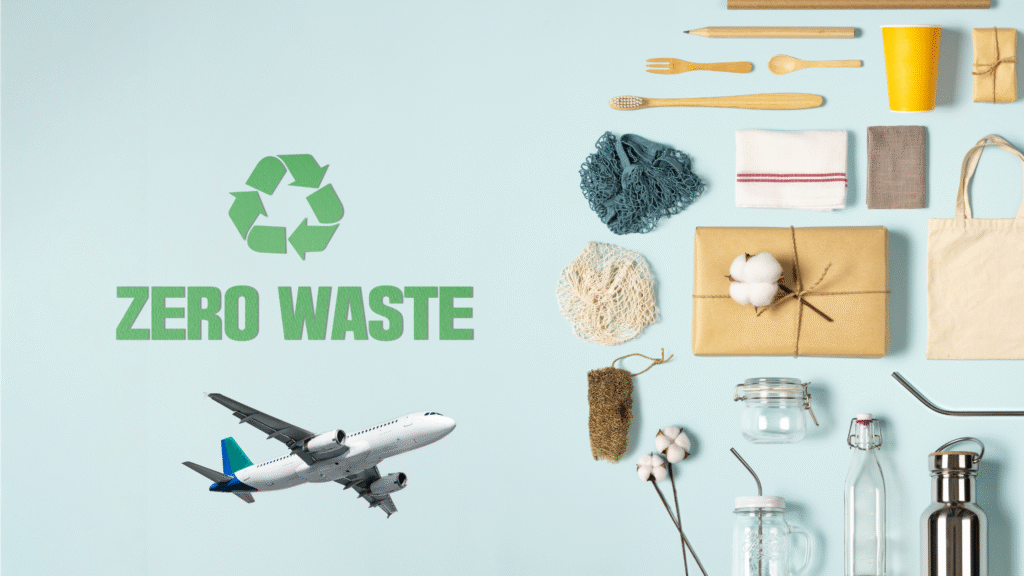
This zero waste packing list 2025 guide builds a durable, plastic-light capsule that works across hot, mild, and cool stops in a single quarter. You’ll get a 35-item master list, solid toiletries, microfiber-lite laundry tips, and a tiny repair kit—plus realistic ways to cut disposables without feeling deprived on trains, night buses, or long-haul flights.
Disclosure: This guide includes affiliate links (Amazon + travel). If you buy via our links, Eco Nomad Travel may earn a commission at no extra cost to you.

Key takeaways: zero waste packing list 2025 in one glance
- Start with a small capsule: 30–35 pieces cover three climates when you focus on merino/plant-blend layers and neutral colors.
- Swap liquids for solids: detergent sheets, soap sheets, shampoo bars and toothpaste tablets remove most plastic bottles and TSA stress.
- Prioritize reusables you’ll truly use: one insulated bottle, one collapsible cup, one bamboo cutlery set, and two nesting containers handle daily waste hotspots.
- Lean on laundromats instead of extra clothes: a consistent laundry rhythm every 4–7 days is more sustainable than overpacking.
- Repair beats replace: a 100-gram repair kit fixes loose seams and snags so you avoid last-minute fast-fashion buys mid-trip.
Why a zero waste packing list 2025 matters for modern travel
The zero waste packing list 2025 approach is less about being perfectly “zero waste” and more about being intentional. Today’s rail-first trips, multi-city Eurail passes, and long-haul digital nomad routes expose how often travelers lean on disposable bottles, wipes, hotel minis, and impulse clothing purchases. By designing a resilient capsule in advance, you preserve comfort while dramatically reducing plastic, packaging and “just in case” baggage weight.
At the same time, regulations and consumer expectations are shifting. Airlines and train operators are rethinking single-use plastics; hotel brands are phasing out tiny toiletry bottles. Organizations like the Sustainable Packaging Coalition track how packaging is evolving, while independent coverage from outlets such as Euronews Green highlights new plastic bans and refill policies across Europe and beyond. When your packing list aligns with these trends, you move more smoothly through airports, hostels, and eco lodges—and signal to partners that low-waste travel is not niche anymore.
This guide is built for sustainable digital nomads, slow travelers, and anyone who wants a practical zero waste packing list that works in real life. It is designed to integrate with Eco Nomad Travel’s broader rail-first and carbon-aware resources, including our train vs plane emissions 2025 comparison and our night trains in Europe 2025 guide.
The 35-item zero waste packing list 2025 (carry-on)
This core zero waste packing list 2025 assumes a 28–35 L backpack, no checked baggage, and a mix of city days, nature walks, and café work sessions. Adjust counts using the calculator below, but use this as a baseline for three-climate travel without overpacking.
Clothing (18 items)
- 2× merino/plant-blend tees (fast-drying, odor resistant)
- 1× long-sleeve base layer
- 1× light woven shirt for sun and evenings
- 1× shorts
- 1× travel chinos
- 1× light joggers or soft pants
- 1× packable puffer or insulated vest
- 1× waterproof breathable rain shell
- 4× quick-dry underwear
- 4× merino-blend socks
- 1× UPF hat • 1× buff or light scarf
- 1× swimwear
- 1× sleep set
Reusables & electronics (10 items)
- Insulated bottle (≤ 21 oz) — Hydro Flask Trail Series
- Nesting stainless containers — light leak-safe set
- Collapsible cup for coffee/tea
- Bamboo cutlery kit — travel set
- eSIM-ready phone + compact power bank
- Universal charger, multi-USB cable, and EU/UK adapters
- Noise-isolating earbuds, sleep mask, and foam earplugs
- Small 10–15 L packable day bag
Toiletries (solids & refills) (7+ items)
- Soap sheets — palm-sized pack
- Body wash sheets — tin of 30
- Shampoo/conditioner bars wrapped in a cloth or tin
- Toothpaste tablets — SuperBee Dentos
- Exfoliating soap pouch — biodegradable
- Biodegradable wipes (emergency only) — tea tree & aloe
- Refillable metal tin for balms or moisturizer
Repair & admin (0.5 L)
- Mini sewing kit + strong thread and 3 safety pins
- Tenacious Tape or iron-on patch squares
- Travel scissors (check TSA / airline rules)
- Mini tube glue and a few zip ties
- Digital copies of documents and 2 spare passport photos
Climate strategy for a zero waste packing list 2025
Because many digital nomad itineraries in 2025 jump between hot, mild, and cool zones in a single quarter, your zero waste packing list has to flex without adding bulk. Instead of packing separate wardrobes, you stack layers and rely on consistent laundry.
Hot (25–35°C)
- UPF shirt + hat; pair with soap sheets for quick sink washes.
- Electrolyte tablets (foil only), reef-safe sunscreen (see our reef-safe guide 2025).
- Focus on breathable fabrics and one light evening layer.
Mild (15–24°C)
- Layer a tee + light shirt + packable puffer at night.
- Travel chinos or joggers cover city walks and trains.
Cool (5–14°C)
- Base layer + puffer + rain shell; add merino socks and buff.
- Use your repair kit to patch snags from hikes instead of retiring garments early.
Rhythm instead of clutter
- Plan a laundromat stop every 4–7 days and stick to it.
- Refill culture: bring bottle, cup and containers; shop bulk “a granel” or package-light markets.
- Keep carry weight at 8–10 kg for low-stress rail and metro transfers.
Laundry workflow with fewer fibers shed
One of the hidden benefits of a zero waste packing list 2025 is how much gentler it can be on waterways and wastewater systems. Microfibers from fast-fashion synthetics are a major pollution source; washing fewer, better garments makes a difference.
- Prefer woven cotton/merino blends over very cheap synthetics; wash cold, line-dry whenever possible.
- Use detergent sheets — 200-load pack — they’re lighter, plastic-free, and portionable.
- Spot-clean early to keep full washes less frequent; rotate garments so nothing wears out in just one zone.
- Microfiber awareness: full machine cycles release fewer fibers than constant aggressive hand-washing that abrades fabric.
Solid toiletries that replace liquids (TSA-easy)
Solid products are the backbone of a carry-on-only zero waste packing list. They shrink your liquids bag, dodge 100-ml limits, and usually come in more recyclable or compostable packaging.
- Body wash sheets in tin — shop
- Dissolvable detergent sheets — shop
- Toothpaste tablets — shop
- Biodegradable soap pouch — shop
- Emergency biodegradable wipes — shop
Affiliate links; always check ingredients and local disposal rules.
Repair kit basics (5-minute saves)
A compact repair kit is the unsung hero of any zero waste packing list. Instead of buying a replacement shirt every time a seam pops, you patch and keep traveling.
A 100-gram kit fixes most issues: a needle and strong thread, three safety pins, mini scissors, 2–3 iron-on or self-adhesive patches, a few zip ties, and a tiny tube of fabric-safe glue. Most “emergencies” are loose buttons, hem failures, and tiny tears from hostels or overnight trains; patching them quickly extends garment life by years.
Packing math: liters, weight & layout
To keep your zero waste packing list 2025 practical, you want a bag size that supports walking to stations, climbing hostel stairs, and hopping on trams without drama.
- Liters: 28–35 L backpack + 10–15 L compressible day bag.
- Weight: aim for 8–10 kg total; go heavier only if you carry camera gear or a laptop brick.
- Layout: solids and sheets in a top pocket; reusables on one side; clothing rolled into two cubes (tops / bottoms) plus a small cube for underwear and socks.
Zero-Waste Packing Optimizer (calculator + troubleshooter)
This tool converts your trip plan into a small, plastic-light capsule. It estimates counts, liters, and carry weight so you can keep the zero waste packing list 2025 tight—without surprises at the laundromat, hostel sink, or airport scale.
Recommended counts
Troubleshooter: if this happens, do this
- Bag keeps creeping over 10 kg: swap a heavy cotton tee for a merino blend, one pair of bottoms to light joggers, and move liquids to solids.
- Leaks at security: replace liquid detergent with detergent sheets and body wash with soap sheets.
- Constant coffee cup waste: carry a collapsible cup and ask cafés to fill it—an easy win for the zero waste packing list 2025 mindset.
- Microfiber shedding: wash cold, full loads; line-dry; prefer woven fabrics; patch snags early.
Security rules: see TSA guidance and your airline or EU carry-on rules—solids bypass the 100-ml headache in most cases.
Zero-Waste Travel Swaps (2025): what to replace—and what to keep
This directory targets the biggest “single-use” culprits on the road. Pair these with your zero waste packing list 2025 and you’ll cut plastic, mess, and budget creep—without carrying more than you need.
Top 10 high-impact swaps
- Plastic water bottles → Insulated bottle (stays cold; refills everywhere). Try Hydro Flask Trail Series.
- Takeaway cups → Collapsible cup (fits pockets; no drips in your day bag).
- Disposable cutlery → Bamboo set — travel kit.
- Hotel minis → Solids (soap and shampoo bars, toothpaste tablets, detergent sheets).
- Plastic tubs → Nesting steel containers — light + leak-safe.
- Wet wipes habit → Soap sheets + small towel (wipes only for emergencies).
- Fast-fashion tees → Merino/plant blends (less washing, less shedding, less landfill).
- Oversized plastic sunscreen → Reef-safe stick or refill (see our reef-safe sunscreen guide).
- Multiple plastic bags → One zip pouch + one dry bag (organized cables and damp clothes, no crinkle waste).
- “Just in case” extras → Repair kit (patch/hem in 5 minutes and keep garments in rotation instead of buying more).
Keep (don’t replace): a single great pair of walking shoes, a compact rain shell, and a hat you’ll actually wear. Longevity beats novelty in every sustainable packing strategy.
Live trip tools for your zero-waste itinerary
These live widgets help you line up low-stress routes and stays around your zero waste packing list 2025. They may take a moment to load.
How to actually use a zero waste packing list 2025 on real trips
A zero waste packing list 2025 only works if it survives your real calendar: weekend city breaks, one-month workations, and multi-stop rail or bus trips across different climates. Instead of treating this as a rigid checklist, think of it as a flexible system. You will adjust counts and fabrics, but the core principles stay the same: fewer liquids, fewer throwaway plastics, and durable gear that you enjoy using every single day.
To make that practical, it helps to anchor your decisions in a bigger picture. Global footprint research shows that everyday consumption habits and short-haul travel choices add up quickly, especially when they involve constant single-use packaging and fast-fashion churn. (For a bigger context, see the Global Footprint Network data package, which tracks ecological footprint trends worldwide.) When your zero waste travel packing list cuts plastics and extends garment life, you’re quietly shaving impact from each trip—without needing a perfect lifestyle.
Step 1: Start from your travel rhythm, not from “stuff”
Most people build a packing list by staring at their wardrobe and asking, “What might I need?” For a zero waste packing list 2025, flip that around. Start with the rhythm of your trip: how often you’ll change clothes, how frequently you’ll do laundry, how much you walk, and how many climate shifts you’ll hit. Then work backward into the capsule.
- Trip pattern: Are you taking night trains, budget flights, or slow buses? If so, prioritize soft layers, a good eye mask, and leak-proof solids.
- Laundry rhythm: Decide now if you’ll use a laundromat once a week or sink-wash every few days. Your choice determines the number of tops, underwear, and socks.
- Refill access: If you’re staying in rail-first cities with strong refill culture—like many in our eco-city guides—you can rely more on bulk shops and less on “just in case” packaging.
Once those pieces are clear, your zero waste packing list gets dramatically simpler. It stops being a vague wishlist and becomes a sized, testable kit you can refine over time.
Step 2: Build a modular zero waste travel kit around reusables
Every strong zero waste travel packing list has the same small backbone of reusables: bottle, cup, cutlery, and containers. These four items will quietly eliminate dozens of plastic bottles, takeaway cups, and flimsy boxes over the course of a month. They also unlock cheap street food and market snacks that are difficult to carry without a container.
To keep that kit light and realistic:
- Choose a bottle that fits your hand, bag pocket, and local refill spots, not just an influencer photo. Our eco-friendly travel kit 2025 shows flexible options that work in airports, trains, and bus stations.
- Use nesting steel containers for leftovers and bulk refills; one set often covers breakfast, snacks, and a small salad or grain bowl.
- Carry a collapsible cup that feels stable on café tables. If you hate the way it feels, you won’t use it, and the best zero waste packing list 2025 in theory becomes wasteful in practice.
For the bigger systems story behind reusables and circular design, the Ellen MacArthur Foundation’s circular economy primer explains how repeated use and better materials cut waste and plastic pollution at scale.
Step 3: Adapt the zero waste packing list 2025 to trip length
Because this guide lives inside a broader zero-waste digital nomad packing framework, it helps to see concrete examples for different trip lengths. Here is how you might adjust your capsule while keeping the same low-waste philosophy.
Example A: 4–5 day city break (hand luggage only)
For a long weekend or short work trip, lean heavily on the “2× wear” rule and focus on versatile layers:
- 2–3 tops (merino or plant-blend), 1 pair of bottoms, 1 optional “nicer” shirt.
- 3–4 sets of underwear and socks, 1 light mid-layer, 1 rain shell.
- Mini zero waste kit: bottle, cup, bamboo cutlery, 1–2 containers, soap sheets, and toothpaste tablets.
This configuration easily fits under most airlines’ free carry-on limits. Pair it with slower, rail-first itineraries from our night trains Europe 2025 guide and you’ll avoid both checked baggage fees and high-emission short flights.
Example B: 30-day rail-first itinerary (one region)
For a month bouncing between hubs—say, eco-conscious cities in Europe or Latin America—you can stretch the same zero waste packing list 2025 with only a few extra pieces:
- 3–5 tops, 2–3 bottoms (including one dressier option), 1 packable puffer, 1 rain shell.
- 7–8 pairs of underwear and socks, swimwear, sleepwear, and a compact repair kit.
- Full zero waste kit with solids, detergent sheets, containers, and collapsible cup.
Now your kit lines up with weekly laundromats, refill shops in walkable neighborhoods, and train journeys where rolling a light bag matters. Combine this setup with the mindset from our low-impact travel habits guide and you get a calmer, slower style of movement that also reduces carbon and plastic waste.
Example C: 10–12 week quarter (multi-climate workation)
For a quarter moving through hot, mild, and cool climates, resist the urge to double everything. Instead, treat your zero waste packing list as a modular base and add only a few “climate bridges”:
- Rotate 5–7 tops across three climates; layer with 2–3 bottoms suitable for different norms (city, coworking, hikes).
- Add one warmer mid-layer (fleece or wool) and a slightly heavier hat/gloves combo for the coldest phase.
- Keep your solid toiletries and reusables exactly the same—those don’t need to multiply with each climate.
This strategy keeps your total weight in the 8–10 kg range even over several months, which matters if you are exploring our sustainable digital nomad lifestyle ideas and moving every few weeks by train or coach.
Step 4: Align your packing list with real-world waste hot spots
Because most waste on the road comes from food packaging, beverages, and personal care, your zero waste packing list 2025 should hit those hot spots first. That’s why this guide focuses so much on reusables, soap sheets, and detergent strips instead of trendy “eco gadgets.” It’s also why we recommend pairing your kit with itineraries that make refilling, walking, and transit easy instead of fighting a car-based layout on every trip.
If you want a deeper dive into how single-use plastics affect travel and tourism specifically, the UN Environment Programme’s overview on reducing the impact of single-use plastic products offers useful context and case studies you can learn from as a traveler, not just as a policymaker. See: UNEP on single-use plastic impacts.
Step 5: Common zero waste packing mistakes (and quick fixes)
Even the best zero waste travel packing list can backfire if it turns into a heavy, fussy kit. These are the mistakes we see most often—and how to fix them quickly.
- Over-packing “eco” extras: If your bag feels like a mobile zero waste store, you’ve gone too far. Keep one bottle, one cup, one cutlery set, and one nesting container stack.
- Bringing untested solids: Always test shampoo bars, tablets, and detergent sheets at home first. If you hate them, they’ll become dead weight.
- Ignoring local infrastructure: Your zero waste packing list 2025 should look different in a dense, rail-first city with refill shops than in a rural, car-dependent area. Adjust counts and containers accordingly.
- Chasing aesthetics over function: Plain, durable, slightly boring gear wins. You don’t need the trendiest bottle; you need the one you’ll still be carrying happily after 20 train rides.
Over time, treat your packing list as a living document. After each trip, note which items you never touched, which ones pulled double duty, and which broke or annoyed you. Then update your core sustainable travel kit based on reality. That continuous refinement—not perfection—is what makes a zero waste packing list 2025 sustainable for your suitcase and for the places you visit.
FAQ (2025)
General questions about the zero waste packing list 2025
Does a zero waste packing list 2025 work for business trips?
Yes. A zero waste packing list 2025 can easily cover business travel. Swap one tee for a collared shirt, add one wrinkle-resistant trouser or dress, and keep the same solids, reusables, and repair kit. Your carry-on stays plastic-light, cabin-ready, and still looks polished in coworking spaces or meetings.
Is a zero waste packing list realistic for first-time carry-on travelers?
It’s actually one of the easiest ways to learn carry-on travel. The zero waste travel packing list focuses on fewer, better items: versatile layers, solid toiletries, and a small set of reusables. Start with a 4–7 day trip and use this page plus our sustainable travel guide 2025 as a roadmap.
How many outfits do I really need for a 30-day zero waste trip?
With weekly laundry, most people are fine with 3–5 tops, 2–3 bottoms, one warm layer, and one rain shell. The zero waste packing list 2025 calculator above assumes shirts worn 2× and underwear/socks 1× between washes. That keeps weight around 8–10 kg while still feeling clean and presentable.
Can I use this zero waste packing list 2025 if I check a bag?
Yes, but you don’t need to. The core of this zero waste packing list is sized for carry-on. If you choose to check a bag, keep the same capsule and leave extra space for bulky layers or sports gear instead of duplicating toiletries and fast-fashion items that create more waste.
Toiletries, laundry and airport security
Are wipes really “zero-waste” for travelers?
Not really. Even biodegradable wipes require resources and packaging. In a genuine zero waste packing list 2025, wipes are for true emergencies only. Day-to-day, lean on soap sheets, a small travel towel, and tap water. Our laundry and solids sections show how to stay fresh without a constant wipe habit.
Will I miss liquids if I switch to solid toiletries?
Most people stop missing them after two trips. Solids don’t leak, don’t trigger 100 ml limits, and usually last longer per gram. Try one category at a time—shampoo bar or toothpaste tablets first—then move toward a fully solid zero waste travel kit once you know what you like.
What are the best solid toiletries for a zero waste packing list 2025?
Look for concentrated bars and tablets with minimal packaging. Combine shampoo and conditioner bars, soap sheets, detergent sheets, and toothpaste tablets inside a single small pouch. For ideas and product types, see the “solid toiletries” section of this guide and our deeper breakdown in the eco-friendly travel kit 2025 post.
How do I handle laundry without big plastic detergent bottles?
The zero waste packing list 2025 is built around detergent sheets and solid stain removers. They’re lighter, TSA-friendly, and come in paper envelopes or tins. Use laundromats once a week, top up with sink washes, and carry a small clothesline. Our laundry section shows how to balance clean clothes with fewer microfibers.
Do detergent sheets really clean as well as liquid detergent?
For typical travel laundry—underwear, socks, tees, and light pants—good detergent sheets are comparable to liquids. They dissolve quickly in warm or cold water and avoid bulky plastic jugs. If you’re worried, test the brand at home before relying on it for your zero waste travel packing list.
Will airport security accept soap sheets, toothpaste tablets and bars?
In most countries, yes. Solids are not counted under liquid restrictions, which is why they’re so useful for a zero waste packing list 2025. For details, review the current liquid rules from agencies like TSA or your local airport before you fly, then keep all “maybe-liquid” items together in one pouch.
Gear, fabrics and backpack size
How can I keep my pack under 10 kg with all these reusables?
Choose one well-sized bottle, one collapsible cup, one bamboo cutlery set, and one nesting container stack—no duplicates. Then limit clothes to what you can wear across climates. The packing calculator above was built to keep a zero waste packing list 2025 in the 8–10 kg range, even with reusables and solids.
Do I need special “eco fabrics” for zero waste packing?
No. It’s better to use what you already own than to buy a full new wardrobe. Over time, swap fast-fashion synthetics for durable cotton, linen, TENCEL, or merino-blend pieces that wash well and shed fewer fibers. Our low-impact travel habits guide explains how fabric choices affect emissions and microplastic pollution.
What backpack size works best for a zero waste packing list 2025?
For most trips, a 28–35 L backpack plus a compressible 10–15 L day bag is ideal. That capacity matches the zero waste packing list on this page and fits typical cabin-size rules. Look for front access, a simple frame, and a comfortable hip belt if you’ll be walking between stations and metros a lot.
Does zero waste packing mean I can’t bring a laptop or camera?
You can absolutely bring tech. A zero waste travel packing list simply encourages you to carry only the devices you really use—usually one laptop, one phone, and one compact camera if needed. Protect them in a single padded sleeve and keep cables in a small pouch to avoid endless plastic baggies.
Destinations, carbon and infrastructure
How does a zero waste packing list 2025 connect to carbon-neutral travel?
Packing light and plastic-low makes it easier to choose rail, buses and night trains instead of short flights. That supports the carbon cuts outlined in our carbon-neutral travel guide 2025 and train vs plane emissions 2025 breakdown. Your suitcase doesn’t solve climate change, but it removes friction from choosing lower-carbon routes.
Does a zero waste packing list 2025 work in hot, humid destinations?
Yes—just shift the fabric mix. Choose airy, quick-dry layers, light merino or plant-blend tees, and a single loose long-sleeve for sun. Keep the same reusables and solids kit, then prioritize refill stations and reef-safe sunscreen. For ocean-heavy trips, pair this guide with our reef-safe sunscreen guide 2025.
Can I still fly if I’m trying to pack zero waste?
You can, but it helps to fly less often and stay longer. The zero waste packing list 2025 makes flights easier—no checked bags, no liquid hassle—while also nudging you toward slower, rail-first itineraries. For ideas, browse our night trains Europe 2025 article and carbon-neutral route planning guides.
What if I visit places without refill shops or bulk stores?
That’s where a strong zero waste travel packing list really helps. By arriving with solids, reusable containers and a bottle, you’re less dependent on local single-use packaging. When bulk isn’t available, buy the largest practical size, share with travel partners, and refill your smaller containers instead of constantly buying minis.
Is zero waste packing only for big eco cities?
No. While rail-first hubs and “15-minute cities” make things easier, the principles work everywhere. Focus on reusables, solids, repair, and fewer but better clothes. Our eco travel places 2025 guide highlights destinations where these choices are especially rewarding for slow, low-impact travel.
Budget, digital nomad life and long-term use
Is a zero waste packing list 2025 more expensive than normal packing?
The upfront cost can be higher if you buy quality solids and reusables, but they usually pay for themselves quickly. You stop buying airport minis, disposable bottles, and throwaway umbrellas. Over a year of trips, a well-designed zero waste packing list almost always saves money and cuts clutter.
How do I talk to hotels or hosts about zero waste preferences?
Keep it simple and specific: mention that you travel with your own bottle, cup, and toiletries, and that you don’t need daily towel changes or tiny plastic amenities. Many hosts are happy to help with refill recommendations if you frame it as part of your sustainable travel habits rather than a demand.
I’m a digital nomad. Can this zero waste packing list 2025 cover work gear too?
Yes. Combine this zero waste packing list 2025 with the systems in our zero-waste digital nomad packing guide. You’ll end up with one laptop, a minimal tech pouch, a plastic-light capsule wardrobe and a tiny office kit that still fits in carry-on while you move between coworking spaces and long-stay apartments.
How do I reuse this packing list for multiple trips and seasons?
Treat this zero waste packing list as your base template. After each trip, mark what you never used, what you wished you had, and what broke. Adjust the capsule once per season—perhaps one warmer layer for winter, one extra linen piece for summer—without adding new plastics or duplicate toiletries every time.
Final thoughts: a calmer bag and a cleaner footprint
If you only skimmed, remember this: the zero waste packing list 2025 is less about owning ultra-minimal gear and more about designing a system you can actually live with. The biggest wins are deliberately boring: a bottle you like holding, a collapsible cup that fits your hand, containers that truly seal, and a repair kit that keeps your favorite shirt alive through three continents.
When you move to a plastic-light packing capsule, mornings on the road shrink to a simple script: soap sheet, toothpaste tablet, refill bottle, go. Airport security stops feeling like a gamble. Laundry collapses into one predictable weekly routine. Because your kit is stable, your attention shifts outward—to refill shops, farmers’ markets, tram lines, and waterfront parks—rather than inward to a messy backpack.
There is also a quiet carbon story behind all of this. Disposable miniatures, oversized bottles, and fast-fashion “backup” outfits each represent a supply chain of plastic, fillers, shipping and landfill. Swapping to solids, refills and longer-lasting garments trims that churn. Paired with rail-first routes and slower travel (see our low-impact travel habits), the effect compounds across every year you stay on the road.
Most importantly, your future self will thank you. After each trip, note what you never used, what broke, and what you wished you’d packed differently. Upgrade one item per journey—the heavy bottle, the slow-drying shirt, the flimsy container. Over time, your zero waste packing list will become a quiet, reliable background system that frees energy for the real reason you travel: to explore, connect, and come home with stories instead of plastic.
Research & sources
- Sustainable Packaging Coalition — packaging guidance & 2025 momentum.
- Euronews Green — policy & plastic reduction coverage.
These are non-affiliate citations to support search quality and give you deeper context on packaging and policy.
Explore more on Eco Nomad Travel
Author
Designs plastic-light kits for long stays and tests solids, laundry sheets, and repair workflows across Europe and LATAM. Jeremy also writes Eco Nomad Travel’s guides on carbon-neutral travel and sustainable digital nomad lifestyles.




Recent Posts
Best Travel Towels
Quick picks for fast-drying, packable towels that actually work on the road.
Best Waterproof Backpack
What matters for rain, train platforms, and daily carry—without overpacking.
Cheapest Way to Travel to Europe
Budget routes, timing, and practical ways to cut costs without cutting comfort.
How to Travel Europe by Train
Planning tips, rail passes, and simple route strategies for smoother trips.
Best Night Trains in Europe
Top sleeper routes, what to book, and how to avoid common overnight mistakes.
SIM Card for International Travel
Simple guidance on SIM vs eSIM, coverage, and avoiding roaming surprises.
Explore Eco Nomad Travel
📚 Core Guides
🧭 Planning & Logistics
🗺️ Destinations & Seasons
Jeremy Jarvis — founder of Eco Nomad Travel, sustainable travel writer, and advocate for regenerative tourism. His work focuses on low-impact mobility, eco-friendly digital nomad life, and climate-positive travel.
Legal
Affiliate DisclaimerPrivacy Policy
Terms of Service
Image & Media Notice
Cookie Policy
Contact
Affiliate Disclosure: Some links on Eco Nomad Travel are affiliate links, meaning we may earn a small commission at no extra cost to you. This supports our mission to inspire responsible and low-impact travel worldwide.
Connect
✅ Trusted Official Sources
Plan smarter eco trips
Try our free Sustainable Travel Tools for Digital Nomads – carbon calculator, train vs plane comparator, and more.
Open Tools Hub