

Last updated: June 2026
For related Eco Nomad guides, see luggage storage european train stations, green travel europe by train, sustainable city breaks europe.
If you want a smooth, low-stress rail journey, this guide to accessible train travel europe gives you clear steps, links to official assistance pages, and plain advice you can use today. Because rules, station layouts, and reservation needs can change, you will see official links at the point you need them. For accessible train travel europe across borders, the most reliable path is to plan early, book the right seat, and request assistance from the right team for each train and station.
Key takeaways you can act on today
- Request station or onboard help with the operator running each train, not only the site that sold your ticket.
- Check station access features (lifts, level boarding, ramp support) before you lock in a route.
- Reserve the right seat type (accessible space, companion seat, priority area) when the route allows it.
- Carry your confirmation for assistance, ticket, seat, and mobility device details in one easy-to-read note on your phone.
- Build transfer buffers. Aim for 15–30 minutes minimum when changing platforms or trains, longer at mega-stations.
Accessible train travel Europe: what it covers
In simple terms, accessible train travel europe means your full journey works: booking, stations, platforms, trains, seats, toilets, and help at each step. Also, it includes how you request assistance, how early you must ask, and what to do if plans change. Because Europe is not one rail company, your trip may involve several operators. Therefore, you often need to request help with each operator for the trains you ride.
Free download: Eco Rail-First Trip Planner
A fast, practical checklist + templates for planning low-impact trips (without decision fatigue).
Across the EU, rail passenger rights are protected by Regulation (EU) 2021/782, which includes rules on assistance for passengers with reduced mobility. You can read the official regulation on EUR-Lex (Regulation (EU) 2021/782) and the European Commission’s passenger rights page for rail (EU rail passenger rights). These sources outline core rights, timelines, and complaint routes.
Step-by-step: how to book accessible train travel europe
Use this simple process when you need a reliable, repeatable path from search to seat. For accessible train travel europe, the same playbook works in most countries, with small local differences.
- Sketch your route. Note key cities and possible transfer hubs. Big hubs have more staff and lifts, but also longer walks.
- Check station access. Visit each station’s official page for lifts, escalators, ramps, platform gaps, and accessible toilets. When in doubt, choose the larger station for a connection if it has better facilities.
- Find trains you can board. On operator sites, look for icons for wheelchair spaces, accessible toilets, and level or ramp boarding. Some long-distance trains have dedicated spaces and companion seats.
- Book tickets with the right seat. If the train offers it, select the wheelchair space or priority area during checkout. If you use a pass, reserve the correct space through the operator.
- Request assistance. Submit the assistance form with the operator that runs your train. Include train number, date, stations, device size and weight, and whether you travel with a service animal or companion.
- Confirm the plan in writing. Save the confirmation email or file. Show it at the station if asked. If you change trains, update the request.
- Arrive early and check in. Reach the meeting point by the time listed in your confirmation. If delays hit, ask staff to rebook the help or guide you to a safe waiting area.
Official assistance links by major operator
Request help with the team that runs your specific train. Below are official pages and portals. Times and forms can change, so always confirm details on the linked page before you book.
| Operator / Country | Where to request | Notes |
|---|---|---|
| Deutsche Bahn (Germany) | DB Mobility Service Center | Assistance for stations and trains in Germany; ramp/boarding help; device info requested. |
| SNCF (France) | SNCF Accès Plus | Help for TGV/Intercités/TER; meeting points and timelines vary by station. |
| Renfe (Spain) | Renfe Atendo | Free care service at stations; request online or by phone; specify train and station. |
| Trenitalia / RFI (Italy) | RFI Sala Blu | Network of “Sala Blu†desks covers many stations; booking windows vary by service. |
| ÖBB (Austria) | ÖBB Barrier-free Travel | Assistance for platforms and trains; device size and weight details often required. |
| SBB CFF FFS (Switzerland) | SBB Assistance | Help at many stations; booking deadlines differ by station and train type. |
| Eurostar (UK–France–Belgium–Netherlands) | Eurostar Accessibility | Wheelchair spaces and companion fares; meeting points at departure stations. |
| UK National Rail (Britain) | Passenger Assist | Book assistance across operators in Britain; many stations have meeting points. |
| NS (Netherlands) | NS Assistance | Station and onboard help; specific station timelines; lift status on station pages. |
For the legal and technical framework behind station and train features, see the European Union Agency for Railways pages on PRM TSI (Persons with Reduced Mobility) specifications (ERA TSI overview). These are standards used when rail infrastructure and rolling stock are upgraded.
How far in advance should you request help?
Short answer: as early as you can. Many operators ask for 24–48 hours’ notice for staff-led boarding and platform support, and some large stations can help with shorter notice. For example, DB’s Mobility Service Center, SNCF Accès Plus, Renfe Atendo, and RFI’s Sala Blu pages give timeframes and specific meeting points. Always follow the guidelines on the operator’s page linked above.
Because delays and equipment issues happen, add buffer time. If you need two assistance handoffs on the same day, consider an extra margin in case a lift is out, a platform changes late, or your incoming train arrives behind schedule.
What station features matter most for a smooth day?
Look for these items on the station’s official access page. For accessible train travel europe, these features reduce risk and make transfers more predictable.
- Step-free routes from entrance to platforms and to street-level taxis or buses.
- Working lifts with clear signage and alternate routes if one is under maintenance.
- Ramps or bridge plates for trains with a platform gap or step.
- Accessible toilets on the platform level or near meeting points.
- Tactile paving and audio-visual boards for real-time train information.
- Meeting points clearly marked for assistance check-in.
Common station terms across languages
When you read station pages, look for these words or icons. The translation can help you confirm that you are on the right section.
| Language | Station access term | Meaning |
|---|---|---|
| French | Accès PMR / Accessibilité | Accessibility for persons with reduced mobility |
| German | Barrierefrei / Mobilitätshilfe | Barrier-free / mobility assistance |
| Italian | Accessibilità / Sala Blu | Accessibility / assistance desks network |
| Spanish | Accesibilidad / Atendo | Accessibility / Renfe assistance service |
| Dutch | Toegankelijkheid / Reisassistentie | Accessibility / travel assistance |
| English | Step-free access / Assistance | Lift/elevator routes and staff help |
Boarding with a wheelchair, scooter, or walker
The right plan depends on train type and platform height. The core of accessible train travel europe is to match your device to the train and station. Ramp boarding is common on long-distance services. Some regional trains have lower floors and near-level boarding. Always give your device size and weight when you request help. If you use a mobility scooter, check the operator’s scooter policy in advance.
Many operators publish approved dimensions, ramp limits, and seat layouts on their assistance pages. For example, DB, SNCF, and Eurostar provide seat maps and rules on their official links above. If you are unsure about a specific model or size, call or email the assistance team before booking.
Travel tips for blind and low-vision riders
- Ask assistance staff to guide you from the meeting point to the seat. Most teams can do this when you request it in your form or by phone.
- Use station announcements and real-time apps for platform changes. Set alerts on your phone so you get both vibration and sound.
- Carry a short text note with your train number, coach, and seat. Show it to staff if audio is hard to hear in a busy hall.
Accessible train travel europe also depends on boards and announcements that you can access in more than one way. Many modern stations display high-contrast boards and have tactile paving. If a feature you count on is unavailable, ask staff for the nearest safe waiting spot and a guided transfer.
Advice for deaf or hard-of-hearing travellers
- Use visual boards, app alerts, and vibration cues for platform changes.
- Arrive early so you can check the platform before a last-minute change.
- Show a pre-written note for help requests or seat questions if you prefer not to speak.
Comfort strategies if you are sensory-sensitive
- Pick quieter departures outside peak commuter times when possible.
- Choose carriages away from bistro cars and door clusters if you prefer less foot traffic.
- Carry noise-reduction tools and a simple card that says what help you might need.
Service animals and assistance dogs
Rules vary by operator and country, but many European railways allow assistance dogs on board, often free of charge. Eurostar, DB, SNCF, SBB, and others describe the process on their assistance pages. Bring documentation as listed on the operator’s site, and note rules for muzzles or harnesses where required. If you cross borders, allow extra time at check-in and have papers ready. For accessible train travel europe across multiple countries, keep copies of documents on your phone and in a small folder.
Do you need seat reservations?
It depends on the country and train type. High-speed and international trains often require reservations. Regional trains usually do not. If a train has dedicated wheelchair spaces, you may need to reserve them, even when a reservation is optional for other passengers. For pass holders, operators may require a separate seat or wheelchair-space reservation. Check the exact train you plan to ride.
Pass or point-to-point: which is easier?
Passes like Interrail/Eurail can work well if you take many trains, but you still need to reserve any required wheelchair space or seat. Point-to-point tickets may be simpler if you ride only a few legs and you can bundle the correct seat and help request at checkout. Passes can simplify accessible train travel europe for long trips, but only when you confirm assistance and reservations early.
Real-world timing: how long to allow at stations?
Plan the longest walk you will face, not the shortest. Mega-hubs can require 10–20 minutes to reach some platforms. If lifts are busy or a track changes late, you need a cushion. For connections, 15–30 minutes is a safer starting point. During construction or summer crowds, add more time.
Short video perspective on accessibility
Generated quick planner: assistance request workflow
Common pitfalls and how to avoid them
- Assuming the ticket seller handles assistance. Avoid this. The operator running the train arranges platform and boarding help.
- Short transfers between far platforms. Add buffer or choose a route with simpler changes.
- Not reserving the wheelchair space when required. On many high-speed trains, this is essential.
- Skipping device details. Include size, weight, and whether your device folds or has a removable battery.
- Forgetting the return leg. Book assistance for every train in both directions.
The most common snags for accessible train travel europe happen at the handoff points: ticket vs. seat vs. assistance requests. Keep all three aligned for each train.
Case study 1: Paris to Frankfurt, one change
You ride TGV Paris–Strasbourg, then ICE to Frankfurt. You book the wheelchair space on both trains. Then you request Accès Plus for Paris departure, and DB Mobility Service for Strasbourg boarding and Frankfurt arrival. You arrive 45 minutes early at Paris, meet staff, and ride the platform buggy to your coach. In Strasbourg, you have 40 minutes between trains for a lift to the new platform and a toilet break. Your confirmations list the meeting points and phone contacts. This sample shows accessible train travel europe planning that splits tasks by operator and station.
Case study 2: Barcelona to Valencia, direct
On Renfe, you choose a direct service with wheelchair space and accessible toilet. You use Renfe Atendo’s form with your device size. You arrive 30 minutes early at Barcelona Sants, meet at the designated point, and the staff coordinate ramp boarding. You keep the confirmation email handy for the conductor.
Packing and document checklist
- Photo ID, tickets, seat reservations, and assistance confirmations.
- Device dimensions and weight, saved in a note for quick reference.
- Charging cables, a small toolkit if allowed, and a spare strap.
- Short card that explains your preferred help or communication style.
- Water, snacks, and any medication in a day-pack you can keep by your seat.
Operator terminology you may see
| Term | What it means |
|---|---|
| PRM | Persons with Reduced Mobility; used in EU rail standards and station pages. |
| Boarding ramp/bridge plate | Portable ramp used by staff to cover a gap or step. |
| Accessible toilet | Toilet with wider door, grab rails, and turning space in the carriage. |
| Meeting point | Signed spot at a station where assistance staff pick you up. |
What to do if something changes on the day
- If a platform changes, show your confirmation to the nearest staff member and ask for an escort to the new track.
- If a lift is out of service, ask for the alternate step-free route or platform buggy.
- If your train is delayed, ask staff to update the handoff or rebook the assistance on your next train.
Photos: station access in context
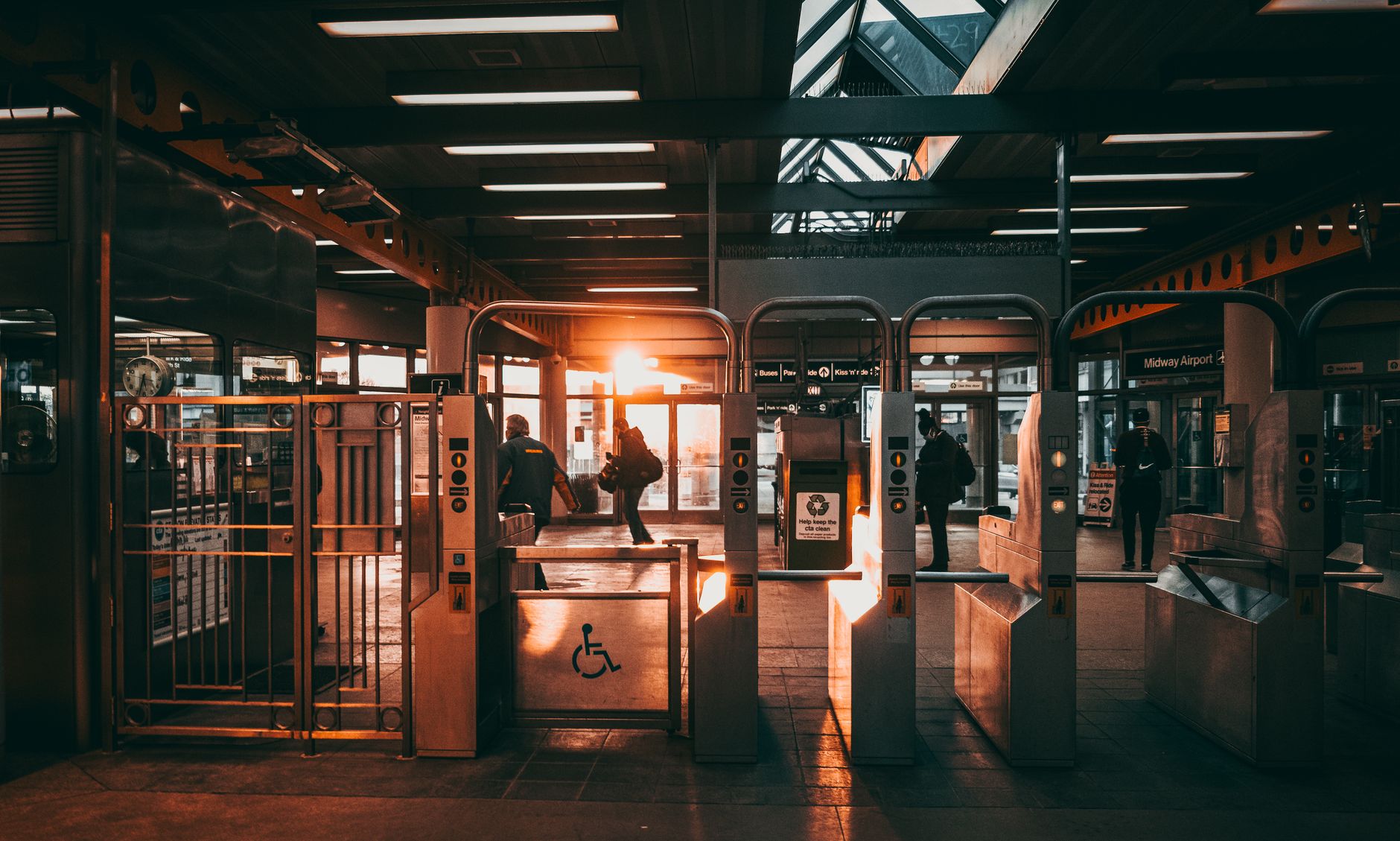
Description and provenance: Photo sourced from Pexels (Jona). See the original at Pexels: Station gates.
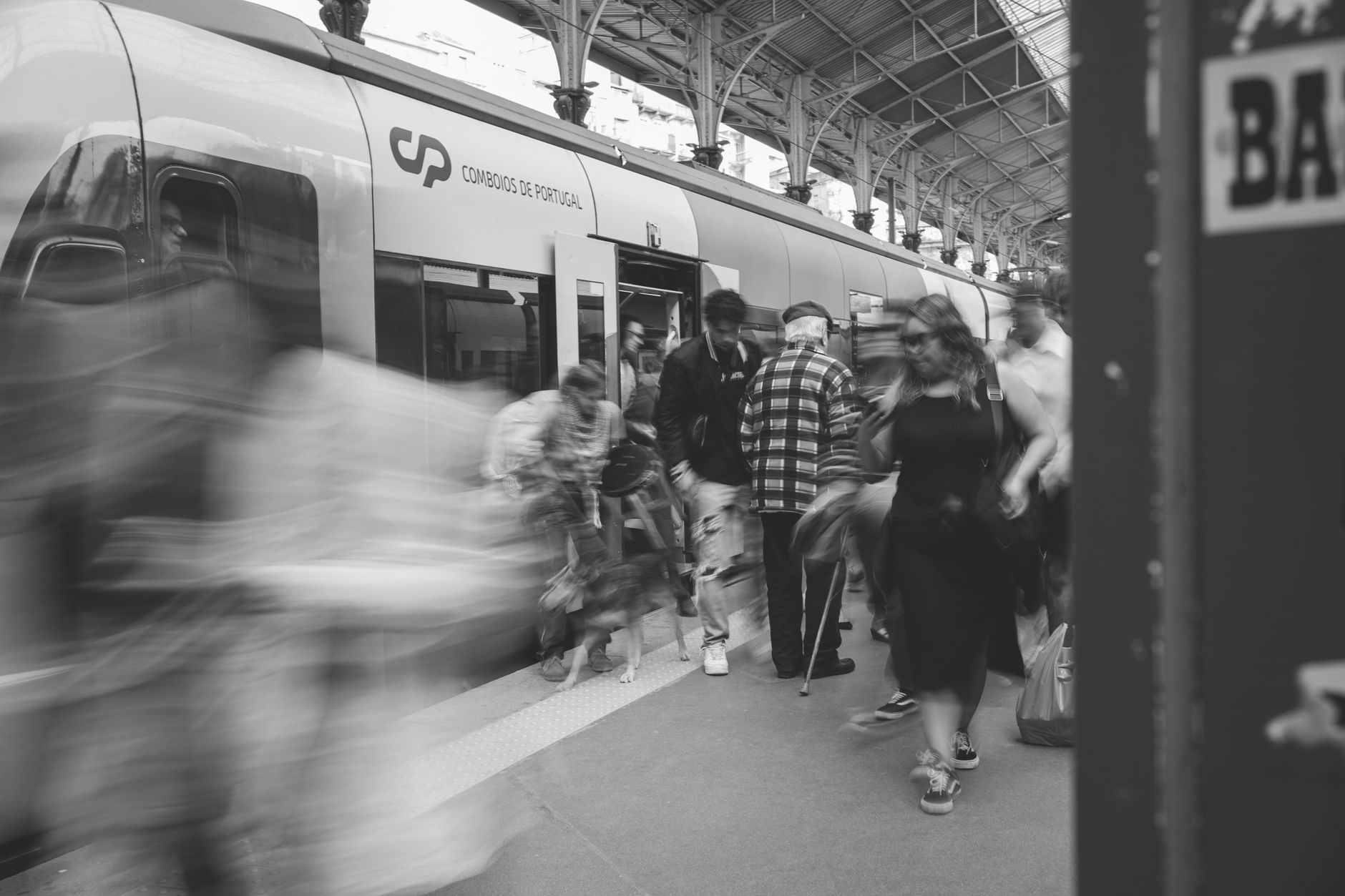
Description and provenance: Photo sourced from Pexels (Diogo Miranda). See the original at Pexels: Station concourse.
When to choose a different route
In some cities, a secondary station has better lifts, clearer signage, or shorter platform walks than the main hub. If your journey allows it, choose the station that reduces the number of changes and the risk of a last-minute sprint across a footbridge. Ask the assistance team which station they recommend for ramp boarding on your route.
Tickets, passes, and ID—what to keep together
- One file or photo note that lists each train number, carriage, and seat/space.
- Operator assistance confirmation emails or PDFs.
- Any eligibility documents you need for discounted fares (if applicable).
Costs and discounts: what to expect
Some operators offer reduced fares for wheelchair users or companions in dedicated spaces. Policies differ. For exact details and eligibility, check the operator’s official page linked earlier. In addition, assistance is often free when you book it within the required timeline.
Accessible bathrooms and onboard layout
Not all carriages have accessible toilets or wide doors. On long-distance trains, accessible seats and toilets are usually in the same or adjacent carriages. Regional trains vary. When you book, look for a carriage plan or a note about accessible features on your train number. If you cannot find it, contact the assistance desk and ask which coach to choose.
Seat map tips
- On high-speed routes, wheelchair spaces are often near the door at the end of a carriage.
- Companion seats are typically the adjacent or opposite seat in the same bay.
- Power outlets and call buttons may differ by train generation.
Digital tools that help on the day
- Operator apps for live platform info and departure boards.
- General rail apps for alerts across borders.
- Phone notes for quick text you can show to staff.
Direct answers to common questions
How do I request help for a cross-border trip?
Request assistance with each operator that runs your trains. For Paris–Frankfurt, contact SNCF for the TGV leg and DB for the ICE leg. Do the same for arrival and return legs. Keep each confirmation in one place.
Can I board without a reservation on regional trains?
Often yes, but only if the route does not require reservations and you are not relying on a dedicated wheelchair space that needs booking. Check the exact train.
What if I miss my connection?
Go to the information desk or assistance point. Show your confirmation and ask them to rebook your help for the next train. Staff can coordinate the handoff.
Compare basic schedules and fares in one place
Affiliate disclosure: Some links in this guide may be affiliate links. If you book or buy through them, Eco Nomad Travel may earn a commission at no extra cost to you.
When you have a short list of workable trains, a quick external check can help you compare times and prices before you place assistance requests. You can scan multiple operators and departures in one view here: Compare trains and fares on Trip.com. Use your operator’s official assistance page afterward to submit help for the exact train you choose.
FAQ: quick answers for accessible rail
Do I have to pay for assistance?
In many European countries, station and boarding assistance are free when you book within the operator’s timeline. Check the linked official assistance pages for current rules.
What should I write in my assistance request?
Include train number, date, stations, device size and weight, whether your device folds, any battery info, your seat/space, and your meeting-point needs.
How early should I reach the meeting point?
Follow your confirmation. Many teams ask you to arrive 20–30 minutes before departure at a signed meeting point. Big hubs may ask for more time.
Which apps help with accessible train travel europe?
Use operator apps for live platforms and disruptions. Add general rail apps for alerts on cross-border routes. Keep a text note ready in case you need quick help.
Do I need seat reservations for accessible train travel europe?
Many high-speed and international trains require them, and wheelchair spaces often need a reservation even when others do not. Check your exact train.
What is the cheapest way to do accessible train travel europe?
If you ride many legs, passes can save money. If you take only a few trips, point-to-point tickets may be cheaper and simpler. Always confirm space and assistance.
More Europe train guides for planning your route
- How to plan train travel in Europe (cornerstone guide)
- Is it safe to travel by train in Europe? Station, luggage, and night train tips
- Interrail vs Eurail: which pass fits your route?
- Best night trains in Europe and how to book a sleeper
Citations and official resources
- Regulation (EU) 2021/782 on rail passengers’ rights and obligations
- European Commission: Rail passenger rights
- European Union Agency for Railways: Technical Specifications for Interoperability (PRM)
- Deutsche Bahn Mobility Service Center
- SNCF Accès Plus
- Renfe Atendo
- RFI Sala Blu (Italy)
- ÖBB Barrier-free Travel
- SBB Assistance
- Eurostar Accessibility
- UK National Rail: Passenger Assist
- NS Assistance (Netherlands)
For accessible train travel europe, keep your route, seat, and assistance in sync. If you treat each leg like a mini-project—book, request, confirm—you build a smooth trip one step at a time. As a result, your day becomes a set of predictable handoffs instead of last-minute scrambles.
