

The quick answer on Baltic train travel
The Baltic states are among the easiest countries in Europe to travel without a car, and they are among the hardest to cross by train. Because Baltic train travel has strong domestic networks and almost no rail links between the three countries, the honest plan combines trains with buses.
That sounds like a weakness and in practice it barely matters. The coach network between the capitals is excellent, frequent, cheap and comfortable.
- Each country has a modern domestic network radiating from its capital.
- There is no useful through rail service linking all three capitals, so buses fill the gap.
- A new high-speed line through the region has been under construction for years and is not yet usable.
- Domestic fares are low and advance booking is rarely necessary.
- Estonia connects by ferry to Finland, which makes a Nordic extension easy.
Affiliate disclosure: Some links in this guide are affiliate links. If you book through them, Eco Nomad Travel may earn a commission at no extra cost to you, and it does not change what we recommend.
Free download: Eco Rail-First Trip Planner
A fast, practical checklist + templates for planning low-impact trips (without decision fatigue).
Plan rail within each country and coach between them. Consequently the region works beautifully car-free, just not purely by train.
How Baltic train travel is structured
Understanding the shape of the three networks explains the whole itinerary problem.
Each country has a national operator running a compact network out of its capital, with modern rolling stock on the main lines. Consequently domestic travel is comfortable and straightforward.
Estonia’s network reaches the university city inland, the coastal towns and the eastern border region. Therefore day trips from the capital are easy and frequent.
Latvia’s network is the most extensive of the three, radiating from the capital to the coast, the eastern region and several spa and castle towns. Meanwhile the seaside line is effectively a commuter service and runs very frequently.
Lithuania’s network links the capital, the second city and the coast, with the inland line between the two main cities being the busiest. So Lithuania also has the region’s only genuinely useful international rail link, running towards Poland.
The historic rail geography was built around connections that no longer carry passenger traffic, which is why the north-south links are missing. Consequently the gap is a legacy issue rather than a lack of demand.
Comparing your options across the region
The table compares how to cover each kind of journey in the Baltics.
| Journey type | Best mode | Booking needed? | Comfort | Notes |
|---|---|---|---|---|
| Within one country | Train | Rarely | Good, modern stock | Cheap, frequent on main lines |
| Between the capitals | Long-distance coach | Worth booking ahead | Good, wifi and sockets | No through rail alternative |
| Capital to the coast | Train | No | Good | Often a frequent commuter line |
| To Poland and central Europe | Train from Lithuania | Yes | Good | The region’s main rail gateway |
| To Finland | Ferry from Estonia | Worth booking ahead | Good | Short crossing, very frequent |
| To Sweden | Overnight ferry | Yes | Cabins available | Replaces a travel day |
| Remote countryside | Bus, or bus plus walking | No | Basic | Rail does not reach most of it |
A framework for planning Baltic train travel
Four decisions cover the whole region, and the first one saves a lot of fruitless searching.
The missing Baltic train travel link between the capitals
This is the one structural fact that shapes every Baltic itinerary, and it is worth stating plainly.
There is currently no practical through passenger rail service connecting all three Baltic capitals in a way a traveller would use. Therefore anyone planning a three-capital trip by train alone will be frustrated.
A major new high-speed line through the region has been under construction for years, intended to link the capitals and continue into Poland. Consequently the situation is expected to change, and the timeline has repeatedly moved.
Until it opens, the long-distance coach network does the job and does it well. Meanwhile the main operators run modern buses with wifi, power sockets and reclining seats several times daily between the capitals.
Journey times between neighbouring capitals are a matter of hours rather than a day. So the coach legs are comfortable rather than endured.
For a low-impact trip, a full coach is comparable to rail per passenger and far better than flying between cities a few hours apart. Consequently the coach is not a compromise environmentally either.
Baltic train travel within Estonia
The smallest of the three has a compact, modern and genuinely pleasant network.
Services from the capital reach the inland university city, the western coast and the eastern border region. Therefore most of the country is within a few hours.
Rolling stock is recent, with comfortable seating, wifi and power on the main services. Consequently it is one of the more pleasant regional networks in Europe.
Fares are low, bought on the day or on board, and advance booking offers little advantage. Meanwhile seat reservations are available on busier services.
The islands are reached by ferry and bus rather than rail, and they are among the best places in the country. So budget a bus leg to get to the ferry ports.
The capital’s ferry terminal connects very frequently to Finland, making a Helsinki day trip or onward journey straightforward. Consequently the country functions as a Nordic gateway as well as a Baltic one.
Baltic train travel within Latvia
Latvia has the most extensive network of the three and the one that best rewards exploring.
Lines radiate from the capital to the seaside resort strip, the eastern region, the spa towns and several castle and national park destinations. Therefore day trips are varied and plentiful.
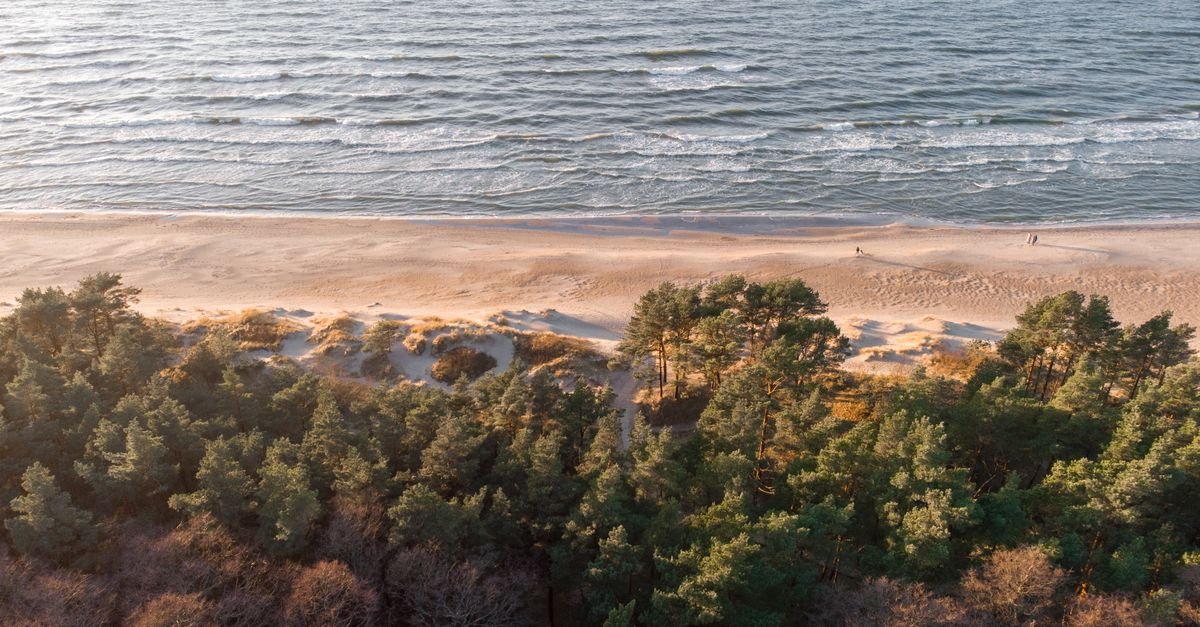
The seaside line is effectively an extended commuter service, running very frequently and taking under an hour. Consequently a beach afternoon is a casual decision rather than an expedition.
The national operator has been renewing its fleet, so the experience varies between modern units and older stock depending on the line. Meanwhile all of it is clean and punctual.
Fares are low and tickets are bought at the station or on board. So the system is about as simple as European rail gets.
The capital’s central market and art nouveau quarter are within walking distance of the station, which makes rail arrival particularly convenient. Consequently a car adds nothing to a Latvian trip.
Baltic train travel within Lithuania
Lithuania has the region’s most useful international connection and a solid domestic network.
The main domestic line links the capital with the second city, running frequently and quickly. Therefore the two can be combined in a single base.
A separate line reaches the coast, connecting to the port city and the spit of dunes beyond it. Consequently the coast is accessible without a car, with a bus or ferry at the far end.
Rolling stock on the main lines is modern, with wifi and power, and the operator has invested noticeably. Meanwhile branch lines are slower and less frequent.
Internationally, the line south towards Poland is the region’s rail gateway, with services connecting onward to Warsaw and beyond. So entering or leaving the Baltics by train means doing it here.
Journey times on that corridor have improved as track upgrades have completed on both sides. Consequently it is now a realistic alternative to flying into the region.
Buses, and why they are not a compromise
Accepting the coach network is the key to good Baltic train travel planning, and it is better than visitors expect.
Long-distance coaches between the capitals run several times daily, with modern vehicles, assigned seats, wifi and power. Therefore the experience is closer to a train than to a budget bus.
Fares are low, and booking ahead both guarantees a seat and usually saves money. Consequently it is worth booking the inter-capital legs rather than turning up.
Coaches also reach the national parks, the coastal villages and the smaller towns that rail does not. Meanwhile that makes them essential rather than merely useful.
Bus stations in all three capitals are central and often adjacent to the railway station. So combining modes is physically easy.
For a low-impact trip, a well-filled coach performs comparably to rail per passenger. Consequently the environmental argument for insisting on rail does not apply here.
Ferries and the Nordic connection
The sea links are a genuine strength of Baltic train travel itineraries and are often overlooked.
Estonia’s capital connects to Helsinki by frequent fast ferries taking a couple of hours. Therefore a Nordic extension costs almost no time.
Overnight ferries run from both Estonia and Latvia to Sweden, with cabins, replacing a travel day with a night. Consequently a Baltic trip can continue into Scandinavia without flying.
Services also link Lithuania’s port to Germany and Sweden, which gives a southern sea route. Meanwhile these are longer crossings aimed partly at freight.
Booking ahead matters in summer and for cabins, and foot passengers generally fare better than drivers for availability. So a car-free traveller has more flexibility here.
Combining rail, coach and ferry makes a genuinely flight-free northern European itinerary practical. Consequently the Baltics are a better link in a flight-free route than their rail map suggests.
Seasons and timing for Baltic train travel
The Baltic climate is more extreme than the latitude suggests and the season changes the trip completely.
Summer is short, bright and genuinely warm, with very long daylight and the coast at its best. Therefore June to August is the main season and the busiest.
The midsummer period is a major cultural event across all three countries, with much of the population heading to the countryside. Consequently accommodation and transport fill around those dates.
Autumn is mild, colourful and quiet, and the forests are at their best. Meanwhile daylight shortens quickly.
Winter is cold, dark and atmospheric, with snow, Christmas markets and very short days. So it suits city breaks rather than countryside exploring.
Spring arrives late and can be grey well into April. Consequently late May is the earliest reliably pleasant window.
Costs and budgeting for Baltic train travel
The region is good value by western European standards and the transport costs are modest.
Domestic rail fares are low enough that optimising them is rarely worthwhile. Therefore spend your planning effort on the inter-capital coaches and the ferries.
Coach fares between capitals are inexpensive, with the cheapest tickets going to those who book ahead. Consequently booking a week out is the sensible habit.
Pan-European rail passes are generally poor value here, because domestic fares are low and the pass cannot cover the coach legs that the itinerary requires. Meanwhile a pass may still make sense if the Baltics are one segment of a much longer trip.
Ferries are the largest single transport cost, particularly overnight crossings with a cabin. So those are worth booking early for the best rates.
Fares and schedules change, so treat this as structure rather than pricing. Consequently check the operators’ own sites for current numbers.
Why the Baltics suit car-free travel
Beyond the transport, several features make this region unusually good without a car.
All three capitals have compact, walkable historic centres with excellent public transport. Therefore a car is actively inconvenient in them.
Several cities offer free or very cheap public transport for residents and low fares for visitors. Consequently urban travel costs almost nothing.
The countryside is flat, forested and well suited to cycling, with growing networks of marked routes. Meanwhile bikes are carried on many trains.
The coast is lined with pine forest, dunes and quiet beaches rather than resort development, and much of it is reachable by train or bus. So the best scenery is accessible without driving.
Rail and coach both produce substantially lower emissions per passenger than driving alone or flying short distances. Consequently the car-free choice is also the lower-impact one.
Practical notes for the region
A few Baltic train travel details are worth knowing before arriving.
All three countries use the euro, which removes currency changes between them. Therefore budgeting is simple across the region.
English is widely spoken, particularly by younger people and in the capitals, and signage at stations includes it. Consequently the language barrier is low.
Digital infrastructure is excellent, with fast and widely available connectivity. Meanwhile this makes the region genuinely good for remote work.
All three are in the Schengen area, so internal borders are not routinely checked, though identification should be carried. So the three-country trip involves no border formalities in practice.
Verify current entry requirements and travel advisories through official sources before booking, since regional conditions can change. Consequently check rather than assume.
A suggested ten-day route
A single shape works well for a first visit, and it uses each mode for what it does best.
Fly or take the train into Lithuania and spend three nights in the capital, using the train for a day trip to the second city. Therefore you start with the country that has the best rail links.
Take the coach north to Latvia and spend three nights in the capital, using the frequent seaside line for a beach afternoon and a longer train for a castle or spa town. Consequently Latvia’s extensive network gets used properly.
Take the coach north again to Estonia for three nights, with a train day trip inland and a ferry day trip north if you want it. Meanwhile the capital itself deserves most of the time.
Leave by ferry to Finland or Sweden, or back down the rail corridor through Lithuania. So the route is a line rather than a loop, which suits the geography.
Reversing the direction works equally well and is sometimes cheaper on flights. Consequently check both before booking the open-jaw.
Cycling, walking and the outdoors
The region rewards getting out of the cities, and rail and bus between them makes that easy.
The terrain is flat and forested, with long marked cycle routes including coastal sections of the European cycle network. Therefore multi-day cycling is accessible to ordinary fitness levels.
Bicycles are carried on many trains in all three countries, with varying rules and sometimes a small fee. Consequently riding one direction and returning by rail is practical.
National parks protect large areas of forest, bog and coast, and several have boardwalk trails through wetland that are genuinely distinctive. Meanwhile most need a bus from the nearest station.
Wild camping rules differ by country and some allow it under conditions, which is worth checking rather than assuming. So verify the rules for each country before planning to camp.
Berry and mushroom picking is a serious national pastime across the region in late summer and autumn. Consequently the forests are busier and friendlier then than you might expect.
Remote work from the region
The Baltics are among the better places in Europe to work remotely, and that affects how long you might stay.
Connectivity is fast and widely available, including in smaller towns and on much of the rail network. Therefore working from a train or a coastal town is realistic.
Estonia pioneered digital residency and remote-worker visa arrangements, and the other two countries have developed their own schemes. Consequently longer stays are administratively possible, though the tax questions are separate and need advice.
Coworking provision is good in all three capitals and thinner outside them. Meanwhile cafes are generally laptop-friendly in the cities.
Costs are lower than in western Europe while infrastructure quality is comparable, which is the central appeal. So a month in one capital goes considerably further than a month further west.
The winter darkness is the genuine drawback for a long stay, and it is more significant than visitors expect. Consequently many remote workers treat the region as a summer and autumn base.
Planning checklist for Baltic train travel
First, accept that the inter-capital legs are coaches and plan them deliberately rather than searching for trains that do not run.
Second, use the domestic rail networks within each country, where fares are low and advance booking is rarely needed.
Third, decide how you will enter and leave: by rail through Lithuania towards Poland, or by ferry from Estonia to Finland or Sweden.
Fourth, book the inter-capital coaches and any ferry cabins ahead, since those are the legs where booking saves money and guarantees a place.
Fifth, plan the countryside by bus, bicycle or on foot, because rail does not reach most parks and coastal villages.
Finally, check the midsummer dates against your plans, confirm current entry requirements, and consider whether a pan-European pass is worth it given the coach legs it cannot cover.
Mistakes that complicate a Baltic trip
- Planning a three-capital itinerary entirely by train and finding the links do not exist.
- Buying a pan-European rail pass for a trip whose longest legs are coaches.
- Turning up for an inter-capital coach without booking in high summer.
- Assuming rail reaches the national parks and coastal dunes, which it largely does not.
- Travelling across the midsummer period without booking accommodation well ahead.
- Expecting spring weather in April, when it is often still grey and cold.
- Booking an overnight ferry cabin late in summer and finding none available.
- Hiring a car for a trip that is almost entirely capitals and coast.
Frequently asked questions about Baltic train travel
Can I travel between the three Baltic capitals by train?
Not usefully at present. There is no practical through passenger rail service linking all three, which is a legacy of how the historic network was built. Long-distance coaches cover those legs several times daily with modern vehicles, wifi and power, and they are comfortable rather than a compromise.
Are the domestic networks any good?
Yes. Each country has a compact modern network radiating from its capital, with recent rolling stock on the main lines, low fares and no need to book ahead. Latvia has the most extensive network, and Lithuania has the region’s most useful international connection.
How do I get to the Baltics by train?
Through Lithuania, where the line south towards Poland connects onward to Warsaw and the rest of central Europe. Journey times on that corridor have improved as track upgrades completed, making it a realistic alternative to flying into the region.
Is a rail pass worth it in the Baltics?
Generally no. Domestic fares are low enough that a pass struggles to pay back, and crucially a rail pass cannot cover the inter-capital coach legs that any three-country itinerary requires. A pass may still make sense if the region is one segment of a much longer European trip.
Can I reach the coast and the national parks without a car?
The coast yes, in all three countries, often by frequent train services. The national parks and smaller coastal villages mostly need a bus at the far end, or a bicycle, since rail does not reach them. The flat forested terrain suits cycling well.
When is the best time to visit?
Summer is short, bright and warm with very long daylight, and it is the main season. Autumn is mild, quiet and colourful. Winter is cold and dark and suits city breaks, and spring arrives late, so late May is the earliest reliably pleasant window.
Practical bookings for a Baltic trip
All three capitals have compact walkable centres, so a central room removes the need for any local transport at all. Compare hotels in the three Baltic capitals on Trip.com
Connectivity across the three countries is excellent, and a regional data plan avoids three separate local SIMs. Compare regional eSIM data plans on Airalo
How this guide was researched
This guide describes the structure of transport in the three Baltic states rather than quoting fares: compact domestic rail networks radiating from each capital, the absence of a practical through passenger rail link between the capitals, the long-distance coach network that fills that gap, the rail gateway through Lithuania towards Poland, and the ferry links to Finland, Sweden and Germany.
No operator names, fares, journey times, frequencies or construction timelines appear here. The new high-speed line through the region is described as under construction with a repeatedly moved timeline, which is the honest position; check its current status rather than relying on any published date.
The emissions comparison is stated directionally: a well-filled long-distance coach performs comparably to rail per passenger, and both are substantially better than driving alone or flying between cities a few hours apart. Nothing here claims first-hand travel on every route described, and entry requirements and advisories should be verified through official sources close to travel.
Useful official references: European Commission rail passenger rights, European Environment Agency transport and mobility data, the EU’s Your Europe travel pages for entry and rights information, and the UNESCO World Heritage list, which includes sites in all three countries.
Planning more of the region by rail? See our guides to Poland train travel, Scandinavia by train and European rail discounts.
Last updated .
