

If you want to see Scandinavia by train instead of stitching the trip together with short flights, this scandinavia train itinerary shows you how to connect Denmark, Sweden, and Norway with practical city hops, scenic rail days, and ferry links that actually save time. It starts with the fastest capital flow, then gives you slower options with fjords, archipelago days, and night trains so you can choose what fits your time and budget.
For related Eco Nomad guides, see digital nomad europe train itinerary, how to travel europe without flying.
This Scandinavia by train guide keeps the route reader-first. Because rail is reliable and walkable in Nordic cities, you can keep logistics simple, skip most flights, and still see a lot. Use the day-by-day plans below, the travel-time tables, and the booking steps to build the version that matches your pace.
Free rail-first travel checklist
Fast, high-signal decisions first - then details. Unsubscribe anytime.
Key takeaways for your scandinavia train itinerary
Begin in Copenhagen and finish in Oslo or Bergen to avoid backtracking, or reverse it if fares are better. Use fast SJ and DSB day trains for core hops, then add the Bergen Railway and the Oslo–Copenhagen ferry where they help. Book point‑to‑point tickets early for busy legs; consider a Global Eurail/Interrail Pass only if you will take many long rides in a short window. Add seat reservations on Sweden’s long‑distance trains in peak months and on Norway’s longer Vy routes. Finally, pack light and target midday trains so you arrive in daylight for easier transfers.
How to use this scandinavia train itinerary guide
Pick the trip length that fits your calendar. Then copy the city order and swap in scenic detours you care about. The generated graphic below shows the planning steps. After that, use the time and reservation tables to finalize each hop and book the fixed pieces first.
Rail‑First Scandinavia Planner (Text‑Light Workflow)
- Choose direction: Copenhagen → Stockholm → Oslo → Bergen (or reverse).
- Pick scenic add‑ons: Bergen Railway, Flåm Railway (day trip), archipelago day in Stockholm.
- Decide on ferries: Copenhagen–Oslo overnight; Gothenburg–Frederikshavn if you need Denmark↔Sweden by sea.
- Book fix‑date segments first: capital‑to‑capital legs and night trains.
- Reserve seats on peak routes; leave short regionals flexible.
- Align stays with daylight and museum hours; keep one buffer day.
Design: Eco Nomad Travel. Clean, 16:9 editorial style, light labels, blue/green accents.
What does a scandinavia train itinerary cover?
At a minimum, Scandinavia by train means connecting Copenhagen, Stockholm, and Oslo with fast intercity trains. With a bit more time, you add Bergen by day train or night train to cross Norway’s mountains and, if you choose, the Flåm Railway as a separate day trip. Ferries can replace a rail leg to save a hotel night.
Sample scandinavia train itinerary routes you can copy
7‑day scandinavia train itinerary (express capitals)
- Day 1: Arrive Copenhagen. Walk Nyhavn, Tivoli (if open), and city bikes.
- Day 2: Copenhagen → Stockholm (about 5–5.5h, fast SJ). Old Town, City Hall tower.
- Day 3: Stockholm museums (Vasa, Fotografiska). Archipelago ferry hop if weather is clear.
- Day 4: Stockholm → Oslo (about 5–6h, SJ/Vy). Opera House, Akershus Fortress.
- Day 5: Oslo sites (Fram, MUNCH, Bygdøy ferries in season).
- Day 6: Oslo → Bergen (6.5–7.5h by day on Bergen Railway). Bryggen at sunset.
- Day 7: Bergen old town, funicular. Fly out or night train back towards Oslo.
This is fast. However, it still balances one long rail day with city‑walking days, which keeps fatigue low.
10‑day scandinavia train itinerary (classic + one ferry)
- Day 1–2: Copenhagen. Slot in a food hall and a canal tour.
- Day 3: Copenhagen → Stockholm (fast SJ). Sunset viewpoint at Monteliusvägen.
- Day 4: Stockholm museums + fika time. Optional late train to Gothenburg (3h) to shorten the next hop.
- Day 5: Stockholm/Gothenburg → Oslo (3.5–6h depending on origin and train).
- Day 6: Oslo city day. Reserve a late cabin on the overnight Go Nordic Cruiseline ferry to Copenhagen.
- Day 7: Overnight ferry → Copenhagen (arrive morning). Store bags, enjoy a mostly car‑free old town.
- Day 8: Copenhagen → Gothenburg (3.5–4h). Haga district walk.
- Day 9: Gothenburg → Bergen via Oslo, or stay local with archipelago boats if you want a lighter day.
- Day 10: Bergen sightseeing and departure.
This Scandinavia by train version adds a comfortable ferry night and more flexible hops between Sweden and Norway.
14‑day scandinavia train itinerary (slow + ferries + fjord day)
- Days 1–3: Copenhagen base. Day trip to Roskilde by rail (Viking Ship Museum).
- Day 4: Copenhagen → Gothenburg by DSB/SJ. Food and canals, Laplandsbaren or Magasingatan eateries.
- Day 5: Gothenburg → Oslo (about 3.5–4h). Time the arrival for golden‑hour harbor views.
- Day 6: Oslo museums + sauna fjord dip (year‑round for the bold).
- Day 7: Oslo → Bergen (Bergen Railway day). Check weather; sit on the left leaving Oslo.
- Day 8: Fjord day trip. Flåm Railway loop from Bergen via Voss and Myrdal, then return. Book the Flåmsbana separately.
- Day 9: Bergen at leisure. Seafood market and hillside neighborhoods.
- Day 10: Bergen → Oslo night train (sleeper) or day back to Oslo.
- Day 11: Oslo → Stockholm (fast SJ/Vy). Evening stroll on Strandvägen.
- Day 12: Stockholm archipelago island hop in season, or Skansen + ABBA Museum for a fun mix.
- Day 13: Stockholm → Copenhagen (fast SJ). Dinner in Nørrebro.
- Day 14: Buffer day for bikes, castles, or a beach if the weather cooperates.
Finally, if you need to end in Denmark fast, swap the return rail for the Oslo–Copenhagen ferry overnight. It saves a hotel and resets you in the capital by morning.
Core train times at a glance
These are typical daytime journey times on direct or common connections. Always check current timetables before booking.
| Route | Typical time (day) | Notes |
|---|---|---|
| Copenhagen ↔ Stockholm | ~5–5.5 hours | Fast SJ services; reserve seats in peak seasons. |
| Stockholm ↔ Oslo | ~5–6 hours | Direct SJ/Vy trains most days. |
| Oslo ↔ Bergen | ~6.5–7.5 hours | Scenic Bergen Railway; night options exist. |
| Gothenburg ↔ Oslo | ~3.5–4 hours | Direct trains; some services need changes. |
| Copenhagen ↔ Gothenburg | ~3.5–4 hours | Frequent DSB/SJ trains via Malmö. |
Source checks: see SJ Sweden, DSB Denmark, and Vy Norway for live schedules and bookings.
How many days do you need for a Scandinavia by rail itinerary?
Seven days covers the three capitals with one long scenic day. Ten days lets you slow down, add a ferry, and keep a rest day. Two weeks gives you fjords or archipelago time and an extra buffer for weather. Because the distances are moderate, Scandinavia by train works best when you go a little slower and avoid packing every day with a long transfer.
Pass vs tickets for a Scandinavia rail itinerary
You do not need a pass to follow any route here. However, a pass can help if you plan many long trips in a tight window. Compare your list of legs to the matrix below.
| Your situation | Better choice | Why |
|---|---|---|
| 4–7 long intercity legs in 10–15 days | Eurail/Interrail Global Pass | Flex passes can save vs. full fares and allow date shuffles. |
| 1–3 long legs + local day trips | Point‑to‑point tickets | Advance web fares on SJ/DSB/Vy are often cheapest. |
| Peak summer, fixed dates | Point‑to‑point (book early) | Lock seats on specific trains before they fill. |
| Shoulder season, flexible dates | Pass or point‑to‑point | Pick based on total distance and promo fares. |
See the Eurail Global Pass (non‑EU) or Interrail Global Pass (EU). For reservations with a pass, review Eurail reservations guidance, then compare costs on each operator’s site.
Seat reservations on a scandinavia train itinerary
Rules vary by country and train type. Here is a quick reference and where to confirm:
| Country | Long‑distance | Regionals | Where to check |
|---|---|---|---|
| Sweden | Often required or strongly advised on SJ InterCity/X2000, esp. summer | Usually not required | SJ |
| Denmark | Standard tickets are flexible by date; add a reservation for busy InterCity or InterCityLyn departures | Not required | DSB |
| Norway | Long‑distance Vy trains use seat reservations | Not required | Vy / Entur |
Also, check the exact train type when you book. For night trains, book sleepers as early as you can. For day trains, choose seats with a table if you plan to work. If you are traveling as a pair, pick a two‑seat side to sit together without a stranger in your row.
Ferries that fit a scandinavia train itinerary
Ferries stitch gaps and can save hotel nights. The overnight Oslo ↔ Copenhagen sailing now runs under Go Nordic Cruiseline, and the published schedule currently shows departure from Copenhagen at 16:30, arrival in Oslo at 10:00, departure from Oslo at 16:30, and arrival back in Copenhagen at 10:00. That timing pairs neatly with rail because you step aboard after dinner, sleep in a private cabin, and reset in the next capital the following morning.
Go Nordic also says check-in closes 15 minutes before departure, so treat 16:15 as the hard cutoff and give yourself extra terminal time in peak season. Confirm current schedules, cabins, and boarding details at Go Nordic Cruiseline and its check-in page.
For a shorter sea link, Gothenburg ↔ Frederikshavn can simplify Denmark–Sweden loops. Check departures with Stena Line and line it up with your trains on either side.
Remember, a scandinavia train itinerary can include ferries for comfort, not only for speed. Book early in summer, and bring snacks; cabins and restaurants fill quickly on peak dates.
Why trains first? The sustainability angle
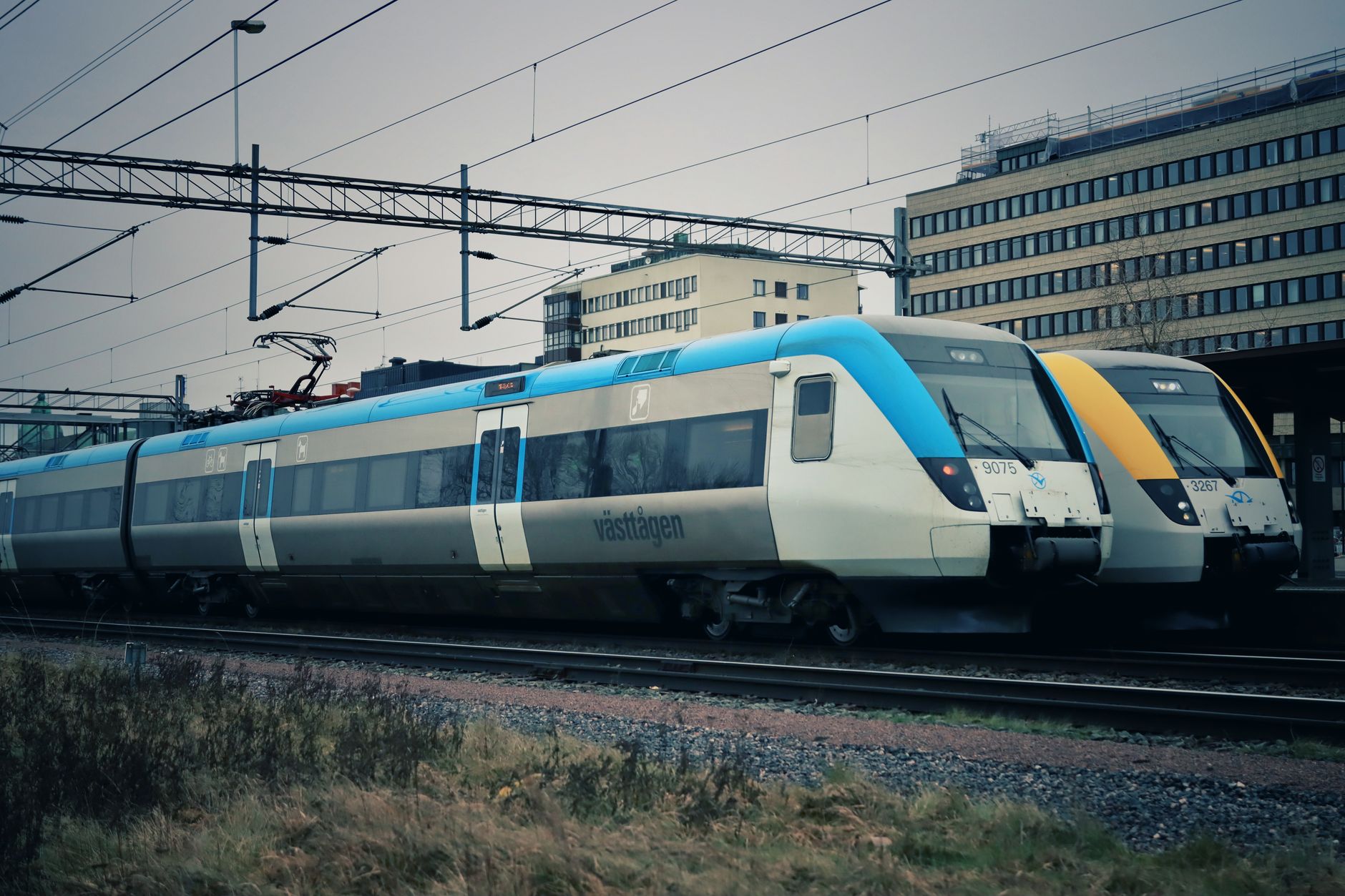
Rail cuts your trip’s emissions versus flying between each city. The European Environment Agency tracks transport greenhouse gas trends across Europe, and rail remains one of the strongest lower-emission choices for medium-distance city hops. This is one more reason Scandinavia by train works well for low-carbon travel when you are comparing it with multiple short flights.
Source: European Environment Agency – greenhouse gas emissions from transport.
Scenic rides and day trips for a scandinavia train itinerary
Bergen Railway (Oslo–Bergen): This high‑plateau crossing is a classic for good reason. Weather shifts fast on the mountain, so bring layers even in summer. Choose a window seat, keep your camera handy for station stops, and enjoy the contrast from forests near Oslo to open tundra near Finse.
Flåm Railway (from Myrdal): A short, ultra‑scenic branch down to the fjord. Book directly with the operator and plan it as a full‑day loop from Bergen via Voss and Myrdal, or as an overnight in the valley if you want more time on the water.
Stockholm Archipelago ferries: If the sky is clear, spend half a day island‑hopping. Boats are seasonal and weather‑dependent, so check local operators for the latest timetables and routes.
Because these are popular, set them on your calendar first. Then lay the rest of your route around them.
Booking steps for a Scandinavian train itinerary
Step 1 — Fix your anchor days: List the experiences with fixed times (Bergen Railway, Flåm, a specific museum) and secure those tickets first.
Step 2 — Lock high‑demand trains: Book capital‑to‑capital day trains and any night trains next. Use operator sites: SJ (Sweden), DSB (Denmark), Vy (Norway). For multi‑operator planning inside Norway, see Entur.
Step 3 — Add a ferry where it helps: If it replaces a hotel night or removes a long day run, check Go Nordic Cruiseline or Stena Line for times and cabins.
Step 4 — Place your hotels smartly: Book stays near central stations to cut transfer time, especially when you have early departures or late ferry arrivals.
Step 5 — Keep a buffer: Leave one flexible day in a city with many indoor options, such as Copenhagen or Stockholm, so minor disruptions do not cascade.
Typical costs and budget tips
Pricing varies by season and how early you book. In general, advance point‑to‑point fares on SJ, DSB, and Vy are the best value for fixed itineraries. These discounted fares are tied to specific trains and are most common outside last‑minute purchases. If you want the freedom to switch days as you go, a Global Eurail/Interrail Pass can be useful, but add any mandatory reservation fees to get a true comparison.
Seat reservations on long‑distance services are either included in the ticket or sold as an add‑on. On some routes, you will see only one combined price that includes a seat; on others, the base fare and reservation may be listed separately during checkout. If you hold a pass, the operator sites usually show a reservation‑only option. Compare both approaches before you decide.
What changes the price most?
Cabins on the Oslo–Copenhagen ferry are priced by date and cabin type. Lower‑berth inside cabins tend to be the most affordable, while sea‑view and premium cabins cost more. Because the ferry replaces a hotel night, compare the combined cabin price plus meals to what you would spend on a hotel, breakfast, and a daytime train the next day.
Daily travel costs beyond transport are predictable. Cards are widely accepted for transit, cafes, and museum entries. To keep food budgets in check, use food halls and bakeries for lunches, then save sit‑down dinners for a few key nights. If you need luggage storage, look for staffed hotel storage or station lockers near the main concourse; bring a contactless card or small coins, depending on the locker system.
When does the ferry beat another rail day?
Finally, plan one or two “splurge” moments—perhaps a scenic rail upgrade, a cabin with a view on the ferry, or a special meal in each capital—and keep the rest simple. With clear priorities, you avoid last‑minute purchases that do not add much joy.
Night trains in Scandinavia: cabins, routes, tips
Night trains can save time and money when they match your route. Between Oslo and Bergen, sleepers are a practical way to reposition while you rest. Book early for private compartments if you value privacy. Families often prefer a compartment to keep everyone together.
Elsewhere in the region, Scandinavia by train can include longer north–south night services within Sweden. If you are tempted, check the specific operator for current routes, car types, and whether bedding is included before you treat a sleeper as the backbone of your plan.
For the best experience, pack earplugs and a light layer, keep valuables close, and set an alarm for 20–30 minutes before arrival. If you are connecting onward in the morning, allow some buffer time for a shower and breakfast before your first activity.
Stations and local transit in the capitals
Copenhagen, Stockholm, Oslo, and Bergen all have central stations close to walkable districts. You can arrive by train and be checking in at your hotel within a short tram, metro, or bus ride—or a 10–20 minute walk if you packed light. This is the key to smooth mornings and calm evenings.
In Copenhagen, the main station connects easily to S‑trains and metro lines for quick moves around the city. Stockholm Central links to commuter trains and the metro network; airport trains run from dedicated platforms. In Oslo, the central station is next to tram and bus stops that fan out across the city. Bergen’s compact station sits near the old town and the light rail line.
Buy local transit tickets from station machines or official apps. Tap‑in systems and contactless payments are common. If you will ride a few times in one day, look for day tickets or short tourist passes to cap your costs.
Best seats and sides of the train
Window seats are worth it on scenic legs. On the Oslo → Bergen route, the left side leaving Oslo often gives broader valley views in the early hours, while the right side can be stronger on the approach to the coast. If your train allows seat selection, choose a table seat for laptops or shared snacks and a quiet zone if you want to read.
For pairs, two‑across seating keeps you together. For families, aim for a table of four or a family area when available. If you are prone to motion sickness, sit near the center of the car over the bogies and face forward.
Family travel and accessibility notes
Stations and trains in Scandinavia are generally well‑signed and designed with accessibility in mind. Many platforms offer step‑free routes, elevators, or ramps. If you need assistance, check the operator website in advance to arrange boarding help.
With children, schedule playground or park breaks near stations—there are often green spaces within a short walk. Pack simple games, download shows over Wi‑Fi at your hotel, and keep snacks within reach. Night trains can be a small adventure for kids; compartments make bedtime easier.
Strollers and wheelchairs are common on local transit. On long‑distance trains, look for designated spaces at car ends. If you have a lot of luggage, board early to claim overhead or rack space and keep aisles clear.
Common mistakes on a scandinavia train itinerary
Do not try to fit all three capitals plus fjords into five days; the pace is too tight. Avoid skipping seat reservations in peak summer or you may end up standing or split from your travel partner. In winter, plan arrivals before sunset and book accommodations close to stations. Finally, leave a generous buffer between a morning ferry arrival and your first train to avoid stress if disembarkation takes longer than expected.
Winter tips for a scandinavia train itinerary
Trains run year‑round, and winter can be beautiful. However, days are short and snow is likely on mountain routes. For winter, your scandinavia train itinerary should allow daylight arrivals in Oslo and Bergen, and you should bring shoes with good grip. Also, watch for reduced seasonal ferries and museum hours.
Compare options for your scandinavia train itinerary
Use this table to choose your best travel day mix:
| Goal | Best tool | Why |
|---|---|---|
| Save time and sleep well | Overnight ferry Oslo–Copenhagen | Replaces a hotel and a daytime hop with a cabin and early arrival |
| See the mountains in daylight | Oslo–Bergen day train | High‑plateau views and photo stops at stations |
| Work while traveling | Day trains with table seats | Stable Wi‑Fi on many intercity trains, bigger workspace |
| Keep costs lower | Advance point‑to‑point fares | Operator promos often beat pass + reservation fees |
| Max flexibility | Global rail pass | Change days if weather shifts or you want to linger |
Luggage and safety on a scandinavia train itinerary
Trains and stations in Scandinavia are generally well‑signed and safe in daylight. Keep valuables close, use hotel bag storage for early arrivals, and avoid last‑minute platform sprints. Choose cars near the center of the platform for faster exits. If you are changing stations across town, allow extra time for traffic and consider a taxi or tram over a long walk in bad weather.
Alternate terms for a Scandinavia rail itinerary
Some readers search for a “Scandinavia rail itinerary” or a “Scandinavia by rail itinerary.” Both mean the same thing as Scandinavia by train: a slow‑travel loop through Denmark, Sweden, and Norway with trains first and the ferry as a bonus. Build your scandinavia train itinerary around the city order that saves backtracking, then add a scenic leg that excites you most.
Quick answers about your scandinavia train itinerary
How many days for a scandinavia train itinerary?
Seven days for capitals only, 10 for a ferry and one scenic rail day, and 14 for fjords or archipelago time plus a buffer.
Do I need to reserve seats in summer?
Often yes on Sweden’s long‑distance SJ trains, recommended on Denmark’s InterCity, and standard for Norway’s long‑distance Vy trains. Check your exact service.
Can I see Bergen and still avoid a flight?
Yes. Combine the Oslo–Bergen Railway with either a night train return or the ferry between Oslo and Copenhagen to position yourself for departure.
Official links for your scandinavia train itinerary
| Purpose | Official link |
|---|---|
| SJ – Sweden (tickets, seat maps, night‑train info) | https://www.sj.se/en |
| DSB – Denmark (tickets, InterCity reservations) | https://www.dsb.dk/en/ |
| Vy – Norway (Bergen Railway and more) | https://www.vy.no/en |
| Entur – Norway (planning and tickets across operators) | https://www.entur.no/ |
| Eurail Global Pass (non‑EU) | https://www.eurail.com/…/global-pass |
| Interrail Global Pass (EU) | https://www.interrail.eu/…/global-pass |
| Go Nordic Cruiseline – Copenhagen–Oslo ferry | https://www.gonordiccruiseline.com/preparing-for-your-trip/sailing-schedule/ |
| Stena Line – Gothenburg–Frederikshavn | https://www.stenaline.com/…/gothenburg-frederikshavn |
| Flåm Railway – official booking | https://www.flamsbana.no/en/ |
| EEA – emissions by transport mode | https://www.eea.europa.eu/…/transport |
Putting your scandinavia train itinerary together
Start with two or three core city hops, then lock the scenic day you want most. Because trains are frequent and punctual, you can keep your bag light and your days simple. Scandinavia by train works best when you build around daylight, ferry comfort where it helps, and one buffer day to relax. Finally, confirm seat reservations where needed and choose station‑adjacent hotels to make mornings smooth.
More Europe train guides for planning your route
- Train Travel in Europe: Eco-Friendly Planning Guide for 2026
- Rail and Ferry Europe Itinerary Ideas for Lower-Flight Trips
- How to Book Train Travel in Europe: Apps, Seats, and Ticket Tips
Last reviewed for schedules and links: . Always recheck times on the operator and ferry sites before you book.
Compare the trip details before you book
Affiliate disclosure: Eco Nomad Travel may earn a commission if you book through qualifying links, at no extra cost to you. Use the link only when it genuinely helps your trip research.
Before you lock in dates for Scandinavia by Train Itinerary: Norway, Sweden, Denmark, and Ferries, compare location, flexible cancellation, transfer timing, and total trip cost so the final plan fits your budget and pace.
