

Quick start: If you need Eurostar tickets soon, start by checking the live ticket release dates, then compare times and classes on the official site. This guide shows how booking windows work, what affects prices, which routes to expect, and how to pick better seats for a smooth trip.
For related Eco Nomad guides, see london to paris train, renfe train tickets spain guide.
In one place, you will learn when Eurostar tickets typically go on sale, how to catch the best fares, how the classes differ, and what to know about luggage, check-in, and border rules. Because schedules and conditions change, you will also find links to official sources for the latest details.
Also, if you need eurostar tickets for a fixed date, set a calendar alert for the release day and keep a backup option in mind. That simple step saves time later.
Key takeaways
- Booking horizon: Release dates vary by route and season. Check Eurostar’s current ticket release calendar before you plan.
- Prices: Fares are dynamic. Book early on popular days, travel off-peak, and be flexible with times to save.
- Routes: London–Paris, London–Brussels, and London–Amsterdam are the core cross‑Channel services. Continental routes within France–Belgium–Netherlands–Germany also operate under the Eurostar brand.
- Seats: Standard offers great value; Standard Premier adds room and a light meal; Business Premier adds flexibility and lounges.
- At the station: Allow enough time for security and border checks. Eurostar publishes station‑specific arrival guidance.
What routes does Eurostar run today?
Eurostar links the UK to mainland Europe via the Channel Tunnel and also operates continental services across parts of France, Belgium, the Netherlands, and Germany. The most searched cross‑Channel routes are:
- London St Pancras International ↔ Paris Gare du Nord
- London St Pancras International ↔ Brussels Midi/Zuid
- London St Pancras International ↔ Amsterdam Centraal (via Rotterdam)
On the continent, the unified Eurostar brand (which includes the former Thalys network) runs frequent trains between Paris, Brussels, Amsterdam, Rotterdam, and select German cities. These continental trains do not require UK border checks. For current timetables and route availability, see Eurostar’s official timetables.
Route notes at a glance
Because each corridor has its own rhythm, plan with the route in mind:
- London–Paris: Trains are frequent. However, peak Friday evenings, Sunday afternoons, and school holiday periods can fill early. If your date is fixed, check the release calendar and compare several trains on that day.
- London–Brussels: Good for onward travel to Antwerp, Ghent, or Cologne via separate tickets. Therefore, leave a safe buffer at Brussels Midi/Zuid if you are changing to a regional or ICE service.
- London–Amsterdam: Demand is strong. Also, schedules can change with infrastructure works. To avoid stress, watch the timetables page for updates and consider London–Rotterdam as a fallback if Amsterdam direct options look tight.
- Paris–Brussels–Amsterdam (continental): These trains usually run often and do not involve UK border checks. Even so, busy weekends still sell through popular times, so compare several departures.
When do Eurostar tickets go on sale?
There is no single date that fits every route or season. Eurostar releases trains in batches and sometimes moves release days earlier or later due to timetable changes, engineering works, or demand.
Best practice: Check the live ticket release dates page first, then set a reminder for your target release day.
| Route group | What to expect | Where to confirm |
|---|---|---|
| London ↔ Paris/Brussels/Amsterdam | Release dates vary by season and schedule updates; popular periods can sell quickly. | Eurostar ticket release calendar |
| Paris ↔ Brussels/Amsterdam (continental network) | Generally frequent services; releases may differ from cross‑Channel trains. | Timetables |
| Holiday peaks (e.g., summer, Christmas) | High demand; early booking helps. Watch calendar updates for earlier batch releases. | Release dates & service news |
Because families and groups often target school holidays and weekends, the lowest fare buckets for those days can vanish soon after release. Also, note time zones on release mornings so you search at the right hour.
Step-by-step: a booking flow that works
- Create or log in to your account before the sale time. Then save traveler details so checkout is faster.
- Search your target train first. Next, open nearby departures in new tabs for quick comparison.
- Pick the class you want. After that, view the seat map if offered.
- Check fare conditions on the checkout page. If plans may shift, compare a flexible option.
- Pay and save the confirmation. Finally, add the booking to your calendar with alarms.
To price eurostar tickets well, be early or be flexible. Those two habits beat most complex “hacks.”
How can I find the cheapest Eurostar tickets?
Eurostar uses dynamic pricing: lower “buckets” sell first, and prices rise as trains fill. You do not need every trick—just a few habits:
- Book early for peak days. Target the first release day for busy periods.
- Shift by a few hours. Midday and late‑evening departures are often cheaper than early mornings and Friday/Sunday peaks.
- Travel midweek. Tuesdays and Wednesdays often price lower than Fridays.
- Check nearby dates in one view. Use the official fare calendar and compare across several days.
- Consider Standard vs Standard Premier. Premier offers comfort and a meal; Standard is best value if price is king.
- Avoid split groups at the last minute. Seats together cost less if booked early under one booking.
If your dates are fixed and popular, set a reminder for the release day and search as soon as it opens. Also, sign up for Eurostar alerts so you hear about schedule loads or sales. When you shop for eurostar tickets, compare at least three departures. Often one train is a clear value pick.
How much do Eurostar tickets cost?
Fares vary by date, time, demand, and class. Eurostar advertises “from” prices on major routes and updates those pages when offers change. For the latest headline fares, check route pages from the official site rather than relying on old screenshots or blogs.
- See live fares by route on eurostar.com.
- Compare several trains the same day; an hour shift can cut the price.
- Look at both Standard and Standard Premier before you decide; occasionally a small upgrade gap is worth it on longer trips.
Official pages display “from” fares for eurostar tickets. Because those figures can change, use them as guidance, then test your exact dates.
What are the Eurostar classes and flexibility options?
Class names and conditions differ slightly between cross‑Channel and continental services, but the core ideas are similar. Always check the fare conditions shown during booking for change/refund rules, as these can change.
| Class | What you get (typical) | Notes |
|---|---|---|
| Standard | Assigned seat, access to the café‑bar, great value. | Least expensive; changes/refunds depend on the specific fare conditions at purchase. |
| Standard Premier | Wider seat/legroom, light meal served at seat, quieter carriage feel. | Costs more than Standard; flexibility depends on fare conditions shown at checkout. |
| Business Premier (cross‑Channel) | Fully flexible tickets (per current terms), lounge access, fast‑track at some stations, onboard meal. | Best for flexibility and perks; check current Business Premier rules before buying. |
When you buy eurostar tickets, check the fare rules that appear right before payment. If you need to keep plans open, choosing flexibility upfront can be cheaper than changing late.
Seat tips: which seats should you pick?
Seat maps appear during booking. If seat choice matters, look for window vs aisle icons, table seats for groups, and power socket location. In Standard Premier and Business Premier, you generally get more space and a meal, which helps on longer runs like London–Amsterdam.
| Preference | What to select | Why |
|---|---|---|
| Views | Window seats | Better scenery in daylight; avoid pillar views near carriage ends. |
| Groups of 4 | Table of four (face‑to‑face) | Easier conversation and snacks; book early for availability. |
| Solo focus | Single window or a quiet carriage (if offered) | More privacy; bring headphones for peak periods. |
| Luggage | Mid‑car areas | Quicker access to overhead racks; end racks fill first. |
Before you confirm eurostar tickets, review the map and pick seats that fit your needs. However, if a layout looks busy, try a nearby train with more open seating.
Check‑in, luggage, and border rules you should know
Cross‑Channel trains include airport‑style checks: you scan your ticket, pass through security and exit/entry controls, and then wait in the departure lounge. Continental Eurostar routes generally use normal intercity boarding with no UK border step.
- When to arrive: Eurostar provides station‑specific guidance and may recommend arriving earlier at busy times. See the official When to arrive page for current advice.
- Luggage allowance: On cross‑Channel services, adults can typically bring two bags plus a small item. There is no set weight limit, but you must be able to carry your bags yourself. Business Premier may allow an extra bag. Check the latest rules on Eurostar’s luggage page.
- Passports and visas: You need valid travel documents for UK/EU border checks. See Eurostar’s Passports and visas guidance and your government’s entry rules (e.g., UK gov advice for France).
Source‑backed: The arrival guidance, luggage rules, and document requirements are detailed by Eurostar in the linked pages above and change with operations and regulations. Keep eurostar tickets handy on your phone or printed so you can present them quickly at gates.
Families, groups, and assistance
Planning for comfort helps your trip run smoothly.
- Families: Choose seats together early, ideally at a table. Also bring snacks, water, and quiet activities. Boarding with time in hand reduces stress.
- Groups: One booking for all seats often makes allocation easier. Therefore, search right at release for peak weekends.
- Assistance: If anyone in your party needs help, arrange assistance in advance via Eurostar’s help pages. For the latest process, see the official guidance (search for assistance on eurostar.com).
- Strollers and mobility devices: Check luggage and assistance rules before travel. Then allow extra time at security and boarding.
What’s the best way to book?
For most travelers, booking direct with Eurostar is the simplest path. You see precise fare conditions, seat maps, and the latest service notices in one place. If you plan multi‑country trips with connections, consider building the trip around the fixed Eurostar leg first, then add regional tickets.
- Direct booking benefits: Clear fare rules, easier changes with your booking reference, and accurate seat selection.
- Third‑party apps: Some tools aggregate routes and offer useful calendars. If you use them, check fare rules and after‑sales steps before paying.
- Connections: For onward trains, compare regional operators (SNCF, SNCB, NS, DB) and allow a sensible buffer in case of delay.
Booking eurostar tickets direct is usually simpler, especially if you might change a seat or time later.
How to read the timetable and plan connections
Eurostar’s timetable tool shows travel time, stops, and first/last trains. When connecting to a separate ticket, add buffer time, especially around peak border queues. For example, allow extra time if you land at London airports before a same‑day Eurostar.
- Confirm your target train on the official timetable.
- Check platform and station access notes (St Pancras is well‑signed; Paris Gare du Nord can be busy at peak hours).
- Allow extra time for security and border checks on cross‑Channel services.
- For onward travel, compare operator sites (e.g., SNCF, SNCB/NMBS, NS).
Save eurostar tickets to a mobile wallet if offered, and store a PDF or print as a backup. That way you are ready if your phone battery runs low.
After you book: manage and prepare
- Review your confirmation: Names must match travel documents. If something looks wrong, act quickly while change windows are open.
- Seat checks: If seat selection was not available at checkout, revisit your booking later. Sometimes extra seats open after schedule updates.
- Travel docs: Verify passport validity, visas if needed, and any child travel consent rules. Then put documents in a safe, easy‑to‑reach place.
- Packing: Use soft bags when possible. Overhead racks are easier with flexible luggage.
Day‑of‑travel checklist
- Arrive according to the station guidance, earlier at peaks.
- Keep eurostar tickets and passports ready before security.
- Check live departures and platform boards as you enter the lounge.
- Stand near your coach number before boarding to find rack space.
- Settle in, stow bags securely, and keep essentials under the seat in front.
Common mistakes to avoid
- Waiting to buy eurostar tickets on a busy weekend and missing the cheapest seats when the schedule first loads.
- Forgetting passports or ID needed for border checks.
- Booking tight, separate‑ticket connections with no buffer.
- Ignoring seat maps on long journeys when a small time shift can improve both price and seat choice.
Smart ways to cut your Eurostar fare
If the embedded player does not load, watch on YouTube: Eurostar TRICK To Save Money. The video shows ways to trim the cost of eurostar tickets. Use what fits your plans.
Should you book now or wait?
Eurostar booking decision guide
- Travel date is a peak (Fri/Sun, holidays)? Book at release or as early as you can.
- Flexible by ±1–2 days or hours? Compare off‑peak times first.
- Need seats together (family/group)? Buy early under one booking.
- Unsure about plans? Compare flexible vs non‑flexible fares before purchase.
- Continental only (no UK border)? Expect more frequencies; compare several departures.
Editor’s note: Keep it simple—if your date is popular or fixed, book early. If you are flexible, compare several trains before paying.
Use the decision guide if your eurostar tickets are for peak dates or if you want to see how flexibility changes your options.

Provenance: Licensed Pexels photo (Cristian Manieri). Used as an illustrative station scene, not a specific Eurostar terminal.
What about sustainability?
Eurostar states that train travel can cut emissions versus flying on comparable routes. For its current sustainability claims and programs, see Eurostar’s sustainable travel page. As always, the precise footprint depends on factors like load, energy mix, and alternative route options.
Direct answers to common planning questions
How far ahead should you book for popular weekends?
As early as practical, ideally on or close to the official release day. Popular Fridays, Sundays, and school holidays tend to rise fastest.
Is there a “best day” to buy?
There is no universal best weekday. Instead, aim for early booking for fixed peak dates, and use flexible search to compare nearby off‑peak trains.
What if you miss the first release?
Check nearby times and days, look for Standard seats first, and recheck in case schedule updates add capacity.
If plans change: changes, refunds, and disruptions
Rules for changes and refunds depend on the fare you choose. First, read the conditions shown during checkout. Then decide if the extra cost for flexibility is worth it for your trip.
- Changes: Some fares allow date or time changes with a fee and any fare difference. Act early for the widest rebooking choice.
- Refunds: Not all tickets are refundable. If a refund is important, select a fare that allows it before you pay.
- Disruptions: For live updates, check Eurostar’s service information. Follow the guidance posted there for options.
Meanwhile, keep copies of your receipts and confirmations. That makes any after‑sales process faster.
Trusted sources for changing rules
- Eurostar ticket release dates (official)
- Eurostar luggage allowance (official)
- Eurostar when to arrive (official)
- Eurostar passports and visas (official)
- Seat 61: London–Paris train guide (independent reference)
- UK government France entry requirements (official)
Expert planning extras
- Choose luggage smartly: Soft bags fit overhead racks more easily than large rigid suitcases.
- Bring snacks and a bottle: There is a café‑bar, but queues can be long at peak times.
- Mark your coach and door: Screens show coach numbers—stand near your carriage to board faster and find rack space.
- Backups: Print a backup of eurostar tickets or store an offline PDF. Power banks are handy for phones.
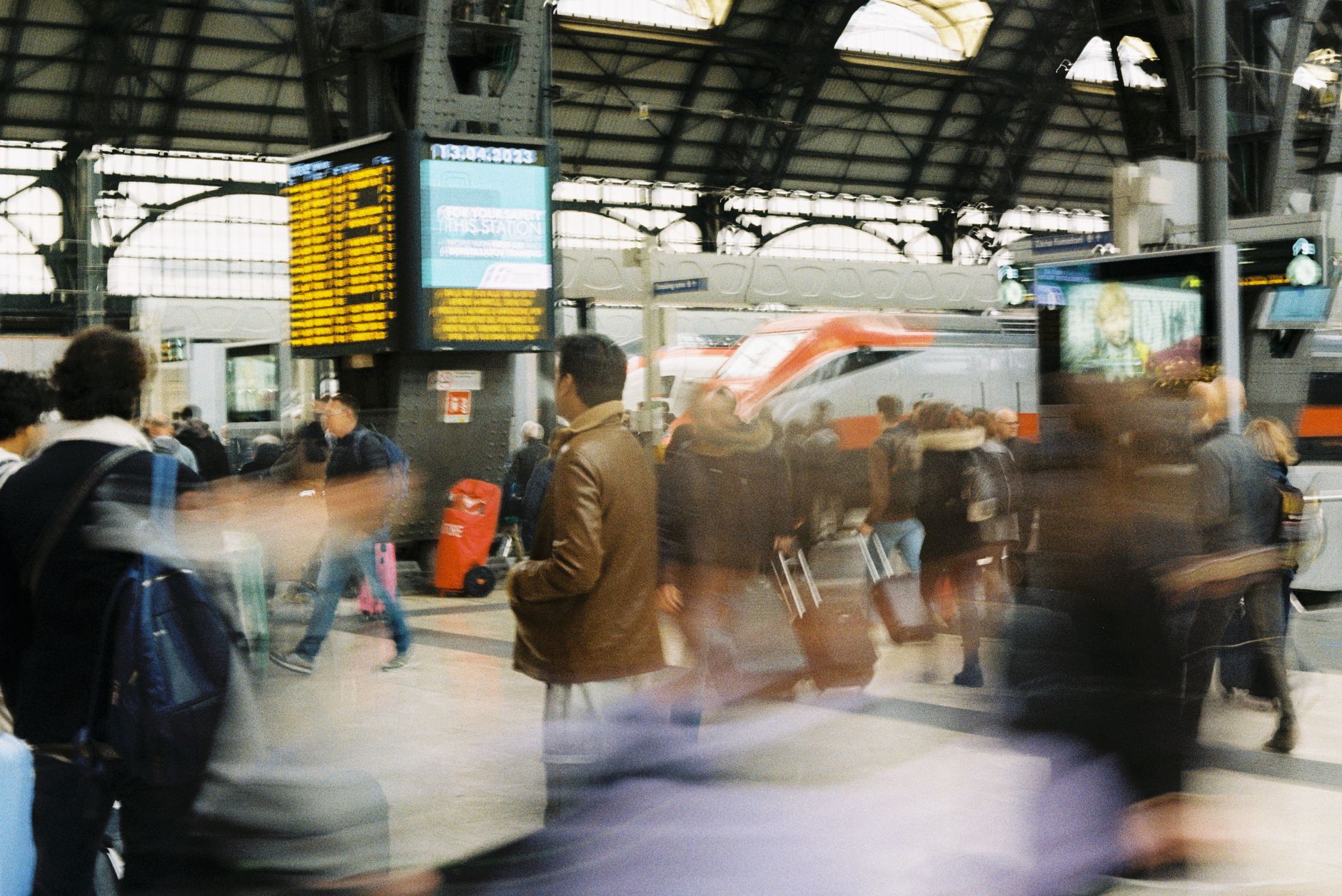
Provenance: Licensed Pexels photo (João Valverde). Used for crowd‑flow context, not a specific Eurostar platform.
Should you buy one through‑ticket or separate tickets?
Through‑tickets reduce risk on missed connections but may be limited across some borders or operators. If you split tickets, allow a generous buffer, especially when crossing the UK–EU border. Independent planners like The Man in Seat 61 explain typical buffers and station layouts—see the guide linked above for route‑specific notes.
Internal next steps
Planning the rest of your rail trip? See our cornerstone guide on train travel in Europe. If you feel unsure about stations, luggage, or scams, read Is It Safe to Travel by Train in Europe? for practical safety and comfort tips. For pass vs point‑to‑point decisions, compare with rail passes vs tickets.
FAQ: Eurostar booking and travel
Can I refund or change Eurostar tickets?
It depends on the fare conditions shown at checkout. Some fares are changeable with fees or fare differences; fully flexible options are usually more expensive. Always read the specific rules before you pay and save your confirmation email.
When is the best time to buy Eurostar tickets?
For peak Fridays, Sundays, and school holidays, buy as early as possible—ideally on the release day. For flexible trips, compare midday or late‑evening departures on midweek dates.
Do children need Eurostar tickets?
Children need valid tickets and travel documents. Eurostar publishes child age brackets, seating, and luggage guidance on its help pages—check the current rules before you buy.
How early should I arrive at the station?
Follow Eurostar’s station‑specific guidance. At busy times, arriving earlier gives you margin for security and border checks. See the official “When to arrive” page for the latest advice.
Can I choose my seat?
Seat selection is shown during booking on many fares. If your seat matters, check the map before payment. You can often move times to find better layouts.
What about luggage size and weight?
Eurostar lists permitted item sizes and numbers. There is typically no fixed weight limit, but you must carry your bags yourself. See the official luggage page linked above.
Last reviewed: This guide was reviewed for operational changes and links on the date shown below. Always confirm time‑sensitive details on official Eurostar pages before you book.

Free download: Eco Rail-First Trip Planner
A fast, practical checklist + templates for planning low-impact trips (without decision fatigue).
Compare the trip details before you book
Affiliate disclosure: Eco Nomad Travel may earn a commission if you book through qualifying links, at no extra cost to you. Use the link only when it genuinely helps your trip research.
Before you lock in dates for Eurostar Tickets: Booking Windows, Prices, Routes, and Seat Tips, compare location, flexible cancellation, transfer timing, and total trip cost so the final plan fits your budget and pace.
