

The quick answer on an EV road trip in Europe
Driving an electric car across Europe is now straightforward in the north and west, and it still takes planning in the south and east. Because charging density varies so much by country, an EV road trip succeeds or fails on route choice rather than on the car.
The practical skill is not range anxiety management. It is knowing which apps to use, which payment methods work where, and how to plan stops around places you actually want to be.
- Connector standards have converged, so a modern car charges almost anywhere with the cable it came with.
- Payment is the real friction, not sockets, because networks use different apps, cards and tariffs.
- Charging density is high along northern and western motorway corridors and thinner in rural areas.
- Plan stops around lunch, a walk or a town rather than around the charger itself.
- Cold weather, speed and mountains all reduce range substantially, and all three are predictable.
Affiliate disclosure: Some links in this guide are affiliate links. If you book through them, Eco Nomad Travel may earn a commission at no extra cost to you, and it does not change what we recommend.

Free download: Eco Rail-First Trip Planner
A fast, practical checklist + templates for planning low-impact trips (without decision fatigue).
Pick a route through well-served corridors, sort payment before you leave, and the rest is ordinary driving. Consequently the trip becomes about where you go rather than about the battery.
EV road trip charging: where it is easy and where it is not
The infrastructure picture is uneven, and knowing the pattern is most of the EV road trip planning.
The Netherlands, Norway, Germany, Austria, Switzerland, France, Belgium, Denmark and Sweden have dense networks, with rapid chargers at frequent intervals on main routes. Consequently a trip through those countries needs little more than a glance at an app.
The United Kingdom and Ireland have improved substantially, with good motorway coverage and patchier rural provision. Therefore planning matters more off the main roads.
Spain, Italy and Portugal have built out their main corridors well while leaving larger rural gaps. Meanwhile Spain in particular rewards sticking to motorways rather than cutting across country.
Central and eastern Europe is improving quickly from a thinner base, with good coverage on international corridors and sparse provision elsewhere. So a route through those countries should follow the main routes rather than the scenic back roads.
The Balkans, Greece and the far south-east remain the most demanding, with long gaps between rapid chargers. Consequently an EV road trip there needs genuine planning rather than confidence.
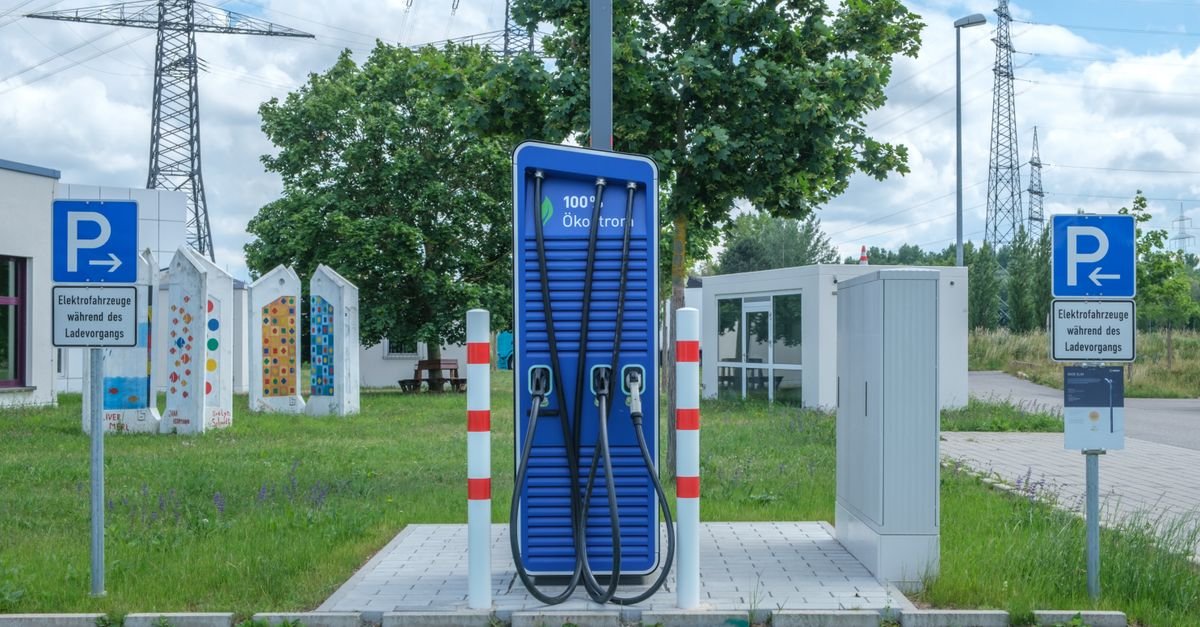
Comparing charging types on an EV road trip
The table compares the charging options by what they are actually for, which is the useful distinction.
| Charging type | Where you find it | Typical stop length | Relative cost | Use it for |
|---|---|---|---|---|
| Ultra-rapid DC | Motorway hubs | A short break | Highest | Covering distance |
| Rapid DC | Main roads, retail parks | A meal or a shop | High | Mid-journey topping up |
| Fast AC | Town car parks, hotels | Several hours | Moderate | While you sightsee or sleep |
| Hotel or accommodation charger | Where you stay | Overnight | Low to moderate | Starting each day full |
| Destination charger at an attraction | Parks, museums, trailheads | While you visit | Varies, sometimes free | Free charging by accident |
| Domestic socket | Rural accommodation | Overnight, slow | Lowest | Emergencies and long stays |
A framework for planning an EV road trip
Five steps, taken in this order, remove nearly all the difficulty.
Payment: the real EV road trip friction
This is where European EV travel is genuinely awkward, and it is solvable in advance.
Charging networks are national or regional, and each has its own app, account and tariff. Therefore a cross-border trip can involve many separate relationships if you do nothing about it.
Roaming providers solve most of this by issuing one card or app that works across many networks, billing you centrally. Consequently setting up one or two roaming accounts before departure is the single most useful preparation.
Roaming convenience carries a price premium over a network’s own tariff, which is the trade. Meanwhile the premium is usually worth it on a trip rather than for daily use at home.
Contactless card payment is increasingly mandated and increasingly available on newer rapid chargers, which has improved matters considerably. So a bank card is now a viable backup in many countries, though not universally.
Carry at least two methods, because a failed app or a declined card at a remote charger is the one genuine failure mode. Consequently redundancy matters more than optimisation.
Connectors, cables and compatibility
The old confusion about plug types on a European EV road trip has largely resolved, which is worth stating plainly.
Rapid DC charging in Europe has converged on a single connector standard, and essentially all modern cars sold there use it. Therefore you plug into the station’s own attached cable and compatibility is a non-issue.
Slower AC charging uses a different standard connector, and here you supply your own cable. Consequently carrying the cable the car came with is essential rather than optional.
An older connector standard persists on some legacy rapid chargers and on a few older cars. Meanwhile new installations have largely stopped including it.
A domestic plug cable, where the car came with one, is a genuine insurance policy for rural accommodation with no charger. So it charges slowly and it charges, which is the point.
In the United Kingdom and Ireland, domestic sockets differ, so an adapter is needed for granny-cable charging. Consequently check this if your route crosses between the mainland and the islands.

What actually reduces range on an EV road trip
Range loss is predictable rather than mysterious, and planning around it removes the anxiety.
Motorway speed is the largest single factor, because air resistance rises sharply with velocity. Therefore driving a little slower on a long leg genuinely extends range, often by a surprising amount.
Cold weather is the second factor, reducing battery performance and adding heating load. Consequently a winter trip needs noticeably more margin than a summer one.
Mountains cost range on the climb and return a good share of it on the descent through regenerative braking. Meanwhile the net cost over a pass is modest, but the climb itself can be alarming if you watch the gauge.
Roof boxes, bike racks and a heavily loaded car all add consumption. So a holiday-loaded car has less range than the same car on a test drive.
Preconditioning the battery while still plugged in, where the car supports it, improves both range and charging speed. Consequently using that feature in winter is worth learning before you leave.
Apps and route planning tools
Good tools do the EV road trip arithmetic for you, and they differ in what they are for.
Charger-mapping apps show locations, connector types, power levels and user reports on reliability. Therefore the user reports are often the most valuable part, since a broken charger is worse than no charger.
Route-planning tools model your specific car, the terrain, the weather and your driving to schedule charging stops. Consequently they are much more useful than a map alone on a long trip.
The car’s own navigation increasingly does this natively, and on newer models it does it well. Meanwhile third-party planners usually have broader network coverage.
Use two sources rather than one, because coverage and data quality differ. So cross-checking a sparse section of route is cheap insurance.
Download offline maps for areas with poor mobile coverage, particularly in mountains and rural regions. Consequently a dead signal does not become a navigation problem.
Where to stop on an EV road trip
The best change in mindset is to stop planning around chargers and start planning around places.
A rapid charge takes roughly the length of a decent coffee and a walk, which is a reasonable break on a long drive anyway. Therefore the stop is only lost time if you spend it staring at the car.
Many rapid hubs now sit at retail parks and service areas rather than in towns, which is convenient and dull. Consequently choosing a slightly slower charger in a town centre often improves the day.
Destination chargers at museums, national parks, trailheads and vineyards let you charge while doing the thing you came for. Meanwhile some are free, which is a pleasant accident rather than a plan.
Lunch stops are the natural charging opportunity, since an hour on a rapid charger adds a great deal. So aligning the two is the single best scheduling habit.
Overnight charging at accommodation is the most valuable of all, because it costs no waiting time at all. Consequently filtering accommodation for a charger is worth doing at booking.
Hiring an electric car abroad
Renting rather than bringing your own car changes several things about an EV road trip.
Availability of EVs in European rental fleets has grown considerably, though the specific model is rarely guaranteed. Therefore you may not know your range until collection, which complicates advance planning.
Ask what charging cables are included, because a missing AC cable limits you to rapid charging only. Consequently confirming this at booking prevents an expensive week.
Some rental companies include a charging card or account, and others leave payment entirely to you. Meanwhile where none is included, your own roaming account covers it.
Return charge requirements vary, with some companies expecting a minimum state of charge and others charging a fee. So clarify this at pickup rather than discovering it at drop-off.
Cross-border restrictions apply to rentals generally and sometimes more strictly to EVs. Consequently declare your intended countries when booking.
EV road trip costs compared with driving on fuel
The economics vary by country far more than people expect.
Charging at home or at accommodation is normally much cheaper than fuel per distance. Therefore an itinerary with overnight charging is the cheapest way to drive.
Rapid motorway charging is the most expensive electricity you will buy, and in some countries it approaches or matches the cost of fuel. Consequently a trip relying entirely on rapid charging saves little money.
Electricity prices differ sharply between countries, as do charging tariffs within them. Meanwhile that means the same journey costs noticeably different amounts depending on where you plug in.
Road tolls, city access charges and parking all affect the total, and several European cities give EVs reduced or free access to low-emission zones. So the savings sometimes come from access rather than energy.
Prices change constantly, so treat all of this as structure rather than figures. Consequently check current tariffs for the networks on your route.
Is an EV road trip actually lower impact?
The honest answer is usually yes, with real caveats worth stating.
An electric car produces no tailpipe emissions and its lifetime emissions are lower than an equivalent petrol or diesel car in almost every European grid. Therefore the comparison against driving on fuel favours the EV.
The size of the advantage depends heavily on the electricity mix where you charge, which varies enormously between European countries. Consequently charging in a renewables-heavy grid is substantially cleaner than in a coal-heavy one.
Manufacturing an EV, particularly its battery, carries a higher upfront footprint than building a conventional car. Meanwhile that is repaid over the vehicle’s life through use, and the payback period shortens as grids decarbonise.
The more important comparison for a trip is against rail, where a train generally beats a car of any kind carrying one or two people. So if a route is well served by rail, the train remains the lower-impact option.
Where rail does not reach, which is most rural and mountain travel, an EV is the better of the available options. Consequently it is a complement to rail rather than a competitor.
Combining a car with trains and ferries
The strongest low-impact itinerary mixes an EV road trip with other modes rather than choosing one.
Taking the train for the long intercity legs and hiring a car at the far end gives you rail’s efficiency and the car’s reach. Therefore the combination beats either alone for a rural destination.
Several European ferry routes carry cars and increasingly offer charging on board or at terminals. Consequently island and coastal itineraries are practical.
Motorail services, where a car travels on the train with you, exist on a small number of European routes. Meanwhile availability has declined, so check current operation rather than assuming.
In cities, leaving the car outside and using public transport avoids low-emission zone charges and parking costs. So a park-and-ride habit improves both the budget and the day.
The practical shape is rail between regions and a car within one. Consequently that is the itinerary worth building toward.
Charging etiquette and shared chargers
Charging bays are a shared resource, and the conventions matter more as uptake grows.
Move the car once it has what you need rather than leaving it plugged in while you have a long lunch. Therefore the rapid bay stays available for someone covering distance.
Several networks now apply idle fees after charging completes, which enforces this financially. Consequently leaving a finished car in a rapid bay can cost real money.
Do not unplug someone else’s car, even if it appears finished, unless local convention and signage say otherwise. Meanwhile leaving a note with a departure time on a slow charger is a widely accepted courtesy.
Park within the bay and leave the cable tidy, since trailing cables are a trip hazard and a common complaint. So the small habits keep sites usable.
Report broken chargers in the app you are using, because those reports are what other drivers rely on. Consequently a minute of your time saves someone else a diversion.
Winter and mountain driving
Cold and altitude are the two conditions that most change an EV road trip, and both are manageable with preparation.
Battery performance drops in cold weather and cabin heating draws from the same pack. Therefore winter range can be substantially below the summer figure even on identical roads.
Preconditioning while plugged in uses mains power rather than battery to warm the cabin and the pack. Consequently departing warm preserves range and speeds up the first charge.
Heated seats and a heated steering wheel use far less energy than heating the whole cabin. Meanwhile using those first and the cabin heater second is the efficient order.
Winter tyres are legally required in several European countries during defined periods, and the requirement applies to EVs identically. So check the rules for every country on a winter route.
Alpine passes close seasonally and the diversions are long. Consequently checking pass status before committing to a mountain route matters as much as checking chargers.
Tolls, zones and city driving
Driving costs in Europe extend well beyond energy, and EVs are treated differently in several of them.
Motorway tolls apply in many countries, by barrier, by sticker or by electronic tag, and the system differs in each. Therefore researching the mechanism per country avoids a fine.
Several countries require a windscreen sticker bought in advance, and driving without one is penalised. Consequently buying them before crossing the border is the simplest approach.
Urban low-emission and congestion zones are widespread and expanding, and many give electric vehicles free or reduced access. Meanwhile registration is often still required even where the charge is zero.
Some cities require a separate emissions certificate or sticker regardless of how clean the vehicle is. So an EV is not automatically exempt from the paperwork.
Parking is often discounted or free for EVs in city centres, sometimes with charging included. Consequently checking local schemes can make a city stop considerably cheaper.
Planning checklist for an EV road trip
First, choose a route through countries and corridors with dense charging rather than assuming uniform coverage.
Second, set up at least two payment methods before departure, including a roaming card or app covering multiple networks.
Third, filter accommodation for charging so that each day starts with a full battery.
Fourth, plan charging stops around lunch, a town or an attraction rather than around the charger itself.
Fifth, add margin for cold weather, motorway speed, mountains and a loaded car.
Finally, confirm which cables are included if hiring, download offline maps for sparse areas, and check whether your route crosses into a region with different domestic sockets.
Mistakes that ruin an electric road trip
- Routing through a thinly served region on the assumption that coverage is uniform.
- Arriving with a single charging app and finding it does not cover the local network.
- Booking accommodation without charging and losing an hour every morning.
- Planning the whole trip on rapid charging and saving nothing against fuel costs.
- Hiring an EV without confirming which cables are included.
- Driving at full motorway speed and then being surprised by the range.
- Taking a winter trip with summer-weather margins.
- Relying on a single charger with no alternative within range.
Frequently asked questions about an EV road trip in Europe
Is charging easy across Europe now?
It depends where. Northern and western Europe have dense networks with rapid chargers at frequent intervals on main routes, and southern and eastern Europe have good motorway corridors with larger rural gaps. The Balkans and the far south-east remain the most demanding and need genuine planning.
What is the biggest practical difficulty?
Payment rather than sockets. Networks are national or regional with their own apps and tariffs, so set up one or two roaming accounts before departure that work across many networks, and carry a contactless card as a backup. Always have two methods, because a declined payment at a remote charger is the real failure mode.
Do I need adapters for different plugs?
For rapid DC charging no, because Europe has converged on one connector standard and you use the station’s attached cable. For slower AC charging you supply your own cable, so carry the one the car came with. Domestic socket standards differ between the European mainland and the UK and Ireland.
How much range will I actually lose?
More than the official figure, and predictably so. Motorway speed is the largest factor because air resistance rises sharply, cold weather is the second, and a loaded car with a roof box adds consumption. Mountains cost range on the climb and return much of it on the descent.
Is it cheaper than driving on fuel?
It depends entirely on where you charge. Overnight charging at accommodation is normally much cheaper than fuel per distance, while rapid motorway charging is the most expensive electricity you will buy and in some countries approaches the cost of fuel. Electricity prices also differ sharply between countries.
Is an EV better than taking the train?
Generally no, for the legs a train covers. A train usually beats a car of any kind carrying one or two people. The strongest low-impact itinerary takes the train between regions and uses a car only where rail does not reach, which is most rural and mountain travel.
Hiring an electric car
When you compare, check which charging cables are included before you compare prices, because a missing AC cable limits you to rapid charging only. Compare electric and hybrid hire cars on GetRentacar
How this guide was researched
This guide describes the structure of European charging infrastructure and the practical decisions that follow from it: the regional variation in charging density, the convergence on single DC and AC connector standards, the fragmentation of payment across national networks and the role of roaming providers, and the predictable physical factors that reduce range.
No charging speeds, tariffs, electricity prices, range figures or network names appear here, because all of them vary by country, provider and vehicle and change frequently. The regional coverage descriptions reflect the broad and well-documented pattern of denser provision in northern and western Europe, and should be verified with a current charger-mapping app for your actual route.
The lifecycle emissions discussion is stated directionally and includes the real caveats: an EV’s manufacturing footprint is higher upfront and is repaid over its life, and the size of its advantage depends on the electricity mix where it is charged. The guide also states plainly that rail usually beats a car for the legs rail covers, which is the honest comparison for a low-impact trip. Nothing here claims first-hand driving of every route described.
Useful official references: European Environment Agency transport and mobility data, Ember’s electricity data explorer for grid mix by country, the International Energy Agency on electric vehicles, and European Commission information on alternative fuels infrastructure.
Planning a lower-impact trip? See our guides to vacations without a car, train versus plane emissions and sustainable road trip ideas.
Last updated .
