

Planning family train travel europe can be simple, calm, and fun when you know how tickets, seats, luggage, and stations work for families. This guide gives you clear, source-backed steps to compare options, book smart, and ride with less stressâ€â€whether you’re taking your first high-speed hop with a toddler or planning a summer route with teens.
For related Eco Nomad guides, see best train apps for europe, train travel with kids europe, train travel with kids europe, europe train itinerary two weeks.
Last reviewed: May 2026
Key takeaways for fast planning
- Book early for lower prices and to sit together. Many long‑distance and high‑speed trains offer dynamic pricing.
- Pick seats near luggage racks, family areas, or a table of four when possible. Quiet coaches can work for older kids.
- Bring what you can carry yourself. Most trains have no weight limits, but space is finite. Fold strollers at boarding if requested.
- Passes (Eurail/Interrail) can be great for flexible routes; many fast trains still need paid seat reservations.
- Use official and aggregator tools to compare. Then choose the channel that matches your exact needs (price vs. seat control vs. support).
- Know your rights. EU rail passenger rules cover delays, assistance, and compensation on many routes.
How to use this guide
Start with the quick answers. Then use the booking and seating sections while you plan dates. Next, scan luggage and stroller tips for station days. Finally, check the route ideas, night-train notes, and FAQs. You will find official sources linked so you can confirm details that may change by route or season.
Free download: Eco Rail-First Trip Planner
A fast, practical checklist + templates for planning low-impact trips (without decision fatigue).
family train travel europe: quick answers
Here are short answers to the most common planning questions for family train travel europe. Deeper sections follow if you need more detail.
- Do we need reservations? Often yes on high‑speed and international trains; not always on regional lines. Passes may still need paid reservations.
- Where do bags go? Overhead racks, end‑of‑car shelves, and under seats. Keep valuables with you.
- How do kids’ fares work? Policies vary. Many operators discount children and some let the youngest ride free with an adult.
- Food? Bistro cars on many intercity/high‑speed routes; bringing your own food is widely allowed.
- Best seats? Table for four, pairs facing, or near family areas. Reserve early to sit together.
- Strollers? Fold at the door if requested. Use doors near multi‑purpose spaces when possible.
How do you book family train tickets in Europe?
Decide if price, seat selection control, or flexible support matters most for your trip. Then choose between operator websites (best for exact seat features and policies) and trusted aggregators (best for comparing routes and languages in one place). For family train travel europe, many parents prefer a hybrid approach: compare across tools first, then book where you can lock the seats you want.
Where to start your search
- Official operators (examples): DB (Germany), SNCF (France), Trenitalia/Italo (Italy), Renfe (Spain), Eurostar (UK/France/Belgium/Netherlands), ÖBB (Austria).
- Pass holders: Start with the Eurail/Interrail reservation guidance for your target trains and dates (Eurail seat reservation overview).
Pricing tip: Long‑distance trains in many countries use airline‑style pricing. Therefore, earlier can be cheaper, and weekend/holiday peaks cost more. However, regional trains tend to have fixed prices or day tickets.
Seat selection: Some operator sites let you choose exact seats or at least seating types (table of four, family area, quiet coach). Aggregators vary here. If sitting together matters most, use the channel that guarantees your seat map choices at checkout.
Which booking tool fits your family task?
Affiliate disclosure: Some links in this guide may be affiliate links. If you book or buy through them, Eco Nomad Travel may earn a commission at no extra cost to you.
| Booking channel | Best when you need | Why it helps families |
|---|---|---|
| Operator site (e.g., DB, SNCF, Eurostar) | Seat selection, family areas, local child rules | Often best control over seat maps and special spaces; direct policy info and after‑sales changes. |
| Rail Europe | Cross‑border search, English checkout, support | Good for multi‑country itineraries and simple currency/credit card handling in one place. |
| Omio | Compare trains vs. buses/flights quickly | Easy mobile app; fast route comparisons to choose the calmest or fastest family option. |
| Eurail/Interrail (for pass holders) | Reservation guidance and pass travel days | Matches pass benefits for kids; shows when reservations are needed and how to add them. |
Also check official sources when policies matter, such as child age rules or luggage details. For example, the EU keeps a page on rail passenger rights that covers delays, disruptions, and assistance (EU rail passenger rights).
Which seats should families choose?
Seat needs change by age and trip length. For short hops, a standard pair of seats works fine. For longer rides, a table of four, seats facing each other, or a spot near a multi‑purpose area often helps. For family train travel europe, aim for seats that give elbow room and a clear place for bags.
| Seat/area type | Good for | Why it works | Watch‑outs |
|---|---|---|---|
| Table of four | 2–4 people | Face‑to‑face, board games, easy snack time | Can be popular; book early to lock it in. |
| Pairs facing (with/without table) | 1–2 kids + adult | Conversation and shared space | Legroom varies by train model. |
| Near multi‑purpose area | Stroller or bags | Extra space and door access | More foot traffic and doors opening. |
| Quiet coach | Older kids/teens | Lower noise; study/reading time | Noise rules apply; not ideal for toddlers. |
| 1st class | Work + calm | More space, quieter, sometimes meal service | Higher price; not needed for short hops. |
Tip: When a site lets you pin exact seats, look for car diagrams that show luggage shelves, family areas, and table groups. Some routes label these clearly; others only offer seat types.
How much luggage can a family bring on European trains?
Most European trains set no formal weight limit. You carry your own bags and must store them safely. Use overhead racks for small cases, end‑of‑car shelves for larger items, and under‑seat spaces for daypacks. Keep money, passports, and electronics with you at all times. This flexible, common‑sense approach appears in many operator pages and aligns with EU guidance on passenger rights (EU rail passenger rights).
International services can have specific allowances. For example, Eurostar lists a clear baggage policy by ticket type, with no weight limit but size and item counts to respect (Eurostar luggage rules). Always check the operator of your exact train.
For family train travel europe, pack “carry‑yourself†kits for each traveler, and use one medium case rather than several small ones when aisles are tight. Also, place snacks, water, activities, tissues, and hand wipes in a top‑pocket daypack that can slide under the seat.
What ages ride free or discounted?
Child policies vary by country and route. Many operators offer free or discounted travel for younger kids when they travel with an adult, and reduced fares for older children and teens. For examples and current details, check your exact operator:
- Germany (Deutsche Bahn): Children under 6 typically travel free; ages 6–14 often travel free when accompanied by a parent or grandparent if added to the booking (Deutsche Bahn). Terms can change, so confirm during purchase.
- Eurostar: Reduced child tickets and simple guidance for traveling with children; check current age brackets before you book (Eurostar with children).
- Renfe (Spain): Child fares and family options vary by train; review current terms on Renfe’s site (Renfe).
| Operator (examples) | Typical child approach | Action for parents |
|---|---|---|
| Deutsche Bahn (Germany) | Young kids free; older children discounted or free with adult if added to booking | Add children during checkout to ensure seats/rules apply |
| Eurostar | Child ticket categories and simple guidance | Check exact age brackets and baggage on your fare |
| Renfe (Spain) | Child fares vary by service | Review route‑specific fare rules |
| Eurail/Interrail (passes) | Children often travel free with an adult pass holder | Confirm pass age rules and needed reservations |
Because rules and discounts can update without notice, always confirm at checkout. In addition, check if your route needs a seat reservation even for free child travel.
Do you need seat reservations with a Eurail/Interrail pass?
Often yes on high‑speed, international, and night trains. Many regional trains do not require them. Eurail/Interrail maintains current lists by route and operator and explains how to add reservations for pass travel (Eurail reservations). For family train travel europe, add these reservations early on popular dates so you can sit together.
Can you board with a stroller or car seat?
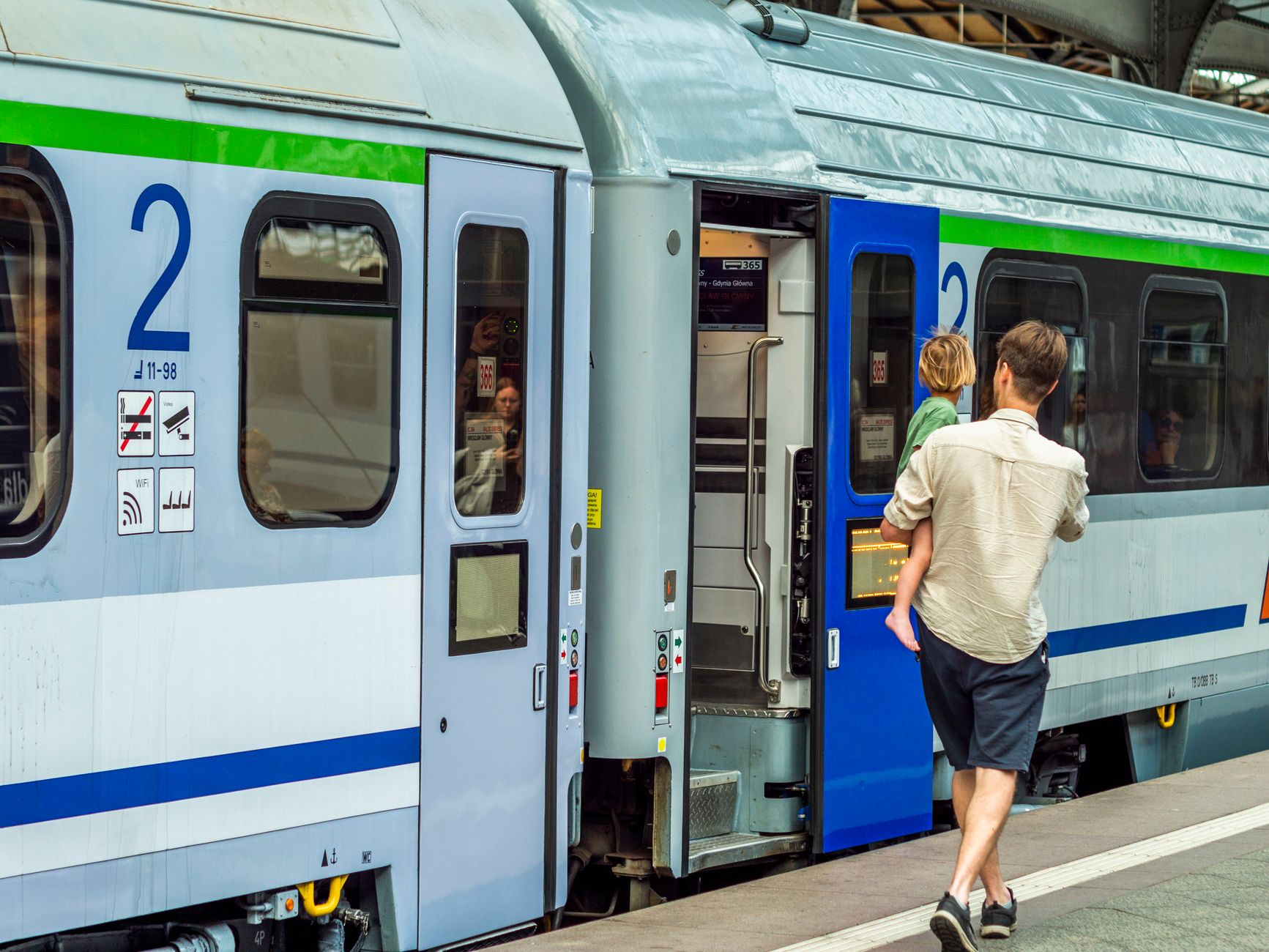
Yes, strollers are common. Fold at the door or in the vestibule if asked, and avoid blocking aisles. Multi‑purpose areas near doors can help. Car seats can be used in a seat you’ve booked, but trains typically do not have ISOFIX anchors; secure the car seat according to its belt‑path guidance if you choose to use it on board. Operator policies vary, so check your train’s page before travel (for example, see practical travel and family guidance on operator sites like DB and SNCF).
How to plan kid‑friendly routes and ride lengths
Shorter hops and planned breaks make days smoother. Instead of one 7‑hour marathon, split the day into two segments with lunch and a playground near a major station. For family train travel europe, aim for 2–3‑hour legs with generous transfer buffers (30–60 minutes) so the family can stretch, snack, and reset.
- Choose hubs with facilities: Big stations often have elevators, family rooms, and many food choices.
- Build in daylight: Early starts keep a cushion if delays happen.
- Lean into scenery: Routes like Rhine Valley (Germany), Geneva–Montreux (Switzerland), or Munich–Salzburg (Bavaria–Austria) can hold attention without screens.
- Watch connection types: A same‑platform change is easier than a platform change that needs stairs or crowds.
Family Rail Day Planner (4 Blocks)
- Morning ride (2–3h): Window seats + snacks
- Midday break (45–90m): Toilets + play stop + lunch
- Afternoon hop (1–2h): Quiet time + books
- Check‑in buffer (60m): Hotel, showers, dinner
Keep segments short, pad transfers, and align meal times with stops.
Food on board: what should you expect?
On many intercity and high‑speed trains, a bistro or café car sells simple hot meals, drinks, and snacks. On some routes, at‑seat service appears in 1st class. However, it is always fine to bring your own food. For family train travel europe, pack a small kit: water, fruit/veg sticks, nut‑free snacks if needed, and wet wipes. Also bring a small trash bag for tidy seats.
Night trains with kids: is it worth it?
Night trains can save a day of travel and feel like an adventure. Families often choose a couchette (shared or private) instead of a simple seat. Private compartments can offer more control over lights and noise. Check current options with your operator; ÖBB’s Nightjet site lists routes and accommodation types (ÖBB Nightjet). For family train travel europe, a private 4‑ or 6‑berth couchette delivers the best rest compared with open coaches.
Station day tips that cut stress
Stations are the gateway to a calm ride. Use these habits to make boarding smooth.
- Arrive early: 25–35 minutes before departure gives time for toilets, platform changes, and snacks.
- Check the board: Track numbers can post late. Watch for last‑minute platform swaps.
- Use elevators when available: Escalators are fast, but elevators reduce stress with bags and strollers.
- Line up at the right car letter: Many platforms show car position diagrams.
- Board at multi‑purpose doors: More space near cycle/stroller areas and end‑of‑car racks.
- Hold small hands: Platforms are active zones with moving trains and gaps.

Tickets, passes, and costs: how do you compare options?
Compare three things: total cost for your dates, seat/space control, and support if plans change. For family train travel europe, add one more: how easy it is to seat everyone together, especially on busy weekends and holidays.
- Point‑to‑point tickets: Great for fixed itineraries with specific dates. Book early for savings on high‑speed routes.
- Passes (Eurail/Interrail): Strong when you want flexibility or many cross‑border trips. Confirm reservation needs and fees per leg.
- Regional day tickets: In some countries, day passes for regional trains can beat long‑distance fares when time allows.
Support your choice with sources: Check the Eurail reservation page for pass holders (Eurail reservations). For luggage specifics on an international route, Eurostar’s page is detailed and current (Eurostar luggage). For rights when things go wrong, read the EU rail passenger rights page (EU rail rights).
What if something goes wrongâ€â€delays, missed connections, or seat issues?
First, keep tickets and reservations handy. If you miss a reserved train because a previous train was delayed on a through ticket, go to the operator desk for guidance. EU passenger rules outline your rights on delays, care, and compensation in many cases (EU rail passenger rights). For family train travel europe, build buffers into your connections and know where to find staff quickly at major stations.
Packing checklist for calmer ride days
- Daypack with passports, tickets, wallet, phone, charger, and a pen.
- Food kit: snacks, refillable bottles, napkins, tissues, wipes.
- Comfort: light blanket or scarf, small pillow for naps, spare layers.
- Activities: books, crayons, headphones, offline shows.
- Health: motion‑sickness bands or tablets as advised, small first‑aid kit.
- Stroller strap or bungee to secure on racks if space allows without blocking exits.
Route examples by family profile
Toddlers and early walkers (short legs, many breaks)
- Paris → Lyon (2h): Fast hop, food options at both ends.
- Munich → Salzburg (1h45): Scenic run with short duration.
- Amsterdam → Rotterdam or Utrecht (0:40–1:00): Easy first ride, frequent trains.
School‑age kids (mix of scenery and speed)
- Frankfurt → Cologne via Rhine Valley (2h+): Views keep kids engaged.
- Zurich → Lucerne → Interlaken (1h to 2h hops): Breaks with lakeside walks.
Teens (longer legs okay, add culture stops)
- Paris → Brussels → Amsterdam (3–5h total with a lunch stop).
- Milan → Florence → Rome (1–2h legs, big museums and gelato goals).
Quiet coach or not?
Quiet zones help older kids study or read. If you have a chatty toddler, skip these cars. When you do use them, set clear ground rules and have quiet activities ready. For family train travel europe, choosing a normal car near a multi‑purpose area can be more forgiving.
Accessibility and mobility
Many trains and platforms have step gaps. Ask staff for a ramp if you need one. Use elevators when possible, and keep a hand free for children near platform edges. On some routes, accessible toilets and spaces sit near the multi‑purpose area, which can make boarding with a stroller easier too.
Money‑savers that still protect comfort
- Travel off‑peak when you can; prices and crowds drop.
- Book families together under one booking to sit together and simplify changes.
- Take a regional line for short intra‑country hops; save premium fares for long, fast legs.
- Use passes only when they beat point‑to‑point for your exact dates and routes. Add seat reservations early.
Three booking examples with pros and cons
| Family goal | Channel | Outcome | Risk control |
|---|---|---|---|
| Lock a table of four on a busy Saturday | Operator site with seat map | Guaranteed seating layout | Choose exact car and table; arrive early to claim luggage space |
| Compare 3 cross‑border options quickly | Rail Europe / Omio | Simple price and time comparison | Double‑check seat types on the final operator page |
| Flexible two‑week loop with kids | Eurail/Interrail pass + reservations | Freedom to shift days with coverage for kids | Book mandatory reservations early to sit together |
Sources you can trust for changing details
- Eurail: Reservations for pass holders (which trains need them and how to add).
- Eurostar: Luggage rules (clear baggage guidance for international services).
- European Commission: Rail passenger rights (delays, assistance, compensation).
- ÖBB Nightjet (night train routes and accommodation types).
- Deutsche Bahn (national booking and family policies in Germany).
FAQs
How early should we arrive at the station?
Arrive 25–35 minutes before departure for most intercity rides. You will have time for toilets, snacks, and any last‑minute platform change. For international services with checks, arrive earlier per the operator’s guidance.
Can we bring food and drinks on board?
Yes. Bring your own food on almost all European trains. Many long‑distance routes also have a bistro car. Keep crumbs and spills in check for the next family who uses the seats.
Do regional trains need reservations?
Often no, though rules vary by country. Some regional services allow optional reservations; high‑speed and international trains are more likely to require them. If you hold a pass, check the Eurail reservation page for your route.
Is there space for a stroller?
Yes, usually in multi‑purpose areas or near doors. Fold it at boarding if asked, and avoid blocking aisles and exits. Consider a compact travel stroller for tight cars.
What is the best age for family train travel europe?
There is no single best age. Toddlers do well with short legs and frequent breaks. School‑age kids enjoy scenic lines. Teens can handle longer rides if they have books, music, or schoolwork.
Do we need paper tickets?
Many operators use e‑tickets with QR codes. Some still offer or require printed tickets for certain routes. Read your confirmation carefully and bring ID if required.
How do we sit together if the train looks full?
Search earlier trains or a different departure time. If possible, use the operator site where you can pick a cluster of seats. At the station, ask staff for help; families are often moved to sit together when space allows.
More Europe train guides for planning your route
- Train Travel in Europe: Complete Planning Guide
- Eurail & Interrail Passes: How They Work and When to Buy
- Best Night Trains in Europe for Families
Compare the trip details before you book
Affiliate disclosure: Eco Nomad Travel may earn a commission if you book through qualifying links, at no extra cost to you. Use the link only when it genuinely helps your trip research.
Before you lock in dates for Family Train Travel in Europe: Tickets, Seats, Luggage, and Kid-Friendly Tips, compare location, flexible cancellation, transfer timing, and total trip cost so the final plan fits your budget and pace.
