

Last reviewed: July 2026
For a related Eco Nomad guide, see spain train travel guide.
Here is your spain train travel guide for planning high-speed and regional trips across the country. It shows how AVE, Avlo, OUIGO, and iryo compare, when to buy tickets, and how to read stations and seats. Also, it answers pass and reservation rules and links to official sources so you can verify details before you book. Throughout this Spain rail travel guide (your Spain trains guide for quick planning), you will find steps, checklists, and links that help you choose with confidence.
Spain train travel guide: quick answers
- Main operators: Renfe (AVE, Alvia, Media Distancia, Cercanías), low-cost Avlo (Renfe), OUIGO España (SNCF), and private high-speed iryo.
- Fastest corridor: Madrid–Barcelona (as low as about 2.5–3h on the high-speed line). Times vary by service.
- Best time to book: Buy early for lower dynamic fares, especially for weekends and holidays.
- Rail passes: Eurail/Interrail are accepted on many Renfe long-distance and regional trains, but pass seat reservations are required on high-speed. Low-cost brands may not accept passes.
- Stations: Most high-speed departures use security checks. Arrive 20–30 minutes early and watch the boards for your platform (Vía/Andén).
Use this spain train travel guide to compare your options and build an easy, low-stress route.
Spain by train guide: video overview to plan your route
If the player does not load, open the video here: Spain Travel Guide: Best Places, Culture & Trip Ideas. It complements this spain train travel guide with a fast overview of regions and major hubs.
Free download: Eco Rail-First Trip Planner
A fast, practical checklist + templates for planning low-impact trips (without decision fatigue).
Plan your Spain rail trip in five steps
- Pick your corridor: Madrid–Barcelona, Madrid–Andalusia, or Mediterranean (Barcelona–Valencia–Alicante).
- Choose service type: AVE for speed, Alvia/Media Distancia for reach, or low-cost Avlo/OUIGO/iryo for deals.
- Compare fares and times: Off-peak vs peak; direct vs one change.
- Book and assign seats: Add pass reservations if you use Eurail/Interrail.
- Station plan: Arrive early, bags ready, find Vía, board when open.
Spain trains guide: how the rail network works
Spain has one of Europe’s largest high-speed networks on standard-gauge lines and an extensive classic network on Iberian gauge. Infrastructure is managed by Adif. Passenger service is operated by Renfe (state operator) and open-access competitors on key high-speed corridors. In this spain train travel guide, you will see how to pick the right service for time, price, and comfort.
Spain rail travel guide: operators at a glance
| Brand | Type | Typical routes | Classes | Passes accepted? | Official site |
|---|---|---|---|---|---|
| Renfe AVE | High-speed | Madrid–Barcelona, Madrid–Seville/Málaga, Madrid–Valencia/Alicante | Standard/Comfort/Business vary by train | Generally with seat reservation | renfe.com |
| Renfe Alvia | Fast long-distance (mixed gauge) | Madrid–Galicia, Madrid–Basque Country, Madrid–Asturias | Turista / Preferente variants | Often with reservation | renfe.com |
| Media Distancia | Regional | Regional links across Spain | Standard seating | Often included on passes, reservations vary | renfe.com |
| Cercanías | Commuter | Metro-area services (e.g., Madrid, Barcelona) | Standard | Usually not included in global passes; local tickets | renfe.com |
| Avlo (Renfe) | Low-cost high-speed | Madrid–Barcelona and more | Single class, add-on extras | Low-cost brands often do not take passes | renfe.com |
| OUIGO España | Low-cost high-speed (SNCF) | Core high-speed corridors | Basic with paid options | Usually not covered by passes | ouigo.com/es |
| iryo | High-speed (open access) | Madrid–Barcelona, Madrid–Valencia, Madrid–Andalusia | Several fare families | Typically not covered by passes | iryo.eu |
Because Spain now has competition on many high-speed lines, you can often choose between full-service and low-cost offers on the same corridor. This spain train travel guide will show you how to weigh time, price, and baggage rules before you buy.
Spain by train guide: fastest and common routes
Times depend on service type, stops, and operator. Below are representative non-stop or limited-stop timings to help you compare. Always check current schedules on official operator sites.
| Route | Fastest indicative time | Notes |
|---|---|---|
| Madrid – Barcelona | ~2h30–3h | Multiple operators on high-speed line |
| Madrid – Valencia | ~1h45–2h | High-speed line; frequent |
| Madrid – Seville | ~2h30 | Historic AVE corridor to Andalusia |
| Madrid – Málaga | ~2h45–3h | High-speed via Córdoba |
| Barcelona – Valencia | ~2h45–3h+ (varies) | Mix of services; check for direct options |
| Madrid – Alicante | ~2h15–2h30 | Frequent high-speed |
| Madrid – Bilbao/San Sebastián | ~4h30–5h+ (improving) | Mix of Alvia and long-distance |
Spain rail travel guide: when to buy tickets
Dynamic pricing rewards early buyers, especially for popular dates and peak hours. For AVE and competing high-speed brands, set fare alerts a few weeks to a couple of months ahead when timetables open for your dates. For regional trains, last minute is often fine, but direct seats on busy weekends can still sell out. This spain train travel guide suggests buying sooner for Friday outbound and Sunday return trips and during summer, Easter (Semana Santa), and long weekends.
Seasonal patterns and smart timing
Popular Spanish holidays and summer festivals can push fares up. Midweek and midday trains often have more seats at lower prices. If you must travel Friday evening or Sunday afternoon, compare multiple departures on the same corridor. Even a 20-minute shift can trim the fare or land a better seat. Conversely, very first and very late departures can price well too. Therefore, check a few adjacent times before you commit.
Spain trains guide: AVE vs Avlo vs OUIGO vs iryo
All share the same basic promise: fast city-to-city trips. The differences are comfort levels, included services, seat pitch, and baggage rules.
- AVE offers more comfort tiers, quiet cars on some routes, and flexible fare families. Food and lounges may be available with top tickets. See Renfe for current details.
- Avlo is Renfe’s low-cost brand with a single class and paid extras like seat choice or extra luggage.
- OUIGO España runs double-decker TGV-style sets with basic fares plus optional add-ons. Check OUIGO España for exact rules.
- iryo focuses on service and flexible fare families across major corridors. See iryo for cabin and fare info.
Low-cost tickets can be great value, but factor in fees for larger bags, seat selection, and changes. The best pick depends on the total price for your needs. Use this spain train travel guide to weigh trade-offs before you click ‘buy’.
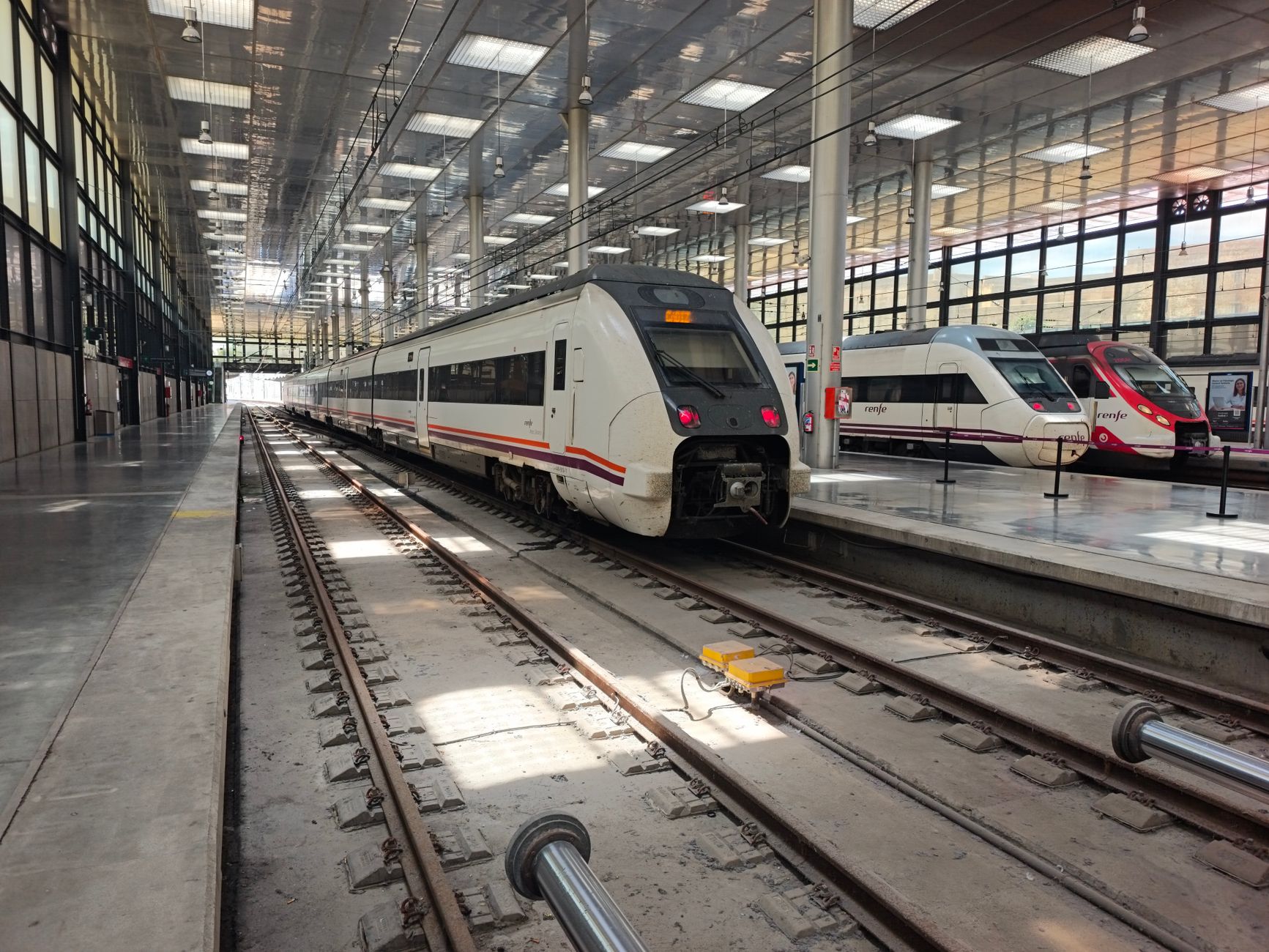
Spain by train guide: read your ticket and find your platform
Most tickets show a six-character booking code (often called Localizador), coach (Coche), and seat (Plaza). Stations display platforms as Vía or Andén. For high-speed, there is usually a quick security check. Arrive 20–30 minutes early, pass the check with bags ready, and board when the screen shows Embarque or your coach number. Keep your ID handy because name matching may be required. This spain train travel guide recommends taking a screenshot of your QR and coach/seat in case mobile data drops inside the hall.
Useful Spanish ticket fields
Common terms include Clase (class), Tarifa (fare type), Fecha (date), Hora (time), Origen/Destino (origin/destination), and Puerta de embarque (gate, when used). On platforms, look for coach markers on the floor or pylons to stand near your assigned Coche. This small step speeds boarding and reduces aisle traffic.
Spain rail travel guide: tickets, fares, and classes
Fares vary by route, demand, fare family (flexible vs non-refundable), and operator. On AVE and iryo you often pick between tiers with different change/refund rules and seating. Avlo and OUIGO use one basic class with paid extras. Seat maps appear at checkout on many routes, so grab pairs or tables if you travel as a group. Flexible tickets cost more but reduce change anxiety; window or table seats suit scenery or work; and Wi‑Fi or food varies by brand and fare. Because fares change often, this spain train travel guide links to official sources rather than quoting prices.
If plans change: refunds, name edits, and exchanges
Rules depend on your fare family and operator. Some low-cost fares are strictly non-refundable and non-changeable. Others allow paid changes up to a cut-off time. Name changes are often restricted, so enter names and ID details with care at booking. If you need flexibility, compare the upgrade price to the likely cost of rebooking later.
Spain trains guide: Eurail/Interrail reservations
Yes, for most high-speed and long-distance services, a seat reservation is required on top of your pass. This is a separate cost and seat assignment. Low-cost brands often do not accept passes. Regional trains may be included with no or low reservation fees. Always confirm for your exact train and date on the pass websites.
| Service | Pass acceptance (general) | Reservation needed? | Where to check |
|---|---|---|---|
| Renfe AVE / Larga Distancia | Generally yes | Yes, required | Eurail / Interrail |
| Renfe Alvia | Generally yes | Often required | Eurail / Interrail |
| Media Distancia | Often included | Varies by route | Pass sites & Renfe |
| Cercanías | Usually not included | No | Local info |
| Avlo / OUIGO España / iryo | Commonly not included | N/A | Operator sites |
See Eurail and Interrail for route-by-route details. Eurail says many reservation e-tickets can be booked until close to departure, while paper reservations need more lead time. For domestic Spanish trains that do not show in the online self-service tool, Eurail also lists station ticket desks and phone pre-reservations as fallback channels. This spain train travel guide suggests booking pass reservations as soon as your travel days are set, since quotas for pass holders can be limited on popular trains.
Spain by train guide: booking channels that work
You can book direct with each operator or use a trusted multi-operator tool. Direct options include Renfe (AVE, Alvia, Media Distancia, Avlo), OUIGO España, and iryo. Compare times and fares across brands on the same corridor before you pay. This spain train travel guide recommends checking departures side by side so you can balance price and schedule, and leaving margin if you connect between different companies.
Spain rail travel guide: 9 booking tips to save time
- Search Spanish city names (e.g., Sevilla, Córdoba, Zaragoza) to avoid blank results.
- Mind station names in big cities. Barcelona Sants is the main long-distance hub.
- Travel off-peak if you can. Midday departures are often cheaper.
- Consider one stop if a direct train is sold out; time cost vs savings may be small.
- Book together to seat groups at a table or facing pair.
- Enter correct names and ID. Some operators may check against ID.
- Check baggage rules on low-cost brands before you click buy.
- Screenshot everything: ticket QR, seat, coach, booking code.
- Scan for engineering works near holidays and late nights.
Seat maps, coach letters, and platform habits
On many high-speed services, seat maps show before you pay. Pick a table if you want to work, or an airline-style pair for couples. Trains may run in either direction; some seats face backward. At the platform, coaches line up by letters or ranges marked on the floor. Move to your marker early. This keeps aisles clear, speeds boarding, and helps families sit together.
Spain trains guide: onboard experience and luggage
High-speed cabins are airline-style with wide seats, tables, and power outlets on many sets. Rides are quiet and smooth. Regional trains vary but are comfortable for medium hops. For luggage, allowances differ by brand and ticket. Renfe’s current luggage page says standard hand luggage can include up to 3 pieces, with a combined limit of 25 kg and 290 cm, and the largest item capped at 85 x 55 x 35 cm. It also notes stricter Avlo limits: 1 small hand item plus 1 cabin bag are included, with larger baggage added as a paid extra. Check the current policy on each operator’s site before you pack. As a rule, keep one medium roller and one personal item ready to slide into overhead racks or the end-of-coach shelf. For families, a foldable stroller is easiest to park near doors.
If you are choosing between AVE and a low-cost fare, run the bag math before you buy. A cheaper fare can still be the best choice for a backpack trip, but a family with checked-size rollers may prefer a fare that includes more luggage or easier changes. This is especially important on point-to-point Spain trips where you may not have time to repack at the station.
Food, Wi‑Fi, and power
Wi‑Fi and entertainment vary by operator and trainset. Some AVE and iryo services offer free Wi‑Fi and at-seat portals, while cafeteria cars or trolleys appear on selected routes and fares. Bring a water bottle and snacks in case your specific train has no catering or sells out at busy times. A compact power bank helps if your seat lacks a socket.

Station basics: security, boards, and boarding
High-speed departures often require scanning your bag and ticket before entering the platform area. After the check, watch departure boards for your train number and Vía (platform). Gates open close to departure and close a few minutes before the time. If you need assistance, ask for help at the information desk well before boarding. This spain train travel guide suggests arriving 30 minutes early at major hubs like Madrid Atocha and Barcelona Sants, and 20 minutes at smaller high-speed stations.
Spotlight: Atocha and Sants
Madrid Atocha and Barcelona Sants are large hubs with clear signage in Spanish and English. Expect separate concourses for high-speed and regional services. Security queues can spike before peak departures. Therefore, keep tickets ready, consolidate bags, and follow overhead signs to your Vía. Both stations link to metro networks, so consider storing extra time for transfers during rush hours.
Spain rail travel guide: refunds, delays, and rights
EU rail passenger rights apply to Spain. Your exact compensation and support depend on the operator, route, fare, and cause of the disruption. Renfe also publishes an AVE punctuality guarantee that can be more generous than minimum EU rules, but thresholds and payout rules can change. Always check current terms on the European Commission’s rail rights page, the Renfe site, and carrier pages for iryo and OUIGO España.
Keep tickets and delay proof (photos of boards, staff notes). Ask staff where to file claims or use the online form. For EU rail trips, 60 minutes is an important threshold for assistance and compensation checks, while 120 minutes can trigger a higher compensation tier under the EU passenger-rights framework. Renfe, iryo, and OUIGO may also publish their own claim routes and guarantees. This spain train travel guide recommends filing within days of travel for faster outcomes and saving every booking code until the claim is closed.
Spain trains guide: accessibility and assistance
Spain provides station and onboard support for travelers with reduced mobility. Renfe’s assistance service (often called Atendo) can help with boarding, platform transfers, and seat access on many routes. Book assistance ahead and arrive early to meet staff at the agreed point. Lifts and ramps are common at major hubs, and many high-speed trains offer accessible toilets and priority boarding.
Spain by train guide: family and group tips
- Seat together: Reserve seats in one booking to sit as a group.
- Pack light and stackable: Soft bags fit more easily in overhead racks.
- Snacks and water: Bring a bottle and simple snacks; some trains have a café bar.
Spain rail travel guide: scenic rides and detours
High-speed lines are fast but often bypass slow meanders. For more views, mix in a regional hop:
- Barcelona to Figueres/Girona: Green hills and historic towns near the French border.
- Basque Country: Bilbao to San Sebastián offers sea and mountain backdrops on regional lines.
- Valencian coast: Valencia to Alicante shows Mediterranean scenes outside big cities.
This spain train travel guide suggests pairing one fast long leg with one short scenic leg to keep variety in your rail trip.
Spain trains guide: sustainability
Rail is among the lowest‑carbon ways to travel medium distances in Europe. The European Environment Agency reports that rail emits far less CO2 than aviation per passenger‑kilometer on average, especially on electrified networks like Spain’s. If you can replace a short‑haul flight with a train, you often cut emissions and save station‑to‑city transfer time.
Spain by train guide: what to pack
- Photo ID that matches the name on the ticket.
- Portable battery and offline tickets/screenshots.
- Small cable lock for luggage peace of mind on end-of-coach racks.
- Light layers for air‑conditioned cabins.
Spain rail travel guide: compare Spain tickets fast
Affiliate disclosure: Some links in this guide may be affiliate links. If you book or buy through them, Eco Nomad Travel may earn a commission at no extra cost to you.
Ready to check times and prices side by side across operators? You can compare and book common Spain routes in one place here: Compare Spain train tickets on Trip.com. This option is useful when you want an at‑a‑glance view of departure windows and remaining seats.
Spain trains guide: common mistakes to avoid
- Cutting station time too close. High-speed gates can close a few minutes before departure.
- Ignoring baggage rules. Low-cost brands may charge for larger bags.
- Mixing stations by accident. Madrid and Barcelona have multiple stations; confirm the right one.
- Skipping pass reservations. You still need a seat on most long-distance trains.
Spain by train guide: example 7‑day rail loop
Here is a simple loop you can adapt:
- 1–2: Barcelona — Arrive by air, explore the old city and Sagrada Família.
- 3: Barcelona → Madrid — Morning high-speed. Prado and Retiro in the afternoon.
- 4: Madrid → Seville — AVE to Andalusia. Evening tapas and flamenco.
- 5: Seville → Córdoba → Málaga — Short hops, Mezquita at lunch, arrive Málaga by evening.
- 6: Málaga → Valencia — Longer ride; beach walk at sunset.
- 7: Valencia → Barcelona — Return and fly out, or add the Costa Brava.
With passes, reserve your long-distance seats first, then fill regional links as needed. This spain train travel guide suggests adding buffer time if you switch between brands.
How to adapt the loop for slower travel
If you want a calmer trip, remove one city instead of squeezing every famous stop into a week. For example, skip Valencia and add a second night in Seville, or skip Malaga and spend more time in Cordoba. Spain’s high-speed trains make long jumps easy, but the best rail trips still leave time for station transfers, local buses, meals, and rest. A slower version is also easier with kids, larger bags, or a rail pass because you have more room to recover if a reservation is unavailable.
For a first Spain rail itinerary, choose 2 anchor cities and 1 easy side trip. Madrid plus Seville works well for museums and Andalusia. Barcelona plus Girona works well for a lower-stress Catalonia route. Madrid plus Valencia is a strong beach-and-city pairing. Once those anchors are set, use the train for one scenic or cultural detour rather than chasing a new hotel every night.
More Europe train guides for planning your route
For deeper planning, explore these related reads from our rail cluster:
- What is a rail pass in Europe? – Decide between point‑to‑point and passes.
- London to Paris by train – Connect the UK to mainland Europe the easy way.
- Is it safe to travel by train in Europe? – Station and night train tips.
Spain rail travel guide: FAQs
What is the difference between AVE and Avlo?
AVE is Renfe’s full‑service high‑speed brand with several fare tiers and cabins. Avlo is its low‑cost sibling with a single basic class and paid extras like seat choice and extra luggage. Both use high‑speed lines. Choose based on total price, baggage, and flexibility. This spain train travel guide suggests adding up extras before you buy.
Do I need to print my ticket?
No, mobile QR tickets are widely accepted. Keep a clear screenshot of your QR, coach, and seat. Some operators may check ID that matches the name on your ticket.
How early should I arrive for AVE?
Arrive 20–30 minutes before departure to pass security and reach your coach without rushing. At big hubs like Madrid Atocha or Barcelona Sants, arrive a bit earlier at busy times.
Are there night trains in Spain?
Domestic night trains are limited. For longer overnight travel, look at international options via France or Portugal when available. Check current offers on operator and pass sites, as night services can change.
Are passes worth it for Spain?
Passes can work if you plan multiple long legs within a short period and can secure reservations. For two or three long-distance trips, advance point‑to‑point tickets may be cheaper. Compare both paths before you commit.
What are my rights if the train is late?
EU rail passenger rights set minimum standards for delays, assistance, and compensation. Renfe also has an AVE punctuality guarantee. Policies vary by operator and can change, so confirm current terms on the official sites listed below.
Sources and useful links
Learn more and verify current rules on these official sites: Adif (Spain’s infrastructure manager), Renfe, Renfe luggage rules, iryo, OUIGO España, Eurail/Interrail, Eurail Spain reservation help, and the EU Rail Passenger Rights page.
Bookmark this spain train travel guide and check the operator links a few days before you ride in case schedules or rules change.
