

Short answer: Yes—on most routes, you can take a bicycle on European trains. This bike on trains europe guide explains the ticket types, when you must reserve a bike space, how to pack a folding bike, and what to expect on regional, high-speed, and night trains. Because policies change, always check your exact operator before you book.
Last reviewed: June 8, 2026. Rules and fees can change without notice; verify details on the operator’s site before travel.
- Folded bikes usually travel as hand luggage when fully folded and bagged.
- Full-size bikes often need a dedicated bike space and a reservation.
- High-speed and cross-border trains have stricter rules than regional trains.
- Board through bike-marked doors and secure the bike in the rack or space.
- Arrive early; conductors can deny boarding if spaces are full or the bike is not packed per rules.
Your bike on trains europe guide: what to expect
Use this section to plan faster. This bike on trains europe guide covers the three big decisions: your bike type, your train type, and your booking method. Then it shows where to find official rules and how to handle station and onboard etiquette.
Avoid the biggest train-travel mistakes
Booking order + buffer rules + offline plan - free PDF.
Why policies vary by operator
Europe’s rail network is a patchwork of national, regional, and private companies. Also, rolling stock is different from route to route. Therefore, bike spaces, door layouts, and rack designs vary. As a result, one train might allow many bikes without a fee, while another requires a reservation and a specific position within the carriage. Because of this, verify your exact train’s policy during booking, not just the general country rule.
Quick answer: can you bring a bike on any European train?
Not on every train. However, most countries allow bikes on regional trains and on many long-distance services with a booked space. Folded bikes are easier almost everywhere. This bike on trains europe guide recommends you decide first whether you will travel with a folding bike or a full-size bike, then choose trains that match.
Folded bikes vs. full-size bikes
Bike rules start with what you roll. This bike on trains europe guide uses a simple split:
- Folding bikes: When fully folded and bagged, they usually count as hand luggage. You can often bring them on high-speed trains that do not allow regular bicycles. Dimensions and bag rules still apply.
- Full-size bikes: Most regional trains accept them, many long-distance trains do with a reserved space, and some high-speed services ban them unless disassembled and bagged to size limits.
What about e-bikes, tandems, trailers, and cargo bikes? E-bikes are often allowed where regular bikes are allowed, but batteries must stay on the bike and may be subject to safety checks. Tandems, trailers, and cargo bikes are frequently restricted because they exceed space or weight limits. Always check the operator’s site for these exceptions.
What tickets and reservations do you need?
Tickets for you and a spot for the bike are separate decisions. This bike on trains europe guide breaks it down:
- Your seat or rail pass: Book your passenger ticket as usual, or use a Eurail/Interrail pass for flexibility.
- Your bike space or bike ticket: On many routes, you must add a bicycle reservation or purchase a small bike supplement. Without it, you may be turned away if the train is full, even with a valid passenger ticket.
Look for a bicycle icon during booking. If the site does not show bike spaces, try the operator’s own app, select a different train, or contact customer service. If you cannot add a bike, assume the train does not accept unbagged bikes and consider using a folding bike bag instead.
Operator quick-reference: bike spaces and links
Use the links below to confirm rules before you travel. Policies can change by season, timetable, or carriage type.
| Country/operator | Typical bike policy | Booking notes | Official policy |
|---|---|---|---|
| Germany – Deutsche Bahn (DB) | Full-size bikes allowed on many regional/long-distance trains; folding bikes as hand luggage when folded. | Bike space often required on IC/EC/ICE; regional varies by train. | DB: Bicycles on trains |
| France – SNCF | Regional TER widely allow bikes; TGV/Intercités mixed rules. Folded bikes bagged usually allowed. | Reservations often required for TGV/Intercités spaces. | SNCF: Bikes on board |
| Austria – ÖBB (incl. Nightjet) | Many trains carry bikes; Nightjet has limited spots by route. Folding bikes as luggage when folded. | Bike reservations strongly recommended; Nightjet often mandatory. | ÖBB: Travelling with bicycles |
| Switzerland – SBB | Excellent network support; some lines mandatory reservations at peaks. | Check SBB Mobile for bike space and seasonal requirements. | SBB: Bicycle travel |
| Spain – Renfe | Regional Media Distancia and Cercanías often allow bikes; high-speed rules are stricter. | Folding/disassembled bikes in bags are easier on AVE/Alvia. | Renfe: Bicycles |
| Italy – Trenitalia | Many regional trains allow bikes; long-distance varies. Folded bikes as hand luggage. | Bike supplement/space may be needed on some routes. | Trenitalia: Bicycles |
| Eurostar (UK–FR/BE/NL) | No full-size bikes in passenger cars; folded bikes allowed when within size rules and bagged. | Check current length limit; baggage services vary. | Eurostar: Bikes |
Official operator pages above are your best source for current dimensions, fees, and reservation steps. This bike on trains europe guide points you there before every trip.
How do you find and book bike spaces online?
Most national sites show a bicycle icon if your chosen train has spaces. This bike on trains europe guide suggests you start with the operator’s own app or website, then try a pan-European site if needed. Here is how it typically works:
- Search your route and date. Then toggle a bicycle option if available.
- Filter to trains with bike spaces. You may need to avoid high-speed services where bikes are not accepted.
- Add the bike reservation. Some systems sell it as a separate “supplement.”
- Download tickets and reservations to your phone. You may be asked to show both onboard.
| Operator/app | Where to add a bike | Tip |
|---|---|---|
| DB Navigator (Germany) | Advanced options → Add bicycle reservation if offered for IC/EC/ICE; regional varies. | If a leg shows “no bicycle spaces,” try a slightly different time. |
| SNCF Connect (France) | Look for the bike icon on TGV/Intercités; for TER, check the train details. | Spaces are limited; book early in summer. |
| ÖBB (Austria) | During seat selection, choose a bicycle icon to add space; Nightjet often mandatory. | Print or save the separate bike voucher. |
| SBB Mobile (Switzerland) | Search train → options show bike reservation if required on that route/time. | Peak-season rules can differ by line. |
| Renfe | Regional: bike option during booking or at station; AVE/long-distance often require bagging. | Bring a soft bag in case you must disassemble. |
Which trains are best for traveling with a bike?
As a rule of thumb, regional trains are easiest. This bike on trains europe guide recommends you pick trains in this order when traveling with a full-size bike:
- Regional/commuter (TER, RB/RE, R, etc.). These often have level boarding and wide multi-use spaces.
- Intercity/EuroCity. Many accept bikes with a reservation and fee.
- Night trains. Some routes allow bikes, but spaces are limited and must be booked.
- High-speed (TGV, ICE, AVE, Frecciarossa). Policies vary; folded bikes fare better. Full-size bikes may be banned or only allowed when disassembled and bagged to size limits.
Packing rules: folded bikes and size limits
For folded bikes, the key is the bag and the length limit. This bike on trains europe guide highlights two well-known examples:
- Eurostar: Eurostar specifies that folded bikes count as luggage only when bagged and within its length limit (commonly 85 cm). See Eurostar’s policy for the current size and options.
- SNCF TGV/Intercités: Folded or disassembled bikes in a bag are typically accepted up to around 130 × 90 cm on many routes. Confirm details at SNCF Bikes on board.
Other operators have similar rules: if your folded bike looks like luggage and stays within their posted dimensions, it usually rides for free. For full-size bikes, you must use the bike space and follow the rack or strap system on board.
| Operator example | Folded bike rule (summary) | Notes |
|---|---|---|
| Eurostar | Bagged, within length limit (often 85 cm), travels as luggage. | Length checked at stations; no full-size bike boarding. |
| SNCF (TGV/Intercités) | Bagged, up to a posted size (often ~130 × 90 cm). | Space inside car is limited; use soft case. |
| DB (Germany) | Fully folded bikes count as hand luggage on most services. | Check specific IC/ICE carriage notes during booking. |
| ÖBB (Austria) | Folded bikes treated as luggage when bagged. | Nightjet varies; check route rules. |
Tip: Use a soft, zippered bike bag with minimal metal parts. Also, keep pedals inward and chain facing the bag wall to avoid scuffs. Meanwhile, carry a small strap to compress the bike if the bag bulges near the posted size limit.
Station and onboard etiquette that keeps your trip smooth
Small choices matter. This bike on trains europe guide suggests the following:
- Arrive 15–20 minutes early. You need time to find the right sector marker (A, B, C) and the bike-marked door.
- Remove bags. Panniers, bottles, and lights can fall off in the doorway rush.
- Yield during peak times. Families with strollers and wheelchair users have priority in multi-use spaces.
- Use the rack or strap points. Face the bike as diagrams show. Lock it only to itself to avoid blocking others.
- Move at terminus stops. Trains flip directions; doors and bike spaces may swap ends.
Real-world booking examples
Below are simplified examples to show how choices change with your bike type. This bike on trains europe guide assumes summer schedules, when demand is higher and reservations sell out sooner.
- Amsterdam to Cologne (regional + IC): With a full-size bike, pick regional legs and an IC with a bike reservation. With a folding bike, choose the fastest IC/ICE option and board with the bike in a bag.
- Paris to Lyon (TGV): Full-size bikes may require a TGV with a limited number of bike spaces; book early. A folded bike in a 130 × 90 cm bag is simpler and often cheaper.
- Vienna to Innsbruck (Railjet/ÖBB regional): Both bike types work; full-size requires adding a bike space in the ÖBB flow.
- Zurich to Lugano (SBB IC/IR): Spaces can be mandatory at peak times. Folding bikes ride as luggage when bagged; double-check Saturday summer rules.
Helpful video: boarding with a bike in France
Sometimes seeing the process helps more than reading. The walkthrough below shows packing and train-side choices on French services.
Generated decision graphic: will your bike fit this train?

Photo examples from European stations

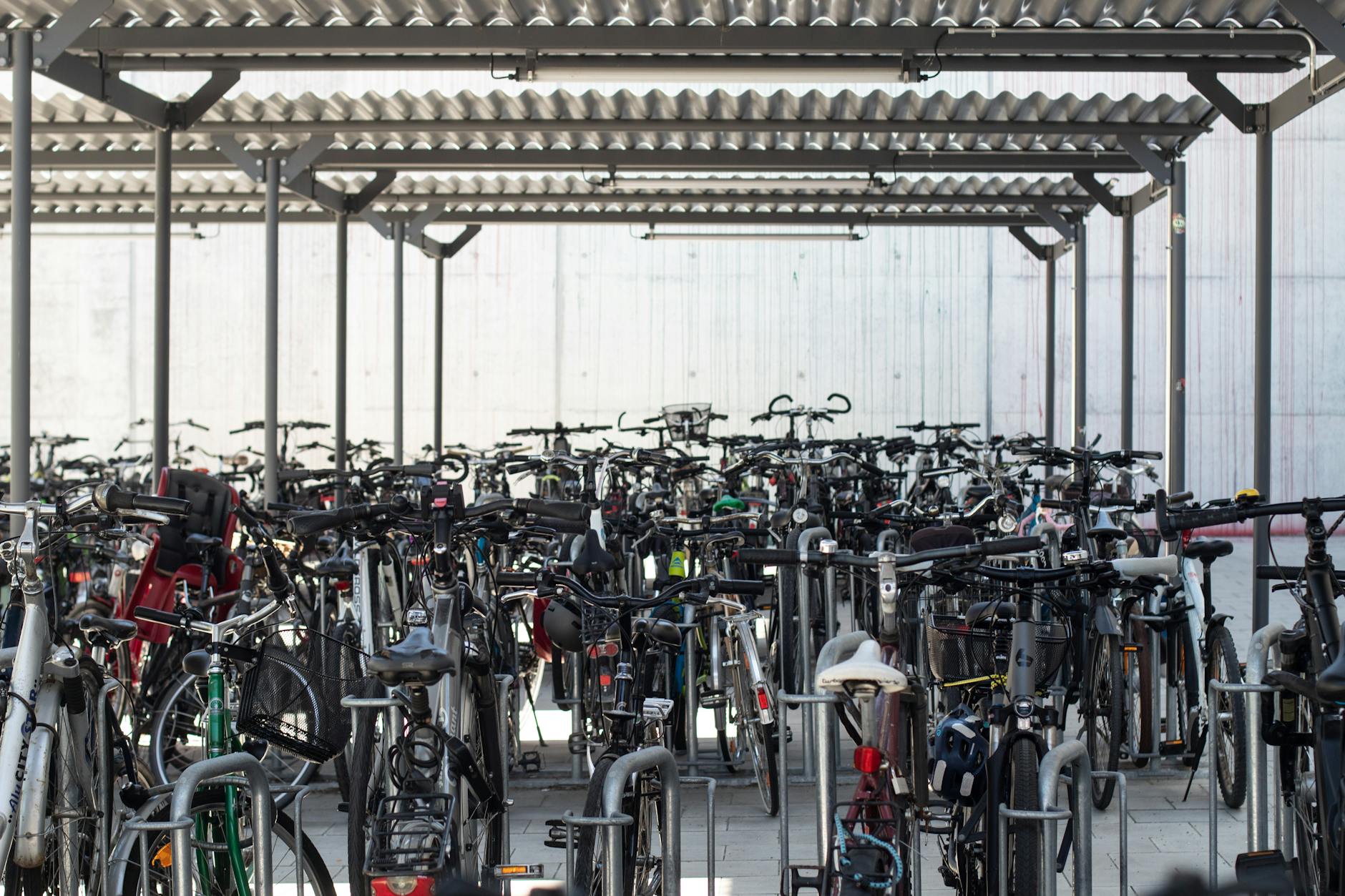
Costs, fees, and money-saving tips
Fees vary by train and country. This bike on trains europe guide suggests you compare three costs: passenger fare, bike supplement or reservation, and a folding-bike bag if you choose the luggage route.
- Regional trains: Often free for folded bikes; low bike supplements for full-size bikes in some countries.
- Long-distance: Expect a small fee for a reserved space. These can sell out well before the train fills with passengers.
- High-speed: Folded/bagged is usually the cheapest way in. Full-size may not be possible at any price.
Because rules and prices change, confirm on the operator’s site: DB, SNCF, Eurostar, and ÖBB.
Universal rules to avoid surprises
These patterns show up across Europe. This bike on trains europe guide keeps them simple:
- If there is a bike space option, reserve it early.
- If your bike can fold and bag, it will fit more trains.
- If in doubt, choose regional trains and off-peak times.
- If staff say a space is full, they are likely right. Find the next train.
- If your bag looks like luggage, boarding is smoother.
Night trains with bicycles
Night services are great because you cover distance while you sleep. But bike spaces are scarce. On ÖBB Nightjet, some routes allow a few bikes with reservations; others do not. SNCF/Intercités de Nuit and other night routes also vary. Book both your sleeper/seat and your bicycle space together. If you cannot add the bike in the same booking, assume that route does not carry full-size bikes and switch to a folding-bike plan.
Boarding and storage: step-by-step
Fast boarding prevents drama. This bike on trains europe guide recommends this flow:
- Find the right sector. Many platforms have lettered zones showing where each carriage stops.
- Scan the exterior. Look for a bicycle icon near a wide door. On double-deckers, bike spaces are usually on the lower level.
- Roll straight to the rack. Load the front wheel first if it is a vertical hook design. If horizontal, follow the arrows.
- Secure and stand back. Use straps if provided. Keep aisles clear.
- Prepare to move if asked. Wheelchairs, prams, and other priority needs may adjust the layout.
Eurail/Interrail passes and bike reservations
Rail passes cover your seat or standing right on eligible trains, not your bicycle space. This bike on trains europe guide emphasizes that you often must buy the bike reservation separately from the pass. If pass reservations sell out, you need another train. Folded bikes can rescue your plan on full routes, since they ride as luggage on many high-speed services that do not carry full-size bikes.
Mistakes to avoid
- Assuming “any train” will take bikes. Always check the exact train number.
- Forgetting to bag a folding bike. Many staff will ask to see the bag zipper closed.
- Booking a perfect route with one non-bike leg. One short hop can block the whole day. Filter for bike icons first.
- Arriving late to a crowded platform. Late arrivals miss the bike door and end up blocked by crowds.
This bike on trains europe guide keeps you away from those pain points by starting with the bike type and train filter, then adding the reservation.
Sample bike-friendly itinerary ideas
Try these popular corridors to learn the rhythm, then plan bigger rides. This bike on trains europe guide adds a folding-bike angle for each option.
- Netherlands → Germany (Utrecht–Düsseldorf): Short regional hops and IC segments with bike spaces. Folding option: take faster ICE legs with the bike in a bag.
- France → Spain (Bordeaux–San Sebastián): Regional TER to Hendaye, then Euskotren across the border. Folding option: consider TGV to Bayonne and bag the bike for high-speed legs.
- Munich → Innsbruck → Brenner: Alpine views with ÖBB regional trains. Folding option: use fast Railjet segments if timing is tight.
- Basel → Interlaken (Switzerland): SBB InterCity/InterRegio with strong bike support; check for reservation peaks. Folding option: ride any time as luggage.
Trip tools worth bookmarking
- Official operator apps: DB Navigator, SNCF Connect, ÖBB, and SBB Mobile show live platform tracks and coaches.
- City cycling maps: Use local open-data maps to find station bike entrances and lifts.
- Soft bike bag + straps: A light bag and two Velcro straps solve most last-minute size checks.
Compare tickets and bike options in one place
Affiliate disclosure: Some links in this guide may be affiliate links. If you book or buy through them, Eco Nomad Travel may earn a commission at no extra cost to you.
When you need a fast overview across operators, open a comparison site in a second tab. It helps you spot trains with easier changes and the right timing for bike spaces. For a broad search across European routes, you can compare dates and fares here: Compare routes and prices on Trip.com. Keep this bike on trains europe guide open while you check the operator’s bike rules for your short list.
FAQs: bringing a bike on European trains
- Do I need a reservation for my bike?
- On many long-distance and some cross-border routes, yes. Regional trains often do not require it, but capacity is still limited. Check the operator’s site during booking. This bike on trains europe guide links official pages above.
- Are folded bikes always allowed?
- Usually yes, when bagged and within size limits. However, some stations or trains still set measurements or restrict oversize bags at peaks. Verify before you travel.
- Can I board with panniers attached?
- It is best to remove them. They snag doorways and do not sit well in most racks. Carry them to your seat and keep aisles clear.
- What about e-bikes?
- E-bikes often follow the same rules as regular bikes, but heavy frames and batteries can make lifting hard. Some lines also restrict battery handling. Check the operator’s policy.
- Does Eurail include bike reservations?
- No. Your pass covers you, not your bicycle. You must add any bike spaces or supplements separately.
More Europe train guides for planning your route
Sources and official references
- Deutsche Bahn – Bringing your bicycle: bahn.com
- SNCF – Bikes on board: sncf.com
- ÖBB – Travelling with bicycles: oebb.at
- Eurostar – Bikes policy: eurostar.com
- SBB – Bicycle travel information: sbb.ch
- Renfe – Bicycles and scooters: renfe.com
- Trenitalia – Bicycles on trains: trenitalia.com
Final tip: When in doubt, screenshot the train’s bike policy and carry a soft bike bag. Those two items solve most last-minute surprises at the platform.
